

Living in Budapest: the ultimate expat guide
Everything you need to know for a successful life in Budapest.
Budapest, the capital of Hungary, is a city where history meets modern European life along the banks of the Danube River. With a population of approximately 1.7 million, this dynamic metropolis blends stunning architecture, world-famous thermal baths, and a thriving cultural scene with surprisingly affordable living costs. The city is divided into two distinct parts—hilly Buda on the west bank and flat Pest on the east—connected by iconic bridges including the Széchenyi Chain Bridge. For those seeking a European base with character, accessibility, and value, Budapest offers an exceptional quality of life that continues to attract professionals, students, and retirees from around the world.
5 Good Reasons to Move to Budapest
- Affordable cost of living: Living expenses are approximately 36% lower than Berlin, 44% below Paris, and 50% less than London, making it one of Europe's best-value capitals.
- Excellent public transport: A comprehensive network of metro lines, trams, and buses operates efficiently throughout the city, with monthly passes costing around USD 22.
- Rich cultural heritage: From UNESCO World Heritage sites to ruin bars and thermal baths, the city offers endless opportunities for exploration and leisure.
- Central European location: Budapest serves as an ideal base for travel, with Vienna, Prague, and other major cities easily accessible by train or budget airline.
- Growing international community: A welcoming expat scene, English-speaking services, and international schools make settling in straightforward for newcomers.
Working in Budapest
Budapest is Hungary's economic engine, generating over half of the country's GDP and offering the most diverse employment opportunities in Central Europe. The city has attracted major multinational corporations, tech startups, and shared service centers, creating a dynamic job market for international professionals. Understanding work permit requirements and key industries will help you navigate your career transition effectively.
Key Employment Sectors
The Hungarian economy has experienced strong employment growth, with Budapest's unemployment rate sitting at just 2.3% in 2023—well below the national average. Growing sectors include IT and technology, renewable energy, pharmaceutical and chemical industries, automotive manufacturing, tourism and hospitality, and transport and logistics. Major employers include Mercedes-Benz, Audi, IBM, Morgan Stanley, and numerous tech companies establishing regional headquarters in the city.
Work Permits and Visas
Citizens of the EU, EEA, and Switzerland can live and work in Hungary without a permit, though registration is required for stays beyond 90 days. Non-EU nationals typically need a Single Permit combining residence and work authorization, valid for up to two years and renewable. Highly qualified professionals may apply for the EU Blue Card, requiring a minimum gross monthly salary of HUF 883,671 (approximately USD 2,474) in 2025. Hungary also offers a White Card for digital nomads earning at least EUR 3,000 monthly from non-Hungarian employers.
The table below summarizes key employment indicators for Budapest:
Unemployment rate (Budapest) | 2.3% (2023) |
Average gross monthly salary (Hungary) | EUR 1,561 |
Minimum wage (2024) | EUR 697 gross/month |
Key growing sectors | IT, pharmaceuticals, automotive, tourism |
Sources: EURES – European Commission, Hungarian Central Statistical Office (KSH)

Working in Budapest
There are so many types of jobs available in Budapest that people from other parts of the country ...
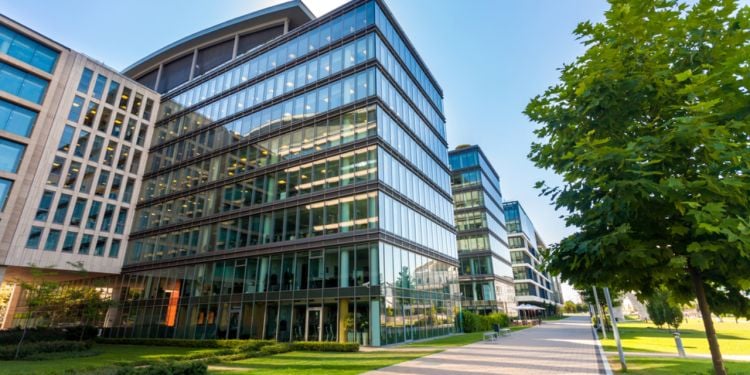
The labour market in Budapest
There are so many types of jobs available in Budapest that people from other parts of the country ...

The work culture in Budapest
Congratulations! You have been hired by a company for a job in Budapest. Depending on the position ...
Higher Education and Universities in Budapest
Budapest hosts some of Central Europe's most respected universities, offering quality education at significantly lower costs than Western European institutions. With over 37,500 international students enrolled across Hungarian universities, the city has established itself as an attractive study destination. Most major institutions offer extensive English-taught programs, making higher education accessible without Hungarian language skills.
Top Universities
Eötvös Loránd University (ELTE), founded in 1635, ranks among the world's top 2% of universities and welcomes approximately 5,300 international students from over 100 countries. The university offers more than 100 English-taught degree programs across nine faculties. The Budapest University of Technology and Economics (BME) is one of the world's oldest technology universities, offering courses in five languages with over 21,000 enrolled students. Corvinus University is renowned for business and economics programs, ranking in the global top 50 for management by the Financial Times.
Tuition Fees and Scholarships
Annual tuition fees for international students typically range from EUR 1,200 to EUR 5,000 for most undergraduate and graduate programs. Medical and dental programs are more expensive, ranging from EUR 12,000 to EUR 16,000 per year. The Stipendium Hungaricum scholarship program, launched by the Hungarian government, offers full funding including tuition, accommodation allowance of HUF 40,000/month, and health insurance for citizens from nearly 70 partner countries.
Application deadlines typically fall between January and June for September intakes. Most universities require proof of English proficiency, academic transcripts, and may conduct entrance interviews or examinations.
Sources: Eötvös Loránd University, Budapest University of Technology and Economics, Study in Hungary
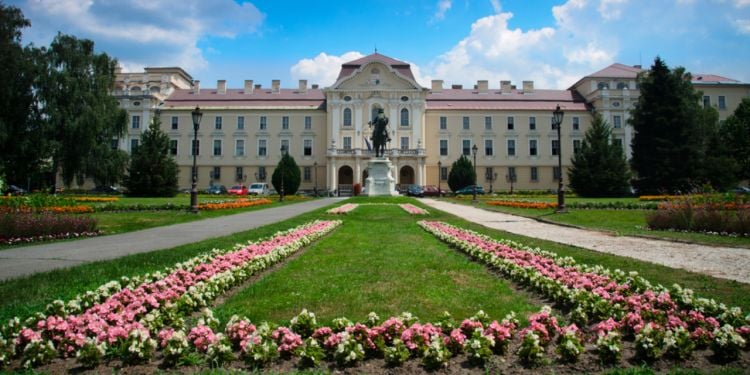

Schooling Options for Expat Families
Budapest offers diverse educational options for expat families, from local Hungarian schools to prestigious international institutions following British, American, or International Baccalaureate curricula. While the Hungarian public school system is free and generally well-regarded, instruction is conducted entirely in Hungarian, making international schools the preferred choice for most expat families.
International Schools
The American International School of Budapest (AISB), established in 1973, offers an American-style education combined with the IB program for students aged 3 to 18. The British International School Budapest (BISB), part of the Nord Anglia Education family, provides the English National Curriculum leading to IGCSE and the International Baccalaureate Diploma Programme with a 100% IBDP pass rate. Budapest British International School (BBIS) became Hungary's first IB Continuum School, offering all three IB programs from ages 3 to 18.
Fees and Enrollment
Annual tuition fees at international schools typically range from EUR 5,100 to EUR 23,000 depending on the school and grade level. Additional costs include application fees (approximately HUF 165,000), registration fees, and uniform expenses. Most schools offer sibling discounts of 5-15%. International schools in Budapest are concentrated in the Buda hills (Districts II, III, XI, and XII), offering green surroundings and modern facilities.
Applications are accepted year-round, though the main enrollment period runs from January to May for the following September. Early applications are recommended as popular schools maintain waiting lists.
Sources: British International School Budapest, U.S. Department of State – AISB Fact Sheet, BBIS Budapest
Housing and Neighbourhoods in Budapest
Finding accommodation in Budapest has become increasingly competitive in recent years, with rising demand from remote workers, students, and expats driving rental prices upward. Despite these increases, housing costs remain significantly lower than in most Western European capitals. Understanding the different districts and their characteristics will help you find the right neighborhood for your lifestyle and budget.
Popular Expat Neighbourhoods
District V (Belváros-Lipótváros) is the heart of Pest, offering proximity to the Parliament, business districts, and cultural attractions—expect premium rents. Districts VI and VII provide a mix of historic charm, ruin bars, and convenient city-center living. District II (Buda) is popular with families due to its green spaces, international schools, and quieter atmosphere. District XI (Újbuda) offers modern apartments, good transport links, and proximity to universities. District XIII on the Pest side provides family-friendly amenities and access to Margaret Island.
Rental Prices and Procedures
Average rents for a one-bedroom apartment in central Budapest range from HUF 250,000 to HUF 350,000 (approximately USD 680-950) per month. Outer districts offer more affordable options starting around HUF 180,000 (USD 490). A three-bedroom apartment in the city center typically costs between USD 1,000 and USD 1,500 monthly.
Most landlords require a two-month deposit plus one month's rent in advance. Lease agreements are typically signed for one year minimum, and many contracts now include inflation clauses tied to official statistics. Increasingly, rents are quoted in euros rather than forints to protect against currency fluctuations.
Sources: Numbeo, Daily News Hungary
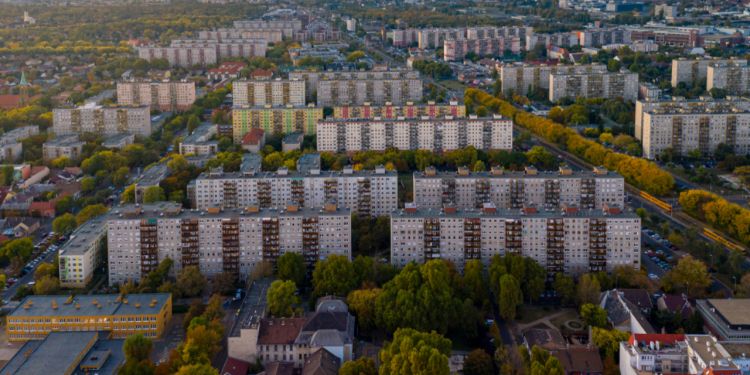
Buying property in Budapest
Buying a house or a flat can be a good option if you are planning a long-term stay in Budapest. ...
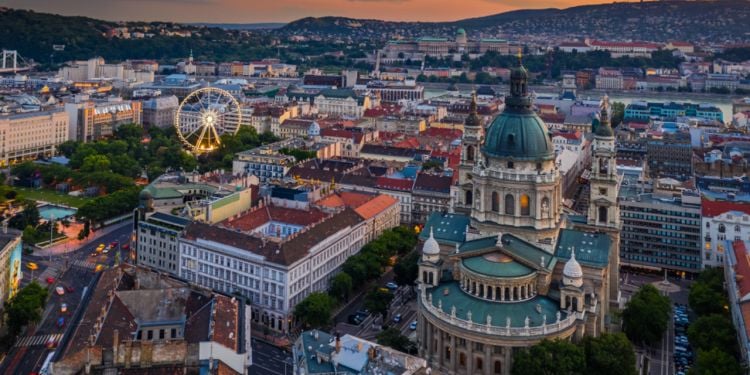
Popular neighbourhoods in Budapest
Choosing the best place to live in Budapest might not be an easy task as it will depend on the ...
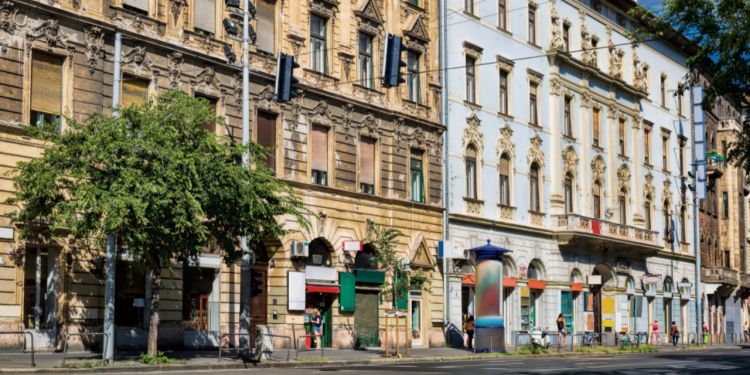
Accommodation in Budapest
Finding accommodation will be one of your priorities, whether you are moving to Budapest alone or ...
Leisure, Culture, and Things to Do
Budapest offers an extraordinary range of cultural, recreational, and social activities that make it one of Europe's most enjoyable cities to live in. From world-famous thermal baths to a legendary nightlife scene, there is always something to explore regardless of your interests or budget.
Thermal Baths
Known as the City of Spas, Budapest sits atop thermal springs that have attracted bathers since Roman times. The Széchenyi Thermal Bath in City Park is Europe's largest public spa complex, with 18 pools ranging from cold plunges to hot thermal waters, housed in a stunning Neo-Baroque building. Entry costs approximately USD 30 on weekdays. The Rudas Bath, dating from the 16th-century Ottoman era, features an atmospheric octagonal pool beneath a centuries-old dome and offers rooftop pools with panoramic Danube views. Note that Gellért Bath is closed for renovation until 2028.
Culture and Nightlife
The city's cultural scene includes world-class venues like the Hungarian State Opera House, the Palace of Arts (MÜPA), and numerous museums including the Hungarian National Gallery and the House of Terror. Museum entry typically costs USD 5-15. Budapest's ruin bars are legendary—Szimpla Kert pioneered the concept of converting abandoned buildings into eclectic watering holes. On Saturdays, the Sparty pool parties at Széchenyi attract thousands of revelers.
Parks and Outdoor Activities
Margaret Island offers a peaceful green escape in the middle of the Danube with running tracks, gardens, and thermal pools. City Park (Városliget) houses the zoo, museums, and the recently opened House of Hungarian Music. The Buda Hills provide hiking trails and scenic views accessible via the charming Children's Railway and Zugliget Chairlift.
Sources: Széchenyi Bath, Time Out Budapest

Eating out in Budapest
Hungarian people love food and eating; it's one of the main conversation topics wherever you ...

Sports in Budapest
Sports are a great way not only to stay fit but also to keep yourself busy during your stay in ...
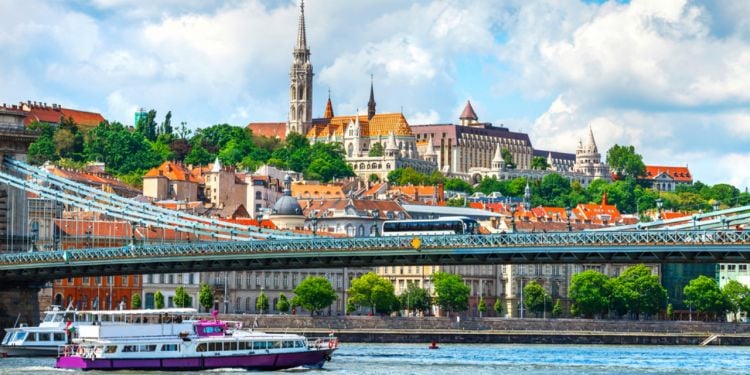
Things to see and to do in Budapest
Budapest offers a fascinating range of cultural and leisure activities for locals and expats alike, ...
Daily Life in Budapest
Daily life in Budapest blends Central European efficiency with a relaxed pace that makes the city highly livable for newcomers. From excellent public transportation to a strong café culture and accessible services, settling into a routine is straightforward once you understand how the city works.
Getting Around
Budapest's public transport system, operated by BKK, is one of the most efficient and affordable in Europe. The network includes four metro lines, extensive tram routes (including the iconic lines 4 and 6 running 24/7 along the Grand Boulevard), buses, trolleybuses, and suburban railways (HÉV). A monthly pass costs HUF 8,950 (approximately USD 22), providing unlimited travel on all services within the city. Single tickets cost HUF 450 (USD 1.20). The BudapestGO app offers route planning, real-time updates, and mobile ticket purchasing. EU citizens aged 65 and over travel free with valid ID.
Lifestyle and Practical Matters
Grocery shopping is convenient with supermarket chains like Tesco, Lidl, Aldi, and Spar found throughout the city. The Central Market Hall (Nagycsarnok) offers fresh produce, local specialties, and a taste of Hungarian food culture. Weekly grocery costs for one person average HUF 20,000-30,000 (USD 55-80).
Hungary uses the Hungarian forint (HUF), though some international businesses and landlords quote prices in euros. Banking services are readily available, with major international and local banks offering English-language support. Mobile services from Vodafone, Telekom, and Yettel start from around EUR 3-13 monthly for prepaid SIM cards. Internet services are fast (average 178 Mbps) and affordable at approximately EUR 20 per month.
Sources: BKK Budapest, Daily News Hungary
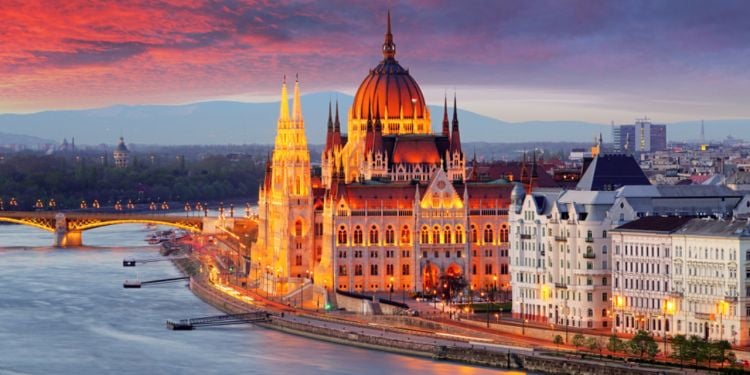
Discovering Budapest
When most people hear about Hungary, they immediately think of the Parliament building, Buda with ...
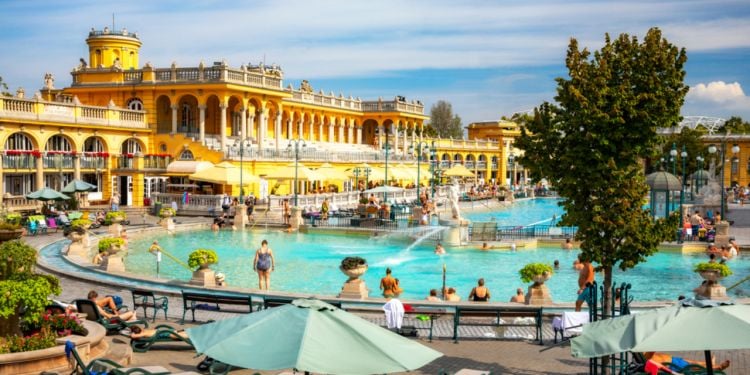
Adjusting to the culture in Budapest
Moving to Budapest for the first time can give you a cultural shock, especially if you are coming ...

Developing your social circle in Budapest
To settle down in a new place is never easy, especially when talking about moving to a new country. ...
Cost of Living in Budapest
Budapest remains one of Europe's most affordable capitals, though prices have risen notably in recent years. The cost of living is approximately 40% lower than in the United States and significantly below Western European cities. Understanding typical monthly expenses will help you plan your budget effectively before relocating.
Monthly Budget for a Single Person
A single person can live comfortably in Budapest on approximately USD 1,300-1,500 per month, including rent. Those with more modest budgets can manage on less by choosing outer districts and cooking at home regularly.
Rent (1-bedroom, city center) | USD 680-950 |
Utilities (electricity, gas, water, internet) | USD 100-150 |
Groceries | USD 220-320 |
Public transport (monthly pass) | USD 22 |
Dining out and entertainment | USD 150-250 |
Health insurance (private) | USD 50-100 |
Total estimated monthly cost | USD 1,220-1,790 |
Monthly Budget for a Family of Four
Families should expect higher costs, particularly for housing and schooling. A comfortable lifestyle for a family of four typically requires USD 3,500-4,500 per month, depending on schooling choices.
Rent (3-bedroom, city center) | USD 1,200-1,800 |
Utilities (electricity, gas, water, internet) | USD 180-250 |
Groceries | USD 600-800 |
Public transport (2 adult passes) | USD 44 |
International school fees (per child/month) | USD 900-1,900 |
Health insurance (family) | USD 150-300 |
Leisure and dining | USD 300-500 |
Total estimated monthly cost | USD 3,374-5,594 |
Sources: Numbeo, Imigrant Hungary
In Short
Budapest combines the grandeur of a historic European capital with the practicality and affordability that modern expats seek. Whether you're drawn by career opportunities in its growing economy, the quality of its universities, or simply the prospect of soaking in thermal waters after a day exploring Baroque palaces and ruin bars, the city delivers on its promises. The international community is welcoming, English is widely spoken in professional settings, and the infrastructure makes daily life smooth and enjoyable. With its central location, rich culture, and excellent value for money, Budapest remains one of Europe's most compelling destinations for those ready to start a new chapter abroad. Connect with fellow expats and get practical advice by joining the Budapest forum on Expat.com.
We do our best to provide accurate and up to date information. However, if you have noticed any inaccuracies in this content, please contact us.


News & testimonies

The best places to live in Budapest
Budapest is one of the most beautiful cities in Central-Eastern Europe and one regional student hub, with thousands of foreign students living in the city. If you intend to move to Hungary, here are some data on the real estate market and the Budapest main districts.
The Hungarian adventures of The Anderson Five
Matthew was pleased to discover (upon moving from the US to Hungary) that Budapest is incredibly child-friendly, as he and his wife moved from Bellingham, Washington to Budapest, Hungary with their three young boys. Here he tells https://www.expat.com about life in Hungary so far, and his favourite things about the country.

Unpacking my bottom drawer in Budapest
Born in Dublin, Ireland, when Tayto crisps were the only crisps worth eating, I've been flitting around the Northern Hemisphere for what seems like a lifetime.
Kevin in Hegymagas: "The lifestyle in Hungary is more temporally relaxed"
Kevin comes from the US. He moved to Hungary with his Swiss-Hungarian wife in 2007. Fond of vineyards, he has settled in the village of Hegymagas, near Lake Balaton. Kevin enjoys, above all, looking after their vineyard.
Essential services for your expat journey



