Living in Nice: the ultimate expat guide
Everything you need to know for a successful life in Nice.
Nice is the capital of the French Riviera and France's fifth-largest city, home to approximately 340,000 residents in the city proper and nearly 1 million in the greater metropolitan area. Located on the stunning Baie des Anges (Bay of Angels), Nice offers a unique blend of Mediterranean lifestyle, rich cultural heritage, and modern urban amenities. The city enjoys over 300 days of sunshine annually and a mild climate that has attracted visitors and residents for centuries.
Why Choose Nice?
Nice combines the charm of a historic coastal town with the infrastructure of a major European city. Its strategic position between the Alps and the Mediterranean Sea provides exceptional quality of life, with easy access to skiing, beaches, and neighboring destinations like Monaco and Italy.
5 Good Reasons to Move to Nice
- Exceptional climate – Mild winters averaging 12°C and warm summers around 28°C make Nice comfortable year-round.
- Strategic location – Just 30 minutes from Monaco, 20 km from the Italian border, and served by France's second-busiest airport.
- Thriving tech hub – Proximity to Sophia Antipolis, Europe's largest technology park with over 2,500 companies.
- Rich cultural scene – World-class museums including Matisse and Chagall, vibrant Old Town, and renowned gastronomy.
- Quality healthcare – Access to France's top-ranked universal healthcare system.
Working in Nice
The Nice metropolitan area offers diverse employment opportunities across several key sectors. While the Provence-Alpes-Côte d'Azur region has an unemployment rate of approximately 7.7% (Q4 2024), Nice benefits from a dynamic economy driven by tourism, technology, and services. Non-EU citizens require a work permit, which must be sponsored by a French employer before arrival.
Key Industries and Employers
Tourism and hospitality remain major employers, but the region's economic backbone increasingly includes information technology, biotechnology, cybersecurity, and artificial intelligence. The nearby Sophia Antipolis technology park—Europe's largest—hosts over 2,650 companies and employs approximately 44,500 people. Major employers include Amadeus, Thales, Orange, Cisco, and numerous startups.
Employment Data Overview
The following table provides key employment indicators for the Nice metropolitan area and surrounding region:
Regional unemployment rate | 7.7% (PACA region, Q4 2024) |
Average gross monthly salary (France) | €3,620 |
Minimum wage (SMIC) | €1,766.92/month (2024) |
Main sectors | Tourism, IT, Healthcare, Research |
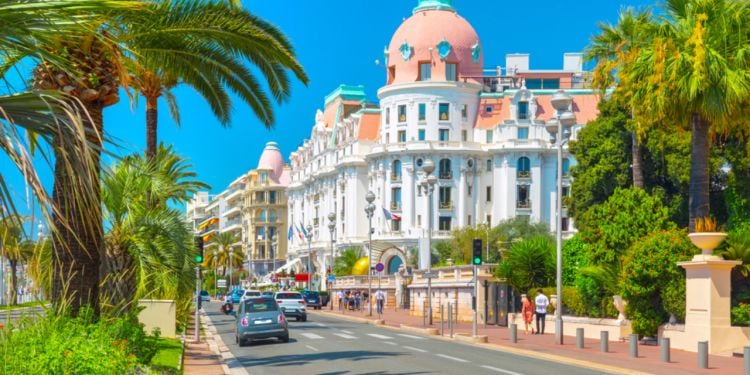
Working in Nice
Situated on the southeastern coast of France, in the Provence-Alpes-Côte d'Azur region, Nice has attracted both local and international ...
Higher Education & Universities
Nice is a significant academic center, hosting Université Côte d'Azur, which enrolls over 30,000 students annually and ranks among France's top research-intensive universities. The institution was awarded the prestigious IDEX (Excellence Initiative) label by the French government, placing it among the country's elite universities.
Main Institutions
The flagship Université Côte d'Azur (formerly Université Nice Sophia Antipolis) offers programs across sciences, engineering, humanities, law, medicine, and economics. The university operates multiple campuses in Nice, Sophia Antipolis, and Cannes. It offers 11 international Master of Science programs taught entirely in English, covering fields such as data science, artificial intelligence, and digital systems.
Tuition Fees and Admission
Public university tuition in France remains highly affordable. EU students pay approximately €170/year for undergraduate programs and €243/year for master's degrees. Non-EU students pay differentiated fees of around €2,770/year for undergraduate and €3,770/year for master's programs, though many scholarships and exemptions exist. Admission typically requires applications through Campus France for international students, with deadlines between January and April for fall intake.
Sources: Université Côte d'Azur, Campus France
Retirement in Nice
Nice has attracted retirees for over a century, from Queen Victoria to modern-day expatriates seeking Mediterranean sunshine and French quality of life. The city offers excellent healthcare, mild climate, and cultural richness that make it an ideal retirement destination.
Visa Requirements for Retirees
France does not offer a specific retirement visa, but non-EU retirees typically apply for the Long-Stay Visitor Visa (VLS-TS Visiteur). This visa allows residence for up to one year without working and can be renewed indefinitely. Applicants must demonstrate sufficient income—typically at least equivalent to France's minimum wage (€1,766.92/month as of 2024)—through pensions, investments, or savings. After five years of continuous residence, retirees may apply for a 10-year residence card.
Healthcare for Retirees
After three months of legal residence, retirees can apply for Protection Universelle Maladie (PUMA), France's universal healthcare system. Coverage reimburses approximately 70–80% of most medical costs. Most retirees supplement this with private mutuelle insurance costing €50–€150/month depending on age and coverage. France's healthcare system consistently ranks among the world's best, with excellent hospitals and specialists in Nice.
Sources: France Visas, Assurance Maladie
Schooling for Children
Nice and the French Riviera offer excellent educational options for expatriate families, including French public schools, bilingual programs, and internationally accredited institutions. The French education system is highly regarded, and international schools in the region follow British, American, or International Baccalaureate (IB) curricula.
International Schools
The International School of Nice (ISN) is the region's leading English-language institution, welcoming students from preschool through Grade 12. Accredited by both American (MSA) and European (CIS) standards, ISN offers the IB Primary Years Programme and IB Diploma, with over 65 nationalities represented. Nearby, Mougins British International School follows the British curriculum and achieves a 100% A-level pass rate.
Fees and Enrollment
The following table outlines typical annual tuition fees at international schools in the Nice area:
International School of Nice (Primary) | €11,400–€17,000/year |
International School of Nice (High School) | €20,000–€23,700/year |
Mougins British International School | €10,000–€20,000/year |
French public schools | Free |
Enrollment at international schools typically requires early application, transcripts, and sometimes language assessments. French public schools are free and welcome foreign children, though instruction is entirely in French.
Sources: International School of Nice, Mougins School
Housing & Neighbourhoods
Finding accommodation in Nice requires understanding the city's diverse neighborhoods and competitive rental market. Rental prices have increased in recent years due to high demand, though they remain lower than Paris. Most rentals require a dossier (application file) including proof of income, employment contract, and guarantor.
Popular Neighborhoods for Expats
Vieux Nice (Old Town) offers charm and character with narrow streets, local markets, and vibrant nightlife—ideal for those seeking authentic atmosphere. Cimiez is an upscale, quiet residential area favored by families, featuring Belle Époque architecture, parks, and prestigious museums. The Port area has become trendy, with colorful facades, antique shops, and waterfront dining. The Musicians' Quarter (Quartier des Musiciens) offers beautiful 19th-century buildings and a central location near the train station.
Rental Prices
The following table shows average monthly rents in Nice:
1-bedroom apartment (city center) | €700–€900/month |
1-bedroom apartment (outside center) | €550–€700/month |
3-bedroom apartment (city center) | €1,500–€2,100/month |
3-bedroom apartment (outside center) | €1,000–€1,400/month |
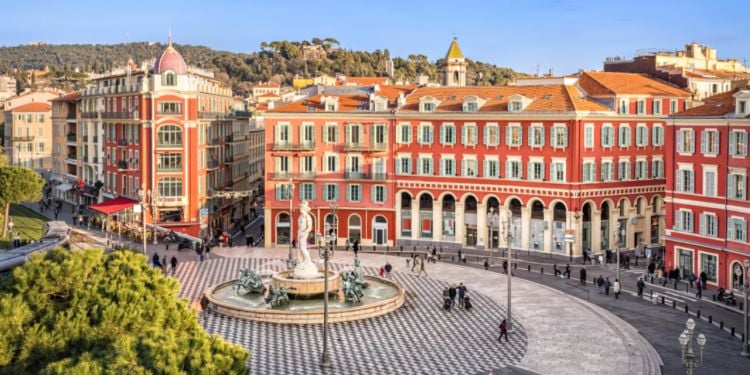
Accommodation in Nice
Nice is a popular city in southeast France near Italy, known for being a great summer vacation spot. With 340,000 people, Nice is a perfect ...
Leisure, Culture & Things To Do
Nice offers exceptional cultural and recreational opportunities, from world-class museums to Mediterranean beaches and mountain adventures just an hour away. The city's artistic heritage—home to Matisse and Chagall—combined with its natural beauty creates endless possibilities for leisure.
Museums and Cultural Sites
The Musée Matisse in Cimiez showcases the evolution of Henri Matisse's work in a stunning 17th-century villa. The Musée National Marc Chagall houses the world's largest public collection of Chagall's work. The MAMAC (Museum of Modern and Contemporary Art) features works by Yves Klein and other modern masters, plus panoramic rooftop views. Vieux Nice (Old Town) offers baroque architecture, the beautiful Cathédrale Sainte-Réparate, and the historic Palais Lascaris.
Outdoor Activities and Events
The iconic Promenade des Anglais stretches 7 km along the Bay of Angels, perfect for walking, cycling, or rollerblading. Castle Hill (Colline du Château) provides stunning panoramic views and waterfall gardens. Beach clubs and public beaches line the coast. The Nice Carnival (February) is one of the world's largest, while the Nice Jazz Festival (July) attracts international performers. Day trips to Monaco, Èze, Saint-Paul-de-Vence, and alpine ski resorts are easily accessible.
Sources: Nice Tourism Office
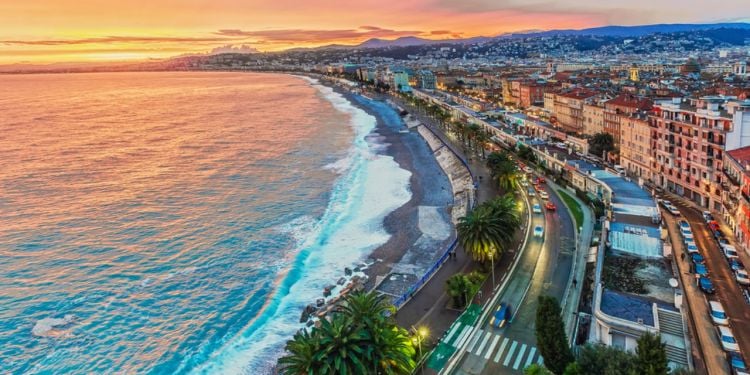
Things to see and to do in Nice
The jewel of the Côte d'Azur and a historic vacation destination for three centuries, Nice features an idyllic coastal location, a ...
Daily Life
Daily life in Nice blends Mediterranean relaxation with French urban convenience. The city offers excellent public transportation, vibrant markets, and a café culture that encourages leisurely living. Most shops close on Sundays, and the traditional long lunch break remains common in smaller businesses.
Getting Around
Nice's public transport network, Lignes d'Azur, includes 3 tram lines and an extensive bus network covering the metropolitan area. A single ticket costs €1.50 and allows transfers within 74 minutes. The Multi 10 pass offers 10 trips for €10, while monthly subscriptions range from €25–€45 depending on eligibility. The tram connects the airport to the city center in approximately 30 minutes. Regional trains link Nice to Monaco (20 minutes), Cannes (30 minutes), and other Riviera destinations.
Lifestyle and Culture
The Cours Saleya flower and food market operates daily (except Mondays) and is central to local life. Nice enjoys a strong café culture, with apéritif hour (apéro) being a beloved tradition. The pebble beaches along the Promenade des Anglais fill with locals and visitors year-round. Healthcare is accessed through the French system (Assurance Maladie), which covers approximately 70% of costs, with most residents supplementing coverage through a private mutuelle.
Sources: Lignes d'Azur, Ville de Nice
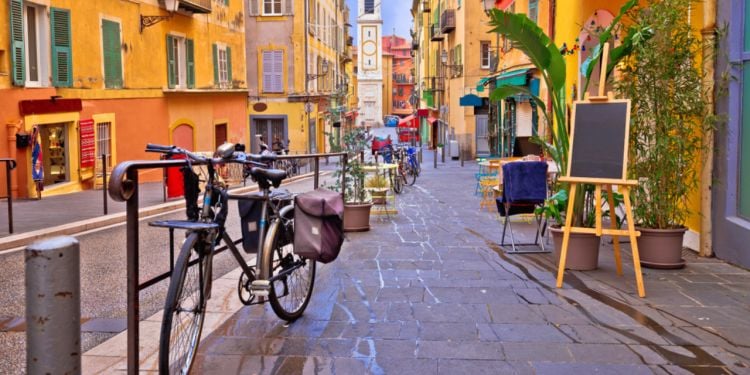
Getting around Nice
As an expatriate in Nice, you'll find it easy to navigate the city daily, thanks to its well-established transport network managed by Lignes ...
Cost of Living
Nice offers a lower cost of living than Paris—approximately 15–20% less—while maintaining excellent quality of life. Housing represents the largest expense, followed by food and transportation. The city is more affordable than many comparable Mediterranean destinations.
Monthly Budget: Single Person
The following table estimates monthly expenses for a single person living in Nice:
Expense | Monthly Cost (€) |
Rent (1-bedroom, center) | €750–€900 |
Utilities | €100–€150 |
Groceries | €300–€400 |
Transport (monthly pass) | €25–€45 |
Health insurance (mutuelle) | €50–€100 |
Total (excluding rent) | €475–€695 |
Monthly Budget: Family of Four
The following table estimates monthly expenses for a family of four in Nice:
Expense | Monthly Cost (€) |
Rent (3-bedroom, center) | €1,500–€2,100 |
Utilities | €180–€250 |
Groceries | €700–€900 |
Transport | €50–€90 |
International school (2 children) | €2,000–€3,500 |
Health insurance (family) | €150–€300 |
Total (excluding rent) | €3,080–€5,040 |
Sources: Numbeo
In short
Nice offers an exceptional quality of life that combines Mediterranean climate, rich culture, and modern infrastructure. Whether you're drawn by career opportunities in Sophia Antipolis's tech hub, seeking excellent education for your family, or planning a fulfilling retirement, Nice delivers on its promises. The city's international community, world-class healthcare, and beautiful surroundings make integration easier than many other French cities. From the colorful streets of Vieux Nice to the elegant promenades along the sea, this is a city that rewards exploration and invites you to embrace the art de vivre.
Ready to start your Nice adventure? Join the Expat.com Nice forum to connect with fellow expatriates, ask questions, and share experiences with our welcoming community!
We do our best to provide accurate and up to date information. However, if you have noticed any inaccuracies in this content, please contact us.


Essential services for your expat journey