Living in Lille: the ultimate expat guide
Everything you need to know for a successful life in Lille.
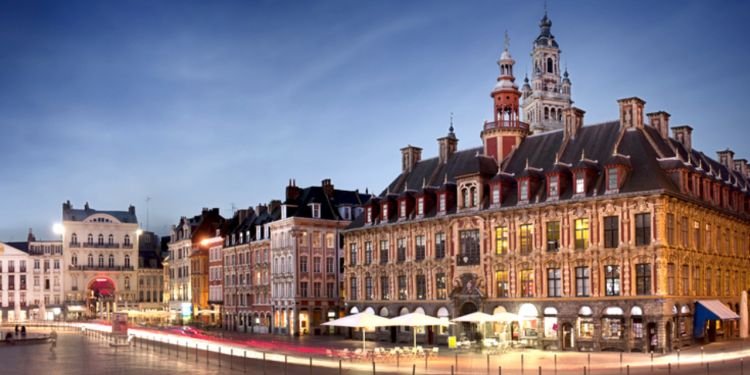
Lille is a dynamic city in northern France, serving as the capital of the Hauts-de-France region. With a population of approximately 230,000 in the city proper and over 1.1 million in the metropolitan area, Lille ranks as France's fourth-largest urban conglomeration. Located just 1 hour 20 minutes from London by Eurostar, 1 hour from Paris by TGV, and 35 minutes from Brussels, Lille occupies a strategic position at the crossroads of Europe. The city seamlessly blends French sophistication with Flemish heritage, offering a rich cultural tapestry, excellent gastronomy, and a youthful energy driven by its large student population.
5 Good Reasons to Move to Lille
- Strategic European location – Direct Eurostar connections to London, Paris, and Brussels make Lille ideal for international professionals and frequent travelers.
- Affordable cost of living – Rent and daily expenses are significantly lower than Paris while maintaining excellent quality of life.
- Thriving job market – Home to major retail headquarters (Auchan, Decathlon, Leroy Merlin), a growing tech sector at Euratechnologies, and Europe's largest university-hospital complex at Eurasanté.
- Rich cultural scene – Named European Capital of Culture in 2004, with world-class museums, annual festivals, and a celebrated gastronomy.
- Young and welcoming atmosphere – Over 100,000 students and a population where more than 27% are under 25 create a vibrant, open-minded community.
Finding Work in Lille: Industries, Salaries and Opportunities
Lille has successfully transitioned from its industrial past in textiles and mining to become a modern service-based economy. The city now serves as a major retail and finance center, hosting the headquarters of several major French companies. For expats seeking employment, understanding the local job market and visa requirements is essential for a successful relocation.
Key Employment Sectors
The service sector dominates Lille's economy, accounting for approximately 91% of employment. Key industries include retail (Lille is the birthplace of Auchan, Decathlon, Leroy Merlin, and Castorama), insurance (France's second-largest insurance center with six head offices), digital technology (Euratechnologies hosts over 300 startups), and healthcare and biotechnology (Eurasanté is Europe's largest university-hospital complex). The logistics sector also thrives due to Lille's strategic location.
Work Permits and Visas
EU/EEA citizens can work freely in France without a visa. Non-EU nationals typically require a long-stay visa (visa de long séjour) and a work permit (autorisation de travail). The most common routes include employer-sponsored visas, the Talent Passport for highly skilled workers, and intra-company transfers. Processing times vary from 2 to 4 months. After arrival, all foreign nationals must register with the local prefecture within the first few months.
Employment Overview
Regional unemployment rate (Hauts-de-France) | 8.7% |
Average annual salary in Lille | €43,000 |
Average monthly net salary | €2,640 |
National minimum wage (SMIC) | €1,767/month gross |
Sources: INSEE, Numbeo 2025, EURES
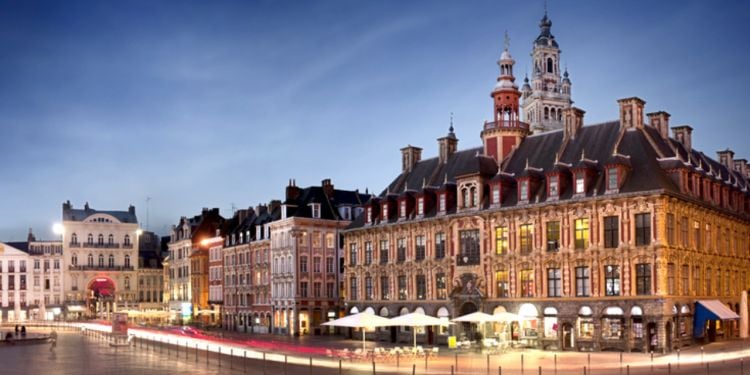
Working in Lille
Lille, the capital of French Flanders in the Hauts-de-France region of northern France, has a rich history rooted in manufacturing and textiles. As a ...
Higher Education: Studying at Lille's Top Universities
Lille is France's third-largest university city, home to over 100,000 students from around the world. The city offers excellent higher education opportunities across a wide range of disciplines, from sciences and engineering to arts and business. International students benefit from a welcoming environment, affordable tuition fees, and a vibrant student community.
University of Lille
The University of Lille (Université de Lille) is the main public university, formed from the merger of three institutions in 2018. It hosts over 67,000 students and is ranked among the top 700 universities globally (QS World Rankings 2026: #654). The university offers programs in sciences, humanities, law, health, and technology. Tuition fees for public universities in France are highly affordable: approximately €170/year for Bachelor's programs and €243/year for Master's programs for EU students. Non-EU students may pay differentiated fees of €2,770–€3,770/year, though many exemptions exist. A minimum B2 level in French is typically required for French-taught programs.
Grandes Écoles and Specialized Institutions
Lille hosts several prestigious grandes écoles and specialized schools. EDHEC Business School is one of France's top business schools with strong international programs. Sciences Po Lille offers political science and international relations programs. Centrale Lille and École des Mines are leading engineering schools. The Catholic University of Lille is the largest private university in France, offering programs across multiple disciplines. Many of these institutions offer English-taught Master's programs, with tuition ranging from €7,000 to €15,000/year.
Admission and Student Life
International students from outside the EU typically apply through Campus France and the online platform Études en France. Applications generally open in November for the following academic year, with deadlines in January–March. Students must also pay the CVEC (Contribution Vie Étudiante et de Campus) of €103/year. Student housing through CROUS costs approximately €200–€400/month, while private rentals average €400–€600/month.
Sources: University of Lille, Campus France
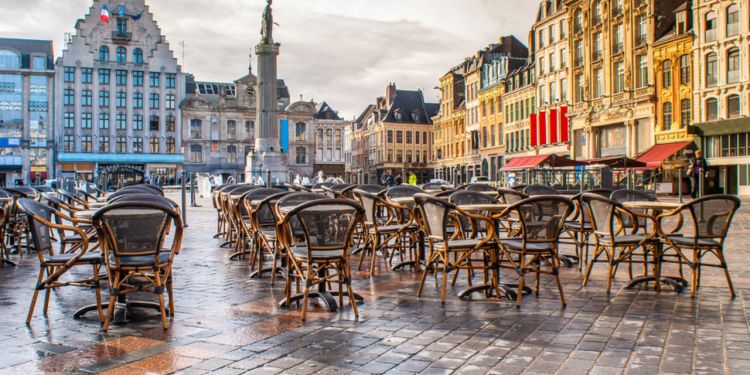
Study in Lille
Located at the heart of Europe, Lille is vibrant and picturesque, known for its splendid architecture. The city is home to three public universities, ...
Schools for Expat Children: International and Bilingual Options
Families relocating to Lille will find several schooling options, from the French public system to international and bilingual schools. While the selection is smaller than in Paris, quality institutions exist to meet the needs of expat families seeking continuity in their children's education.
French Public Schools
France's public education system is free and compulsory from ages 3 to 16. Children attend école maternelle (ages 3–6), école primaire (ages 6–11), collège (ages 11–15), and lycée (ages 15–18). The curriculum follows the French national program, with instruction entirely in French. Public schools offer an excellent option for families planning a long-term stay, as children typically become fluent within 6–12 months. Enrollment is done through the local mairie (town hall) based on your residential address.
International and Bilingual Schools
École Jeannine Manuel Lille is the premier international school in the region, located in Marcq-en-Barœul. This bilingual French-English school welcomes students from nursery through high school (ages 3–18) and offers both the French Baccalaureate (with international option) and the International Baccalaureate Diploma. The school hosts over 1,000 students from 37 nationalities and provides boarding facilities. Annual tuition ranges from €4,530 for day students (French track) to €8,535–€14,890 for IB programs, with boarding adding €12,865–€19,735/year. The school is accredited by the French Ministry of Education, IBO, CIS, and NEASC.
Other Options
Lille Métropole International School in Villeneuve d'Ascq offers bilingual education following the French national curriculum with an international approach. The Section Internationale at public lycées provides enhanced English instruction for older students. Private Catholic schools under contract (sous contrat) offer an alternative with lower fees (around €1,500–€3,000/year) while following the French curriculum.
Sources: École Jeannine Manuel, French Ministry of Education
Housing in Lille: Neighborhoods, Rent and Finding an Apartment
Lille offers a diverse housing market with options ranging from historic Flemish townhouses to modern apartments. Rental prices are considerably lower than Paris, making the city attractive for expats seeking good value. Understanding the different neighborhoods and rental procedures will help you find the right home.
Popular Neighborhoods for Expats
Vieux-Lille (Old Lille) is the historic heart of the city, featuring cobblestone streets, Flemish architecture, boutique shops, and upscale restaurants. Rent is higher here but offers charm and convenience. Vauban is the main student quarter near universities, offering green spaces and a relaxed atmosphere. Wazemmes is a multicultural neighborhood known for its famous market, alternative cultural scene, and affordable rents (often called the Brooklyn of Lille). Centre provides easy access to transport, shops, and cultural venues. For families, Lambersart and Marcq-en-Barœul offer quieter residential areas with good schools nearby.
Rental Prices
The average rental price in Lille is approximately €16/m². Furnished apartments typically cost more than unfurnished options. Finding accommodation can be competitive, with approximately 2 applicants per available property.
1-bedroom apartment (city center) | €550–€900/month |
1-bedroom apartment (outside center) | €500–€700/month |
3-bedroom apartment (city center) | €1,200–€2,000/month |
3-bedroom apartment (outside center) | €950–€1,500/month |
Sources: Numbeo 2025
Renting Process
To rent in France, you typically need to provide: proof of income (pay slips or employment contract showing income 3x the rent), ID/passport, proof of address, and a French bank account. A guarantor (garant) earning 3–4x the rent is often required. Newcomers without a French guarantor can use services like Visale (free government guarantee for eligible tenants) or paid guarantee services. Expect to pay a security deposit of 1–2 months' rent plus the first month upfront.
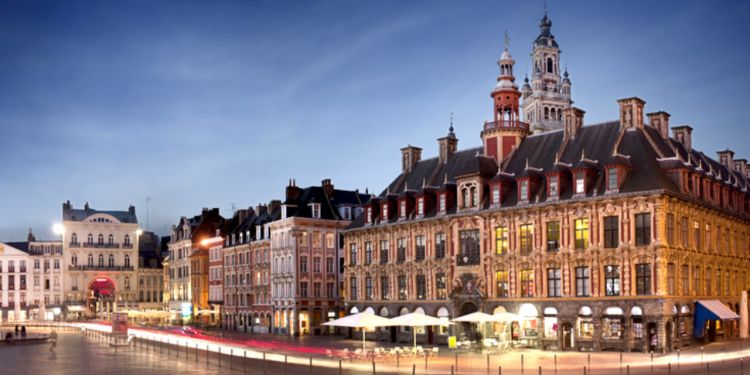
Accommodation in Lille
Lille is located in the Hauts-de-France region of northern France, right near the border with Belgium. The area has great connections to the rest of ...
Leisure, Culture and Things to Do in Lille
Named European Capital of Culture in 2004, Lille boasts an impressive cultural scene that punches well above its weight. From world-class museums to vibrant nightlife, the city offers diverse entertainment options for residents and visitors alike.
Museums and Cultural Venues
The Palais des Beaux-Arts is France's second-largest fine arts museum after the Louvre, housing masterpieces by Rubens, Van Dyck, Goya, Delacroix, and Monet. Admission costs approximately €7–€10. The LaM (Lille Métropole Museum of Modern Art) in Villeneuve d'Ascq features works by Picasso, Modigliani, and contemporary artists. La Piscine in nearby Roubaix is an art museum housed in a stunning Art Deco swimming pool. The Maisons Folie network offers cultural spaces for exhibitions, concerts, and community events. The Opéra de Lille and Théâtre du Nord provide excellent performing arts programming.
Festivals and Events
The Braderie de Lille (first weekend of September) is Europe's largest flea market, attracting over 2 million visitors annually. Lille3000 organizes major cultural events every few years, transforming the city with exhibitions, installations, and performances. Les Nuits Secrètes music festival and numerous Christmas markets in winter add to the festive calendar. The Séries Mania festival celebrates television series with premieres and industry events.
Parks, Sports and Nightlife
The Citadelle Park (Parc de la Citadelle) is Lille's largest green space, featuring a star-shaped 17th-century fortress designed by Vauban, a zoo, and extensive walking paths. Parc Matisse near Euralille offers a central relaxation spot. For sports enthusiasts, Stade Pierre-Mauroy hosts LOSC Lille football matches and major concerts. The Palais des Sports offers basketball and handball events. Nightlife centers on Vieux-Lille and the Masséna neighborhood, with pubs, wine bars, and clubs. The local beer culture is particularly strong, with traditional estaminets (taverns) serving regional brews.
Sources: Lille Tourism Office, Palais des Beaux-Arts
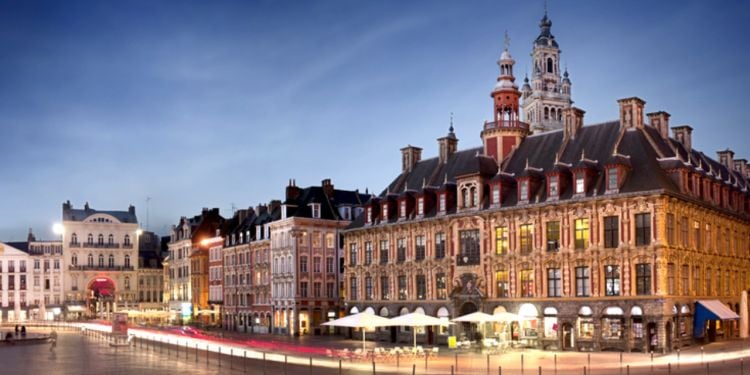
Things to see and to do in Lille
Lille is a multifaceted city buzzing with culture. For a long time, it was an industrial heavyweight, which contributed to the development of a rich ...
Daily Life in Lille: Transportation, Culture and Practicalities
Daily life in Lille combines French elegance with Flemish warmth. The city is compact and easy to navigate, with excellent public transportation and a walkable center. Understanding local customs and practical aspects will help you settle in smoothly.
Getting Around
Lille's public transport network is operated by Ilévia and includes 2 metro lines, 2 tramway lines, and an extensive bus network. The metro runs from approximately 5:00 AM to midnight (with extended hours on weekends). A single ticket costs €1.80–€2.00, while a monthly pass is €62. The V'Lille bike-sharing system provides 266 stations across the metropolitan area. For regional travel, Lille Flandres station connects to local TER trains, while Lille Europe station serves TGV and Eurostar services. Key travel times include: London (1h 20min), Paris (1h by TGV), Brussels (35min), and Amsterdam (2h 20min).
Healthcare
France has one of the world's best healthcare systems. As a resident, you'll register with the Assurance Maladie (national health insurance), which reimburses approximately 70% of medical costs. Most residents also take out complementary insurance (mutuelle) to cover the remainder. The CHU de Lille is one of France's largest university hospitals, with comprehensive services including emergency care. English-speaking doctors can be found through expat networks and online directories.
Lifestyle and Culture
Lille embraces a convivial lifestyle influenced by its Flemish heritage. The city is famous for its gastronomy, including local specialties like carbonnade flamande (Flemish beef stew), welsh (cheese toast), moules-frites, and excellent craft beers. Shopping is a highlight, with the Euralille shopping center and charming boutiques in Vieux-Lille. Markets are central to local life, with the Wazemmes market (Tuesday, Thursday, Sunday) being the largest. The climate is oceanic with mild winters (average 3–7°C) and pleasant summers (17–25°C), with frequent rainfall year-round.
Sources: Ilévia, Métropole Européenne de Lille
Getting around Lille
Situated in the heart of France's northeastern rail network, Lille is well-connected by rail to London, Brussels, and Amsterdam. It only takes ...
Cost of Living in Lille: Budget Planning for Expats
Lille offers an excellent quality of life at a significantly lower cost than Paris. Understanding typical expenses will help you plan your budget effectively. Prices are comparable to other major regional cities, with housing being the largest expense.
Monthly Budget for a Single Person
A single professional can live comfortably in Lille on a monthly budget of approximately €1,800–€2,500, depending on lifestyle and housing choices.
Expense | Monthly Cost |
Rent (1-bedroom, city center) | €700–€900 |
Utilities (electricity, heating, water) | €150–€210 |
Groceries | €250–€350 |
Public transport (monthly pass) | €62 |
Mobile phone plan | €8–€22 |
Internet (broadband) | €20–€40 |
Health insurance (mutuelle) | €30–€60 |
Leisure and dining out | €200–€400 |
Monthly Budget for a Family of Four
A family of four should budget approximately €4,000–€6,000/month, depending on schooling choices and lifestyle.
Expense | Monthly Cost |
Rent (3-bedroom, city center) | €1,200–€2,000 |
Utilities | €200–€280 |
Groceries | €600–€800 |
Public transport (family) | €120–€180 |
International school (2 children) | €750–€2,000 |
Health insurance (family) | €100–€200 |
Childcare/activities | €300–€500 |
Leisure and dining | €300–€500 |
Sources: Numbeo 2025
In Short
Lille offers an exceptional combination of European connectivity, affordable living, and rich cultural heritage that makes it an ideal destination for expats. Whether you're a professional seeking career opportunities in retail, tech, or healthcare, a student pursuing higher education, or a family looking for a welcoming community, Lille delivers on quality of life without the premium prices of larger capitals. The city's strategic location at the heart of northern Europe, just over an hour from London, Paris, and Brussels, opens up endless possibilities for work and leisure. With its youthful energy, Flemish-French charm, and warm local hospitality, Lille welcomes newcomers with open arms. Ready to start your expat journey in Lille? Connect with fellow expats and locals on the Expat.com Lille forum to ask questions, share experiences, and build your network in this dynamic northern French city.
We do our best to provide accurate and up to date information. However, if you have noticed any inaccuracies in this content, please contact us.


Essential services for your expat journey