Living in Namur: the ultimate expat guide
Everything you need to know for a successful life in Namur.
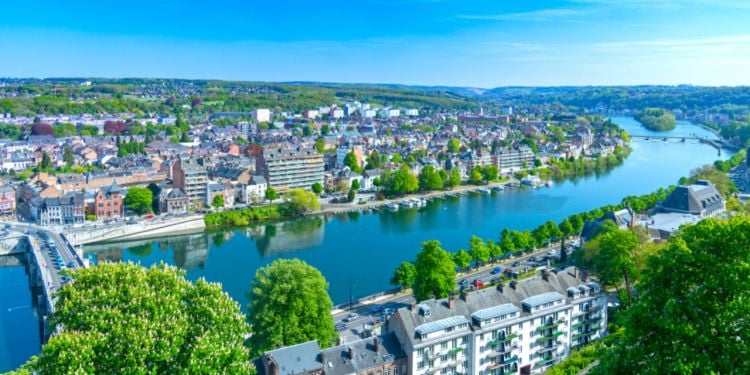
Namur sits at the confluence of the Sambre and Meuse rivers, serving as the capital of both Wallonia and Namur Province. This city of approximately 112,000 residents offers a compelling mix of medieval heritage, riverside charm, and modern convenience. As the seat of the Walloon Parliament and regional government, Namur provides stable employment opportunities while maintaining a relaxed pace of life that sets it apart from larger Belgian cities.
The city's strategic location places Brussels just 60 kilometers to the north, reachable in under an hour by train. Surrounded by the green valleys of the Ardennes, Namur attracts those seeking affordable living costs, strong public services, and easy access to nature without sacrificing urban amenities.
Five Good Reasons to Move to Namur
- Most affordable city in Belgium – Monthly living costs average around €1,226, significantly lower than Brussels or Antwerp.
- Excellent transport connections – Direct trains reach Brussels, Liège, and Luxembourg within an hour.
- Rich cultural heritage – The Citadel, baroque churches, and numerous museums offer year-round exploration.
- Quality higher education – The University of Namur attracts students and researchers from across Europe.
- Safe and walkable – Low crime rates and a compact city center make daily life pleasant and stress-free.
Finding Work in Namur
Namur's economy centers on public administration, healthcare, education, and services. As Wallonia's administrative capital, the city hosts numerous government offices, creating steady demand for professionals in policy, administration, and support roles. The University of Namur and the CHU de Namur hospital are major employers in education and healthcare respectively.
Employment Landscape
The Walloon Region recorded an unemployment rate of 7.8% in 2025, higher than the national average of 5.9%. Within Namur city, unemployment stands at approximately 14%, typical for regional capitals. However, skilled professionals in healthcare, IT, engineering, and public service face strong demand. Six sectors account for three out of four salaried jobs in Wallonia: health and social work, education, trade, public administration, industry, and administrative services.
Work Permits for Non-EU Citizens
Non-European nationals must obtain a Single Permit to work in Belgium for more than 90 days. Your employer initiates this application through the competent region (Wallonia for jobs based in Namur). The Single Permit combines work authorization and residence rights into one document. Highly-skilled workers must earn a minimum gross annual salary of €47,174 in the Walloon Region. Processing typically takes 3-4 months, though timelines vary.
Unemployment rate (Wallonia, 2025) | 7.8% |
Average gross monthly salary (Belgium) | €4,076 |
Median gross monthly salary (Wallonia) | €3,100 |
Key sectors | Public administration, healthcare, education, services |

Find a job in Namur
Located in the heart of Wallonia, Namur combines quality of life with professional opportunities. This dynamic regional capital is increasingly ...
Studying at the University of Namur
The University of Namur (UNamur) stands as the city's primary institution of higher education. Founded in 1831 by the Jesuits, this university combines traditional academic values with modern research excellence. Its central campus location allows students to walk between lectures and the riverside cafés of the old town.
Academic Programs and Faculties
UNamur welcomes approximately 7,500 students and 300 doctoral researchers annually across six faculties: Arts, Law, Economics, Social Sciences and Business Administration, Computer Science, Medicine, and Sciences. The university offers over 70 bachelor's and master's programs, with particular strengths in nanotechnology, biotechnology, information systems, and legal studies related to technology.
Most programs are taught in French, though some master's courses offer English instruction. International students typically need IELTS or TOEFL scores for English-taught programs, while French-taught programs require proof of French proficiency at B2 level or higher.
Tuition Fees and Student Life
Annual registration fees for EU and non-EU students range from approximately €835 to €944, making Belgian universities among the most affordable in Western Europe. Students should budget around €400 per month for living expenses beyond accommodation. The university operates student residences with monthly rents starting at €330 (all charges included), while private student housing in the city averages €400 per month.
UNamur provides extensive student services including a sports hall, radio station, choir, and numerous "kots à projets" – themed student houses organized around shared interests or social causes.
Sources: University of Namur, QS Top Universities
Schools and Education for Children
Belgium's education system is managed at the community level, with French-speaking Wallonia following the Fédération Wallonie-Bruxelles curriculum. Compulsory education runs from age 5 to 18, divided into primary (6-12 years) and secondary (12-18 years) stages. Public schools are free for residents and deliver high-quality instruction, which explains why only a small percentage of Belgian families opt for private education.
Local Schools in Namur
The city offers numerous French-speaking public and Catholic schools at all levels. Popular secondary schools include Athénée Royal de Namur and Collège Notre-Dame de la Paix. The bilingual Athénée Royal François Bovesse provides instruction in both French and Dutch, useful for families planning to work across language regions.
Enrollment requires registration with your local commune within 60 days of arrival. School zones do not restrict choices, so families can select any public school in the city. The academic year runs from September to June.
International School Options
Namur hosts the International School of Namur, which offers an international curriculum suitable for expatriate families. However, the range of international schools in Namur is limited compared to Brussels. Many expat families working in Namur commute their children to schools in Brussels, where options include the International School of Brussels (annual fees from €24,590), British School of Brussels, and various European Schools.
International school tuition in Belgium typically ranges from €6,000 to €35,000 annually, varying by grade level and institution. Some employers include education allowances in expatriate packages.
Sources: Expatica, International Schools Database
Housing and Neighborhoods in Namur
Finding accommodation in Namur proves more straightforward than in Brussels or Antwerp, with reasonable rents and good availability outside the student rush periods of August-September. The city comprises 25 districts, each offering distinct character and housing options. Most rental properties come unfurnished, requiring tenants to supply their own furniture, light fixtures, and curtains.
Popular Areas for Expats
The city center offers walkable streets, historic architecture, and proximity to shops and restaurants. Jambes, across the Meuse River, provides quieter residential streets with easy access to the center via bridges. Wépion, known for its strawberry cultivation, appeals to families seeking suburban calm with river views. Saint-Servais and Salzinnes offer affordable options near the university and hospital.
Renting requires a deposit of up to three months' rent. Tenants must register their address at the local commune within eight days of moving in. An inventory of fixtures (état des lieux) is mandatory at the start and end of each tenancy.
Rental Prices
The table below shows average monthly rents in Namur based on recent market data.
1-bedroom apartment (city center) | €767/month |
1-bedroom apartment (outside center) | €633/month |
3-bedroom apartment (city center) | €1,033/month |
3-bedroom apartment (outside center) | €850/month |
Sources: Numbeo 2025
How to find accommodation in Namur
Settling in Namur means choosing a human-sized city, pleasant to live in, and still affordable. Whether you are a student, an expatriate, or with ...
Culture, Leisure and Things to Do
Namur punches above its weight culturally, hosting major festivals, maintaining excellent museums, and offering easy access to the natural beauty of the Ardennes. The city comes alive during summer with outdoor concerts at the Citadel, while autumn brings the renowned International French-Language Film Festival (FIFF).
Museums and Heritage
The Citadel of Namur dominates the city skyline. This vast fortress traces 2,000 years of history, from Roman times through medieval sieges to its role as a royal retreat under Leopold II. Visitors can explore underground passages on guided tours, ride the cable car for panoramic views, and discover the Terra Nova interpretation center.
The Félicien Rops Museum showcases works by the provocative 19th-century Namur-born artist. The TreM.a – Museum of Ancient Arts displays medieval Mosan art, goldsmithing, and religious artifacts. Belgium's first Computer Museum traces the evolution from early calculators to smartphones.
Festivals and Events
Key annual events include:
- Namur en Mai – Street arts festival transforming the city into an open-air stage
- Les Solidarités – Summer music festival at the Citadel featuring pop, rock, and world music
- KIKK Festival – Digital art and technology conference attracting international creatives
- Fêtes de Wallonie – September celebration of regional identity with parades and concerts
- Combat de l'Échasse d'Or – Folklore event featuring stilt-walking battles
Outdoor Activities
The Meuse and Sambre rivers offer boat cruises, kayaking, and riverside cycling paths. The surrounding Ardennes provide hiking trails, castle visits, and cave explorations at sites like Parc Furfooz. The city maintains several parks including Parc Louise-Marie and the Reine Fabiola Attraction Park for families.
Sources: Visit Namur, Visit Wallonia
Daily Life in Namur
Life in Namur moves at a gentler pace than in Belgium's larger cities. Locals embrace a relaxed attitude – embodied by the cartoon characters Françwès and Djoseph, who represent the laid-back spirit of Namur's residents. The compact city center makes walking and cycling practical for daily errands, while efficient public transport connects outlying neighborhoods.
Getting Around
TEC operates the bus network throughout Namur and the wider Walloon region. A single journey ticket costs €2.60 when purchased from the driver (€2.00 in advance). Monthly passes cost approximately €59. The TEC app provides real-time schedules and digital ticketing.
Namur Station serves as a major rail hub on the north-south axis connecting Amsterdam, Brussels, and Luxembourg, as well as the east-west "Dorsale Wallonne" linking Paris, Charleroi, and Liège. Trains to Brussels depart frequently and take about 55 minutes. The city also operates La Namourette, a river shuttle connecting Jambes to Salzinnes via the center.
Shopping and Services
Supermarkets including Carrefour, Delhaize, Colruyt, and discount chains Aldi and Lidl serve daily grocery needs. Most shops open from 8:00 to 20:00 and close on Sundays. The pedestrianized old town hosts boutiques, bakeries, and weekly markets. Place d'Armes and the surrounding streets form the commercial heart of the city.
French is the working language in Namur. While many professionals speak English, learning French greatly improves daily interactions and social integration.
Sources: TEC, Ville de Namur
Cost of Living in Namur
Namur ranks as Belgium's most affordable city, with monthly costs averaging around €1,226 for a single person (excluding rent). This represents savings of approximately 40% compared to Brussels. Housing, groceries, and dining out all cost less than in the capital, while public services maintain the same high standards found throughout Belgium.
Monthly Budget: Single Person
The following estimates cover typical monthly expenses for a single professional living in Namur.
Rent (1-bedroom, city center) | €767 |
Utilities (electricity, heating, water) | €162 |
Groceries | €300 |
Public transport (monthly pass) | €59 |
Mobile phone plan | €18 |
Internet | €43 |
Leisure and dining out | €200 |
Total (estimated) | €1,549 |
Monthly Budget: Family of Four
Rent (3-bedroom, city center) | €1,033 |
Utilities | €250 |
Groceries | €700 |
Public transport (2 adults) | €118 |
Internet and mobile | €80 |
International school (annual, divided by 12) | €1,250 |
Leisure and dining out | €400 |
Total (estimated) | €3,831 |
Sources: Numbeo 2025, Relocate.me
In Short
Namur offers expatriates a rare combination: the administrative stability of a regional capital, living costs well below the Belgian average, and a quality of life shaped by riverside walks, historic architecture, and accessible green spaces. The city rewards those who appreciate a slower pace, strong community ties, and easy weekend escapes to the Ardennes.
Whether you're drawn by a job in public administration, university research, or simply the appeal of affordable European living, Namur welcomes newcomers with open arms and a laid-back charm. The challenge of learning French opens doors to genuine local integration, while the train connections keep Brussels and beyond within easy reach.
Ready to start your Namur adventure? Join the Expat.com Namur forum to connect with others who've made this city their home, ask questions, and share your experiences.
We do our best to provide accurate and up to date information. However, if you have noticed any inaccuracies in this content, please contact us.


Essential services for your expat journey