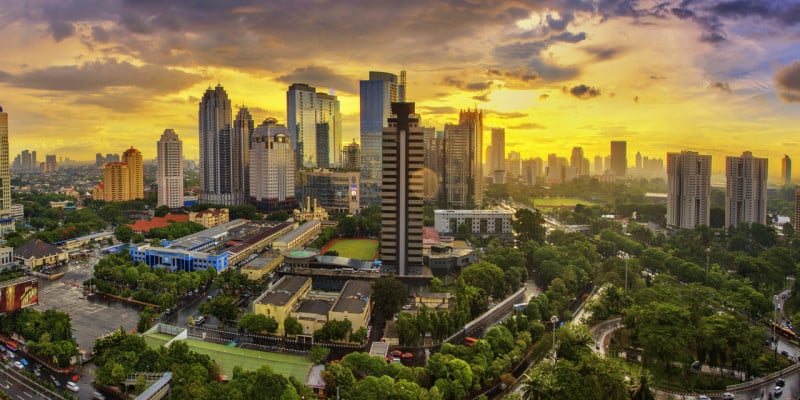
As Indonesia's major financial and commercial hub, the capital city has a wealth of professional opportunities for both locals and foreigners. Before you relocate to Jakarta, take the time to learn more about the sectors that hire, etiquette, CVs, work permits, etc.
If you have decided to work in Indonesia, you should understand that obtaining the necessary permissions is usually quite challenging. In fact, to obtain your work permit in Indonesia, you will have to undergo a whole series of procedures and paperwork. The reason for this is that the Indonesian government is extremely protective of local employees.
Consequently, it is mandatory for local companies to justify the recruitment of a foreigner, regardless of the context in which they were hired or the sector in which the company operates. As part of such justification, the company will also have to give a valid reason why an expatriate has been chosen rather than an Indonesian for the specific position. There are, however, some exceptions in certain sectors where foreign professional skills are in greater demand.
You can also decide to be your own boss, for example, by choosing to become a digital nomad in Indonesia or by setting up your own business in Indonesia. However, you should be aware that the difficulties in obtaining all the necessary permits and authorizations will be more or less the same. Be respectful of the legislation in force and be patient with the officials. The slightest sign of anger or outburst can cause you to lose even more time or even have your application rejected outright.
Alternatively, you may choose to seek assistance from an agency that specializes in recruitment and job search. These agencies should be able to provide you with a list of potential positions that match your work experience, skills and aspirations. In the case of foreigners recruited by local companies prior to their relocation, it is up to the concerned company to carry out the administrative procedures on behalf of its future employee.
Should your new job bring you to Jakarta, offices and administrative centers will be relatively easy to access. Jakarta is also, without a doubt, the business capital of Indonesia and, as such, is home to most of the country's major economic actors. In any case, in Jakarta, there are greater chances of finding a job that suits you.
Looking for the best job opportunities in Jakarta?
If you are considering moving to Indonesia and working there, it is highly recommended that you secure a job before your departure date. This way, once you land, you will have enough time to apply for the appropriate visa and work permit. In practical terms, this means the Internet will be your first tool for finding a job, and there are many websites, such as Glassdoor, dedicated to job searches in Jakarta. Do not neglect social networks such as Facebook and LinkedIn, as they offer invaluable resources to help you find jobs across the country. Moreover, it is always a good idea to check out Indonesia expat forums and online discussion boards for more information on local job opportunities.
Most foreigners working in Jakarta are sent by companies that have branches or offices there. These companies are mainly in import-export, hospitality, food and beverage, manufacturing, real estate, and finance, among other sectors.
Language teaching is another interesting option to consider, especially when it comes to English and Mandarin. There is indeed a great demand for such skills, coming mainly from international schools and local universities. Over the past twenty years, many new private schools have opened in Indonesia, triggering even more openings for foreign teachers who wish to settle in the country. Naturally, most of these schools are located in Jakarta, home to the country's largest expatriate population. And, of course, a teaching degree is required if you want to work in this sector in Indonesia.
The fast-growing ICT sector in Indonesia is looking for new talent, including foreigners, to accelerate the pace of the digital revolution. Many startups have launched in Jakarta over the past few years, and many are seeking international expertise to grow and develop new digital solutions adapted to the local context.
Important:
Whether you are just beginning your job search in Jakarta or considering a career change, you will have to rely on local professional networks. To do this, you will need to abide by Jakartan etiquette and demonstrate respect. This will be crucial for your future professional success in the capital of the Indonesian archipelago.
With Jakarta bustling with ever-growing activity, opportunities abound for those who pay attention. Jakarta is a dynamic city driven by trade and major industries, and its rapid development presents clear challenges. Despite the bureaucracy and chaotic environment, there is a market for foreign experts with specialized skills.
Most expatriates working in Jakarta are employed by foreign companies, teach English, or work in the import-export sector. In recent years, demand for foreign talent has also surged in the country's rapidly evolving IT, communications and e-commerce sectors. Executive positions such as Director, CEO, COO, or HR manager are among the most attractive positions for expatriates.
Other sectors with high job potential in Jakarta include web development, agriculture, international trade, import-export, accounting, services, telecommunications, engineering, health (especially for doctors and specialists), and many others.
Import-export
This sector has always thrived in Jakarta, as the city is one of Indonesia's most important business hubs. Job openings in this area include business development manager, operational efficiency manager, business consultant and strategic negotiator. As the Jakarta Stock Exchange is one of the main hubs for Asian trade, there are also many opportunities for stock market experts and financial professionals.
Oil and Gas
As with the preceding sector, the oil and gas industry has long been a major source of employment for expatriates in Jakarta. In addition to offering high salaries, the sector provides various job roles, namely in the fields of financial analysis, engineering, management, and geology. However, it should be noted that the Ministry of Energy and Mineral Resources requires foreign applicants to be over 30 and under 55 to work in the exploitation and consumer sectors in Indonesia.
Financial services
The finance sector is constantly in demand for talent, and expatriates can earn comfortable salaries as managers, consultants, CFOs, treasury managers, economists, data analysts and controllers. The Jakarta Stock Exchange is one of the major hubs of the Asian economy, and there is no shortage of demand for stock market specialists.
Technology
As mentioned earlier, the information and communication technology sectors are growing fast in Indonesia. For this reason, companies are looking for engineers, software developers, web developers, technical consultants and cybersecurity specialists, especially in Jakarta. While working hours can be long, the wages are lucrative. More on this below.
Education
Due to the rapid growth of international schools in Jakarta, demand for foreign teachers is rising. The need for language tutors, especially in English and Mandarin, is particularly pressing and strongly attracts younger expatriates.
Hospitality and tourism
As much as the business world prevails in Jakarta, hospitality and tourism are equally important components of the city's economy. Over the past few years, the government has been trying to boost tourism in Jakarta and improve the hospitality sector. Private companies are responding to this demand by hiring expatriates for positions as hotel managers, chefs, and business consultants.
Restaurant business can be another interesting option. As one of the great food destinations in Southeast Asia, Jakarta has seen many restaurants open in recent years, offering a variety of local and foreign cuisines. Consequently, offers for manager or chef positions with solid international experience have been multiplying in Jakarta lately.
Indeed, the hospitality and hotel industry remains one of the main employers of foreign professionals in Indonesia. There are several internationally renowned hotel chains with a presence in Jakarta, including Four Points by Sheraton, InterContinental, Le Meridien and Holiday Inn, among others.
Join the Jakarta community
Get regular tips and advice to make the most of your expat life
Applying for a job in Jakarta
When looking for a job in Jakarta, it is important that your CV is up to date and aligns with the expectations of your potential employers. It is, therefore, mandatory to adapt your CV to local standards. This is necessary no matter which country you are moving to, and Indonesia is no exception.
In Indonesia, a CV:
Must be only one page long.
Must include a formal but attractive photo of yourself.
Be concise and provide personal information only if necessary.
Summarize your key strengths.
List your general skills.
Contain your contact information and link to your LinkedIn profile.
While a LinkedIn profile may not seem mandatory to you, be aware that most HR professionals in Indonesia use this social network. Its popularity is such that almost all recruitment is now done through it. Therefore, make sure that your LinkedIn profile is up to date, complete, and that it highlights your professional attributes.
As for personal information, avoid going overboard by disclosing everything about your life. Mentioning that you are married and have children should be more than enough. If you are involved with a charity, you should mention this as well, but there's no need to give details about your medals from intercollegiate games or the number of siblings you have.
If you have previously worked for a prominent company, try to highlight this information and explain how this experience has helped you gain more knowledge in your field of expertise. Finally, try to keep it simple and avoid bright colors on your resume paper, as this may be seen as a sign of superficial vanity in Indonesia.
In Indonesia, being punctual is not a habit, except in the workplace. Make sure you arrive early for your interview to prepare yourself and make a good impression. As for the dress code, it will depend on your company. So, don't hesitate to ask your employer about the dress code before your first day at work. If in doubt, choose professional and standard outfits.
During a professional interview, your smile will be part of your assets. Remember that this simple gesture is very important in Indonesia. Be friendly and enthusiastic, but don't overdo it.
Keep in mind that men are greeted with "Bapak" and women with "Ibu". If you know a few Bahasa words, try to sneak them into the conversation. This should make a strong impression on your Indonesian interviewer.
The Jakarta business culture is both friendly and direct. After exchanging some jokes, it will be time to get serious. As you can see, it is not necessary to be overly formal during an interview.
Finally, don't forget to follow up on your interview a few days later. Express your gratitude for the opportunity and reaffirm your interest in the position and the company.
Wages in Jakarta
Depending on the job, Jakarta's foreign professionals are among the highest-paid expatriates in the world, with average annual salaries ranging from IDR 1,554,930,000 to IDR 2,591,550,000 (USD 90,000 to USD 150,000). Local companies looking for talent place a high value on the experience and skills of foreign workers and aim to attract them at all costs. Of course, salary is always going to be determined by the industry one works in, their educational background and professional experience.
Applying for a work permit in Jakarta
For a long-term expatriation, you will need a work permit, as the Indonesian business visa is only valid for 60 days. The work permit is valid for a maximum of 2 years and can be extended later.
As explained above, the process of obtaining a work permit in Indonesia is the responsibility of the employer. In return, you will need to provide a diploma or a competency certificate or show at least five years of work experience related to the position to be filled.
Once you have a work permit, you must join the National Health and Social Security Program (BPJS), which gives you access to free health care in Indonesia, and take Indonesian language classes provided by your employer.
Aside from sales and service jobs that require uniforms, most companies in Jakarta have their own dress codes. However, there has been a growing concern with expats showing up to work in T-shirts and jeans. This sort of behavior should be avoided, as it's considered rude and disrespectful. Unless you work in a laid-back work environment with a relaxed dress code, stay on the safe side by wearing conservative, professional attire.
Besides, most companies usually have a batik day, which usually falls on Thursday or Friday. Batik Day is enforced to raise people's awareness of this beautiful cultural heritage. It means men must wear a batik shirt and women must wear either a batik blouse or dress to work.
Social status and hierarchy
Much like other Asian cultures, Indonesia places great importance on respecting the social hierarchy in every interaction. Everyone in Indonesia has a status and their own place in society. When you are interacting with Indonesians in the workplace, pay close attention to where they stand in this hierarchy.
It is important to pay more respect to those who stand at the top. It goes without saying that you should respect your superiors and other high-level employees. Aside from that, you must pay attention to your coworkers' ages. The older they are, the more you should respect them.
You shouldn't call anyone directly by their first names. Don't forget to address everyone with the appropriate honorifics:
Older or senior male: Bapak/Pak
Older or senior female: Ibu/Bu
Similarly aged male: Mas
Similarly aged female: Mbak
To stay on the safe side, stick with "Pak" and "Bu" when addressing people in the workplace. Only use "Mas" and "Mbak" to address people who clearly state that they prefer to be addressed that way.
Show good manners
It is very important always to be polite and show good manners when you work in Jakarta. Showing good manners will maintain a harmonious and supportive work environment. It may even help increase productivity in the workplace.
Employees are expected to be friendly with each other, even if they are not close friends. When you come into the office each morning, don't forget to greet everyone and smile. Whenever you meet your coworkers, give them a smile and a slight nod to acknowledge them.
You should also be a good team player and be willing to help your coworkers when they need assistance. Avoid gossiping and bad-mouthing your coworkers. Doing so will help you avoid unwanted office dramas and help you stay focused on your own tasks.
'Saving face'
Dignity and reputation are fundamental in Indonesia. Pay close attention to how you act so you don't accidentally tarnish someone's reputation in the workplace. This is called saving face, preserving one's reputation in the eyes of others.
While Westerners tend to be brutally honest in the workplace, Indonesians tend to beat around the bush. Indonesians always avoid confrontations, preferring to settle conflicts quietly in private. This is how you should act, as well. Avoid openly expressing your displeasure towards your coworkers. Instead, you should remain professional and calmly address your problems in private.
Aside from saving face, you should also practice 'giving face'. This means raising someone's reputation in the eyes of others. It is common practice to give compliments and even brag about your coworker or your business partner to others. Moreover, when you are being complimented, don't forget to say thank you. Then, reciprocate the compliment to shift away from yourself and stay humble.
Networking
In Jakarta, who you know is more important than what you know. Building and maintaining good relations is the key to success in Indonesia. It is wise to maintain a wide circle of business partners and connections to increase your reputation in the workplace.
Stay on everyone's good grace. Always act politely and avoid conflicts in the workplace. Maintaining good connections with your coworkers will ensure a smooth sailing working experience. Moreover, networking might even help you climb the social ladder as well as help you get raises and promotions more quickly.
We do our best to provide accurate and up to date information. However, if you have noticed any inaccuracies in this article, please let us know in the comments section below.