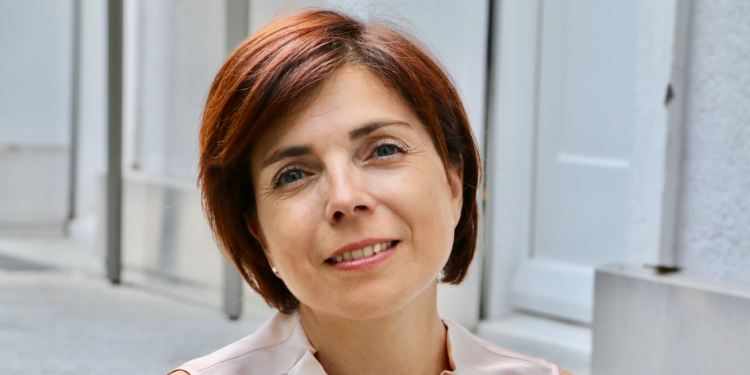
Growing up as an expat child means learning, very early on, how to navigate different worlds. For some, it's a profoundly enriching experience. For others, it can raise difficult questions: Who am I, really? Where do I belong? For parents, supporting this identity-building process can feel like a real challenge, especially when a child's reference points are constantly shifting between home, school, the home country, and the host country. Cécile Solar, a certified coach and co-author of the Objectif Orientation guidebooks published by Hachette, helps us better understand what these children living “between two cultures” go through.
Cécile Solar, could you introduce yourself in a few words?
I'm a certified professional coach for families living abroad, and I also coach young people.
After a first career in higher education and student life within a local authority in the south of France, I moved to Germany 19 years ago. I've personally experienced the questions that come with mobility, motherhood, identity, and belonging.
Today, I support young people and their parents as they navigate these transitions, build self-confidence, and find a healthy balance between their different cultures.
Is this kind of “identity loss” common among expat children?
Yes, it's fairly common, especially at key moments such as entering adolescence, moving to a new country, or returning to the home country after several years abroad.
These children, sometimes referred to as TCKs (Third Culture Kids), grow up between different worlds without ever feeling they entirely belong to just one of them.
They may say, “I'm from everywhere and nowhere at the same time.”
For example, I once coached a French-German teenage girl who no longer knew which language she even thought in. She told me, “I speak French at home and German at school, but I don't know what I want, no matter which language I'm using.”
It wasn't a vocabulary issue, and it wasn't simple confusion. It was a real search for meaning: “Who am I, if I don't fully recognize myself in either world?”
Join the community
Get regular tips and advice to make the most of your expat life
What causes this feeling of identity loss in children growing up abroad?
Several factors can come together:
Frequent moves
Changing environments repeatedly force a child to constantly reinvent themselves—sometimes at the expense of stability and continuity. During adolescence, feeling accepted by a group and recognised by peers is essential. But it's hard when you don't know the social codes.
Cultural differences
Children and teenagers quickly realise they don't quite do things the same way as others. They can feel like they're neither “from here” nor “from there.”
Parental expectations
Sometimes parents want to protect the culture of origin, while the child is trying to fit into the host culture. That tension can create a sense of divided loyalty.
Language
Language also plays a significant role: it shapes both thought and emotions. If a child expresses themselves more easily in the language of school than in the language spoken at home, they may feel disconnected from their family, or the opposite can happen.
Are there warning signs parents can look out for if their child seems to be struggling?
Yes. Certain signs may point to deeper discomfort around identity:
Social withdrawal, or difficulty feeling like they belong in a group
Behaviour changes, such as suddenly rejecting the family's language or culture
Telling phrases like: “I don't know who I am,” “I'm not like everyone else,” “I want to go home.”
Or, during adolescence, a strong need to break away from family in order to “redefine themselves alone.”
These signs aren't automatically alarming, but they deserve attention and should be listened to without judgment. They often reflect a normal identity-building phase, one that is already part of adolescence, but intensified by expat life.
What can parents do to help their child feel grounded despite constant change?
There's a Jewish proverb often quoted in parenting:
“There are only two things we can give our children: roots and wings.”
It perfectly captures the essence of parenting, and especially the reality of raising children abroad.
Giving roots means offering your child a solid foundation: a family story, shared values, and a sense of belonging connected to something stable, even when everything around them keeps changing.
Giving wings means allowing them to open up to the world, explore, take risks, and follow their own path, without being afraid of losing themselves along the way.
In daily life, this can look like:
Valuing every culture present in the family, and highlighting diversity as a strength rather than focusing on differences.
Creating stable reference points through rituals, traditions, or family habits, wherever you live.
Welcoming emotions linked to transitions (sadness, nostalgia, anger) without dismissing them.
Encouraging autonomy and curiosity so your child feels free to explore and make each new experience their own.
Speaking openly about having a multi-layered identity, and reminding them they can belong to more than one world at once, and that this is a strength, not a contradiction.
In that way, parents become both the keepers of roots and the ones who give wings, helping their child feel anchored within themselves while moving confidently through the world.
And on the other hand, what well-meaning mistakes should parents avoid?
Some good intentions can unintentionally increase confusion:
Idealizing the home country or, conversely, criticizing the host country can create a loyalty conflict.
Dismissing what the child is going through, saying, “You're lucky to live abroad; don't complain,” can shut down their ability to express very real feelings.
Trying too hard to preserve a “pure” identity when the child experiences themselves as a blend.
Instead, the goal is to give them the freedom to be a mix, without forcing them to choose sides.
Are there any specific tools or approaches you recommend to support children in this process?
Yes, several approaches can be constructive:
Family rituals: a “food from home” night, a scrapbook of the places you've lived, a world map where you trace your moves together.
Narrative practices, such as the Tree of Life, which I often use in coaching. It helps children tell their story, explore their roots, and identify their strengths through a positive metaphor.
Journaling or photography: encouraging teenagers to create a memory journal or a personal timeline of their experiences.
And in some cases, professional support (a coach or psychologist trained in intercultural issues) can help them put words to what makes their experience so unique.
In the long term, how can growing up between cultures become a strength?
It can be an incredible advantage, both personally and professionally. Children who grow up between cultures often develop:
Strong adaptability and a natural openness to the world.
A refined emotional and intercultural intelligence.
The ability to build bridges between different worlds and understand multiple perspectives.
When they are supported in recognizing what makes them unique, these teenagers often grow into confident, empathetic, curious adults who can thrive in many different environments.
Their identity may be multifaceted, but it can also be deeply stable, because they've learned that you can belong to several worlds without losing yourself.
Holder of a degree from the French Ministry of Education and a Master II in Language Policy, I have had the opportunity to live in Japan and China, and am currently based in Germany. My activities revolve around writing, teaching and managing programs.