

 Guide updated by Diana Bocco on 23 July 2026
Prague, the capital of Czechia (Czech Republic), is one of Central Europe's most attractive destinations for expats. With 1,407,084 inhabitants (Czech Statistical Office, December 2025) spread across 10 administrative districts and 298 km², the city combines a UNESCO-listed historic core with a modern tech-driven economy. Crossed by the Vltava River and watched over by Prague Castle (the largest castle complex in the world according to Guinness World Records, 18 acres), Prague offers four distinct seasons, excellent infrastructure, and a remarkably international atmosphere. Roughly 1 in 4 residents is a foreign national, making Prague the second-highest expat share among EU capitals after Brussels. The city is the seat of the President, Parliament, and all ministries, and generates about 25% of national GDP.
5 good reasons to move to Prague
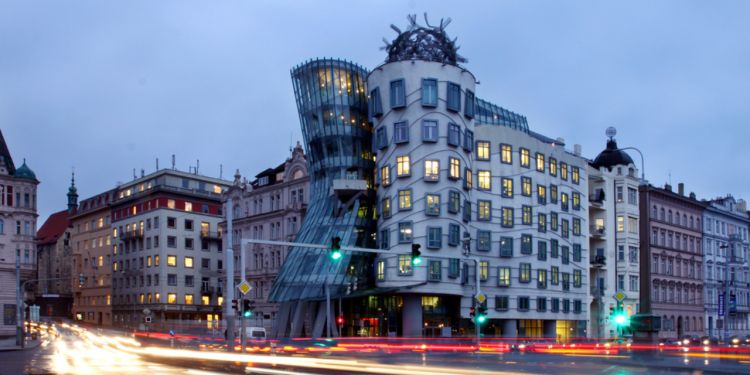
- UNESCO World Heritage city since 1992 with exceptionally preserved Gothic, Baroque, Art Nouveau and Cubist architecture.
- Cost of living roughly 40–60% lower than London or major Western European capitals (CostLiving 2026, Numbeo 2026).
- One of Europe's best public transport networks: 3 metro lines, 34 tram lines and a monthly pass at just CZK 550.
- Booming tech hub with companies like Avast/Gen Digital, JetBrains and 250+ shared services centres employing over 30,000 people.
- Central EU and Schengen location: Berlin, Vienna and Bratislava are all about 4 hours away by direct train.
Your setup journey
Guide in 9 steps. Click any step below to jump directly to the section you need.
01Working in Prague: a tech-driven capital with low taxes
Prague concentrates a quarter of the Czech economy and offers a broad job market across technology, finance, automotive, consulting and shared services. The city hosts regional EMEA headquarters of multinationals as well as homegrown success stories. Personal income tax is a flat 15% (rising to 23% above roughly CZK 1.5 million per year), one of the most competitive rates in the EU.
Key industries and salaries
Major sectors include software and IT (Avast/Gen Digital, JetBrains, Productboard, Mews, plus Amazon, Microsoft, IBM, SAP, Oracle, Cisco offices), banking (Česká spořitelna, Komerční banka, ČSOB), automotive (Škoda Auto headquartered an hour away), and Big Four consulting. Around 250 shared services centres employ over 30,000 people, often in multilingual roles. The average gross salary in Prague is roughly CZK 55,000–60,000 per month, while senior tech and corporate roles regularly reach CZK 100,000–200,000.
Work permits and freelancing
EU and EEA citizens may work freely. Non-EU professionals typically use the Employee Card, the EU Blue Card (for highly qualified workers), or the Czech Digital Nomad Visa launched in July 2023 and extended in 2025 (minimum income CZK 69,248/month, equivalent to 1.5× the national average wage). Freelancers commonly register a Živnostenský list (trade licence), which allows a flat-rate deduction and an effective tax rate as low as 6–12%.
Main job platforms: Jobs.cz, LinkedIn, and Expats.cz for English-speaking roles.
The table below summarises key employment indicators for Prague in 2026.
Indicator | Value | Source |
National unemployment rate (Czechia) | ~2.7% (one of the lowest in the EU) | Czech Statistical Office |
Average gross monthly salary (Prague) | CZK 55,000–60,000 | CSU 2026 |
Leading sectors | Tech & software, finance, automotive, BPO/SSC | CzechInvest |
Sources: Czech Statistical Office, Ministry of Interior of the Czech Republic.
Discover more
Join the discussion on the forum
02Housing & neighbourhoods: where to live in Prague
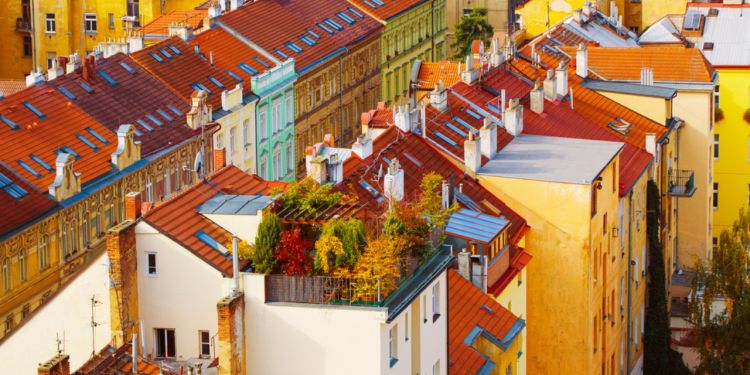
Prague's housing market is dominated by apartments in historic buildings, refurbished communist-era panelák blocks, and modern developments in gentrified districts. Rental demand is strong, especially in central districts, and listings on expat-oriented platforms can be 20–40% more expensive than on local Czech sites such as Sreality.cz or Bezrealitky.cz.
Popular expat neighbourhoods
Vinohrady (Prague 2/3) is the top expat area: leafy, upscale, with parks, embassies and a strong café and restaurant scene. Karlín (Prague 8) is the gentrified riverside tech hub, popular with young professionals working at Mews, multinationals and startups. Dejvice and Bubeneč (Prague 6) host most embassies, the technical university, and the main international schools, making them ideal for diplomats and families. Smíchov and Anděl (Prague 5) are trendy and well-connected, while Holešovice (Prague 7) and Žižkov (Prague 3) appeal to creatives and young singles. Old Town and Malá Strana (Prague 1) are the most expensive and busiest.
Rental procedure and prices
Standard leases are 12 months minimum with a 2–3 month deposit and proof of income. Foreign ownership is allowed for EU citizens; non-EU buyers may need a Czech company or permanent residence. The table below summarises average monthly rents in 2026.
1-bedroom in central districts (Vinohrady, Karlín, Holešovice) | CZK 18,000–26,000 (USD 800–1,180) |
1-bedroom in outer suburbs | CZK 11,000–18,000 (USD 500–820) |
3-bedroom in central districts | CZK 30,000–50,000 (USD 1,360–2,270) |
3-bedroom in outer suburbs | CZK 22,000–35,000 (USD 1,000–1,590) |
Monthly utilities (heating, water, electricity) | USD 80–150 (seasonal) |
Sources: Numbeo Prague, Czech real-estate market data 2026.
Discover more
03Cost of living in Prague: affordable for a major European capital
Prague is significantly cheaper than Western European capitals while offering comparable quality of life. According to Numbeo (May 2026, based on 2,450 entries from 306 contributors), rents in Prague are 14.3% lower than in Berlin and overall costs are 40–60% lower than in London or other major Western European cities. The local currency is the Czech koruna (CZK), not the euro, with approximate mid-2026 rates of 1 USD ≈ 22 CZK and 1 EUR ≈ 24 CZK.
Budget for a single person
A single expat living comfortably in a central one-bedroom apartment typically spends around CZK 46,000 per month, in line with Expatlife.ai estimates for 2026.
Expense | Monthly cost (CZK) | USD equivalent |
Rent (1-bedroom, central) | 24,000 | USD 1,090 |
Groceries | 6,000–9,000 | USD 270–410 |
Utilities | 4,000 | USD 180 |
Transport (monthly pass) | 550 | USD 25 |
Health insurance (private, expat) | 2,500–5,000 | USD 115–230 |
Estimated total | 40,000–50,000 | USD 1,800–2,270 |
Budget for a family of four
For a family of four with two children in school, the monthly budget varies sharply depending on school choice (public Czech is free, international fees are significant).
Expense | Monthly cost (CZK) | USD equivalent |
Rent (3-bedroom, expat district) | 35,000–65,000 | USD 1,590–2,950 |
Groceries | 15,000–25,000 | USD 680–1,140 |
Utilities (incl. heating) | 5,000–8,000 | USD 230–365 |
Transport (family) | 2,000–4,000 | USD 90–180 |
School fees (2 children, international, mid-tier) | 60,000–90,000 | USD 2,730–4,090 |
Health insurance (family, international) | 4,800–12,000 | USD 220–550 |
Estimated total (with international school) | 130,000–200,000 | USD 5,900–9,090 |
Sources: Numbeo Prague (May 2026), Czech Statistical Office.
04Retirement in Prague: an emerging European destination
Prague is not a traditional retirement hotspot like the Mediterranean coast, but it is becoming an attractive option for retirees who value culture, urban infrastructure and healthcare rather than year-round sunshine. The city offers a high standard of public services, excellent hospitals, low crime and a strong cultural calendar at a fraction of the cost of Western European capitals.
Advantages and limitations
Key advantages include universal healthcare (VZP), top university hospitals such as Motol (the largest hospital in Central Europe) and VFN, and a public transport network that is free for residents aged 65+, with 50% off national trains for the same age group. Dental care is also significantly cheaper than in many Western countries. On the downside, winters are cold (around -3°C to 3°C) with short daylight hours in December, the Czech language is challenging, and the international retiree community is smaller than in established Mediterranean destinations.
Visas and budget
EU and EEA citizens can settle freely. Non-EU retirees apply for a long-term residence visa with proof of sufficient financial means and private health insurance, as Czechia does not offer a dedicated retirement visa. A comfortable retired couple typically budgets CZK 50,000–80,000 per month (around USD 2,270–3,640), or CZK 90,000–150,000 per month for an upscale lifestyle.
Sources: Czech Ministry of Interior, Motol University Hospital.
05Higher education & universities: studying in Central Europe's oldest academic city
Prague is the main university hub of Czechia, hosting around 50,000 international students and home to the oldest university in Central Europe. International programmes are widespread, and tuition in Czech-language courses at public universities is free, even for foreign students, which is one of the most attractive aspects of higher education in the country.
Main universities
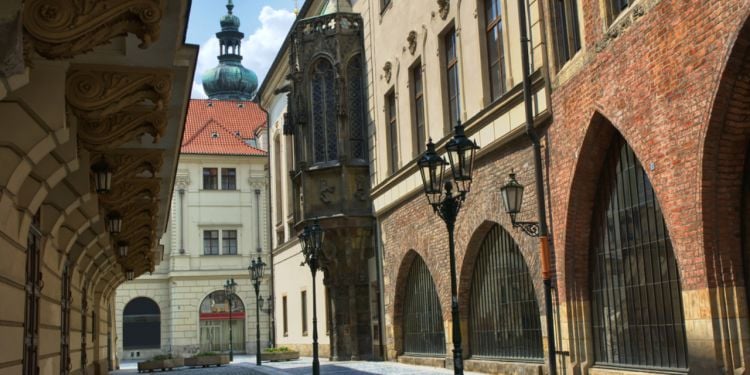
Charles University (Univerzita Karlova), founded in 1348 by Emperor Charles IV, is the flagship institution with around 50,000 students across 17 faculties. It is consistently ranked in the global QS Top 250–300 and counts two Nobel laureates among its alumni. Czech Technical University (ČVUT), founded in 1707, is the country's top engineering school with around 24,000 students based mainly in Dejvice (Prague 6). VŠE (Prague University of Economics and Business), founded in 1953, leads in business and economics. Anglo-American University (AAU) and University of New York in Prague (UNYP) offer fully English-taught, US-style degree programmes.
Tuition fees and admission
Programmes taught in Czech at public universities are free of charge if you pass the language requirement (B2 level). English-taught programmes range from CZK 150,000 to 450,000 per year at public universities, and CZK 200,000–400,000 per year at private English-language institutions. A student visa costs about CZK 1,000 and allows up to 20 hours of work per week. Student dormitories (kolej) cost CZK 4,000–8,000 per month.
Official websites: Charles University, Czech Technical University, VŠE, Anglo-American University.
Discover more
06Schooling for children: the largest international school network in Central Europe
Czech public education is free, secular and of good quality, with mandatory schooling from age 6 to 15. The language of instruction is Czech, which pushes most expat families towards Prague's well-developed network of international and bilingual schools, the largest in Central and Eastern Europe.
The Czech public system
The system is structured as 9 years of základní škola (primary plus lower secondary combined), followed by 4 years of gymnázium (upper secondary) and university. The academic year runs September to June and is regulated by the Ministry of Education (MŠMT). For families staying long term, the public system is fully free and integrates children well, but a language transition period is needed.
International and bilingual schools
Prague offers more than a dozen international schools. The flagship is the International School of Prague (ISP), founded in 1948, a full IB World School (PYP/MYP/DP) with around 900 students from 60+ nationalities, located in Nebušice (Prague 6). Prague British International School (Nord Anglia network) and Park Lane International School follow British curriculum with IGCSE, A-Levels and IB. The English College in Prague blends Cambridge and Czech curricula. Deutsche Schule Prag offers a German Abitur track. The table below gives indicative annual fees for 2026.
School | Curriculum | Annual tuition (CZK) |
International School of Prague | IB (PYP/MYP/DP) | 500,000–700,000 |
Prague British International School | British / IGCSE / A-Level | 350,000–550,000 |
Park Lane International School | British + IB Diploma | 350,000–500,000 |
English College in Prague | Cambridge + Czech / IB | 200,000–300,000 |
Sources: International School of Prague, Park Lane International School, Expats.cz directory.
07Daily life in Prague: practical, walkable and well-connected
Daily life in Prague is generally smooth, safe and affordable. The city consistently ranks among the safest capitals in Europe, and the historic centre is exceptionally walkable. Czech is the official language, but English is widely spoken in business, tech and tourist areas, while older generations often speak German or Russian.
Getting around
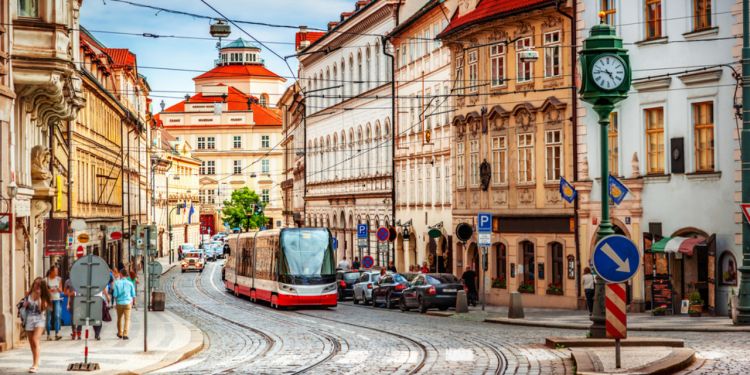
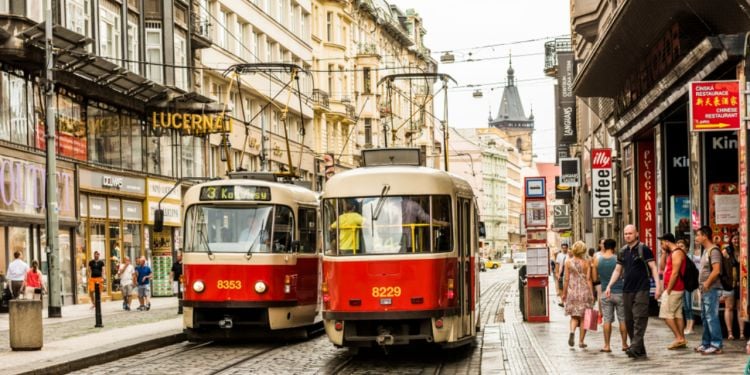
The integrated public transport network (PID/DPP) is one of Europe's best. It includes 3 metro lines (A, B, C), 34 tram lines (the densest network in Central Europe), more than 150 bus routes, suburban trains, ferries on the Vltava, and the Petřín funicular. A monthly pass costs just CZK 550 (about USD 25), with transport free for residents aged 65+ and 50% off for ages 60–64 and students. Single tickets are CZK 30 (30 min) or CZK 40 (90 min). Apps like Bolt, Uber and Liftago are widely used for ride-hailing, while cycling is less popular due to cobblestones and hills. Václav Havel Airport (PRG), 17 km west of the centre, is the main air gateway to Central Europe with around 16 million passengers per year and direct flights to all European capitals plus New York, Seoul, Dubai and Doha.
Lifestyle and culture
Czech culture is centred on pubs (hospoda) and beer: Czechia leads the world in beer consumption per capita (around 140 L/year), and a half-litre of Pilsner Urquell at a local pub costs CZK 50–90. Hearty cuisine includes svíčková, guláš and knedlíky (dumplings). Society is highly secular: 46% of the population declares no religion, one of the highest rates in the world. The country is also progressive on LGBTQ+ rights, with civil same-sex marriage legalised in January 2025.
Sources: Prague Integrated Transport, Czech Statistical Office.

08Leisure, culture & things to do in Prague
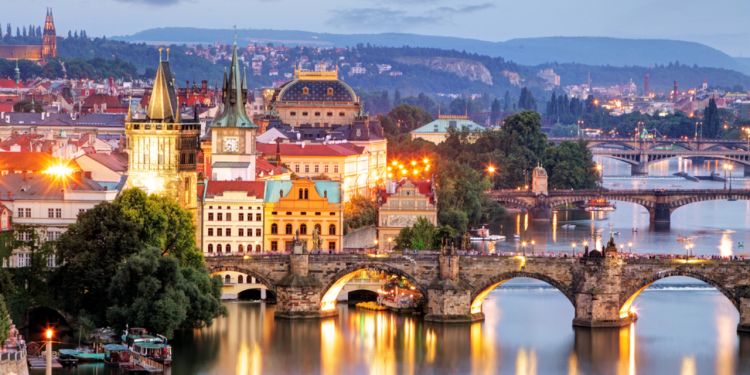
Prague is one of Europe's richest cultural capitals, with a dense concentration of historic monuments, museums, parks and music venues. The historic centre has been a UNESCO World Heritage site since 1992, and the city is nicknamed the "city of a hundred spires" for its Gothic skyline.
Must-see sights and museums
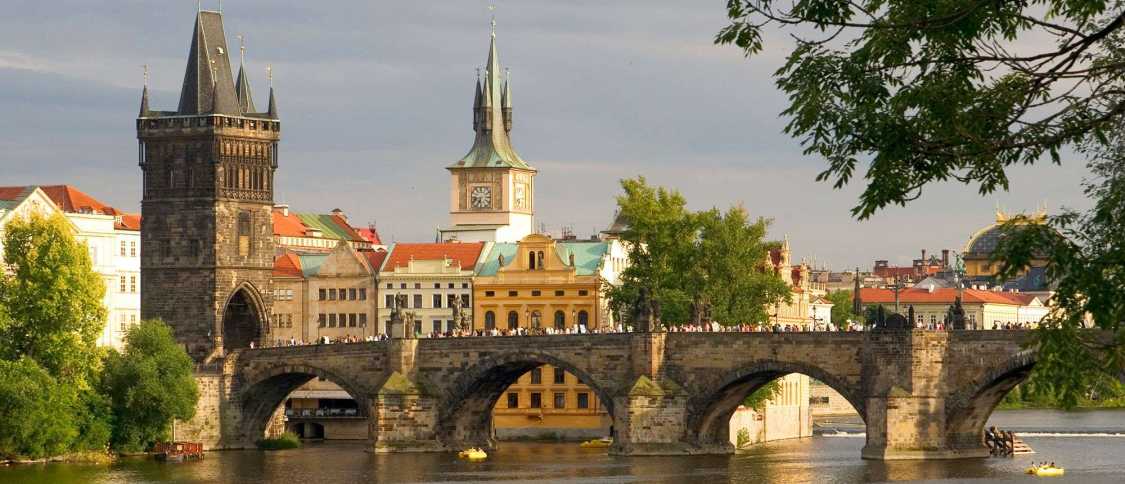
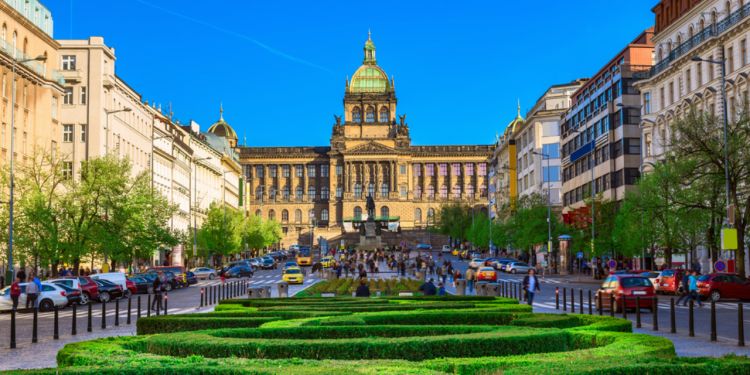
The unmissable sights include Prague Castle (the largest castle complex in the world per Guinness, with the Gothic St. Vitus Cathedral and the Royal Palace), the Charles Bridge (1357), the Old Town Square with the Astronomical Clock (1410, the oldest still in operation worldwide), the historic Jewish quarter Josefov with the Old-New Synagogue (1270, oldest active synagogue in Europe) and the Old Jewish Cemetery, plus Wenceslas Square, where the Velvet Revolution unfolded in 1989. Major museums include the National Museum, the National Gallery, and the DOX Centre for Contemporary Art. The National Theatre and Rudolfinum host the Czech Philharmonic and world-class opera and ballet.
Outdoor life, sport and nightlife
Prague has plenty of green space: Stromovka Park (95 hectares), Letná Park with its panoramic beer garden, Riegrovy sady in Vinohrady, and Petřín Hill with its mini-Eiffel tower. Football is huge thanks to the Sparta vs Slavia derby, and ice hockey is a national passion. Skiing in the Krkonoše mountains is just 2 hours away. Nightlife centres on Žižkov (said to have the most pubs per square kilometre in Europe) and clubs like Roxy, Cross Club and Lucerna Music Bar. The Náplavka riverbank hosts farmers' markets, boat bars and summer festivals. Day trips are easy: Český Krumlov (UNESCO), Karlovy Vary, Kutná Hora and the brewing capital Plzeň are all within a few hours.
Sources: Official Prague tourism portal, UNESCO World Heritage Centre.

09FAQ
10In short
Prague combines the charm of a UNESCO-listed historic capital with the practical comforts of a modern, well-connected European city. Affordable rents, low taxes, free or low-cost public transport, a growing tech ecosystem and one of the largest expat communities in the EU (around 25% of residents) make it a strong choice for professionals, students, families and retirees alike. Winters are cold but manageable, and the central location opens up the rest of Europe with ease. If you are considering a move to Prague, join the Expat.com Czech Republic forum to connect with fellow expats, share advice and get answers from people who already call this remarkable city home.
Join the Prague community
Get regular tips and advice to make the most of your expat life
Essential services for your expat journey






Forum topics on living in Prague
Discover forums topics on expat life in Prague: join the conversation, ask your questions, get advice and share your experience.
- Homeschooling in Czech
- Long-term study/research visa still processing after almost 60 days
- Living in Brno
- Filipino Direct Hire by Czech Employer
- Is it genuine or job scam ?
- Working in Czech Republic - I worry about my salary.
- Pregnancy in Prague
- Muslims in Prague
- Long Term Visa - Process time from India
- MOVE TO PRAGUE IN 2019, HOW / WHERE CAN I SELL MY ART PRINTS?
- Finding a job in Czech Republic and Central Europe
- Hello. Im looking for Indonesian people in Prague.
- My czech republic long stay student visa is taking too long??
- Bringing a car to Czech republic
- czech for foreigners??? where is the best course?
- HAVE FUN IN PRAGUE