

Living in Phu Quoc: the ultimate expat guide
Everything you need to know for a successful life in Phu Quoc.
Phu Quoc, Vietnam's largest island, has transformed from a quiet fishing community into one of Southeast Asia's most sought-after destinations. Located in the Gulf of Thailand, just 45 km from mainland Vietnam and 4 km from Cambodia, this tropical haven offers a unique blend of natural beauty, modern amenities, and affordable living. With a population of approximately 179,000 residents and a growing expat community of around 200 foreign residents, Phu Quoc provides the perfect balance between authentic Vietnamese culture and international convenience.
Why Choose Phu Quoc?
The island spans 574 square kilometers, with over half designated as protected national parkland. Its subtropical climate ensures warm temperatures year-round, typically ranging from 25°C to 32°C. The best weather occurs between November and April, with dry, sunny days ideal for beach activities and outdoor exploration.
5 Good Reasons to Move to Phu Quoc
- Exceptional affordability – Living costs are significantly lower than major cities, with comfortable monthly budgets starting from USD 800 to USD 1,500.
- Pristine natural environment – Over 20 beaches, UNESCO-protected national parks, and crystal-clear waters for diving and snorkeling.
- Modern infrastructure – International airport with direct flights, world-class healthcare at Vinmec Hospital, and growing entertainment options.
- Visa-free entry for 30 days – Special visa exemption policy for foreign visitors arriving directly to Phu Quoc.
- Welcoming community – Small-town hospitality where expats and locals often know each other, creating a genuine sense of belonging.
Working in Phu Quoc: Opportunities in Paradise
Phu Quoc's economy is dominated by tourism and hospitality, which accounts for approximately 70% of the island's GDP and provides employment for the majority of residents. The sector has experienced remarkable growth, with tourism revenue reaching over VND 21,170 billion (approximately USD 850 million) in 2024. For expats seeking employment, understanding the local job market and visa requirements is essential.
Key Industries and Employment Sectors
The hospitality industry offers the most opportunities for foreign workers. Luxury resorts such as JW Marriott, InterContinental, Vinpearl, and numerous boutique hotels regularly seek qualified professionals. Positions range from management roles to specialized positions in food and beverage, guest services, and spa operations. English teaching is another growing sector, with language centers and international-style schools seeking native speakers. Salaries for English teachers typically range from USD 1,500 to USD 2,500 per month, depending on qualifications and experience.
Work Permit Requirements
Foreign nationals wishing to work legally in Vietnam must obtain a work permit, valid for up to 2 years and renewable once. Requirements include a bachelor's degree or equivalent, plus 3 years of relevant experience, or 5 years of technical experience without a degree. Employers must sponsor the application through the Department of Labor, Invalids and Social Affairs. Processing typically takes 4-6 weeks once documents are complete.
Average monthly salary (hospitality sector) | USD 400 - USD 1,200 |
English teacher salary | USD 1,500 - USD 2,500 |
Tourism sector employment share | Approximately 70% |
Sources: Vietnam Briefing, Vietnam Government Portal
Higher Education: Study Options on Phu Quoc
While Phu Quoc itself does not currently host major universities, the island is undergoing significant development that includes plans for educational facilities. The Phu Quoc Master Plan, completed in 2024, includes provisions for a university campus within the island's new mixed-use district. For now, students seeking higher education typically travel to mainland Vietnam or pursue online learning options.
Nearest University Options
The closest higher education institutions are located in Ho Chi Minh City, accessible via a 1-hour direct flight from Phu Quoc International Airport. Several prestigious universities welcome international students with programs taught in English. RMIT University Vietnam offers Australian-accredited degrees in business, engineering, and design. Fulbright University Vietnam provides a liberal arts education with American-style curricula. Tuition fees for international students typically range from USD 8,000 to USD 20,000 per year, depending on the institution and program.
Online Learning and Vocational Training
Many expats on Phu Quoc pursue education through online degree programs from international universities. High-speed internet is widely available across the island, supporting remote learning. For vocational training, the island's hospitality sector offers on-the-job training programs, and several resorts provide professional development for employees in tourism and hotel management. Language schools in Duong Dong offer Vietnamese language courses for foreigners wishing to integrate more fully into local life.
Sources: Sasaki Phu Quoc Master Plan, RMIT Vietnam
Retirement in Phu Quoc: A Tropical Haven
Phu Quoc has emerged as an attractive retirement destination for those seeking an affordable tropical lifestyle with modern healthcare access. The island's laid-back atmosphere, natural beauty, and growing expat community create an appealing environment for retirees. However, Vietnam does not currently offer a dedicated retirement visa, requiring creative solutions for long-term stays.
Visa Options for Retirees
Vietnam has no specific retirement visa category. Most retirees rely on renewable tourist visas or e-visas, which are now available to citizens of all countries for stays up to 90 days. The e-visa can be single or multiple entry. Some retirees maintain legal status through regular border runs or by obtaining business visas (DN) with the help of visa service agencies. The Investor Visa (DT) offers longer stays of up to 5 years for those willing to make qualifying investments in Vietnamese businesses, typically starting from VND 3 billion (approximately USD 120,000). Phu Quoc benefits from a special 30-day visa exemption for tourists arriving directly to the island by international flight.
Healthcare and Lifestyle Considerations
Vinmec Phu Quoc International Hospital provides reassurance for retirees concerned about healthcare access. The hospital offers comprehensive services including cardiology, diagnostics, and emergency care, with English and French-speaking doctors on staff. For serious medical issues, Ho Chi Minh City's world-class hospitals are just a 1-hour flight away. Many retirees purchase international health insurance plans that cover treatment both in Vietnam and medical evacuation to Singapore or Bangkok if needed. The cost of living allows retirees to maintain comfortable lifestyles on modest fixed incomes, with a couple living well on USD 1,500 to USD 2,500 per month including healthcare costs.
Sources: Vietnam E-Visa Portal, Vinmec Healthcare
Schools for Children: Education Options for Families
Families considering a move to Phu Quoc should be aware that the island's educational infrastructure for expatriate children remains limited. There are currently no established international schools on Phu Quoc following internationally recognized curricula such as IB, British, or American programs. Most expat families with school-age children either homeschool or arrange for education in Ho Chi Minh City, where excellent international schools are available.
Local Schooling Options
Phu Quoc has several public Vietnamese schools that follow the national curriculum. However, instruction is entirely in Vietnamese, and foreign nationals are generally not permitted to enroll their children in public schools. Some private Vietnamese schools may accept foreign students, but language barriers present significant challenges. For younger children, there are kindergartens and preschools in Duong Dong that may accommodate non-Vietnamese speakers with varying degrees of English support.
International Schools in Ho Chi Minh City
Many expat families living on Phu Quoc send their children to boarding programs or arrange split living arrangements with one parent in Ho Chi Minh City. Top options include:
- British International School (BIS) – English National Curriculum and IB program, tuition from USD 15,000 to USD 30,000 per year.
- American International School (AIS) – American curriculum with IB Diploma, tuition from USD 20,000 to USD 35,000 per year.
- Saigon South International School (SSIS) – Non-profit American curriculum school, tuition from USD 18,000 to USD 28,000 per year.
Homeschooling remains the most practical option for families committed to living full-time on Phu Quoc. Online curricula from providers such as Connections Academy or K12 enable children to follow accredited programs while enjoying island life.
Sources: Nord Anglia Education, American International School
Housing and Neighborhoods: Finding Your Island Home
Phu Quoc offers a diverse range of housing options, from budget-friendly local houses to luxury beachfront villas. Unlike major Vietnamese cities, the island's rental market operates largely through word-of-mouth, Facebook groups, and direct negotiation with landlords. There are no major rental agencies, so networking within the expat community is essential for finding long-term accommodation.
Popular Neighborhoods for Expats
Duong Dong is the island's main town and commercial center, home to the famous night market, restaurants, and essential services. Rent here is moderate, and the central location provides easy access to shops, healthcare, and transportation. Long Beach (Bai Truong) stretches south of Duong Dong and features numerous resorts alongside residential options. Ong Lang Beach offers a quieter alternative on the northwest coast, popular with expats seeking tranquility and reasonable rents. The An Thoi area in the south is developing rapidly with new resort communities and modern apartments.
Rental Prices and Housing Types
Rental costs on Phu Quoc are generally affordable, though beachfront properties command premium prices. Most long-term rentals come unfurnished, requiring tenants to purchase furniture and appliances. Furnished apartments in modern complexes like Sun Grand City Hillside offer convenient alternatives for expats seeking move-in-ready homes.
1-bedroom apartment (furnished) | USD 400 - USD 700/month |
3-bedroom villa with garden | USD 800 - USD 1,500/month |
Local house (unfurnished) | USD 130 - USD 300/month |
Sources: FazWaz Vietnam, Expat community reports
Leisure, Culture and Things To Do
Phu Quoc offers an exceptional range of leisure activities, from pristine beaches and nature exploration to world-class entertainment complexes. The island's rapid development has brought sophisticated attractions while preserving its natural charm. Whether you seek adventure, relaxation, or cultural experiences, Phu Quoc delivers diverse options for every interest.
Beaches and Natural Attractions
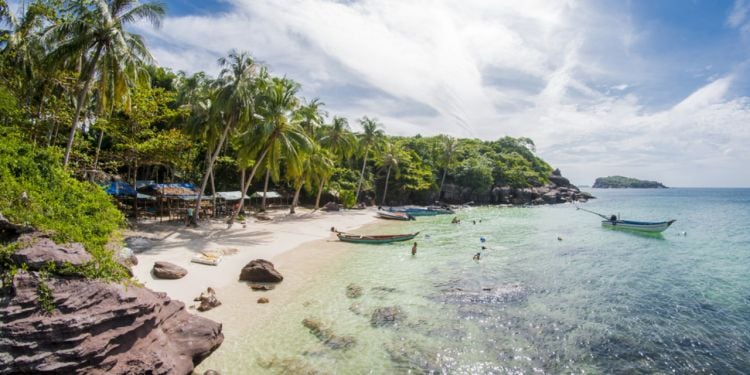
The island boasts over 20 beaches, each with its own character. Long Beach (Bai Truong) stretches for 20 km along the west coast, famous for stunning sunsets. Sao Beach (Bai Sao) in the southeast features powdery white sand and calm waters perfect for swimming. Ong Lang Beach offers a quieter alternative popular with expats. Phu Quoc National Park covers over 31,400 hectares of protected rainforest with hiking trails, waterfalls, and diverse wildlife. The An Thoi Archipelago of 18 islands south of Phu Quoc provides exceptional snorkeling and diving opportunities among vibrant coral reefs.
Entertainment and Cultural Experiences
VinWonders Phu Quoc, covering 50 hectares, ranks as Vietnam's largest theme park with six themed zones, over 100 rides, and one of Asia's largest aquariums. Grand World Phu Quoc operates as a 24-hour entertainment district featuring Venetian-style canals, the Teddy Bear Museum, and spectacular shows including the Quintessence of Vietnam cultural performance. Vinpearl Safari is Vietnam's largest semi-wild conservation park, home to over 150 animal species. For cultural immersion, the Coi Nguon Museum displays over 3,300 artifacts documenting the island's history. The Duong Dong Night Market offers local seafood, street food, and handmade crafts every evening.
Sports and Recreation
Water sports enthusiasts enjoy kayaking, jet-skiing, and stand-up paddleboarding at beaches across the island. Several dive centers offer PADI certification courses and guided dives to coral reefs. Vinpearl Golf Phu Quoc features an 18-hole course set within pristine forest. Yoga retreats and wellness centers have multiplied, catering to health-conscious expats seeking balance.
Sources: VinWonders Official, Vietnam National Tourism
Daily Life: Getting Around and Living on the Island
Daily life on Phu Quoc moves at a relaxed tropical pace that many expats find refreshing. The island offers a blend of modern convenience and traditional Vietnamese culture, with growing infrastructure supporting an increasingly comfortable lifestyle. Understanding transportation options and local customs will help newcomers adapt quickly to island living.
Transportation Options
The motorbike is the primary mode of transport for both locals and expats. Rental costs range from VND 100,000 to VND 200,000 (USD 4-8) per day, or approximately USD 80-100 per month for long-term rentals. Many long-term residents purchase secondhand motorbikes for USD 150-400. VinBus operates a free electric bus service connecting the airport, Duong Dong, and the Vinpearl resort complex in the north. Traditional taxis are available through companies like Mai Linh and Phu Quoc Taxi, with fares around VND 12,000-20,000 (USD 0.50-0.80) per kilometer. The Grab app is operational on the island for both car and motorbike taxi services.
Healthcare and Daily Services
Vinmec Phu Quoc International Hospital provides world-class medical care with English-speaking staff, modern equipment, and JCI accreditation. Located in the Bai Dai area, this 150-bed facility offers emergency services, specialist consultations, and comprehensive health checkups. For minor ailments, Phu Quoc General Hospital in Duong Dong and private clinics provide affordable care. Health insurance for expats typically costs USD 1,000-3,000 per year through providers like Cigna or Pacific Cross.
Daily shopping is convenient at minimarts and local markets throughout Duong Dong. The Duong Dong Market offers fresh seafood, produce, and local goods at local prices. For imported products, several convenience stores stock international brands at slightly higher prices.
Sources: Vinmec Healthcare, Grab
Discover Phu Quoc
Located at the southwest tip of Vietnam, Phu Quoc Island, also known as Pearl Island, is part of the Kien Giang province. With a history of conflict ...
Cost of Living: Your Budget in Phu Quoc
Phu Quoc offers a remarkably affordable lifestyle compared to Western countries and even other popular expat destinations in Southeast Asia. While costs are slightly higher than mainland Vietnam due to the island's tourism focus and shipping requirements for goods, most expats find they can live comfortably on modest budgets. Careful planning allows for significant savings while enjoying a high quality of life.
Monthly Budget for a Single Person
A single expat can live comfortably on Phu Quoc with a monthly budget between USD 800 and USD 1,500, depending on lifestyle preferences. Those willing to live simply in local-style accommodation and eat at Vietnamese restaurants can manage on the lower end, while those preferring Western amenities and dining will spend more.
Expense Category | Budget | Comfortable |
Rent (1-bedroom) | USD 300 | USD 600 |
Utilities (electricity, water, internet) | USD 50 | USD 100 |
Groceries and dining | USD 200 | USD 400 |
Transportation | USD 50 | USD 100 |
Health insurance | USD 100 | USD 200 |
Entertainment and leisure | USD 100 | USD 300 |
Total | USD 800 | USD 1,700 |
Monthly Budget for a Family of Four
Families will need a larger budget, particularly if pursuing homeschooling or international education options. Housing costs increase significantly for properties with multiple bedrooms and child-friendly spaces.
Expense Category | Budget | Comfortable |
Rent (3-bedroom house/villa) | USD 700 | USD 1,300 |
Utilities | USD 100 | USD 200 |
Groceries and dining | USD 500 | USD 800 |
Transportation | USD 100 | USD 200 |
Health insurance (family) | USD 300 | USD 500 |
Education (homeschool materials) | USD 100 | USD 300 |
Entertainment and activities | USD 200 | USD 500 |
Total | USD 2,000 | USD 3,800 |
Sources: LivingCost.org, Expat community surveys
In Short
Phu Quoc offers a rare combination of tropical beauty, affordable living, and modern conveniences that appeals to adventurous expats, digital nomads, and retirees alike. The island's transformation from a quiet fishing community to an international destination continues at a remarkable pace, yet it retains the warmth and hospitality that define Vietnamese culture. Whether you're drawn by pristine beaches, seeking an affordable lifestyle, or looking for a welcoming community far from crowded cities, Phu Quoc delivers an island experience unlike any other in Southeast Asia. The growing infrastructure, world-class healthcare at Vinmec Hospital, and expanding entertainment options ensure comfort without sacrificing the authentic charm that makes this destination special. Ready to explore your new island life? Join the conversation with fellow expats on the Phu Quoc forum at Expat.com to connect with the community and discover firsthand insights from those already living the island dream.
We do our best to provide accurate and up to date information. However, if you have noticed any inaccuracies in this content, please contact us.


Essential services for your expat journey