

FOOD AND DRINK IN BRAZIL - AVOIDING PROBLEMS



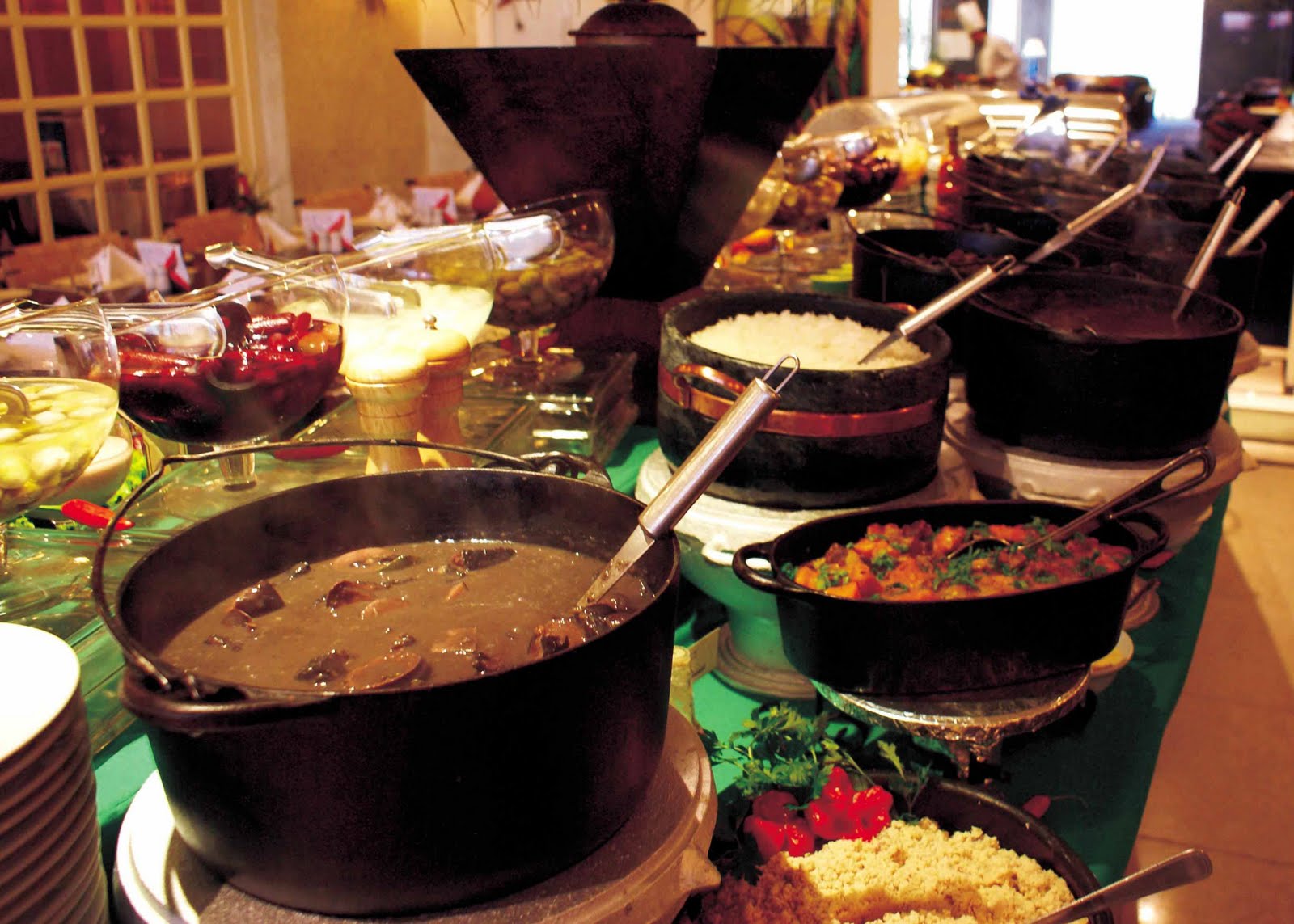
For those who have chosen to move here and especially for those who are visiting Brazil for a short time there are some precautions you should take regarding eating and drinking in order to avoid discomfort or even more serious problems.
Water – You simply cannot drink tap water in most places in Brazil so don’t even try. In the major cities you may drink tap water that has been filtered (either using a tap fitted with a filter, passed through a separate drip-through filter or water purifier). For the same reason you should avoid asking for ice in your drinks unless you are sure that it too has been made with filtered/purified water. Drinking fountains in most public places are safe, but if you don’t see some kind of in-line filter or there is no sign saying the water is filtered take a pass on it, look for another one. Do not use any outdoor drinking fountains found in parks, public squares, etc., they are completely unsafe both in terms of the water quality and their sanitary conditions. If you plan on going to the park to spend the day, go for a run, etc., you are best off to take water from home or to buy bottled water. If here for a short while you should also avoid consuming watermelon or strawberries since their irrigation source is uncertain. Most Brazilians drink bottled water or mineral water. Lots of street venders sell homemade “freezie” type popsicles in a plastic tube which are called “gelinhos” here, again avoid these because of the unknown water source.
Canned/bottled soft drinks and beer – Never drink the beverage directly from the can or bottle unless it has first been washed thoroughly. This is especially important if you purchase it from one of the many street vendors or beach vendors, you have no idea where their ice comes from and all you need to do is look at the interior of the Styrofoam cooler to see the unsanitary conditions most such products are stored in. Use a drinking straw or disposable cup whenever possible.
Fruit & Vegetables – Regardless of where you purchase them they should be thoroughly washed in a basin of cold water that has had a few drops of liquid bleach added. Fruits and vegetables purchased at the supermarket or central market are generally speaking all of high quality, however you will also find good quality produce at lower prices at neighborhood produce shops (sacolão) and street markets that are held frequently all over the country. Organically grown produce may be found at many supermarkets.
 Street food / Beach vendors – Observe the sanitary conditions of the place where you are buying your snacks. Things like pastels or other deep fried foods, for example, pay particular attention to the color and smell of the cooking oil used. One rule of thumb to observe is never order anything that contains eggs or mayonnaise unless you are absolutely certain that it has been kept properly refrigerated at all times. If you are ordering kebabs (churrasco / espeitinhos) make sure you ask for the meat to be well done (bem passado) not on the rare side. The longer the meat is cooked the less the chance of contracting any food related illness. Also don’t overdo it in your consumption, excessive consumption of meat can cause some real digestive discomfort and lots of time prisoner to the toilet.
While it might be really tempting to buy something to snack on or even a light meal from a beach vendor just remember that he or she has probably been there on the beach under the hot sun the whole day long, that cooler has been opened a thousand times or more. How well refrigerated can the food inside really be? If possible restrict your food purchases to beach restaurants where the chances are better that the food has been properly stored and prepared.
Meat, Poultry & Fish – When you buy these items in a large supermarket you can be relatively certain they are fresh and fit for consumption. However, some small and unscrupulous supermarkets have a nasty habit of repackaging things that have expired and giving them new validity dates so really you should trust your nose and how the product looks too. Fresh fish should have no odor at all, if it smells “fishy” it has spoiled. Although sale of meats, poultry and fish in small street markets has been banned because there is no way of tracing the product’s origin or fitness for consumption the practice still happens. Don’t buy them from a street market. Large public markets (Mercado Central/Municipal) in most cities sell reliable products. In many costal towns and cities you will also be able to purchase fish and other seafood right off the boat. Generally speaking these are as fresh as you can get and the prices are reasonable. Myself, I would rather spend the time going down to the dock and picking out my fish and thereby supporting the hard working fisherman rather than pay inflated supermarket prices. Sadly that is not possible here in São Paulo. When I first arrived in Brazil it was common to see meat, poultry and fish sold in the numerous street markets. This has since been banned. If you do see a vendor selling any of these products DO NOT BUY there, the products are of unknown origins and also usually not kept refrigerated properly. Many such products can even be from hijacked cargos.
Eggs – You will note that even in the largest supermarkets here in Brazil eggs are not kept refrigerated. This is something completely unheard of in most other countries. Eggs really must be kept refrigerated to prevent Salmonella bacteria from forming, this is very dangerous. I buy and consume eggs frequently and so-far have been lucky. Once you get them home you should wash them, put them back in the container and place them on the shelf in your refrigerator. Eggs should never be stored in the refrigerator door (again Salmonella is the concern). I don’t know why the egg containers that the appliance manufacturers put in fridge doors haven’t been banned ages ago. Also when using eggs, it is best to always break your eggs, one-by-one, into a separate bowl and not break them directly into the food you are preparing. This way you won’t have to throw everything out and start over from scratch if you should break open a rotten egg.
Milk – Fresh pasteurized milk is not extremely popular here in Brazil so you won’t see it much, you will be able to find it in many supermarkets in 1L plastic pouches. By far most of the milk sold here in Brazil comes in 1 liter boxes and it is UHT (Ultra high temperature) treated milk. You should pay attention to the validity date. While I haven’t heard of any recent cases, a few years back several dairy producers were caught adding Caustic Soda to milk to keep it from spoiling. It actually became a joke here in Brazil – when you asked for milk in your coffee or tea generally the question that followed was, “com ou sem soda caustica”? UHT milk can be safely stored unrefrigerated for prolonged periods (within the validity dates) without any problems. Once opened it should be kept refrigerated and consumed within 24 to 48 hours. Leave the milk in the original box, cut a small piece of the tip off of the lift tab and when done fold the tab back down and return the box to the fridge. If you are making up powdered milk, make it with filtered or purified water only.
Canned / Bottled goods - Pay attention to the validity dates. Never buy anything in a can that is dented, damaged in any way or rusting. Once you get the product home, wash the can or bottle before you store it, or at the very least before you open it. (Never know what kind of nasty little critters have been all over it.)
Spicy foods – Many Brazilian regional dishes are extremely hot and spicy. Unless you are well accustomed to spicy foods and hot sauce try to limit your consumption. Nothing can spoil a vacation like a case of “Montezuma’s Revenge”.
Brazil has a very rich and diversified cuisine. The regional dishes that you find all over Brazil will make your mouth water and once you have experimented with a new dish it will remain in your memory forever. The worst thing about Brazilian food will by trying to decide what dish you liked best. In big cities like São Paulo and Rio you will also find a wide range of international cuisine too, just in case you get the urge for something from home. Follow the foregoing simple rules and “Bom Apetite”.
NOTE : For anyone who hasn’t a clue what the Portuguese names are for foods and other products, like spices and seasonings, you will find at the supermarket send me a private message with your e-mail address and I will send you a complete and comprehensive list of Portuguese/English translations. You will need Adobe Acrobat Reader since the file is in .PDF format.
Cheers,
William James Woodward – Brazil Animator, Expat-blog
- Driving in Brazil - Guide
- Organic food in Brazil - Business
- Problems with paying in stores with international cards - 34 Replies
- CRNM renewal problems - 6 Replies
- areas without flooding problems in santa catarina. - 9 Replies
- Problems using UK debit card in Brazil ATMs - 7 Replies
- Just for fun: Food culture in Brazil - 6 Replies
Cheers,
William James Woodward - Brazil Animator, Expat-blog
First of all you will hardly ever find restaurants anywhere in Brazil (even in tourist destinations) that have their menu printed in English and Portuguese. When you do, the translations are usually horrible so be careful and ask about the ingredients if you have any special dietary needs or allergies.
Most of the Brazilian dishes have a very high sodium (salt) content so never add salt until you've tasted the dish first and if you are on a reduced sodium diet for health reasons you would be well advised to request that your dish be prepared without salt if at all possible.
The sweet dishes also have a very high sugar content so you should be aware of this if you're diabetic.
Grains, nuts, etc. - There are no restrictions placed on manufacturers or restaurants, etc., with regard to ingredients that might provoke reactions in some people. Manufacturers are only required to list their ingredients on the packaging however some terms are generic and don't name the specific ingredient. Be very careful if you have such allergies to read the list of contents on packaged foods and ask at restaurants... "what's in it?". While most of the cooking oil sold and used in Brazil is soybean oil you should note that peanut oil is also common here so take care when ordering deep fried foods if you have serious allergies to nuts.
NOTE: If you suffer from any life threatening allergies I do have a list of translations for foods and spices that I am willing to provide for those in real need. Please send me a private message with your e-mail address and I will send you the two files in .PDF format (you'll need Adobe Acrobat Reader). Please folks, limit it to serious cases... I can't be spending all of my time sending out these lists to people who really aren't in any danger and could find out the names of the ingredients by checking Google and Google Translator, OK?
Cheers,
William James Woodward - Brazil Animator, Expat-blog
There have been recent cases throughout Brazil of milk being adulterated with uric acid. There have been news reports of producers in some states engaging in this practice.
The best way to protect yourself from this is to purchase only the most well known brands, if you're not sure which ones those are they are almost without exception the most expensive. You should steer clear of any milk that is priced well below the normal price range of competing brands.
 Cheers,
William James Woodward Brazil Animator, Expat-blog Team





Cheers,
William James Woodward - Brazil & Canada Expert, Expat-blog Team
Some padarias and supermarkets might sell milk in 1 Liter plastic sacks. It may be difficult to find fresh whole milk there in Manaus because of the fact most things are shipped into the city from great distances. You're more likely to find the 1 Liter boxes of UHT milk instead.


Anyway - does anyone here drink tea? I'm talking about good strong English tea, or loose tea like you get in Indian grocery stores. I brought a supply of Barry's Irish tea from the US, but now my mother-in-law has taken a liking to it and seeing her make it is like watching sacrilege.....lol
I've seen "cha preta' in Carrefour but the one I tried wasn't very good. Any suggestions?
Sorry about the vent, thanks for reading....
Jessie
I asked my MIL what the greens were and she said "taioba" - so I had to go and google it - after much searching I found out you are not supposed to eat them raw - they contain calcium oxalate - which forms in needle-shaped crystals - so the pain you feel is from actual trauma to the mouth. When I told her what happened she just laughed and told me to drink milk.
It was really unpleasant and distressing - please be careful with these unfamiliar plants - people that have eaten them the correct way their whole life may not think to warn you. I hope this helps anyone new to these foods.
Here is a link about calcium oxalate: http://en.wikipedia.org/wiki/Calcium_oxalate
Regards,
Jessie
You should be able to find specialty and imported teas at the Mercado Central in BH. It's a great place to spend an afternoon. I used to shop there regularly when I lived in BH and recommend it highly.
You might also want to check out Supermercado Verdemar in Diamond Mall while you're at it. It's not to far away from the Mercado Central.
Cheers,
William James Woodward - Brazil & Canada Expert, Expat-blog Team
I did go to the Mercado Central a couple of weeks ago and enjoyed it very much. I wasn't looking for tea that day, but will definitely be going back as it was a lot to take in especially with a two-year-old.
I will try the other place too.
Thanks again,
Jessie
If you're into crafts, art and handmade clothing don't miss the Sunday morning Artesan's Fair each week on Av. Alfonso Pena in front of Parque Municipal, it's sensational.
If you want a couple of lists of translations of foods, spices and other products you'll find in supermarkets I have done up two that I provide to our members in PDF format. Just send me a private message with your e-mail address and I will send you the lists. They're a real lifesaver for anyone like me who loves to cook.
Cheers,
William James Woodward - Brazil & Canada Expert, Expat-blog Team

I know how you feel about the tea situation. I am actually back in Jozi and will be coming back to SP in about 2 months time. Is there anything that you would like me to bring, like tea (rooibos), Oros, Provita's etc.
Melissa

Thanks for writing - can I send a private message?
Jessie



I'm not in Sao Paulo, I'm in BH, but I've bought butter in the supermarket here - the brand was Itambe. It seems to be a well-known brand. The padarias here also sell milk that isn't long-life milk, and the best brand I've tried is Itambe.
Hope this helps!
Jessie

Cheers,
William James Woodward, Expat-blog Experts Team

AndKen wrote:I´ve been to dozens of cities, I always drank tapped water, never had a problem.
Unfiltered? Very lucky man indeed if that's the case. The water here is almost poison in most cities. Nobody in Brazil, not even native Brazilians drinks water straight from the tap, just ask any of them. Most drink bottled water or at the very least use a water filter or purifier. I've known lot of people who've gotten serious abdominal problems from ice cubes that are made from unfiltered tap water.
AndKen.... I once was involved in a car accident where my car was completely destroyed. I walked away without a scratch even though I wasn't wearing a seatbelt. That said I'd never advise people NOT TO WEAR A SEATBELT because to say that would be just plain STUPID.
Tap water safe? Not a chance..... every public place you go, every employer all their water coolers are connected not only to huge and highly visible in-line filters, but the coolers themselves are purifiers too. Those that don't use them the water coolers are bottled water. Would they go to all that expense if the drinking water exactly as it comes from the tap was safe to drink? Clearly not! Would the bottled water industry be so large and profitable if the tap water was safe? Absolutely not, the average Brazilian wouldn't waste his money buying bottled water otherwise...... and we all know that you'll find bottled water in almost every Brazilian household or at least the good old "filtro".
I'd suggest that you go to Manaus - AM or to Porto Seguro - BA or maybe Vitória - ES or Contagem - MG and drink the tap water in any of those cities, if you survive to come back then you can tell us OK?
In the meantime I'm going to warn you one more time, and only one more time, stop posting contradicting and false information on the forums as you've been doing especially when what you're doing can lead to injury or harm to other members. Should you fail to heed this warning appropriate action will be taken.
William James Woodward, Expat-blog Experts Team
The adulterations involve two major brands Parmalat and Lider, produced on February 13th and 14th this year. When buying UHT milk boxes it is necessary not only to check the validity date of the product but if it's Parmalat or Lider then also check the date of production.
Cheers,
William James Woodward
How do you find these things out? Do they broadcast them on the news? Just curious....
I don't really watch the news but my mother in law does and she never tells us stuff like this.

Try Verde Mar supermarket on Nossa Senhora do Carmo. You can find a lot of tea there. The best supermarket in BH.
Good luck !
Gilberto


~ Elizabeth
P.S William what are the supermarkets in Sao Paulo that stock the best range of foreign favorites?
Check their online catalogue at santaluzia.com.br
Cheers,
William James Woodward, EB Experts Team

Brunfy wrote:Would love list of English translations for foods, spices, etcetera. Will be spending summer in Belo Horizonte-- hope to make some side trips, too! Thanks so much!!
Hi Brunfy,
Unfortunately our private message system isn't set up to send attached files. Please send me a private message with your e-mail address and I will be glad to send you the list.
Cheers,
James Expat-blog Experts Team
Make your relocation easier with the Brazil expat guide

Childcare in Brazil
As more and more women have joined the workforce in Brazil, childcare has become very important. There are a few ...

Accommodation in Salvador de Bahia
Salvador, the capital of the state of Bahia and Brazil's first colonial capital, is a world-known tourist ...

Accommodation in Brasilia
Brasilia, the country's federal capital, is home to many highly-paid government employees and foreign ...

Customs in Brazil
Visitors to Brazil and returning residents of Brazil are permitted to bring in personal possessions and items for ...

Working in Recife
Recife is the capital of the northeastern state of Pernambuco. With a population of 1.6 million (more than double ...

Marriage in Brazil
Brazil can be a romantic country, and you may want to marry here. Perhaps you even want to remain in Brazil ...

Working in Curitiba
Curitiba attracts many foreigners, who come both for work and because Curitiba offers a high standard of living. ...

Shave, Wax or Bleach?
The Brazilian bikini wax. More and more women are opting for this because either:
Forum topics on living in Brazil
Essential services for your expat journey



