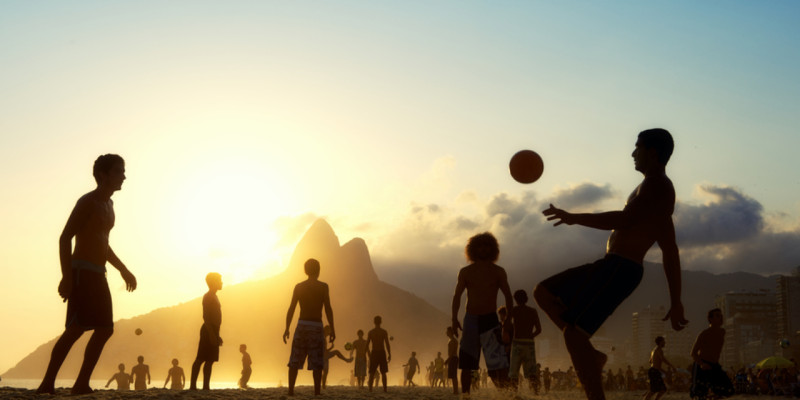
Sports in Brazil range from soccer matches and club volleyball to running groups, swimming lessons, capoeira, and coastal water sports. As you settle in, municipal centers, gyms, schools, and multisport clubs offer different ways to stay active and meet people. The choices depend on where you live, with local enrollment rules, membership terms, and costs shaping your routine.
Brazilian sports offer several ways to build a routine, from working out at a neighborhood gym to joining a club where training and social activities share the same setting. Commercial gyms sell subscriptions, multisport clubs combine facilities with membership, and municipal centers register participants for particular activities. Sesc, Serviço Social do Comércio, also provides individual and team sports for different ages. Across these settings, activities include weight training, running, swimming, volleyball, racquet sports, and martial arts.
Your surroundings shape the options: surfing on the coast, sailing on a São Paulo reservoir, or walking and climbing in mountain parks. For regular company and exercise, consider how an activity brings people together.
Soccer competitions run at several levels, including the national Brasileirão championship, Copa do Brasil, and state championships. Rivalries include Flamengo and Fluminense in Rio de Janeiro, Corinthians and Palmeiras in São Paulo, and Grêmio and Internacional in Porto Alegre. The Brazilian Football Confederation (CBF) provides competition schedules.
To buy a match ticket, start with the home club's ticket information. It explains the sections, prices, sale dates, and official sales platform. Members of supporter programs, known as sócios-torcedores, may have an earlier purchase window. Away supporters have a separate allocation, and your ticket section determines which stadium gate to use.
Entry may require more than just showing a ticket. The linked Flamengo match instructions for the Maracanã require advance facial registration and an original photo ID, with an original passport specified for foreign attendees.
Volleyball's Superligas offer another way to follow club sport. The men's Superliga schedule includes teams, venues, and broadcasters. Sada Cruzeiro plays in Contagem, Minas in Belo Horizonte, and Vôlei Renata in Campinas, with other teams in São Paulo state. For basketball, the Liga Nacional de Basquete organizes Novo Basquete Brasil (NBB). Its broadcast arrangements include ESPN, SporTV, Xsports, and NBB's YouTube channel.
Join the Brazil community
Get regular tips and advice to make the most of your expat life
Gyms and fitness classes in Brazil
Gyms, called academias, provide weights and cardio equipment, sometimes with group classes. Pilates studios, functional training centers, and gyms devoted to a particular discipline give you other ways to train. A pool or private lessons may be a separate service, so check what's included in the subscription you want.
Smart Fit illustrates how price and commitment can vary within one chain. Its Fit plan starts at BRL 99.90 per month (about USD 20), with a 12-month commitment and access to your chosen branch. Smart starts at BRL 119.90 per month (about USD 24), with no fixed term. Black starts at BRL 159.90 per month (about USD 32), with a 12-month commitment and access to the network in Brazil and other countries covered by the plan.
Compare the regular monthly charge, especially when an offer highlights a discounted first month. The contract terms cover applicable extra fees, cancellation, and promotions. If your stay is short or uncertain, a plan without a fixed term may suit you better than committing to a year.
Running and road races in Brazil
In São Paulo,Ibirapuera Park brings walkers, runners, and coached groups to the same public space. Park access is free, while coaching services may charge for sessions. You'll encounter the term assessoria de corrida for a service that provides a training plan and running support.
At the park, Corre no Ibira offers plans starting at BRL 249 per month (about USD 49), including an individual training plan, in-person strength training, and changing rooms with showers. Registration is through the operator's platform.
The Brazilian Athletics Confederation race calendar lists road and adventure races. Each organizer handles registration and sets conditions for distances, age categories, and bib collection. Both individual runners and training groups can take part in road races. One established event is São Paulo's 15 km São Silvestre; its official rules and registration information explain categories, documents, and race-kit collection.
Swimming pools and lessons in Brazil
You can swim at municipal facilities, private swim schools, and clubs. In São Paulo, municipal sports center pools are free to use with the network's membership card. Conditions on adult accompaniment or parental authorization apply to minors. Leisure pool access and swimming lessons have separate enrollment requirements: a card gives access for leisure swimming, while lessons require a place in a class suited to your ability.
For the São Paulo municipal sports card, the application requires a photo, copies of identity documents and your CPF, and proof of address. The CPF is Brazil's tax identification number and is also used for routine registrations. You can apply at a sports center or through the municipal online service. If your foreign documents differ from those requested, contact the center's reception for help with your application.
In Santa Catarina,Sesc swimming courses use temperature-controlled pools. At the Blumenau branch, monthly public rates are BRL 193 for one lesson a week (about USD 38), BRL 230 for two (about USD 46), and BRL 253 for three (about USD 50). Requirements can differ between branches: Jaraguá do Sul requires a medical certificate for aquatic activities, renewed every six months.
Joining team sports and clubs in Brazil
Classes give you a way to learn or return to a team sport with a group already in place. Sesc Santa Catarina offers adult basketball and volleyball at participating branches, with in-person registration for people paying the public rate. It also rents courts by the hour, giving priority to workers in commerce, services, and tourism. When renting a court, the person booking organizes the players.
For soccer, useful terms include futsal (indoor soccer) and futebol society, also written futebol soçaite, for small-sided soccer. At a multisport club, the options can extend to both amateur teams and member social activities. In São Paulo,SPAC (Clube Atlético São Paulo) offers soccer and rugby. Joining involves the club's membership process.
When contacting a club or instructor, explain which sport you want to play, your level, and your availability. Ask which language is used in sessions and whether you can try one before enrolling. Useful Portuguese terms include iniciante (beginner), aula experimental (trial session), turma (class group), and mensalidade (monthly fee).
Tennis and other racquet sports in Brazil
Tennis schools and clubs in Brazil offer lessons and court bookings. Organized groups, internal competitions, and player rankings can help you find partners. For example,Spa Tênis's LetzPlay page brings together bookings and rankings for a facility with clay and sand courts.
Beach tennis uses solid paddles on sand, and facilities also exist inland. The Santa Catarina Beach Tennis Federation directory lets you search by city or region and find contacts and booking tools. Some venues use LetzPlay; others handle reservations at reception or through other apps.
Padel is played on enclosed courts and has regional federations. The Cobrapa club directory includes facilities in Rio Grande do Sul, Paraná, Santa Catarina, São Paulo, and Rio de Janeiro. For squash, the São Paulo Squash Federation lists clubs, coaches, and its competition circuit.
Capoeira and martial arts in Brazil
Capoeira combines combat movements, physical expression, and a cultural dimension. Beginners progressively learn footwork and sequences. Sesc Santa Catarina capoeira groups serve children and adults at participating branches. At Prainha in Florianópolis, the public rate is BRL 95 per month (about USD 19) for three 50-minute sessions a week, with groups organized by age.
Other options include jiu-jitsu, judo, karate, and Muay Thai. At Sesc Prainha jiu-jitsu, classes are open from age 14, with public rates of BRL 80 per month for two sessions a week (about USD 16) or BRL 95 for three (about USD 19). If you're starting out, discuss the class level, required equipment, and how newcomers are introduced to the instructor.
Playing golf in Brazil
You can access golf through private membership or a visitor green fee. At Itanhangá in Rio de Janeiro, an 18-hole round costs BRL 590 on weekdays (about USD 117) or BRL 740 on weekends and holidays (about USD 147). Reduced rates apply to tee times from noon. Book online, and the starter confirms availability.
The club limits some visitor categories to 12 visits a year, except for tourists from other states or countries. If you're settling in Rio and want to play every week, your visitor category matters. The green fee does not include the club's other sports facilities.
Surfing, sailing, and other water sports in Brazil
You can also learn to sail inland. On São Paulo's Guarapiranga reservoir, Vou de Vela offers a basic course covering maneuvers and safety procedures, plus a two-hour introductory session with an instructor aboard, for BRL 350 (about USD 69).
Diving and snorkeling in protected areas involve site-specific access rules. In Fernando de Noronha, some natural pools require a reservation, a flotation vest, a mask, and a snorkel. Some routes also require an accredited guide. The park ticket is separate from the operator's service, so plan for both.
For beach swimming in Rio de Janeiro state, Inea, the state environmental institute, monitors bathing-water quality. Also take account of sea conditions and lifeguard instructions on site. For kayaking, stand-up paddleboarding, or sailing, contact the watersports base about permitted areas and launch conditions.
Hiking, cycling, and climbing in Brazil
Itatiaia National Park, on the border between Rio de Janeiro and Minas Gerais, has walks, mountain routes, and climbs. Its route descriptions distinguish the lower and upper areas and give distances and difficulty levels. Cycling is allowed in designated sectors and on some park roads.
In Serra dos Órgãos National Park, climbs around Dedo de Deus accessed from BR-116 require an advance risk-and-rules acknowledgment form. You must confirm with the park administration and hand in the printed form at the relevant entrance. A day hike, an overnight traverse, and a technical ascent call for different preparation; use the requirements for your actual route.
Heat also affects outdoor exercise. Official heat guidance distributed in Rio recommends sun protection, hydration, and limiting exposure during the hottest hours. Adjust training times and intensity based on local heat alerts, and use indoor activity as an alternative.
Sports for children in Brazil
Rio de Janeiro offers free municipal sports activities through its Vilas Olímpicas, sports centers, and programs, including options for people with disabilities. Register at the facility: available sports, age groups, and spaces determine which activity your child can join.
Sesc Santa Catarina youth activities include swimming and gymnastics for young children, multisport discovery for children, and team or individual disciplines for teenagers. Age groups depend on the institution. A course charge may be additional to registration with the network, while private sports schools charge for lessons or packages. When choosing a group, consider its level, the equipment needed, and how often your child can attend around school.
At Interlagos, the São Paulo Formula 1 Grand Prix offers grandstand tickets, hospitality, and a fan zone. The official São Paulo Grand Prix site explains circuit sectors and access and links to Eventim for ticket sales.
Frequently asked questions
Soccer competitions include the Brasileirão, Copa do Brasil, and state championships. You can also follow the volleyball Superligas and Novo Basquete Brasil basketball. Federation and league schedules identify fixtures, venues, and broadcasts.
At Smart Fit, Fit starts at BRL 99.90 per month (about USD 20) with a 12-month commitment. Smart starts at BRL 119.90 (about USD 24) with no fixed term, and Black starts at BRL 159.90 (about USD 32) with a 12-month commitment. Prices vary by branch; compare the regular charge and contract terms.
Sesc Santa Catarina offers adult basketball and volleyball at participating branches, while SPAC in São Paulo offers amateur sports including soccer and rugby through its membership structure. Contact the branch or club about your level, available places, joining conditions, and the language used in sessions.
Ibirapuera Park in São Paulo has coached running groups, including Corre no Ibira. The Brazilian Athletics Confederation calendar lists road and adventure races, with entries handled by the organizers. São Silvestre is a 15 km race in São Paulo with individual registration through its official site.
Itanhangá in Rio de Janeiro offers visitor green fees: BRL 590 for 18 holes on weekdays (about USD 117) and BRL 740 on weekends and holidays (about USD 147). Some visitor categories are limited to 12 visits a year; tourists from other states or countries are exempt from that limit. The fee excludes other club sports facilities.
Options include surfing along parts of the São Paulo, Santa Catarina, and Rio de Janeiro coasts, windsurfing and kitesurfing in Ceará, and sailing on Guarapiranga reservoir in São Paulo. Fernando de Noronha offers diving and snorkeling subject to protected-area rules, including reservations and required equipment at some natural pools.
Rio de Janeiro offers free municipal activities through Vilas Olímpicas, sports centers, and programs, including options for people with disabilities. Registration is at the facility and depends on the activity, age group, and space. Sesc Santa Catarina also offers activities from swimming and gymnastics to multisport and teenage sports, with fees and age groups depending on the course.
For soccer, use the home club’s official ticket instructions, which explain sales windows, sections, and entry conditions. Flamengo’s published instructions for a Maracanã fixture require advance facial registration and an original passport for foreign attendees; consult your own fixture’s requirements. The São Paulo Grand Prix site links to its Eventim ticket sales.
Itatiaia National Park offers walks, mountain routes, climbs, and cycling in designated sectors. Serra dos Órgãos has technical climbing routes, including around Dedo de Deus. The relevant BR-116 access procedure requires an advance risk-and-rules form, confirmation from the administration, and a printed copy handed in at the entrance.
Options include capoeira, jiu-jitsu, judo, karate, and Muay Thai. Sesc Santa Catarina has capoeira groups for children and adults at participating branches. At Sesc Prainha in Florianópolis, jiu-jitsu starts at age 14. Ask the instructor about beginner arrangements, class level, and equipment.
ℹ️
We do our best to provide accurate and up to date information. However, if you have noticed any inaccuracies in this article, please let us know in the comments section below.
A journalist, holder of the DALF C1 and C2 and a diploma from the University of Mauritius, I have nearly twenty years of writing experience. After six years in the Mauritian press, I joined Expat.com, where I have been working for over a decade, including five years as editorial assistant, and now as editorial manager.