Living in Santiago: the ultimate expat guide
Everything you need to know for a successful life in Santiago.
Santiago, Chile's capital and largest city, is home to over 7 million residents in the metropolitan area. Nestled in a valley surrounded by the snow-capped Andes Mountains, the city offers a unique blend of modern urban living and stunning natural landscapes. As South America's most developed economy and an OECD member, Chile provides political stability, a high standard of living, and a welcoming environment for newcomers from around the world.
Why Choose Santiago?
Santiago has evolved into a cosmopolitan hub attracting professionals, entrepreneurs, and families seeking quality of life in Latin America. The city combines first-world infrastructure with a lower cost of living compared to major North American or European cities.
5 Good Reasons to Move to Santiago
- Economic stability: Chile has the highest credit rating in Latin America (AA- from S&P) and a robust, transparent economy.
- Quality healthcare: Access to excellent private healthcare facilities at affordable rates compared to the United States.
- Natural beauty: Ski resorts within an hour's drive, beaches two hours away, and world-class wine regions at your doorstep.
- Growing tech scene: Santiago is Latin America's emerging tech hub, with major companies like Google, Amazon, and Microsoft establishing operations.
- Safe environment: Consistently ranked among the safest major cities in Latin America with low crime rates.
Working in Santiago: Opportunities and Employment
Santiago serves as Chile's economic powerhouse, hosting the headquarters of major national and multinational corporations. The city offers diverse employment opportunities across finance, technology, mining services, and professional services sectors. Foreign professionals with specialized skills are particularly sought after, especially those who are bilingual in Spanish and English.
Key Industries and Job Market
The Chilean economy is driven by several key sectors. Mining remains the backbone, with Chile producing over one-third of the world's copper. The technology sector is rapidly expanding, with IT services projected to reach USD 2.74 billion by 2029. Santiago has become a regional hub for fintech, with 348 active startups as of 2024. Other growing sectors include renewable energy, agriculture and food exports, and financial services. The service sector employs approximately 71% of the workforce.
Work Permits and Visas
Foreign nationals must obtain a Temporary Residence Visa (Residencia Temporal) to work legally in Chile. The most common pathway is the visa subject to contract (visa sujeta a contrato), which is tied to an employment contract with a Chilean employer. This visa is valid for up to 2 years and can be renewed. Processing time typically takes 6-8 months. After two years of residence, you may apply for permanent residency (Residencia Definitiva). The minimum salary requirement is CLP 500,000 monthly (approximately USD 515), though skilled positions typically offer significantly higher compensation.
The following table summarizes key employment indicators:
Unemployment Rate (2025) | 8.5% |
Average Monthly Salary (Santiago) | CLP 2,170,000 (USD 2,200) |
Minimum Wage (2025) | CLP 529,000 (USD 544) |
Top Sectors | Mining, Technology, Finance, Renewable Energy |
Sources: National Institute of Statistics (INE), Trading Economics
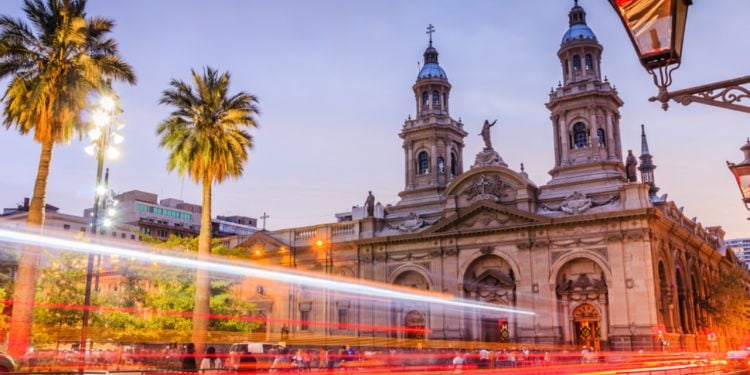
Working in Santiago
Chile is a country which is very developed in some ways, such as infrastructure, and very underdeveloped in others like poor customer service ...
Higher Education and Universities in Santiago
Santiago is home to some of Latin America's most prestigious universities, offering quality education and research opportunities. International students benefit from affordable tuition fees compared to North America or Europe, along with diverse academic programs. Many universities offer courses in English, particularly at the graduate level.
Top Universities
The Pontificia Universidad Católica de Chile (PUC) consistently ranks among the top universities in Latin America. It offers over 100 undergraduate programs and numerous graduate options. The Universidad de Chile, founded in 1842, is the country's oldest and most traditional public university, known for research excellence. Other notable institutions include Universidad de Santiago de Chile (USACH), Universidad Andrés Bello (UNAB), and Universidad Diego Portales. These universities offer programs across engineering, business, medicine, and social sciences.
Tuition Fees and Admission
Tuition fees for international students vary by institution and program. At public universities, undergraduate fees range from USD 3,000 to USD 7,000 per year. Private universities charge between USD 5,000 and USD 10,000 annually. Professional programs like medicine cost more. The Universidad de Chile charges a matriculation fee of USD 250 per semester plus variable tuition based on course load. At Pontificia Universidad Católica, credits cost approximately USD 120 each. Admission typically requires academic transcripts, language proficiency (Spanish for most programs), and entrance examinations. Graduate programs may accept TOEFL or IELTS for English-taught courses.
The following table provides tuition estimates:
Public University (Undergraduate) | USD 3,000 - 7,000/year |
Private University (Undergraduate) | USD 5,000 - 10,000/year |
Master's Programs | USD 4,000 - 10,000/year |
Student Living Costs | USD 700 - 1,100/month |
Sources: Universidad de Chile, Pontificia Universidad Católica de Chile
Schools and Education for Expat Children
Santiago offers numerous schooling options for expatriate families, from international schools following foreign curricula to bilingual institutions combining Chilean and international programs. The academic year runs from March to December, with summer holidays from mid-December to February and a two-week winter break in July.
International Schools
Santiago has over 17 international schools catering to various nationalities and curricula. The International School Nido de Aguilas is the premier American-curriculum school, serving over 1,500 students from 50 countries. It offers the International Baccalaureate (IB) program alongside American college preparatory education. The Grange School and Craighouse School follow British traditions with IB programs. Bradford School offers English-medium education with Cambridge examinations. For families seeking bilingual options, Santiago College combines Chilean curriculum with IB programs. German-speaking families can consider the Deutsche Schule Santiago, while French speakers have the Alianza Francesa.
Enrollment and Fees
International school places are competitive, and parents should apply well in advance. Most schools require entrance assessments in language, mathematics, and English, plus family interviews. Tuition fees are substantial: Nido de Aguilas charges approximately USD 20,900 per year for grades K2-12, plus a one-time incorporation fee of around USD 14,700. Other international schools range from USD 8,000 to USD 15,000 annually. Additional costs include registration fees, uniforms, transportation, and extracurricular activities. Some employers offer education allowances as part of expatriate packages.
The following table summarizes school options:
Nido de Aguilas (American/IB) | USD 20,900/year |
The Grange School (British/IB) | USD 12,000 - 15,000/year |
Craighouse School (British/IB) | USD 10,000 - 14,000/year |
Santiago College (Bilingual/IB) | USD 9,600/year |
Sources: Nido de Aguilas, The Grange School
Housing and Neighborhoods in Santiago
Santiago's housing market offers diverse options from modern high-rise apartments to traditional houses in tree-lined neighborhoods. Rental prices vary significantly by location, with premium areas commanding higher rates. Understanding the city's neighborhoods helps newcomers find the right fit for their lifestyle and budget.
Popular Neighborhoods for Expats
Las Condes and Vitacura are the most sought-after areas, featuring upscale apartments, shopping centers, international restaurants, and proximity to international schools. Providencia offers a central location with excellent metro access, vibrant nightlife, and diverse dining options. Ñuñoa has emerged as a popular middle-class neighborhood with a bohemian atmosphere, parks, and more affordable rents. Lo Barnechea and La Dehesa appeal to families seeking houses near the Andes foothills. Santiago Centro and Lastarria attract young professionals drawn to cultural amenities and urban convenience.
Rental Prices and Procedures
Rental prices in Santiago are typically quoted in Chilean pesos (CLP) or the inflation-adjusted unit UF (Unidad de Fomento). In premium neighborhoods like Las Condes and Vitacura, expect to pay CLP 700,000 to 1,200,000 (USD 720-1,240) monthly for a furnished two-bedroom apartment. In Providencia, one-bedroom apartments range from CLP 475,000 to 700,000 (USD 490-720). More affordable options in Ñuñoa or Santiago Centro start around CLP 350,000 to 520,000 (USD 360-535) for one-bedroom units. Rental contracts typically require a one-month deposit plus the first month's rent. Most apartments include gastos comunes (common expenses) of USD 80-150 monthly for building maintenance and security.
The following table shows average monthly rents:
1-Bedroom (Las Condes/Vitacura) | USD 700 - 1,000 |
1-Bedroom (Providencia) | USD 490 - 720 |
3-Bedroom (Good Area) | USD 1,200 - 1,800 |
Average Price per sqm (Purchase) | USD 2,400 - 3,500 |
Sources: Numbeo, Global Property Guide
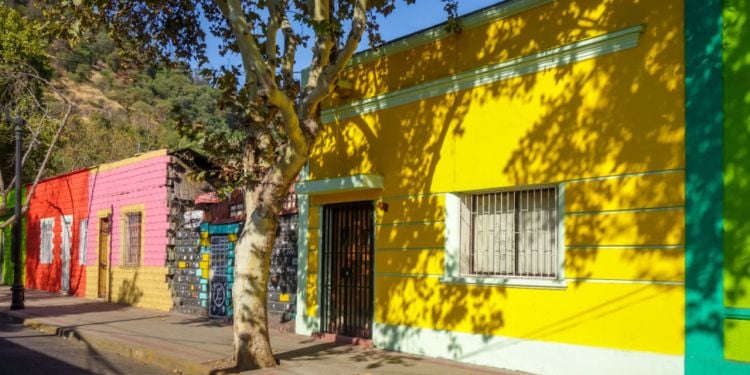
Accommodation in Santiago
There are many options for housing in Santiago, including many different types of areas to live as well as different price points. This article gives ...
Leisure, Culture, and Things to Do in Santiago
Santiago offers a rich cultural scene, diverse entertainment options, and easy access to outdoor adventures. From world-class museums and vibrant neighborhoods to nearby ski resorts and wine valleys, residents enjoy a variety of activities year-round.
Museums and Cultural Attractions
The Museo Chileno de Arte Precolombino (Pre-Columbian Art Museum) houses one of Latin America's finest collections of indigenous artifacts. The Museo de la Memoria y los Derechos Humanos (Museum of Memory and Human Rights) offers a powerful look at Chile's recent history. Art enthusiasts will appreciate the Museo Nacional de Bellas Artes and the Centro Cultural Gabriela Mistral (GAM), which hosts exhibitions, concerts, and theater performances. La Chascona, the Santiago home of Nobel Prize-winning poet Pablo Neruda, provides insight into Chilean literary heritage.
Parks and Outdoor Activities
Cerro San Cristóbal (San Cristóbal Hill) rises nearly 900 meters above the city within the Parque Metropolitano, South America's largest urban park at 722 hectares. Visitors can hike, take the funicular, or ride the cable car for panoramic views. Cerro Santa Lucía offers another hilltop escape with historic terraces and fountains. Parque Bicentenario in Vitacura provides a tranquil setting with lagoons and walking paths. Every Sunday, 40,000 cyclists take to car-free main roads during the CicloRecreoVía program.
Nightlife and Entertainment
Barrio Bellavista is the heart of Santiago's nightlife, packed with bars, restaurants, and clubs. The Lastarria neighborhood offers a more sophisticated scene with wine bars, art-house cinemas, and boutique cafes. Providencia and Las Condes have upscale dining and cocktail lounges. Day trips to the Maipo Valley wine region allow visitors to tour renowned vineyards like Concha y Toro and Santa Rita. The coastal cities of Valparaíso and Viña del Mar are just two hours away, offering beaches, colorful hillside neighborhoods, and seaside restaurants.
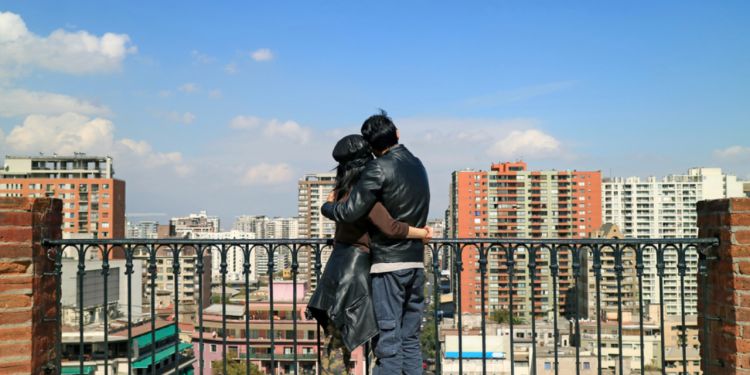
Thing to see and to do in Santiago
There are many different leisure activities in Santiago. After all, a large metropolitan area of over 7 million inhabitants provides a wide variety ...
Daily Life in Santiago
Santiago offers a comfortable daily routine with modern amenities, efficient transportation, and a Mediterranean climate featuring warm, dry summers and mild, rainy winters. The city combines the convenience of a major metropolis with a relatively relaxed pace compared to other global capitals.
Getting Around
Santiago's public transport system, RED Metropolitana de Movilidad, integrates metro, buses, and trains under a single fare system. The Metro is the backbone of the network, with 7 lines and 143 stations covering most of the city. It carries approximately 2.5 million passengers daily and is known for being clean, safe, and efficient. To use public transport, purchase a Tarjeta BIP (rechargeable card) at any metro station for approximately CLP 1,550 (USD 1.60). A single trip costs between CLP 640-800 (USD 0.65-0.80) depending on peak hours, and the card allows transfers within a 2-hour window. Buses (micros) complement the metro, reaching neighborhoods beyond rail coverage. Uber and Cabify are widely used and often more affordable than traditional taxis.
Lifestyle and Culture
Santiaguinos typically work from 9 AM to 6 PM, with lunch being an important social meal. Dinner is usually eaten late, around 8-9 PM. Weekends often involve family gatherings, visits to parks, or trips to nearby beaches or mountains. Learning Spanish significantly improves daily life, though English is increasingly spoken in business environments. The city hosts weekly farmers' markets (ferias) in every neighborhood, offering fresh produce at lower prices than supermarkets. Major supermarket chains include Jumbo, Líder, and Unimarc. Santiago enjoys over 300 sunny days per year, with summer temperatures reaching 30°C (86°F) and winter lows around 3°C (37°F).
Cost of Living in Santiago
Santiago is one of the more expensive cities in South America but remains affordable compared to major cities in North America, Europe, or Australia. The cost of living has increased in recent years, yet foreigners with international salaries can enjoy a comfortable lifestyle. Budgeting carefully and understanding local prices helps newcomers manage expenses effectively.
Monthly Budget for a Single Person
A single professional can live comfortably in Santiago on approximately USD 1,500-2,000 monthly, including rent. This budget covers a one-bedroom apartment in a decent neighborhood, utilities, food, transportation, and entertainment. Those seeking premium housing or dining out frequently should budget USD 2,500+ monthly.
Category | Monthly Cost (USD) |
Rent (1-bedroom, central) | 550 - 800 |
Utilities (electricity, water, gas) | 85 - 120 |
Gastos Comunes | 80 - 150 |
Groceries | 300 - 400 |
Transportation | 50 - 80 |
Health Insurance | 100 - 200 |
Entertainment & Dining | 150 - 300 |
Total (Single Person) | 1,315 - 2,050 |
Monthly Budget for a Family of Four
Families with children should budget USD 3,500-5,000 monthly, depending on housing choices and schooling. International school fees represent a significant expense, ranging from USD 800-1,750 monthly per child.
Category | Monthly Cost (USD) |
Rent (3-bedroom, good area) | 1,200 - 1,800 |
Utilities & Gastos Comunes | 200 - 300 |
Groceries | 600 - 800 |
Transportation | 100 - 150 |
International School (2 children) | 1,600 - 3,500 |
Health Insurance (family) | 300 - 500 |
Entertainment & Dining | 300 - 500 |
Total (Family of 4) | 4,300 - 7,550 |
Sources: Numbeo 2025, Expat.cl
In Short
Santiago combines the best of modern urban living with the warmth of South American culture. The city offers economic stability, quality healthcare, excellent education options, and stunning natural surroundings—all at a cost of living lower than most major global cities. Whether you're drawn by career opportunities in mining, tech, or finance, or simply seeking a high quality of life with easy access to mountains, beaches, and world-class wine regions, Santiago delivers. The welcoming local community and growing international population make it easier to settle in and build a fulfilling life. Ready to start your Santiago adventure? Join the Expat.com Santiago forum to connect with fellow expats, ask questions, and share experiences!
We do our best to provide accurate and up to date information. However, if you have noticed any inaccuracies in this content, please contact us.