

Living in São Paulo: the ultimate expat guide
Everything you need to know for a successful life in São Paulo.
São Paulo stands as the economic heart of South America and Brazil's largest city, home to over 12 million residents within its urban core and more than 22 million across its metropolitan area. This sprawling megacity offers expatriates unparalleled professional opportunities, world-class dining, and a cultural scene that rivals any global capital. The city's cosmopolitan character stems from waves of immigration that brought Italian, Japanese, Arab, and European communities, creating one of the most diverse urban environments on the planet.
Why São Paulo Attracts Expats
The city generates approximately 34% of Brazil's GDP, making it the undisputed business hub for multinational corporations, financial institutions, and tech startups across Latin America. Despite its intense urban rhythm, São Paulo surprises newcomers with expansive green spaces, a subtropical climate with mild winters, and weekend access to stunning beaches along the coast just a few hours away.
5 Good Reasons to Move to São Paulo
- Career opportunities: Headquarters of major Brazilian and international companies across finance, technology, pharmaceuticals, and services.
- Cultural richness: Over 100 museums, countless theaters, and a thriving restaurant scene with cuisines from around the world.
- International community: Large expat networks and established support systems for newcomers.
- Accessible cost of living: While the most expensive city in Brazil, costs remain significantly lower than major North American or European cities.
- Gateway to Brazil: Excellent domestic and international flight connections from two major airports.
Working in São Paulo: Career Opportunities and Employment
São Paulo dominates Brazil's economy, offering expatriates extensive professional opportunities across virtually every industry. The city hosts the headquarters of major Brazilian corporations as well as the regional offices of international giants including Google, Microsoft, Shell, HSBC, and Unilever. For foreign professionals, understanding the job market landscape and visa requirements is essential to building a successful career here.
Key Industries and Job Market
The financial services sector remains the city's backbone, centered around Avenida Faria Lima and the Itaim Bibi district. Technology is booming, with São Paulo emerging as Latin America's leading tech hub, attracting investment in fintech, AI, and software development. Other thriving sectors include pharmaceuticals, advertising, consulting, and manufacturing. English teaching remains a popular entry point for younger expats, though salaries tend to be modest.
Work Visas and Permits
Foreign nationals require a VITEM V (Temporary Work Visa) to work legally in Brazil. Your Brazilian employer must initiate the work permit application with the Ministry of Labor, which typically takes 30 to 60 days for approval. Applicants need either two years of relevant experience with nine years of education, a university degree with one year of experience, or a relevant postgraduate qualification. After two years with the same employer, the temporary visa can convert to permanent residency. Remote workers may qualify for the Digital Nomad Visa (VITEM XIV), valid for up to two years, requiring proof of USD 1,500 monthly income.
Employment Overview
The table below summarizes key employment indicators for São Paulo.
Unemployment rate (Q2 2025) | 5.1% |
Average monthly salary | BRL 4,102 (~USD 820) |
Formal employment rate | 82.9% |
Key sectors | Finance, Technology, Services, Pharmaceuticals |
Sources: IBGE, Fundação Seade
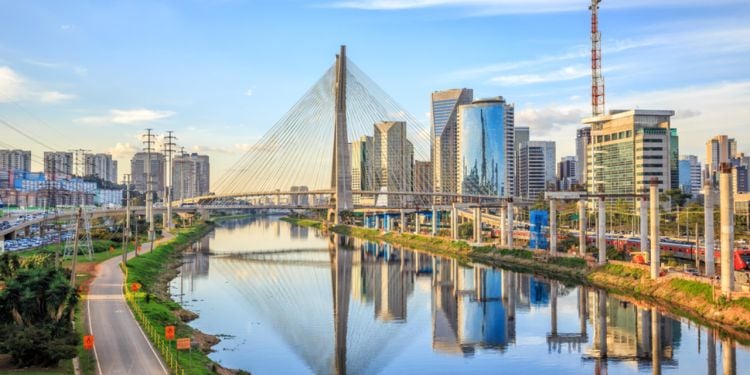
Working in São Paulo
São Paulo is Brazil's largest economic center by far, with many Brazilian firms headquartered here, as well the offices of dozens of ...
Higher Education and Universities in São Paulo
São Paulo hosts Brazil's most prestigious universities and offers excellent opportunities for international students seeking undergraduate, graduate, or research programs. The city's academic institutions combine world-class research facilities with diverse programs taught in Portuguese and, increasingly, in English at the graduate level.
Top Universities
The University of São Paulo (USP) consistently ranks as the best university in Latin America and sits within the top 100 globally according to QS World Rankings. As a public institution, USP does not charge tuition to Brazilian students, while international students pay approximately USD 1,000 per year. The university operates across multiple campuses throughout the state, offering programs in virtually every academic discipline.
Other notable institutions include São Paulo State University (UNESP), the Federal University of São Paulo (UNIFESP) renowned for health sciences, and Mackenzie Presbyterian University, one of Brazil's oldest and most respected private institutions. Pontifical Catholic University of São Paulo (PUC-SP) excels in humanities and social sciences.
Programs and Admission
Undergraduate programs at public universities require passing the vestibular entrance exam, conducted in Portuguese. Master's and doctoral programs often accept international applicants with TOEFL scores of 480+ or equivalent English certification. Many graduate programs now offer courses in English, particularly in business, engineering, and international relations. The academic calendar runs from February to June and August to December.
University Information
University of São Paulo (USP) | |
Federal University of São Paulo (UNIFESP) | |
São Paulo State University (UNESP) | |
Mackenzie Presbyterian University |
Sources: QS World University Rankings, University websites
Schools and Education for Expat Children
São Paulo offers one of the largest education networks in Brazil with over 5,000 schools, providing expat families with diverse options ranging from international institutions following American, British, or IB curricula to bilingual schools combining Brazilian and foreign programs. Most expatriate families choose international schools due to language continuity and globally recognized qualifications.
International Schools
Graded – The American School of São Paulo is the oldest American school in Brazil, offering the IB Diploma and American curriculum from early childhood through grade 12. The British College of Brazil follows the British National Curriculum leading to IGCSEs and the IB Diploma, with annual fees ranging from BRL 92,000 to BRL 138,000 (approximately USD 18,000-27,000). Chapel School offers American, Brazilian, and IB programs with a Catholic foundation.
Avenues São Paulo, part of the global Avenues network, provides an innovative approach combining Brazilian curriculum requirements with international standards, with fees around BRL 198,000 (approximately USD 39,000) annually. St. Nicholas School offers the full IB programme from Primary Years through the Diploma.
Enrollment and Considerations
Most international schools require applications 6 to 12 months in advance, with admission dependent on available spaces and assessments. Documents typically needed include academic transcripts, recommendation letters, and proof of immunizations. Schools are concentrated in upscale neighborhoods like Morumbi, Chácara Flora, and Jardins, which influences where many expat families choose to live. Portuguese language support is commonly offered to help children integrate into Brazilian society.
International School Fees (2025-2026)
The British College of Brazil | BRL 92,000 – 138,000/year |
Avenues São Paulo | ~BRL 198,000/year |
Beacon School | BRL 85,000 – 153,000/year |
St. Nicholas School | BRL 90,000 – 129,000/year |
Sources: International Schools Database, School websites
Housing and Neighborhoods for Expats
Finding the right neighborhood in São Paulo significantly impacts your quality of life, given the city's vast size and notorious traffic. Most expats settle in the central-south zone, where infrastructure, safety, and amenities cater to international residents. Rental prices vary considerably by location, with premium neighborhoods commanding higher rates but offering walkability and security.
Popular Expat Neighborhoods
Jardins (Jardim Paulista and Jardim América) represents São Paulo's most prestigious residential area, featuring tree-lined streets, luxury shopping, and excellent restaurants. Expect to pay BRL 4,800 to 6,500 monthly for a one-bedroom apartment. Itaim Bibi attracts young professionals working in finance and tech, with modern high-rises and vibrant nightlife, while Vila Madalena offers a bohemian atmosphere with galleries, street art, and lively bars at slightly more accessible prices around BRL 3,500 to 5,800 for one-bedroom units.
Pinheiros provides excellent public transport connections and a diverse cultural scene, making it popular among expats seeking balance between urban energy and neighborhood charm. Moema offers a quieter, family-friendly environment near Ibirapuera Park, while Morumbi and Chácara Flora attract families with children enrolled in nearby international schools.
Rental Process
Most rentals require a guarantor (fiador) who owns property in São Paulo, or alternatively a higher security deposit. Apartments are typically rented unfurnished. Working with a licensed real estate agent (corretor) helps navigate the market and lease negotiations. Condominium fees (condomínio) and property tax (IPTU) add significantly to monthly costs.
Average Monthly Rents (2025)
1-bedroom (city center) | BRL 3,500 – 4,500 (~USD 700-900) |
1-bedroom (outside center) | BRL 2,000 – 3,000 (~USD 400-600) |
3-bedroom (city center) | BRL 6,500 – 8,500 (~USD 1,300-1,700) |
3-bedroom (outside center) | BRL 3,800 – 5,500 (~USD 760-1,100) |
Sources: Numbeo
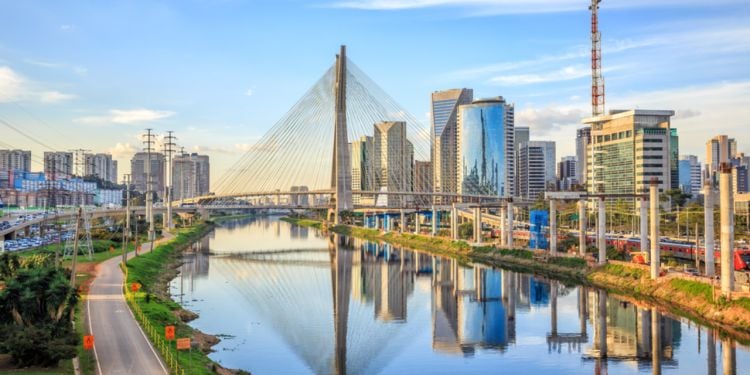
Accommodation in São Paulo
São Paulo is Brazil's largest city by far. It offers a wide variety of accommodations with different levels of comfort and for all ...
Leisure, Culture and Things To Do
São Paulo rewards explorers with one of Latin America's richest cultural offerings. The city's immigrant heritage has created a fascinating mosaic of traditions, cuisines, and artistic expressions. From world-class museums to vibrant nightlife, there's always something to discover beyond the urban intensity.
Museums and Cultural Attractions
The São Paulo Museum of Art (MASP) on Avenida Paulista holds the most important collection of European art in the Southern Hemisphere, including works by Van Gogh, Rembrandt, and Renoir displayed on iconic glass easels designed by architect Lina Bo Bardi. Entry costs approximately BRL 75 (USD 15), with free admission on Tuesdays. The Pinacoteca, Brazil's oldest art museum, showcases Brazilian art in a beautifully restored 19th-century building.
Within Ibirapuera Park, the green lung of São Paulo spanning 400 acres, you'll find the Museum of Modern Art (MAM), the Afro Brazil Museum, and the Oca exhibition space designed by Oscar Niemeyer. The Football Museum at Pacaembu Stadium celebrates Brazil's passion for the beautiful game through interactive exhibits.
Parks and Outdoor Activities
Parque Ibirapuera offers jogging trails, cycling paths, and tranquil lakes—perfect for escaping urban stress. Rent bicycles from vendors near the park entrances. Parque Trianon provides a pocket of Atlantic rainforest right across from MASP. For weekend getaways, the beaches of Guarujá and Santos lie just two hours south.
Nightlife and Entertainment
Vila Madalena pulses with bars, live music venues, and street art, including the famous Beco do Batman alley. The Jardins district offers upscale cocktail bars and fine dining. São Paulo's nightclub scene starts late—don't expect venues to fill before midnight. Traditional samba can be found in Bixiga, the city's Italian-Brazilian neighborhood.
Cultural Highlights
MASP (Art Museum) | Avenida Paulista – Free Tuesdays |
Ibirapuera Park | Free entry – Multiple museums |
Pinacoteca | Jardim da Luz – Free Saturdays |
Vila Madalena (Nightlife) | Bars, galleries, street art |
Sources: MASP, São Paulo City Government
Daily Life and Getting Around São Paulo
Daily life in São Paulo revolves around managing the city's legendary size and traffic while embracing its endless offerings in dining, culture, and entertainment. Paulistanos (São Paulo residents) tend to start their days early and work long hours, but the city truly comes alive after dark with restaurants, bars, and cultural venues buzzing well into the night.
Public Transportation
São Paulo's metro system (Metrô) is modern, clean, and efficient, operating five lines with 89 stations covering over 100 kilometers. The system connects with the CPTM commuter rail network, adding six additional lines serving the greater metropolitan area. Together, these networks transport approximately 5 million passengers daily. A single metro or train ticket costs BRL 5.20 (approximately USD 1), while buses charge BRL 5.00.
The Bilhete Único transit card allows unlimited bus transfers within a three-hour window and integration with metro and trains. Monthly transit passes cost around BRL 230 (approximately USD 45). Ride-hailing apps like Uber and 99 are widely used and affordable. Traffic congestion remains severe during rush hours, with commutes often exceeding 90 minutes each way.
Lifestyle and Culture
Paulistanos embrace a sophisticated urban lifestyle. The city boasts over 12,000 restaurants representing cuisines from around the world, reflecting its immigrant heritage. Weekend brunch culture thrives, and Avenida Paulista closes to traffic every Sunday, transforming into a massive pedestrian zone with street performers, food vendors, and cultural activities. Learning basic Portuguese significantly enhances daily interactions, as English proficiency varies outside business and tourism contexts.
Transportation Costs (2025)
Metro/Train single ticket | BRL 5.20 |
Bus single ticket | BRL 5.00 |
Monthly transit pass | ~BRL 230 |
Average commute time | 93 minutes (round trip) |
Sources: Metrô São Paulo, SPTrans
Cost of Living in São Paulo
São Paulo ranks as Brazil's most expensive city, yet remains significantly more affordable than major cities in North America or Europe. Expats earning in foreign currencies find their purchasing power stretches considerably further here. Housing and international schooling represent the largest expenses, while groceries, dining, and entertainment offer good value.
Monthly Budget for a Single Person
A single expat can live comfortably in São Paulo on approximately USD 1,500 to 2,500 monthly, depending on lifestyle choices and neighborhood. This budget covers rent in a decent neighborhood, utilities, transportation, groceries, dining out, and entertainment. Those living more modestly in emerging neighborhoods can manage on less.
Monthly Budget for a Family of Four
Families with children enrolled in international schools should budget USD 5,000 to 8,000 monthly. International school tuition represents a major expense, ranging from USD 1,500 to 3,500 per child monthly. Private health insurance for a family typically costs USD 400 to 800 monthly, depending on coverage level.
Cost of Living: Single Person (Monthly)
Expense | BRL | USD |
Rent (1-bedroom, center) | 3,500 | 700 |
Utilities (electricity, water, gas) | 300 | 60 |
Internet | 110 | 22 |
Groceries | 1,500 | 300 |
Transportation | 250 | 50 |
Dining/Entertainment | 1,000 | 200 |
Health insurance | 500 | 100 |
Total | 7,160 | ~1,430 |
Cost of Living: Family of Four (Monthly)
Expense | BRL | USD |
Rent (3-bedroom, center) | 7,500 | 1,500 |
Utilities | 600 | 120 |
International school (2 children) | 18,000 | 3,600 |
Groceries | 3,000 | 600 |
Transportation | 800 | 160 |
Health insurance (family) | 2,500 | 500 |
Dining/Entertainment | 2,000 | 400 |
Total | 34,400 | ~6,880 |
Sources: Numbeo 2025, Expatistan
In Short
São Paulo offers expatriates an extraordinary blend of professional opportunity and cultural richness that few cities can match. As South America's economic powerhouse, it provides career prospects across every industry while delivering a sophisticated lifestyle with world-class dining, museums, and entertainment. The city demands patience—traffic, size, and bureaucracy can challenge newcomers—but rewards those who embrace its energy with deep connections and memorable experiences.
Whether you're drawn by a corporate transfer, entrepreneurial ambitions, or simply the adventure of experiencing Brazil's largest metropolis, São Paulo delivers far more than first impressions suggest. The warmth of Paulistanos, the endless culinary discoveries, and the city's remarkable diversity make it a place where many expats extend their stays far beyond original plans.
Ready to connect with others who've made São Paulo home? Join the Expat.com São Paulo forum to ask questions, share experiences, and find your community in this dynamic city.
We do our best to provide accurate and up to date information. However, if you have noticed any inaccuracies in this content, please contact us.


Essential services for your expat journey



