

Living in San Miguel de Tucumán: the ultimate expat guide
Everything you need to know for a successful life in San Miguel de Tucumán.
San Miguel de Tucumán, the capital of Tucumán Province, is a historic and culturally rich city located in the northwest of Argentina. Known as the "Garden of the Republic" for its lush vegetation, Tucumán holds deep significance as the birthplace of Argentine independence, declared in 1816 at the iconic Casa Histórica. With a population of approximately 606,000, it is Argentina's fifth-largest city, offering a blend of colonial heritage, vibrant nightlife, and access to stunning natural landscapes including the Yungas forests and Calchaquí Valleys.
5 Good Reasons to Move to San Miguel de Tucumán
- Affordable cost of living: One of the most budget-friendly cities in Argentina, with living costs significantly lower than Buenos Aires.
- Rich cultural heritage: A city steeped in history, with museums, colonial architecture, and the famous Casa Histórica de Tucumán.
- Natural beauty: Easy access to mountains, forests, valleys, and reservoirs for outdoor activities.
- University hub: Home to the prestigious Universidad Nacional de Tucumán (UNT), attracting students from across the region.
- Warm climate: Enjoy a subtropical climate with mild winters and warm summers, ideal for year-round outdoor living.
Working in San Miguel de Tucumán
San Miguel de Tucumán serves as the economic hub of northwestern Argentina, with employment opportunities in several key industries. While the city offers a more relaxed pace compared to Buenos Aires, expats can find work in various sectors, though Spanish proficiency is generally expected.
Key Industries and Employment Sectors
The local economy is driven by agriculture, particularly sugarcane and citrus production, which has historically shaped the region's identity. Other significant sectors include education, healthcare, commerce, and IT services. The presence of the Universidad Nacional de Tucumán creates opportunities in academia and research. The service sector, including retail and hospitality, also provides employment for residents.
Work Permits and Visas
Foreign nationals wishing to work in Argentina require a work visa sponsored by a local employer registered with the Dirección Nacional de Migraciones (DNM). The employer must be authorized to hire foreign workers. Temporary work visas are valid for one year and can be renewed. After three years, expats may apply for permanent residency. Citizens of MERCOSUR countries (Brazil, Paraguay, Uruguay, Bolivia, Chile, Peru, Colombia, Ecuador, Venezuela) benefit from simplified procedures.
The following table provides an overview of key employment indicators:
Unemployment rate (Greater Tucumán, Q4 2024) | 5.7% |
Average monthly salary (city estimate) | USD 780–950 |
Main sectors | Agriculture, Education, Healthcare, IT, Commerce |
Sources: CEIC Data / INDEC, BDEEX Salary Data 2025
Higher Education and Universities in San Miguel de Tucumán
San Miguel de Tucumán is an important educational center in Argentina, home to one of the country's largest and most prestigious universities. The city attracts thousands of students annually, making it a youthful and dynamic place to live.
Universidad Nacional de Tucumán (UNT)
Founded in 1914, the Universidad Nacional de Tucumán (UNT) is the largest university in northwestern Argentina and one of the most respected public institutions in the country. Access is unrestricted and free of charge for both Argentine and international students. The university comprises 13 faculties offering programs in medicine, engineering, law, economics, agricultural sciences, architecture, and the arts.
International students can pursue undergraduate, graduate, and PhD programs. Most courses are taught in Spanish, so proficiency is required. UNT offers Spanish language courses for international students needing language support. Competitive programs such as Medicine, Engineering, and Law may require entrance exams.
Admission Process for International Students
International applicants must provide a legalized high school diploma, academic transcripts (translated), a passport copy, and proof of Spanish proficiency (DELE or SIELE certificates). Upon receiving an acceptance letter, students must apply for an Argentine student visa at their local consulate. The visa requires proof of financial support and acceptance documentation.
UNT collaborates with CONICET (Argentina's federal science council) on research projects in biotechnology, environmental science, medicine, and agriculture.
Sources: Universidad Nacional de Tucumán Official Website, Wikipedia - UNT
Schooling for Children in San Miguel de Tucumán
Finding the right school is an important consideration for expat families moving to San Miguel de Tucumán. The city offers public and private schooling options, though international schools are concentrated in Buenos Aires.
The Argentine Education System
Education in Argentina is compulsory for 12 years, from age 5 to 17, covering primary and secondary levels. The school year runs from March to December, with summer holidays from mid-December to early March. Public schools are free but operate on half-day schedules (morning or afternoon). Instruction is entirely in Spanish, which can be challenging for children who do not speak the language.
Private and Bilingual Schools
Private schools in Tucumán offer higher quality facilities, smaller class sizes, and some bilingual programs. While the city lacks fully international schools following American or British curricula, several private institutions incorporate English instruction into their programs. Parents seeking International Baccalaureate (IB) or Cambridge IGCSE programs may need to consider schools in Buenos Aires or distance learning options.
Bilingual schools are in high demand throughout Argentina, and applications are typically submitted the year prior to enrollment. Private school fees vary but are considerably lower than in Buenos Aires, typically ranging from USD 100 to USD 400 per month depending on the institution.
Homeschooling was made explicitly legal in Argentina in 2024 under the omnibus law, ending previous legal uncertainty for expat families preferring this option.
Sources: Expat Arrivals - Education in Argentina, Gateway to South America
Housing and Neighbourhoods in San Miguel de Tucumán
San Miguel de Tucumán offers affordable housing options compared to other Argentine cities. The rental market is accessible, with various neighbourhoods catering to different lifestyles and budgets.
Popular Neighbourhoods for Expats
Centro (Downtown): The historic heart of the city, close to Plaza Independencia, museums, restaurants, and shops. Ideal for those who want to walk to amenities. Apartments here range from studios to larger units.
Barrio Norte: A more upscale residential area north of the center, known for its restaurants, bars, and gastronomic scene. Popular among young professionals and families seeking a modern lifestyle.
Yerba Buena: A suburban area west of the city center, considered the most upscale neighbourhood. Features larger homes, green spaces like Percy Hill Park, and a quieter atmosphere. Favored by families and those seeking proximity to nature.
Rental Prices and Procedures
Rental costs in San Miguel de Tucumán are among the lowest in Argentina. The following table outlines typical monthly rents:
1-bedroom apartment (city center) | USD 150–250/month |
3-bedroom apartment (city center) | USD 350–600/month |
1-bedroom apartment (outside center) | USD 100–180/month |
Rental contracts typically require a guarantor (guarantía) who owns property in the province, or a deposit equivalent to several months' rent. Some landlords accept rental insurance as an alternative. Furnished short-term rentals are available through platforms like Airbnb for newcomers exploring the city.
Leisure, Culture and Things To Do in San Miguel de Tucumán
San Miguel de Tucumán offers a rich cultural scene and diverse leisure activities. From historic landmarks to natural escapes, there is plenty to explore both within the city and in the surrounding province.
Museums and Historical Sites
Casa Histórica de Tucumán: Argentina's most important national monument, where independence was declared on July 9, 1816. The museum features guided tours and an evening light show. Free entry.
Museo de la Industria Azucarera: Located in Parque 9 de Julio, this museum explores the history of Tucumán's sugarcane industry in a beautiful colonial building.
Casa Padilla Museum: A 19th-century mansion near Plaza Independencia showcasing period art and furniture.
Parks and Nature
Parque 9 de Julio: The city's largest park, featuring walking trails, a lake, rose garden, cafes, and the Museo de la Industria Azucarera.
Parque Sierra de San Javier: A scenic hill just outside the city, home to the Cristo Bendicente statue. Popular for hiking, paragliding, and panoramic views.
Dique El Cadillal: A reservoir 25 km from the city, perfect for kayaking, windsurfing, fishing, and picnicking.
Day Trips and Excursions
Tafí del Valle: A picturesque mountain valley 107 km away, ideal for hiking, horseback riding, and exploring the Los Menhires Archaeological Reserve.
Quilmes Ruins: A significant pre-Columbian archaeological site in the Calchaquí Valleys, featuring ancient stone structures and a museum.
Villa Nougués: A charming village accessible through the Yungas forest, offering a fairytale-like atmosphere and mountain views.
Nightlife and Gastronomy
Tucumán is famous for its empanadas tucumanas—fried pastries filled with beef, served with lemon. Other regional specialties include tamales, humita, and locro. The city's bars and restaurants concentrate around Barrio Norte and Plaza Independencia.
Sources: Argentina Travel - Tucumán, TripAdvisor
Daily Life in San Miguel de Tucumán
Daily life in San Miguel de Tucumán combines the warmth of Argentine culture with a slower pace than larger cities. Understanding local customs, transportation, and lifestyle will help expats settle in comfortably.
Getting Around the City
San Miguel de Tucumán does not have a metro or tram system. The bus network (colectivos) is the main form of public transit, providing extensive coverage across the city and suburbs. Fares require the SAETA card, an electronic payment card available at kiosks throughout the city—cash is not accepted on buses. A single ride costs less than USD 0.50. Buses operate from approximately 5:00 AM to midnight.
Taxis are readily available, identifiable by yellow and black markings. Short trips within the city center cost around USD 3–8. Ride-sharing apps like Uber and Cabify may operate, though availability can vary. For intercity travel, the Terminal de Ómnibus connects Tucumán to Buenos Aires (14–17 hours), Salta, Córdoba, and other destinations.
Lifestyle and Cultural Customs
Tucumán operates on a traditional Argentine schedule. Many businesses close during siesta (roughly 1:00–5:00 PM), reopening in the late afternoon. Dinner is typically served late, around 9:00–10:00 PM. Weekends often involve family gatherings, asados (barbecues), and socializing at local cafes.
The city enjoys a subtropical climate with hot, humid summers (December–February) and mild winters. Spanish is essential for daily interactions, as English is not widely spoken outside tourist areas and universities.
Sources: Moovit - San Miguel de Tucumán Transit, MileHacker Travel Guide
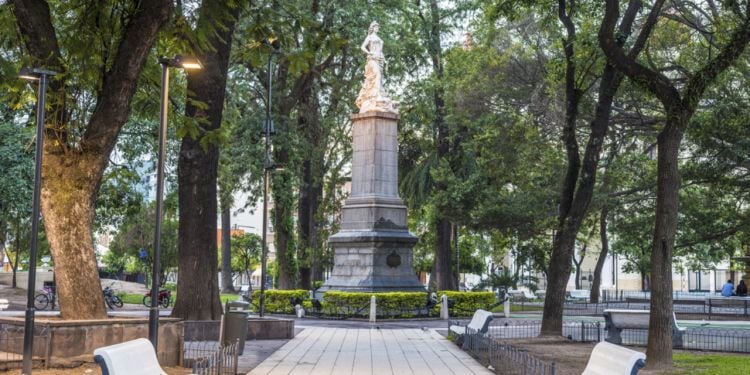
Discover San Miguel de Tucumán
Located close to the Northern Andes, Tucumán is often referred to as the “Gate to Northern Argentina”. The province's capital, ...
Cost of Living in San Miguel de Tucumán
San Miguel de Tucumán is one of the most affordable cities in Argentina, making it attractive for expats on a budget. Living costs are significantly lower than in Buenos Aires or other major South American cities.
Monthly Budget for a Single Person
The following table estimates monthly expenses for a single expat living a moderate lifestyle:
Expense Category | Estimated Cost (USD) |
Rent (1-bedroom, city center) | USD 150–250 |
Utilities (electricity, gas, water, internet) | USD 50–80 |
Groceries | USD 150–200 |
Transportation | USD 20–40 |
Dining out and entertainment | USD 100–150 |
Private health insurance | USD 50–100 |
Total (Single Person) | USD 520–820 |
Monthly Budget for a Family of Four
Expense Category | Estimated Cost (USD) |
Rent (3-bedroom, city center) | USD 350–600 |
Utilities | USD 80–120 |
Groceries | USD 350–450 |
Transportation | USD 50–80 |
Private school fees (2 children) | USD 200–600 |
Health insurance (family plan) | USD 150–250 |
Leisure and dining | USD 150–250 |
Total (Family of Four) | USD 1,330–2,350 |
Sources: LivingCost.org 2025, TravelTables
In Short
San Miguel de Tucumán offers an affordable, culturally rich lifestyle in the heart of Argentina's northwest. The city combines colonial history, access to stunning natural landscapes, and a welcoming community—all at a fraction of the cost of larger Argentine cities. Whether you're drawn by the Universidad Nacional de Tucumán, career opportunities, or simply a desire for a slower pace of life surrounded by mountains and forests, Tucumán provides a genuine Argentine experience. The warm climate, delicious regional cuisine, and proximity to destinations like Tafí del Valle and the Quilmes Ruins make it an ideal base for exploration. Ready to connect with others who have made the move? Join the San Miguel de Tucumán forum on Expat.com to share experiences and get advice from fellow expats.
We do our best to provide accurate and up to date information. However, if you have noticed any inaccuracies in this content, please contact us.


Essential services for your expat journey



