

Living in La Plata: the ultimate expat guide
Everything you need to know for a successful life in La Plata.
La Plata, the capital of Buenos Aires Province, stands out as one of Argentina's most distinctive cities. Founded in 1882 as a planned city, it showcases a unique grid layout with diagonal avenues and abundant green spaces. With a metropolitan population of approximately 938,000 residents, La Plata combines the energy of a major urban center with a more manageable pace of life than neighboring Buenos Aires, located just 35 miles away. Home to the prestigious National University of La Plata (UNLP), the city attracts students, academics, and professionals from around the world. Its strategic location provides easy access to both the bustling capital and the scenic coastal areas along the Río de la Plata estuary.
5 good reasons to move to La Plata
- Affordability compared to Buenos Aires: La Plata offers a significantly lower cost of living than the capital while maintaining excellent urban infrastructure and services.
- World-class education: The National University of La Plata ranks among the top universities in Latin America, providing outstanding academic opportunities and a vibrant student community.
- Exceptional urban planning: The city's systematic design features wide tree-lined avenues, numerous parks, and efficient public transportation, making daily life comfortable and accessible.
- Rich cultural heritage: From the spectacular Neo-Gothic Cathedral to the Natural History Museum and Teatro Argentino, La Plata offers outstanding cultural institutions and architectural landmarks.
- Strategic location: Positioned between Buenos Aires and the Atlantic coast, residents enjoy convenient access to metropolitan amenities, international connections, and beach destinations.
Working in La Plata
La Plata's economy centers on government administration, education, and professional services, given its status as the provincial capital. The city hosts numerous public institutions, universities, hospitals, and research centers that drive employment opportunities. Technology, healthcare, and business services sectors continue growing, particularly benefiting from the city's educated workforce and proximity to Buenos Aires. International professionals can find opportunities in education, research, multinational corporations, and regional offices of international organizations.
Employment sectors and opportunities
The public sector employs a significant portion of La Plata's workforce, with government offices, courts, and provincial administration providing stable career paths. The National University of La Plata creates substantial demand for academics, researchers, and administrative staff across its 17 faculties. Healthcare represents another major employer, with several large hospitals and medical research facilities. The technology sector is emerging, particularly in software development, digital services, and innovation hubs linked to the university ecosystem. Professional services including law, accounting, consulting, and finance thrive due to the concentration of government and corporate activities.
Work permits and legal requirements
Foreign nationals seeking employment in Argentina require appropriate work authorization. The most common visa for employees is the temporary residence visa for work purposes, which employers typically sponsor. This process involves obtaining approval from Argentina's National Migration Office. Professionals with specialized skills or academic positions may qualify for facilitated procedures. The temporary residence permit typically grants a one-year stay, renewable annually, and after two years of legal residence, individuals can apply for permanent residence. Independent contractors and freelancers may also obtain temporary residence under the rentista category by demonstrating sufficient income. All foreign workers must register with the tax authority (AFIP) and obtain a CUIL number to work legally.
Employment indicators
Unemployment rate (Q2 2025) | 7.6% |
Average monthly salary (La Plata) | $608,500 ARS (~$610 USD) |
Key employment sectors | Public administration, education, healthcare, professional services |
Sources: Trading Economics, World Salaries
Higher Education & Universities
La Plata's reputation as an educational center rests primarily on the National University of La Plata (UNLP), one of Argentina's most prestigious and comprehensive institutions. The university ranks among the top universities in Argentina and offers an exceptionally broad range of programs across sciences, humanities, arts, and professional disciplines. The academic culture emphasizes research excellence, with the university operating numerous research institutes and maintaining strong international partnerships. Beyond UNLP, the city hosts several private universities and technical institutes, creating a vibrant academic ecosystem.
National University of La Plata (UNLP)
Founded in 1897 and nationalized in 1905, UNLP serves over 90,000 students across 17 faculties, offering more than 100 undergraduate and graduate programs. The university excels particularly in natural sciences, engineering, medicine, law, and fine arts. Its La Plata Observatory ranks as one of the most important astronomical research centers in Latin America, while the Natural History Museum houses one of the world's most significant paleontology collections. Like most public universities in Argentina, UNLP offers free tuition for both domestic and international students, representing an extraordinary value for quality higher education. Students pay only minimal administrative fees and must purchase their own materials.
Admission process for international students
International applicants must complete several steps to enroll at UNLP. Pre-registration occurs online through the university's SIPU system, typically between October and December for the following academic year. Applicants submit their high school diploma or equivalent, academic transcripts, birth certificate, and proof of Spanish proficiency. All documents must be translated into Spanish by certified translators and legalized through the Argentine consulate or with an Apostille. Many programs require successful completion of a CBC (Common Basic Cycle), an introductory year covering fundamental subjects before entering the degree program. International students must also secure student visa authorization from Argentine immigration authorities. The university's International Office provides guidance throughout the application process and assists with integration into campus life.
For more information and to begin the application process, visit the official UNLP website.
Schooling for Children
La Plata provides diverse educational options for expatriate families, ranging from the free public school system to private bilingual and international institutions. Argentina mandates education for children aged 5 to 17, ensuring universal access to schooling. The academic year runs from early March through mid-December, with a winter break in July. Most schools require uniforms, and families typically purchase textbooks and supplies separately. English instruction is increasingly common even in public schools, reflecting Argentina's emphasis on foreign language education.
Public and private school systems
The Argentine public education system offers free schooling through primary and secondary levels. Public schools follow the national curriculum taught entirely in Spanish, providing solid academic preparation. However, class sizes can be large, and resources may be limited compared to private institutions. Private schools charge tuition but often provide smaller classes, enhanced facilities, and additional programs. Many private schools in La Plata offer bilingual education, typically combining Spanish with English or Italian instruction. These schools prepare students for both Argentine and international qualifications.
International and bilingual schools
Expatriate families often prefer international schools offering curricula from their home countries. While La Plata itself has limited options specifically marketed as international schools, Southern International School, located in nearby Hudson (approximately 15 miles from La Plata), offers the International Baccalaureate program with English and Italian language instruction alongside Spanish. Many families also consider schools in Buenos Aires, easily accessible given the short distance. Notable institutions include Lincoln International School, St. George's College, and Northlands School, all offering British or American curricula with International Baccalaureate programs. Annual tuition at international schools typically ranges from $10,000 to $25,000 USD, depending on grade level and specific programs.
Enrollment requirements
Enrolling children in Argentine schools requires several documents: birth certificate, previous academic records, immunization records, and proof of residence. International families must have these documents translated into Spanish and legalized. For public schools, enrollment occurs during designated periods, usually November through December for the following academic year. Private and international schools maintain their own timelines and often conduct entrance assessments. Parents should contact schools well in advance, particularly for international institutions with limited spaces.
Sources: Expat Quotes, International Schools Database
Housing & Neighbourhoods
La Plata's well-planned urban design creates distinct neighborhoods, each with its own character while maintaining the city's overall coherence. The systematic grid with diagonal avenues makes navigation straightforward for newcomers. Housing options range from modern apartments in the city center to spacious homes in quieter residential areas. The rental market offers considerably more affordable options than Buenos Aires, making La Plata attractive for those seeking comfortable living on a moderate budget.
Popular expat-friendly neighborhoods
Centro (City Center) offers the highest density of services, shops, restaurants, and cultural venues, with many apartment buildings surrounding Plaza Moreno and the Cathedral. This area suits professionals working in government or university positions who value walkability. Tolosa, located northeast of the center, combines residential tranquility with good access to the university and major avenues. Families appreciate its tree-lined streets and neighborhood feel. City Bell, technically a separate locality but part of Greater La Plata, attracts many expatriates and middle-class families with its suburban character, larger properties, and parks. Gonnet offers similar appeal with excellent transportation connections. La Loma, near the historic center, features charming older homes and proximity to cultural landmarks.
Rental costs and procedures
Average monthly rent for apartments in La Plata is approximately $547,244 ARS (around $550 USD at current exchange rates), though prices vary significantly by size, location, and condition. A one-bedroom apartment in the city center typically costs $300,000-$450,000 ARS monthly ($300-$450 USD), while a three-bedroom apartment ranges from $500,000-$750,000 ARS ($500-$750 USD). Properties in suburban areas like City Bell or Gonnet may cost slightly less while offering more space and greenery.
Argentine rental contracts traditionally require guarantía (a property guarantee) where a third party who owns property in Argentina vouches for the tenant. This poses challenges for newcomers without local connections. Alternatives include rental insurance (seguro de caución) available through specialized companies, though it typically costs 3-5% of the total contract value. Some landlords accept direct payment of several months' rent in advance. Contracts usually run for two or three years, with annual rent adjustments based on official indices. Initial costs include first month's rent, security deposit (typically one month), and real estate commission (one month's rent plus VAT).
Utilities and services
Monthly utilities for an 85 square meter apartment average $80,000-$120,000 ARS ($80-$120 USD), covering electricity, gas, water, and building maintenance fees (expensas). Internet service costs approximately $15,000-$30,000 ARS monthly ($15-$30 USD) for reliable fiber optic connections. Most neighborhoods have good infrastructure, with regular garbage collection, street lighting, and public services.
Sources: Rentberry, local real estate data
Leisure, Culture & Things To Do
La Plata's cultural landscape rivals much larger cities, offering museums, theaters, parks, and sporting events that enrich daily life. The city's deliberate planning included generous green spaces and cultural institutions, creating an environment where residents can easily access arts, nature, and entertainment. The substantial university population ensures a constant flow of cultural programming, exhibitions, and performances.
Museums and cultural institutions
The Museo de La Plata, founded in 1884 by explorer Francisco Pascasio Moreno, houses 3.5 million pieces across geology, botany, zoology, paleontology, and anthropology, making it one of South America's most important natural history museums. The collection includes exceptional dinosaur skeletons and indigenous artifacts. The museum occupies a beautiful Neoclassical building within Paseo del Bosque park, with admission around $3,000 ARS ($3 USD). La Plata Cathedral, an impressive Neo-Gothic masterpiece inspired by European cathedrals, dominates Plaza Moreno at the city's geographic center. Visitors can tour the cathedral museum and ascend to the towers for panoramic city views. Casa Curutchet, designed by Le Corbusier, represents the architect's only work in Argentina and stands as an architectural pilgrimage site. Teatro Argentino de La Plata, the country's second-most important opera house after Buenos Aires' Teatro Colón, hosts world-class opera, ballet, and orchestral performances throughout the season.
Parks and outdoor spaces
Paseo del Bosque spans 60 hectares featuring varied native trees, a small lake, a stone grotto, a football stadium, the astronomical observatory, and the natural science museum. Families gather here for picnics, paddle boating, and mate sessions, particularly on weekends. The park bustles with activity year-round, hosting outdoor concerts and cultural events. Plaza Moreno, the city's main square, surrounds the Cathedral and Government House, providing a grand civic space for gatherings and celebrations. República de los Niños, Latin America's first theme park built in 1951, delights children with miniature buildings, rides, and green spaces. Pereyra Iraola Park, a large natural reserve on the city's outskirts, offers hiking trails, horseback riding, and escape into nature just minutes from the urban center.
Sports and nightlife
Football dominates La Plata's sporting culture. Attending matches at Estadio Jorge Luis Hirschi (Estudiantes) or Estadio Juan Carmelo Zerillo (Gimnasia) provides authentic Argentine football atmosphere. The rivalry between these clubs creates intense local passion. The modern Estadio Ciudad de La Plata, also called Estadio Único, hosts major matches and concerts. The city's nightlife centers around the university areas, particularly along Avenida 7 and surrounding streets, where numerous bars, cafés, and clubs cater to students and young professionals. Live music venues feature rock, folk, and tango performances. The craft beer movement has arrived in La Plata, with several microbreweries offering locally produced varieties. Plaza Italia hosts a weekend craft market with artisan goods, street food, and live music, creating a vibrant gathering point.
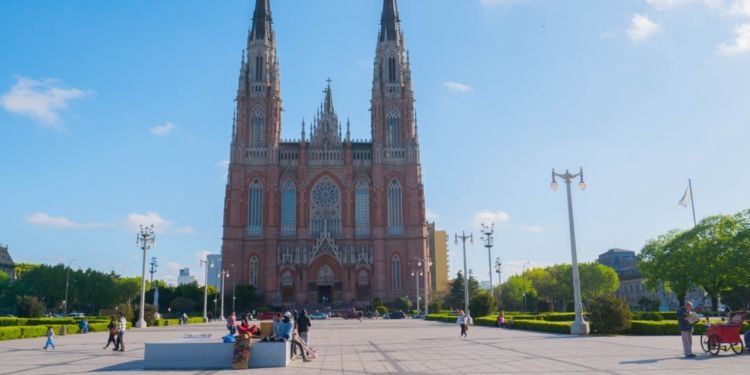
Reasons to visit La Plata
Unbeknown to most people, La Plata is the largest city in the province of Buenos Aires and is, in fact, its capital; Buenos Aires is Argentina's ...
Daily Life
La Plata's planned design makes daily life remarkably convenient, with essential services accessible within walking distance in most neighborhoods. The city maintains a relaxed pace compared to Buenos Aires while offering sophisticated urban amenities. Residents enjoy a strong café culture, outdoor dining, and active use of public spaces. The substantial student population keeps the city youthful and culturally dynamic, with frequent events, concerts, and exhibitions.
Transportation options
La Plata connects to Buenos Aires via direct train services from Constitución station, with departures every 30 minutes and a journey time of approximately 1 hour 21 minutes. Within the city, an extensive bus network (colectivos) provides comprehensive coverage, with dozens of lines serving all neighborhoods. Bus services operate using the SUBE card, a rechargeable smart card required for all public transportation in Argentina. Fares are extremely affordable, typically around $500-$800 ARS ($0.50-$0.80 USD) per trip. Taxis and ride-sharing services like Uber operate throughout the city at reasonable rates. Many residents use bicycles, taking advantage of the flat terrain and growing network of bike lanes. The city's systematic grid makes cycling particularly practical.
Cultural particularities and lifestyle
La Plata follows typical Argentine social customs with late dining hours, usually after 9 PM, and an emphasis on social gatherings centered around food and conversation. Mate, the traditional herbal tea, remains an integral part of daily life, often shared among friends and colleagues. Football passion runs deep, with fierce local rivalry between Club Estudiantes de La Plata and Club de Gimnasia y Esgrima La Plata. The city's numerous parks fill with families and mate circles on weekends. The university's presence creates a lively atmosphere, particularly around the central avenues where students gather at cafés and bookshops. La Plata's residents take pride in their city's planned heritage and cultural institutions, maintaining an identity distinct from Buenos Aires despite the proximity.
Cost of Living
La Plata offers an affordable cost of living compared to many international cities and even relative to Buenos Aires. While Argentina experiences significant inflation and currency fluctuations, the cost structure remains attractive for those earning in foreign currencies or stable incomes. Daily expenses for food, transportation, and entertainment stay reasonable, though imported goods and electronics command premium prices. The following tables provide estimates based on current data, though prices should be verified closer to your moving date.
Monthly expenses for a single person
Expense Category | Monthly Cost (ARS) | Monthly Cost (USD) |
Rent (1-bedroom, city center) | 375,000 | $375 |
Utilities (electricity, gas, water, internet) | 100,000 | $100 |
Groceries and food | 180,000 | $180 |
Transportation (public) | 25,000 | $25 |
Dining out (occasional) | 60,000 | $60 |
Entertainment and leisure | 40,000 | $40 |
Health insurance (private, basic) | 50,000 | $50 |
Total | 830,000 | $830 |
Monthly expenses for a family of four
Expense Category | Monthly Cost (ARS) | Monthly Cost (USD) |
Rent (3-bedroom apartment, good area) | 625,000 | $625 |
Utilities and internet | 150,000 | $150 |
Groceries and food | 400,000 | $400 |
Transportation | 45,000 | $45 |
School fees (2 children, private bilingual) | 800,000 | $800 |
Dining out and entertainment | 120,000 | $120 |
Health insurance (family plan) | 180,000 | $180 |
Miscellaneous and savings | 150,000 | $150 |
Total | 2,470,000 | $2,470 |
Note: Exchange rates fluctuate significantly in Argentina. These estimates use an approximate rate of 1,000 ARS = 1 USD for simplicity. Actual costs may vary based on lifestyle choices and currency movements.
In short
La Plata presents an appealing option for those seeking Argentine urban life with manageable scale and cost. The city's exceptional planning, abundant green spaces, and cultural richness create quality of life that exceeds what many larger cities offer. Free university education, affordable living costs, and proximity to Buenos Aires combine practical advantages with cultural opportunities. Whether you're drawn by academic pursuits, professional opportunities, or simply desire to experience authentic Argentine culture outside the capital's intensity, La Plata rewards residents with a distinctive character shaped by its planned heritage and intellectual energy. The welcoming community, accessible services, and strong sense of local identity help newcomers integrate smoothly. Ready to take the next step? Join discussions and connect with current residents on the Expat.com forum for La Plata to learn more from those already living the experience.
We do our best to provide accurate and up to date information. However, if you have noticed any inaccuracies in this content, please contact us.


Essential services for your expat journey