Living in Córdoba: the ultimate expat guide
Everything you need to know for a successful life in Córdoba.
Córdoba, Argentina's second-largest city with a population of approximately 1.6 million, stands as a dynamic cultural and educational hub in the heart of the country. Founded in 1573, this historic city blends colonial charm with modern innovation, earning its nickname La Docta (The Learned) thanks to its prestigious National University of Córdoba, the oldest in Argentina, established in 1613. The city's economy thrives on automotive manufacturing, technology, and services, making it a compelling destination for expatriates seeking affordable living, professional opportunities, and authentic Argentine culture away from Buenos Aires' bustling pace.
5 Good Reasons to Move to Córdoba
- Affordability: Cost of living is significantly lower than Buenos Aires, with average rent for a one-bedroom apartment in the city center around $455 per month.
- Educational Excellence: Home to Argentina's oldest university and numerous international schools, Córdoba attracts over 200,000 students annually, creating a vibrant, youthful atmosphere.
- Strategic Location: Positioned in central Argentina, the city offers easy access to the Sierras Chicas mountains and serves as a gateway to stunning natural landscapes.
- Growing Tech Scene: Córdoba has emerged as Argentina's technology center, hosting major companies like Motorola, Intel, and numerous startups, with a focus on software development and aerospace.
- Rich Cultural Heritage: The UNESCO-listed Jesuit Block, colonial architecture, museums, theaters, and a thriving arts scene provide endless cultural exploration opportunities.
Working in Córdoba
Córdoba's diverse economy offers numerous opportunities for expatriates across multiple sectors. The city has established itself as Argentina's technology capital, with a robust automotive industry anchored by factories producing vehicles for major international brands. The services sector, education, and manufacturing together create a dynamic employment landscape that attracts both local and international talent.
Key Industries and Employment Opportunities
The technology sector dominates Córdoba's modern economy, with the city hosting the Argentine Spaceport (Centro Espacial Teófilo Tabanera) where satellites are developed for CONAE. Software development, electronics, and IT services have become major exporters, with companies like Motorola, Vates, Intel, Electronic Data Systems, and Santex América maintaining significant operations. The automotive industry contributes approximately 26.5% of the province's gross geographic product, while the services sector accounts for 64%. Healthcare, education, and finance offer additional opportunities for skilled professionals.
Work Permits and Visa Requirements
Foreign nationals planning to work in Córdoba must obtain an Entry Permit (permiso de ingreso) before applying for a work visa. The most common visa is the Temporary Residence Visa (23A), valid for one year and renewable, which requires a signed employment contract with an Argentine employer registered with the National Registry of Petitioners on behalf of Foreign Applicants (RENURE). The 23E visa applies to intra-company transfers. Citizens of MERCOSUR member states (Brazil, Paraguay, Uruguay) and associated countries enjoy simplified visa processes. After arrival, workers must obtain a DNI (Documento Nacional de Identidad) and register with ANSES, Argentina's social security system. The entire visa process typically takes 1-3 months and requires apostilled documents, police clearance certificates, and proof of employment.
Employment Conditions and Salaries
As of 2025, Argentina's unemployment rate stands at 7.6%, with the national employment rate at 44.5%. In Córdoba, average annual wages are approximately $1,800,000 ARS (around $2,000 USD), with variations based on sector and experience. Technology professionals can earn between $2,500,000-$4,500,000 ARS annually, while healthcare professionals earn $3,000,000-$6,000,000 ARS. The city's growing startup ecosystem and established multinational presence create opportunities for both employment and entrepreneurship.
Indicator | Value | Year |
Unemployment Rate (National) | 7.6% | Q2 2025 |
Average Salary (Córdoba) | $1,800,000 ARS/year (~$2,000 USD) | 2024-2025 |
Key Sectors | Technology (software, aerospace), Automotive, Services, Education | 2025 |
Sources: Trading Economics, Livetecs, Wikipedia - Córdoba Province
Find a job in Cordoba
Several fields in Cordoba are looking for qualified and skilled manpower, offering various opportunities for expatriates.
Higher Education & Universities
Córdoba's reputation as La Docta is firmly rooted in its world-class educational institutions. The city hosts one of Latin America's most prestigious universities and attracts over 200,000 students annually, creating an intellectually vibrant environment that benefits both degree-seeking students and expatriates looking for professional development opportunities.
National University of Córdoba (UNC)
Founded in 1613, the Universidad Nacional de Córdoba (UNC) is Argentina's oldest university and ranks among the top institutions in Latin America. This public university offers 90 undergraduate programs and 160 postgraduate degrees across 12 faculties and 98 research institutes. The university's historic campus spans 109 hectares and includes the UNESCO World Heritage-listed Jesuit Block, containing colonial-era buildings that showcase the institution's rich history. UNC is particularly renowned for its programs in medicine, engineering, law, and sciences, and was the birthplace of the influential University Reform Movement of 1918, which transformed higher education across Latin America.
Admission and Tuition for International Students
UNC operates on a non-fee-paying basis for undergraduate programs, making it accessible to both Argentine and international students. However, international students may face minimal fees (typically $1-$1,000 USD annually depending on program and status). Admission is based on entrance examinations, and most programs require Spanish upper-intermediate (B2) proficiency certified by recognized international examinations such as DELE. The university accepts two categories of international students: within quota (applied through Argentine embassies) and beyond quota (requested directly at the university). The International Relations Office provides comprehensive support, including orientation programs, academic coordinators, and a Buddy Program pairing international students with local peers. Applications typically require a high school diploma, entrance examination results, proof of Spanish proficiency, recommendation letters, and a personal statement.
Campus Life and Resources
UNC's facilities include 25 libraries with over 150,000 volumes, 17 museums, two astronomical observatories (including the renowned Astronomical Observatory of Córdoba), and extensive sports facilities offering 25 different sports. The university maintains strong research connections with CONICET, Argentina's National Scientific and Technical Research Council, positioning it at the forefront of scientific research in Latin America. Students benefit from career services, exchange programs with universities worldwide, and Spanish language courses for those needing to improve proficiency. While UNC does not offer on-campus housing, Córdoba provides affordable accommodation options throughout the city, particularly in the Nueva Córdoba neighborhood adjacent to campus.
Official website: www.unc.edu.ar/english
Schooling for Children
Córdoba offers diverse educational options for expatriate families, from the free public education system to prestigious international schools following various curricula. The city's status as an educational center ensures high-quality schooling options that accommodate children from preschool through secondary education.
Argentine Public Education System
Argentina provides free, compulsory education for children from age 5 to 17, covering 12 years of primary and secondary schooling. The Argentine system operates from March to mid-December and features high literacy rates exceeding 95%. Public schools teach primarily in Spanish and follow the national Argentine curriculum. Foreign nationals can access public education at no cost, though most expatriate families prefer international or bilingual schools for continuity with home country curricula and language instruction.
International Schools in Córdoba
Several international schools serve Córdoba's expatriate community, offering British, American, and International Baccalaureate (IB) curricula. The International School of Córdoba follows the IB curriculum with a focus on developing inquiring, knowledgeable students in a multicultural environment. St. Andrew's Scots School, with a history dating back to 1838, offers both the Argentine national curriculum and Cambridge assessments, providing a unique blend of local and international education. Colegio Mark Twain is a private girls' school serving ages 3-18, combining international standards with local cultural integration. These schools typically feature English as the primary language of instruction alongside Spanish, preparing students for university admission worldwide.
Enrollment and Costs
International school fees in Córdoba range significantly based on institution and grade level. Annual tuition typically ranges from $2,400 to $4,500 USD for international primary schools, with some institutions charging higher fees for secondary education. Private preschool and kindergarten programs average around $210 USD per month. Enrollment procedures vary by school and often require advance registration, academic records, language assessments, and interviews. Most international schools follow admissions timelines similar to those in their curriculum's country of origin. Parents should contact schools directly well in advance of planned relocation, as spaces can be limited and preference may be given to students based on nationality or existing sibling enrollment. Schools generally provide orientation support for new international families and offer extracurricular programs in sports, arts, and cultural activities.
Resources: International Schools Database, Best International Schools in Argentina
Housing & Neighbourhoods
Córdoba offers diverse housing options across its many neighborhoods, from modern apartments in the city center to spacious houses in upscale residential areas. The real estate market provides significantly better value than Buenos Aires, with rental prices averaging 30-40% lower than the capital while maintaining high quality of life.
Key Neighborhoods for Expatriates
Nueva Córdoba ranks as the most popular area for expatriates and students, located just one kilometer south of the historic center. This vibrant neighborhood combines early 20th-century architecture with modern amenities, offering abundant cafés, restaurants, cultural attractions, and nightlife. Its walkability and proximity to the National University make it ideal for young professionals and students. Cerro de las Rosas, in the northwest, represents an upscale residential district with excellent shopping centers, restaurants, and banking services. This neighborhood, founded in 1928, features large chalets with gardens and attracts middle to upper-class residents seeking a quiet, family-friendly environment with easy access to parks like Parque del Kempes. Centro (Historic Center) preserves colonial heritage with landmarks like Plaza San Martín and the UNESCO-listed Jesuit Block, offering apartments in beautifully restored buildings. Villa Cabrera combines residential tranquility with modern shopping and services, suitable for families seeking safety and convenience.
Rental Market and Property Types
Córdoba's rental market offers apartments and houses across various price points. In the city center, one-bedroom apartments average $455 per month, while outside the center, similar units rent for approximately $315 per month. Three-bedroom apartments in the city center average $777 per month, and outside the center around $592 per month. For purchasing, apartment prices average $1,400-$1,600 per square meter in Córdoba, significantly below Buenos Aires' $2,300-$2,500 per square meter. Rental agreements typically require a deposit equivalent to one or two months' rent, proof of income, and sometimes a local guarantor. Most leases run for two years with annual adjustments tied to inflation indices.
Utilities and Living Costs
Basic utilities for a standard apartment (electricity, heating, cooling, water, garbage) average $100 per month. Internet services range from $28-$50 per month for unlimited data with speeds of 60 Mbps or higher. Mobile phone plans with calls and 10GB+ data cost approximately $17 monthly. Many apartment buildings include amenities such as security, parking, and common areas in maintenance fees. When budgeting for housing, expatriates should also consider expenses like building maintenance fees, property taxes (if purchasing), and seasonal variations in utility costs, particularly during summer months when air conditioning increases electricity consumption.
Apartment Type & Location | Average Monthly Rent (USD) |
1-Bedroom Apartment (City Center) | $455 |
1-Bedroom Apartment (Outside Center) | $315 |
3-Bedroom Apartment (City Center) | $777 |
3-Bedroom Apartment (Outside Center) | $592 |
Sources: Numbeo, Global Property Guide
Leisure, Culture & Things To Do
Córdoba's cultural richness and diverse leisure options reflect its historical importance and youthful energy. The city offers everything from UNESCO World Heritage sites to vibrant nightlife, contemporary art galleries, and outdoor adventures in nearby mountain ranges.
Museums and Cultural Attractions
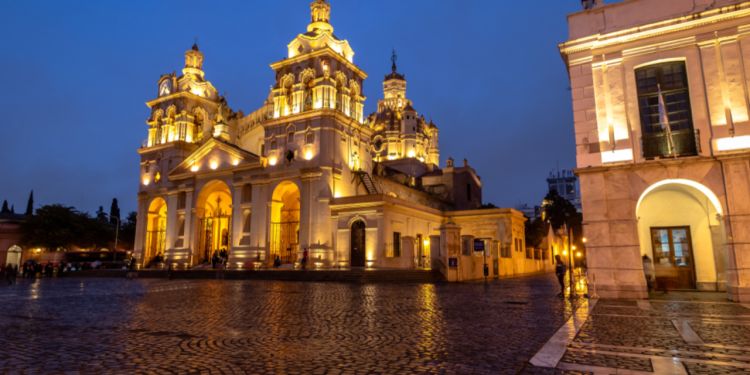
The Jesuit Block (Manzana Jesuítica), declared a UNESCO World Heritage Site in 2000, stands as Córdoba's most significant historical attraction. This complex includes the Church of the Society of Jesus, the former Jesuit school Colegio Nacional de Monserrat, and the National University Historical Museum, all dating from the 17th century. The Cathedral of Córdoba, Argentina's oldest continuously operating church since 1577, features stunning frescoes and a crypt containing remains of historical figures. Museo Evita - Palacio Ferreyra, housed in an opulent beaux-arts mansion, displays over 500 works by artists including Goya and Picasso. Paseo del Buen Pastor, a former women's prison transformed into a cultural center, hosts concerts, art exhibits, and a spectacular illuminated water fountain show. Plaza Cielo Tierra offers interactive exhibits on earth sciences and astronomy with free admission. The Caraffa Fine Arts Museum and Museo Provincial de Bellas Artes Emilio Caraffa showcase Argentine and international art in stunning architectural settings.
Parks, Outdoor Activities and Recreation
Parque Sarmiento, the city's green heart spanning 43 acres, features a rose garden, artificial lake, zoo, and natatorium where university students and families gather. The park hosts the Centro Cultural Córdoba, an architectural landmark with city views. Reserva Natural San Martín, an ecological reserve just outside the city, preserves the original Espinal woodlands covering the region before urbanization. For cycling enthusiasts, Córdoba recently completed an elevated bike track (Ciclovia) connecting major neighborhoods, with free bike rentals available through the municipal program. Within 30 minutes of the city, the Sierras Chicas mountain range offers hiking, climbing, and nature retreats in towns like Villa Carlos Paz, Alta Gracia, and La Falda.
Nightlife and Entertainment
Córdoba's nightlife thrives across several distinct zones. Nueva Córdoba attracts students with bars, pubs, and mainstream clubs concentrated around university areas. Güemes, particularly along Belgrano Street and Marcelo T. de Alvear avenue, offers pleasant bars and clubs in a bohemian atmosphere. The neighborhood hosts the famous Paseo de las Artes, an outdoor art market every weekend. Cerro de las Rosas features upscale clubs and restaurants. The city is renowned for cuarteto, a unique local music genre, with clubs dedicated to this style. Teatro del Libertador San Martín, a 19th-century opera house with neo-baroque interior, presents classical music, opera, rock, and dance performances. Pierrot Lunaire, an Art Nouveau mansion in Entre Ríos, hosts intimate concerts and masterclasses in an elegant setting. Cinema tickets cost around $9, while concert and theater prices vary by venue and production. The dining scene centers on traditional Argentine asados (BBQ), Italian-influenced cuisine, and international options, with Rafael Núñez Avenue and Belgrano Street offering the highest concentration of quality restaurants.
Daily Life
Daily life in Córdoba combines the energy of Argentina's second-largest city with a more relaxed pace than Buenos Aires. The city's compact layout, extensive public transportation, and vibrant cultural scene create an environment where expatriates can easily integrate while enjoying authentic Argentine traditions.
Transportation and Getting Around
Córdoba's public transportation system includes buses (colectivos), taxis, trolleybuses, and an increasingly popular network of cycling infrastructure. The city operates over 70 bus lines managed by private and public companies, connecting all major neighborhoods. A single bus ticket costs approximately $1.00, while a monthly pass runs around $56.50. To use buses, residents need a Red Bus card purchased from kiosks (note: this differs from Buenos Aires' SUBE card system). Córdoba recently completed an elevated bicycle track connecting Nueva Córdoba, General Paz, and Centro neighborhoods, with free bike rentals available through a city program requiring online registration. Taxis are readily available with a starting fare of $1.20 and cost around $3.62 per mile. The city is highly walkable, with most attractions within a 10-15 minute walk from each other in the center. Ingeniero Ambrosio L.V. Taravella International Airport, located about 20 minutes from the city center, connects Córdoba to major Argentine cities and some international destinations.
Cultural Habits and Lifestyle
Córdoba's lifestyle reflects Argentina's famous social culture with its own unique character. The city's 200,000 students create a youthful, dynamic atmosphere, particularly in neighborhoods like Nueva Córdoba and Güemes. Cordobeses (locals) have a distinctive accent and their own slang, including the famous emphasis on certain syllables that sets them apart from other Argentines. Meal times follow Argentine customs: light breakfast, substantial lunch between 1-3 PM, afternoon tea (merienda) around 5-6 PM, and late dinner typically after 9 PM. Social life centers around cafés, restaurants, and parillas (steakhouses), particularly along Rafael Núñez Avenue in Cerro de las Rosas and Belgrano Street in Güemes. The city is famous for fernet con cola, a bitter herbal liquor mixed with Coca-Cola that locals proudly claim as their signature drink. Weekend activities include visiting Parque Sarmiento, the city's largest park with a zoo, rose garden, and lake, or exploring the nearby Sierras for hiking and nature activities. The Paseo del Buen Pastor, a former women's prison transformed into a cultural center, hosts concerts, art exhibits, and a spectacular water fountain show. Shopping takes place in modern malls like Patio Olmos and Nuevocentro Shopping, or in neighborhood markets. The city's cultural calendar includes festivals, concerts at venues like the historic Teatro del Libertador San Martín, and gallery openings showcasing local artists. Córdoba is generally safe compared to Buenos Aires, though normal urban precautions apply, particularly in less central areas at night.
Cost of Living
Córdoba offers one of the most affordable cost-of-living profiles among major Argentine cities, significantly lower than Buenos Aires while maintaining excellent quality of life. The following tables provide detailed breakdowns of monthly expenses for both single individuals and families of four, based on 2025 data.
Monthly Budget Breakdown
For a single person living in Córdoba, monthly expenses excluding rent typically range from $600-$800 USD. Families of four can expect monthly costs of approximately $1,800-$2,400 USD before rent. These figures include groceries, transportation, utilities, dining out, and entertainment. Adding rent, a single person can live comfortably on $1,100-$1,300 USD monthly, while families of four should budget $2,600-$3,600 USD monthly. These costs are approximately 60-70% lower than major cities in North America or Western Europe, making Córdoba attractive for remote workers, retirees, and families seeking an affordable yet culturally rich lifestyle.
Expense Category | Single Person (USD/month) | Family of Four (USD/month) |
Rent (1-BR city center / 3-BR city center) | $455 | $777 |
Utilities (electricity, water, heating, cooling, garbage) | $100 | $150 |
Groceries | $250 | $600 |
Transportation (monthly pass / family needs) | $57 | $120 |
Internet & Mobile Phone | $45 | $70 |
Dining Out & Entertainment | $150 | $300 |
Fitness/Gym Membership | $26 | $50 |
Healthcare/Insurance (estimate) | $80 | $200 |
School Fees (international school, if applicable) | N/A | $550 (per child/month avg) |
Total (excluding rent) | $708 | $2,040 |
Total (including rent) | $1,163 | $2,817-$3,367 |
Common Prices for Everyday Items
Restaurant meals at inexpensive establishments cost around $10, while a three-course meal for two at a mid-range restaurant averages $50. A combo meal at McDonald's costs approximately $10. Domestic beer (pint) costs $2.61, while cappuccinos average $2.39. Grocery prices remain reasonable: a liter of milk costs $1.60, a dozen eggs $2.59, a kilogram of chicken $6.68, and beef $9.96 per kilogram. A monthly gym membership runs about $26, and cinema tickets cost around $9. Córdoba's affordability extends to services, with private preschool averaging $210 monthly and international primary school tuition around $275-$375 monthly (though full-year fees vary significantly by institution).
Sources: Numbeo Córdoba, Wise Cost of Living
In Short
Córdoba presents an exceptional opportunity for expatriates seeking authentic Argentine culture, excellent educational institutions, and affordability in Argentina's second-largest city. With its UNESCO World Heritage sites, thriving technology sector, prestigious National University, and proximity to stunning mountain landscapes, Córdoba offers a compelling alternative to Buenos Aires without sacrificing urban amenities or cultural richness. The city's welcoming atmosphere, significant student population, and growing international community create an ideal environment for newcomers. Whether you're drawn by professional opportunities in the expanding tech sector, world-class education, or simply the vibrant lifestyle at costs 60-70% lower than major Western cities, Córdoba delivers quality of life in an intellectually stimulating setting. Connect with fellow expatriates and locals, share experiences, and get practical advice by joining the Córdoba forum on Expat.com, where you'll find an active community ready to help you settle into life in La Docta.
We do our best to provide accurate and up to date information. However, if you have noticed any inaccuracies in this content, please contact us.


Essential services for your expat journey