

Living in Concordia: the ultimate expat guide
Everything you need to know for a successful life in Concordia.
Concordia is a welcoming city located in the province of Entre Ríos, on the western bank of the Uruguay River, directly opposite the Uruguayan city of Salto. With a population of approximately 179,000 residents, it is the second-largest city in Entre Ríos and serves as a regional hub for agriculture, tourism, and energy production. The city enjoys a humid subtropical climate with warm summers and mild winters, making it pleasant year-round. Concordia is renowned for its thermal hot springs, citrus orchards, and proximity to natural attractions like El Palmar National Park. The binational Salto Grande Dam connects the city to Uruguay and supplies hydroelectric power to both countries.
5 Good Reasons to Move to Concordia
- Affordable cost of living – Housing, food, and daily expenses are significantly lower than in Buenos Aires or major international cities.
- Therapeutic hot springs – Multiple thermal complexes offer relaxation and wellness benefits from the Guaraní Aquifer waters.
- Natural beauty – The Uruguay River, El Palmar National Park, and lush landscapes provide endless outdoor activities.
- Strategic location – Easy access to Uruguay via the Salto Grande bridge, and approximately 430 km from Buenos Aires.
- Relaxed lifestyle – A slower pace of life with strong community ties and traditional Argentine culture.
Working in Concordia
The economy of Concordia is primarily driven by agriculture, tourism, and energy production. The region is one of Argentina's largest producers of citrus fruits, particularly oranges, which are exported nationally and internationally. The thermal tourism sector creates seasonal employment opportunities in hospitality, wellness services, and food and beverage. The Salto Grande Hydroelectric Complex, a binational project with Uruguay, also provides technical and administrative jobs.
Key Employment Sectors
The main industries include citrus cultivation and processing, tourism and hospitality, retail and commerce, and public administration. However, job opportunities for foreigners in specialized fields may be limited compared to larger cities like Buenos Aires or Córdoba. Remote work is increasingly viable for expats with stable internet connections.
Work Permits and Visas
Foreign nationals require a work visa to be legally employed in Argentina. The most common option is the 23A temporary residence visa, valid for one year and renewable. Employers must sponsor the application through the National Immigration Office (DNM). Citizens of MERCOSUR countries (Brazil, Uruguay, Paraguay, Bolivia, Chile, Colombia, Ecuador, Peru) benefit from simplified visa procedures. After arriving, workers must obtain a DNI (Documento Nacional de Identidad) and register for a CUIL (tax identification number).
The following table summarizes key employment indicators:
Unemployment Rate (Entre Ríos) | Approximately 6-7% (2024) |
Average Monthly Salary (Formal Sector) | ARS 640,000–810,000 (~USD 620–790) |
Main Industries | Agriculture, Tourism, Energy, Commerce |
Sources: INDEC, Ministry of Labor Argentina
Find a job in Concordia
Concordia, in Argentina, has been attracting more and more tourists and expatriates since a few years. It is known to be a developing city.
Higher Education and Universities in Concordia
Concordia offers access to public higher education through two main institutions. Argentina's public universities are tuition-free for undergraduate programs, including for international students, making higher education highly accessible.
Universidad Tecnológica Nacional (UTN) – Facultad Regional Concordia
The UTN Concordia is a regional campus of Argentina's leading technical university. It offers engineering degrees and technical programs focused on practical skills and industry needs. Programs include Civil Engineering, Electromechanical Engineering, Systems Engineering, and various technical certifications. The faculty also provides extracurricular courses and professional development programs open to the community.
Website: UTN Concordia
Universidad Nacional de Entre Ríos (UNER)
The UNER is a comprehensive public university with campuses throughout Entre Ríos province, including facilities in Concordia. Founded in 1973, it offers programs in agricultural sciences, food sciences, administration, health sciences, and social work. The university is ranked among the top institutions in Latin America and provides a sports campus in Concordia with facilities for soccer, basketball, handball, and volleyball.
Website: UNER
Admission Process
International students must have their secondary school credentials apostilled or legalized and translated into Spanish. Most programs require completion of a preparatory course (CBC) or entrance requirements specific to each faculty. Spanish language proficiency is essential as instruction is primarily in Spanish.
Schooling for Children in Concordia
Education in Argentina is compulsory for 12 years, from age 5 to 17. The school year runs from early March to mid-December, with summer holidays from mid-December to early March. Concordia offers public and private schooling options, though international schools are not available locally.
Public Schools
Public education in Argentina is free and open to foreign residents. Instruction is entirely in Spanish, following the national curriculum. Public schools provide a solid foundation, though resources may vary. Children of expats will benefit from Spanish immersion, which helps with integration into the local community.
Private and Bilingual Schools
Several private schools in Concordia offer enhanced facilities and smaller class sizes. Some private institutions include English language instruction as part of their curriculum, though fully bilingual programs comparable to those in Buenos Aires are not available locally. Uniforms are typically required, and additional fees apply for supplies and extracurricular activities.
International School Options
Concordia does not have international schools following British, American, or IB curricula. Families requiring such education may need to consider distance learning programs or schools in Buenos Aires, approximately 430 km away. Buenos Aires offers numerous international schools, including Lincoln School, St. George's College, Northlands, and the Lycée Franco-Argentin Jean Mermoz.
For more information on schools in Buenos Aires: Lincoln School, St. George's College
Housing and Neighborhoods in Concordia
Housing in Concordia is remarkably affordable compared to Argentina's larger cities and most international destinations. The real estate market offers a range of options from apartments in the city center to houses in quieter residential neighborhoods.
Types of Housing
Most rentals are unfurnished apartments or houses. Furnished options exist but are less common and typically command higher rents. Many properties include outdoor space, gardens, or access to communal areas. Near the thermal complexes, you'll find cabins and bungalows popular with tourists and seasonal residents.
Expat-Friendly Neighborhoods
The city center offers convenience with proximity to shops, restaurants, and services. The costanera (riverfront) area provides scenic views and recreational spaces along the Uruguay River. Residential neighborhoods like those near San Carlos Park offer a quieter suburban atmosphere with good access to amenities. The Perilago area near Salto Grande is popular for those seeking proximity to the lake and thermal resorts.
Average Rental Prices
The following table provides indicative rental costs in Concordia:
1-bedroom apartment (city center) | ARS 150,000–250,000/month (~USD 145–245) |
3-bedroom apartment (city center) | ARS 300,000–450,000/month (~USD 290–440) |
House with garden (suburbs) | ARS 250,000–400,000/month (~USD 245–390) |
Sources: Local real estate listings, Numbeo (Argentina regional data, 2024)
Rental Procedures
Renting typically requires a garantía (guarantee), which is usually a property title from someone in the same province or a bank guarantee. Lease terms are commonly 2-3 years. A deposit equivalent to one or two months' rent is standard. Working with a local real estate agent (inmobiliaria) is recommended to navigate the process.
Leisure, Culture, and Things to Do in Concordia
Concordia offers a rich array of leisure activities centered on its natural resources, thermal waters, and cultural heritage. The city balances outdoor adventures with traditional Argentine experiences.
Thermal Hot Springs
The region's thermal complexes are a major draw. Termas del Ayuí features seven pools at temperatures ranging from 37°C to 43°C, plus a water park with slides and a lazy river. Vertientes de la Concordia offers therapeutic hydrotherapy in a scenic lakeside setting. Punta Viracho provides a quieter experience with mineral-rich waters. All complexes draw from the Guaraní Aquifer, one of the world's largest underground freshwater reserves.
Nature and Parks
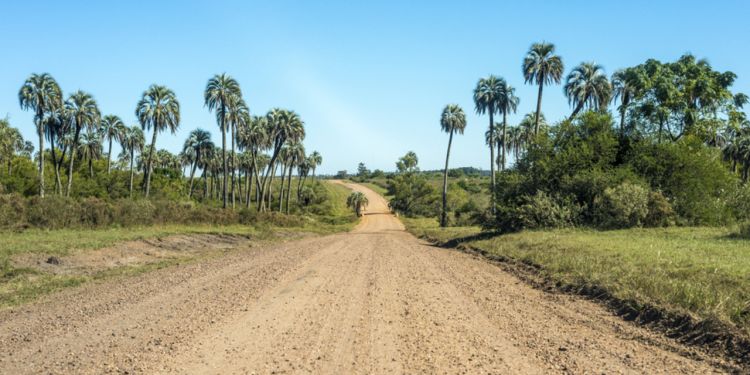
El Palmar National Park, located about 65 km south, protects one of the last yatay palm forests in the world. The park offers hiking trails, birdwatching, wildlife viewing (capybaras, viscachas, foxes), and river beaches. The Salto Grande Lake, created by the dam, is popular for fishing (dorado, surubí, pacú), boating, and water sports. The Costanera (riverfront promenade) provides walking paths and sunset views over the Uruguay River.
Cultural Attractions
Castillo San Carlos is a historic castle with connections to French aviator and author Antoine de Saint-Exupéry, who reportedly found inspiration here for "The Little Prince." The Museo Arruabarrena showcases regional history and art. The Cathedral San Antonio de Padua is the city's main church and architectural landmark.
Events and Nightlife
The Concordia Carnival is one of the region's most celebrated events, featuring colorful parades and music. The Fiesta Nacional de la Citricultura (National Citrus Festival) celebrates the region's orange production. Nightlife centers on restaurants, bars, and the local casino. The city's food scene highlights Argentine staples like asado (grilled meats), empanadas, and fresh citrus juices.
Daily Life in Concordia
Daily life in Concordia follows the relaxed rhythms typical of provincial Argentina. The city offers a comfortable pace with all essential services, while maintaining strong connections to nature and traditional culture.
Transportation
Concordia has a local bus network connecting the city center to residential areas, beaches, and thermal complexes. Buses are affordable but schedules may be limited outside peak hours. Many residents rely on cars, motorcycles, or bicycles for daily transport. Taxis and remises (radio-dispatched cars) are widely available and reasonably priced. The city is connected to Buenos Aires and other major cities via long-distance buses, with the journey to Buenos Aires taking approximately 5-6 hours. Comodoro Pierrestegui Airport offers limited domestic flights, primarily to Buenos Aires.
Shopping and Services
The city center features a variety of shops, supermarkets, banks, and services. Fresh produce markets offer locally grown citrus fruits, vegetables, and regional products. Major supermarket chains are present for everyday needs. Shopping hours typically follow the traditional Argentine schedule, with some businesses closing for a midday break (siesta) between 1 PM and 5 PM.
Cultural Habits
Social life often revolves around family gatherings, asados (barbecues), and mate (traditional herbal tea). Dinner is typically eaten late, around 9-10 PM. The city celebrates Carnival with colorful parades, one of the region's most popular festivals. Fishing in the Uruguay River and visits to the hot springs are common weekend activities.
Climate
Concordia enjoys a humid subtropical climate. Summers (December-February) are hot, with temperatures reaching 35-40°C. Winters (June-August) are mild, averaging 11°C, with occasional frosts. Rainfall is distributed throughout the year, with approximately 1,400 mm annually.
Cost of Living in Concordia
Concordia offers one of the most affordable costs of living in Argentina, which itself is significantly cheaper than most Western countries. The economic situation in Argentina involves high inflation, so prices fluctuate frequently. Living costs in Concordia are approximately 30-40% lower than in Buenos Aires.
Monthly Budget for a Single Person
The following table estimates monthly expenses for a single person living a modest but comfortable lifestyle:
Expense Category | Monthly Cost (ARS) | Monthly Cost (USD) |
Rent (1-bedroom) | 200,000 | ~195 |
Utilities (electricity, gas, water) | 50,000 | ~49 |
Groceries | 150,000 | ~146 |
Transportation | 30,000 | ~29 |
Internet and mobile | 25,000 | ~24 |
Health insurance (basic private) | 80,000 | ~78 |
Total (Single Person) | 535,000 | ~521 |
Monthly Budget for a Family of Four
Expense Category | Monthly Cost (ARS) | Monthly Cost (USD) |
Rent (3-bedroom) | 380,000 | ~370 |
Utilities | 80,000 | ~78 |
Groceries | 350,000 | ~341 |
Transportation | 60,000 | ~58 |
Internet and mobile | 35,000 | ~34 |
Private school fees (2 children) | 200,000 | ~195 |
Health insurance (family plan) | 200,000 | ~195 |
Total (Family of 4) | 1,305,000 | ~1,271 |
Sources: Numbeo Argentina, INDEC (2024-2025 estimates). USD conversions at approximate rate of ARS 1,025/USD.
In Short
Concordia offers an authentic Argentine lifestyle at an accessible cost, combining the therapeutic benefits of its renowned hot springs with the natural beauty of the Uruguay River and surrounding palm forests. While it may lack the cosmopolitan amenities of larger cities, it rewards residents with a genuine sense of community, rich cultural traditions, and easy access to outdoor activities. The city serves as an excellent base for those seeking a slower pace of life while remaining connected to both Argentina and neighboring Uruguay. Whether you're drawn by the thermal waters, the citrus groves, or the warm hospitality of Entre Ríos, Concordia provides a welcoming environment for expats ready to embrace provincial Argentine life.
Connect with fellow expats and get insider tips on the Expat.com Concordia Forum.
We do our best to provide accurate and up to date information. However, if you have noticed any inaccuracies in this content, please contact us.


Essential services for your expat journey