Setting up your finances is one of the first practical tasks you will face after arriving in Argentina, and the local banking system has its own distinct logic. A peso savings account is free by law, a government program exists specifically to help migrants access the financial system, and the digital banking scene is growing quickly. At the same time, obtaining the tax identification number you may need to unlock certain products can take up to 30 business days for non-residents, so the timing of your first steps matters more than in many other countries. This article covers every stage of the process, from choosing the right account type to understanding fees, cards, ATMs, and the compliance rules around holding US dollars locally.
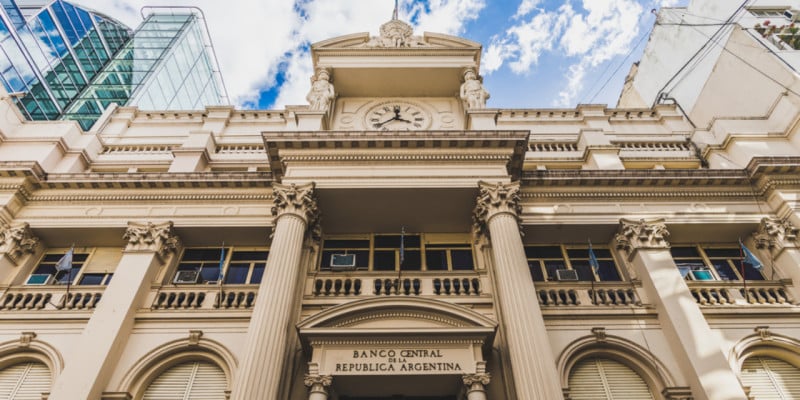
The Banco Central de la República Argentina (BCRA) is the country's central bank and primary financial regulator. It sets the rules that all banks must follow, publishes consumer-facing guidance on account types, and maintains a searchable database of its communications at the BCRA communications search engine.
Two foundational products underpin the retail banking landscape for newcomers. The caja de ahorro (savings account in pesos) is positioned by the BCRA as a free, everyday account that includes a debit card and is available at the bank of your choice. The Cuenta Gratuita Universal (CGU), which the BCRA introduced on February 1, 2020, is a mandated offering that all banks must provide, requiring only a national identity document (DNI) to open. Together, these two products mean that Argentina's banking system has a clearly defined free baseline that any newcomer can access without needing a salary, a credit history, or a paid service package.
Beyond these basics, the system includes current accounts (cuentas corrientes), bundled service packages, foreign currency savings accounts, and a growing number of digital-only banks. Traditional banks such as Banco Macro, Banco Galicia, and Banco Santander Argentina coexist with fintech-oriented players like Brubank, giving expats a range of options depending on how they prefer to manage their day-to-day finances.
A local bank account is not legally required to live in Argentina, but it quickly becomes necessary in practice. Without one, you cannot use a local debit card for everyday payments, and many landlords, utilities, and service providers expect Argentine account details for recurring transactions. The BCRA's savings account guidance makes clear that a caja de ahorro lets you operate with a debit card and carry out ordinary transactions, and that you can open one at the bank of your choosing.
For migrants specifically, the Argentine government runs a dedicated financial inclusion program called Cuenta para migrantes. The official Cuenta para migrantes page explains that migrants can access a no-cost peso savings account at participating banks. The program references limits tied to UIF Resolution 30/2017, which places caps on cash operations and account balances, so it is worth reviewing those restrictions if you expect to move larger amounts through the account regularly.
If you plan to open certain products beyond a basic savings account, such as a current account, a bundled package, or a credit card, you will likely need a tax identification number first. The CDI (Clave de Identificación) is the ID used when you do not yet have a CUIT or CUIL, and it is the standard pathway for foreign nationals who need to access the financial system. Because the CDI process can take time, the CDI application page on Argentina.gob.ar is worth consulting early in your relocation planning.
Understanding the different account categories available will help you choose the right product from the start and avoid paying for services you do not need.
The caja de ahorro en pesos is the most common everyday account. The BCRA states that opening, maintenance, and the provision of a debit card are all free of charge for peso savings accounts. This is the account most expats use first, and it covers the basics: debit card payments, cash withdrawals, and transfers.
The Cuenta Gratuita Universal (CGU) is a mandated product available at every bank in Argentina. The BCRA's CGU page states that to open one you need only a DNI and confirmation that you do not already hold a bank account. The BCRA's FAQ adds that alongside your DNI, you must present a sworn declaration stating you do not have another account and that you will notify the bank of any change. The CGU is designed for financial inclusion and is the most accessible entry point into the Argentine banking system for anyone who already holds a DNI.
The foreign currency savings account (caja de ahorro en dólares) also exists as a product at several major banks. Banco Macro's account opening page states that you can open accounts in both pesos and dollars entirely online. However, there are compliance requirements attached to buying or depositing US dollars, which are covered in the Cards and payments section below.
Current accounts (cuentas corrientes) are primarily used for business and higher-volume transactions. Opening one requires a CUIT, CUIL, or CDI, along with identity documents, and the account holder must establish a special address (domicilio especial) in Argentina.
Join the Argentina community
Get regular tips and advice to make the most of your expat life
Requirements for expats opening a bank account in Argentina
The documentation you need depends on your residency status, the type of account you want, and the bank you choose. Here is what the official sources confirm.
For a CGU or basic peso savings account, the minimum requirement is a DNI. If you have already obtained your Argentine DNI through the immigration process, you can open a CGU at any bank with your DNI and a sworn declaration that you have no other account.
For broader banking products that require a tax ID, the relevant identifier for most newly arrived foreigners is the CDI. The CDI service page on Argentina.gob.ar sets out the documentation requirements by residency status:
Residents: DNI or proof of a pending migration file (expediente migratorio)
Non-residents: passport
Non-residents from neighboring countries: a national identity document from their country of origin
Non-residents operating from abroad: passport copy or equivalent document
All applicants must submit Form F 663 (Formulario F 663, original and copy) at the ARCA office corresponding to their real address in Argentina. This means you need a documented address before you can file for a CDI, which creates a sequencing challenge for newcomers who arrive without signed accommodation in place. Planning your address situation before beginning the CDI process will save time.
For foreign residents who do not yet have an Argentine DNI, ARCA provides a digital process through its "Presentaciones digitales" platform under the procedure titled "Alta CUIT personas humanas - Situaciones especiales." This requires Form 460 F/PD (rubros 1 to 5) and supporting documents. The ARCA page for foreign residents without DNI notes that once you obtain your Argentine DNI, you must replace this CUIT with the standard resident CUIT within 10 business days.
The Cuenta para migrantes page also sets out which identity documents are accepted at participating banks for migrants from non-MERCOSUR countries who hold a temporary, transitional, permanent, or precaria (provisional) residence certificate: these include the digital DNI (DNI-d) or a passport, and, where applicable, a consular visa issued by an Argentine authority.
Opening a bank account in Argentina
The process for opening an account varies depending on the account type and the bank you choose. Here is how it works in practice.
For a CGU, the process is straightforward: present your DNI and the sworn declaration at any bank branch. Brubank, a digital bank, publishes its own CGU terms confirming that eligibility requires being of legal age, holding a DNI, and not having any other bank account. The CGU can be opened with minimal documentation and no branch visit at digital banks.
For a standard peso savings account at a traditional or digital bank, some institutions now offer fully online onboarding. Banco Macro's account opening platform states that you can open a savings account 100% online. This is a practical option for expats who want to get a debit card without visiting a branch.
If you need a CDI before you can open your chosen account type, the official steps are:
Complete Form F 663 in duplicate
Gather the required identity documents for your residency category
Present everything in person at the ARCA office that corresponds to your real address in Argentina
Non-residents should allow up to 30 business days for the CDI to be processed. This timeline can be a significant bottleneck if you are waiting on the CDI before you can open certain account types, so starting this process as early as possible after arrival is strongly advisable.
Bank interfaces, branch staff, and official onboarding materials are primarily in Spanish. Preparing key documents and understanding basic banking vocabulary before visiting a branch will make the process smoother.
Online and digital banks in Argentina
The digital banking sector in Argentina has grown noticeably, and for expats who prefer app-based account management, it offers some of the most accessible entry points into the local financial system.
Brubank is one of the more established digital banks and explicitly offers a CGU pathway. Its legal terms confirm the conditions: legal age, DNI, and no existing bank account elsewhere. The CGU can be initiated through Brubank's platform, making it a practical option for expats who have already obtained their DNI and want an account quickly without visiting a branch.
Banco Macro is a traditional bank that has developed a strong digital onboarding process. Its platform allows you to open a savings account in both pesos and dollars entirely online, with no branch visit required. The page confirms no cost for opening a savings account and covers both currency options.
Banco Santander Argentina's SuperCuenta is a digital account that includes standard banking features. However, it carries an important compliance note for anyone who wants to hold or access US dollars: if you do not deposit a salary or pension with Santander and are not a Private Banking client, you can only buy USD for savings after presenting documentation proving your income and demonstrating that you meet the requirements to access the foreign exchange market. Moreover, USD cash deposits can only be made at a branch counter and must be made by the account holder in person. This applies broadly to foreign currency operations at Santander and is representative of the kind of FX compliance requirements you may encounter across the Argentine banking system.
Banking fees and costs in Argentina
The Argentine banking system has a clear free baseline, but bundled service packages can carry significant monthly fees. Understanding the difference between product types is key to avoiding unnecessary charges.
The BCRA states that peso savings accounts (cajas de ahorro en pesos) are free for opening, maintenance, and debit card provision. This applies across all banks operating in Argentina. If you open a standalone caja de ahorro, you should not be charged a monthly maintenance fee.
The situation changes when banks bundle their accounts into service packages. These packages offer additional features (insurance, preferential rates, higher transaction limits) but carry monthly maintenance commissions. Two examples from major banks illustrate the range:
Banco Galicia: a monthly service commission of ARS 5,300 (inclusive of 21% VAT) applies to certain bundled packages, effective from May 1, 2026, as listed in the bank's published fee schedule.
Banco Santander Argentina: the SuperCuenta 3 package carries a monthly maintenance fee of ARS 24,000 plus taxes, with a final amount of ARS 29,040 shown as an example on the bank's packages page. Santander also publishes a BCRA-mandated commissions table listing a monthly account maintenance charge of ARS 7,234 for certain account categories.
Banks may waive these package fees if you meet certain conditions, such as maintaining a minimum balance or having your salary deposited directly. Always ask whether a fee waiver applies to your situation before signing up for a bundled product.
The practical advice: if you want to keep costs at zero, ask explicitly for a standalone caja de ahorro en pesos rather than accepting a package that includes services you may not need.
Cards and payments in Argentina
Every peso savings account issued by an Argentine bank comes with a debit card, as mandated by the BCRA. This gives you immediate access to card payments at the point of sale, which is the most common way to pay for goods and services in Argentina's larger cities.
Apple Pay is available in Argentina, but whether your specific card works with Apple Pay depends on your issuing bank. Confirm compatibility directly with your bank once your account is open.
For foreign currency operations, be aware that compliance requirements can add steps. Santander's SuperCuenta page provides a representative example: buying USD for savings requires income documentation and proof that you meet foreign exchange market requirements, unless you are a salary depositor or a Private Banking client with Santander. USD cash deposits can only be made at the branch counter by the account holder. These rules reflect Argentina's foreign exchange regulatory environment and are not unique to Santander, so expect similar requirements at other banks when dealing with dollar accounts.
ATMs and cash in Argentina
Argentina has a well-distributed ATM network. Banelco operates what it describes as the largest network of ATMs and self-service terminals in the country, with machines available across the country, including in smaller cities and towns. For most day-to-day cash needs, finding a Banelco ATM is straightforward in urban areas.
Banelco also offers a cardless cash withdrawal feature called Extracción sin tarjeta: you can send money to a Banelco ATM so that you or another person can withdraw it without a physical card, using a 6-digit code. The validity period of the code varies by bank, so check with your provider.
ATM withdrawal fees depend on your bank or fintech provider, not on a universal national rate. As an example, Reba, a digital bank, provides a fee schedule effective from May 2026 showing a charge of ARS 5,900 for Banelco withdrawals and ARS 5,900 for cardless withdrawal orders. If you are using a foreign card initially, both your foreign card issuer and the local ATM network may apply separate fees. Opening a local account as soon as practical will reduce these costs.
Argentina's foreign exchange regulations directly affect how international transfers work for both incoming and outgoing funds. The regulatory environment in this area is subject to change, and the compliance requirements at individual banks can vary. Always confirm the current rules directly with your bank before initiating an international transfer, and check the BCRA's current communications for any updates to foreign exchange regulations that may affect your situation.
If you plan to keep most of your funds in USD outside Argentina and transfer amounts in as needed, pairing a local Argentine account with an international money transfer service is a common approach among expats. The specific mechanics of that arrangement depend on the providers involved and the current regulatory framework, so verify the details with each institution before proceeding.
Frequently asked questions about banking in Argentina
It depends on the account type. A Cuenta Gratuita Universal (CGU) requires only a DNI and a sworn declaration that you have no other bank account. For other products such as current accounts, bundled packages, or credit cards, banks typically require a CUIT, CUIL, or CDI. The CDI is the standard tax identifier for foreign nationals who do not yet hold a CUIT or CUIL, and the documentation you need varies depending on whether you are a resident or non-resident.
For non-residents (personas físicas no residentes), the official processing time extends to 30 business days (30 días hábiles administrativos). If your chosen bank requires a CDI before opening certain account types, this timeline can be a meaningful bottleneck, so it is worth starting the application as soon as you have a confirmed address in Argentina.
Yes, by regulatory requirement. The BCRA states that peso savings accounts (cajas de ahorro en pesos) are free for opening, maintenance, and the provision of a debit card. This applies to all banks in Argentina. The fee-free status applies to a standalone savings account; bundled service packages that include additional features can carry monthly maintenance charges, so it is important to distinguish between the two when speaking with a bank.
The Cuenta Gratuita Universal (CGU) is a no-cost account that all banks in Argentina are required to offer. To open one, you need a DNI and a sworn declaration confirming that you do not hold another bank account and that you will inform the bank of any change. It is the most accessible entry point into Argentine banking for anyone who already has a DNI, and it includes a debit card at no charge.
Yes. Brubank's CGU legal terms confirm the eligibility conditions: you must be of legal age, hold a DNI, and not have any existing bank account at Brubank or any other bank. Brubank's digital platform allows you to initiate this process without visiting a branch, making it a practical option for expats who prefer app-based banking and already have their DNI.
Apple Pay is listed on Apple's Latin America page as available in Argentina. Whether your specific card works with Apple Pay depends on your issuing bank, as not all Argentine banks and card types are compatible. Contact your bank directly once your account is active to confirm whether your card supports Apple Pay.
Fees vary by bank and fintech provider. As an example, Reba published a fee schedule effective as of May 2026, showing a charge of ARS 5,900 for Banelco network withdrawals and ARS 5,900 for cardless withdrawal orders. These are provider-specific charges, not a universal rate applied across all Argentine banks. Check your bank's published fee schedule to understand what applies to your account.
Foreign exchange compliance requirements apply to dollar operations at Argentine banks. Santander's SuperCuenta terms provide a representative example: if you are not depositing a salary or pension with Santander and are not a Private Banking client, you can only buy USD for savings after presenting income documentation and demonstrating that you meet the requirements to access the foreign exchange market. USD cash deposits must be made at a branch counter by the account holder in person. Expect similar requirements at other banks, as these reflect Argentina's broader foreign exchange regulatory framework rather than policies specific to one institution.
ℹ️
We do our best to provide accurate and up to date information. However, if you have noticed any inaccuracies in this article, please let us know in the comments section below.
A journalist, holder of the DALF C1 and C2 and a diploma from the University of Mauritius, I have nearly twenty years of writing experience. After six years in the Mauritian press, I joined Expat.com, where I have been working for over a decade, including five years as editorial assistant, and now as editorial manager.