Living in Texas: the ultimate expat guide
Everything you need to know for a successful life in Texas.
Texas stands as the second-largest state in the United States, offering expatriates a unique blend of economic opportunity, cultural diversity, and affordable living. With a GDP exceeding $2.7 trillion in 2024, Texas ranks as the 8th largest economy in the world if it were an independent nation. The state welcomed 62 million travelers in 2024 and continues to attract professionals from around the globe, drawn by its thriving job market and no state income tax policy.
A Diverse Landscape
From the bustling metropolises of Houston, Dallas, and Austin to the historic charm of San Antonio and the beach communities along the Gulf Coast, Texas offers something for every lifestyle. The state spans prairies, forests, coastal regions, and the scenic Hill Country, with less than 10% being desert terrain. Major cities provide modern amenities while smaller towns offer a more relaxed pace of life.
5 Good Reasons to Move to Texas
- No state income tax — Keep more of your earnings with Texas's tax-friendly policies for residents.
- Thriving job market — Home to 53 Fortune 500 companies and leading industries in energy, technology, healthcare, and aerospace.
- Affordable cost of living — Housing costs are 16% below the national average, with overall living expenses 6% lower than the U.S. average.
- World-class healthcare — Access to renowned medical facilities including Houston Methodist and MD Anderson Cancer Center.
- Cultural diversity — A welcoming multicultural community with residents from around the world and rich Texan heritage.
Working in Texas: Career Opportunities and Employment
Texas offers a dynamic labor market with over 14.3 million jobs across diverse industries. The state has earned the Governor's Cup award for 13 consecutive years for leading the U.S. in job-creating relocation and expansion projects, with 1,368 qualified capital investment projects in 2024 alone. International professionals will find abundant opportunities in the state's key economic sectors.
Key Industries and Employers
The Texas economy relies heavily on energy (oil, natural gas, and renewables), technology, healthcare, aerospace and defense, manufacturing, and financial services. Major employers include ExxonMobil, AT&T, Texas Instruments, American Airlines, and the Texas Medical Center in Houston. The state is emerging as an epicenter for digital transformation, with semiconductor plants, data centers, and tech startups choosing Texas for their operations.
Employment Data
The table below provides key employment indicators for Texas in 2025:
Unemployment Rate | 4.1% (September 2025) |
Average Weekly Wage (Major Counties) | $1,589 - $1,998 |
Job Growth Rate | 1.4% annually |
Median Household Income | $79,721 (2024) |
Sources: U.S. Bureau of Labor Statistics, Federal Reserve Bank of St. Louis
Work Visas for International Professionals
International workers typically require an H-1B visa for specialty occupations, an L-1 visa for intracompany transfers, or an E-2 investor visa. The H-1B visa is valid for up to six years and requires employer sponsorship. Note that significant changes to the H-1B program were announced in September 2025. Prospective applicants should consult the USCIS website for the latest requirements and procedures.
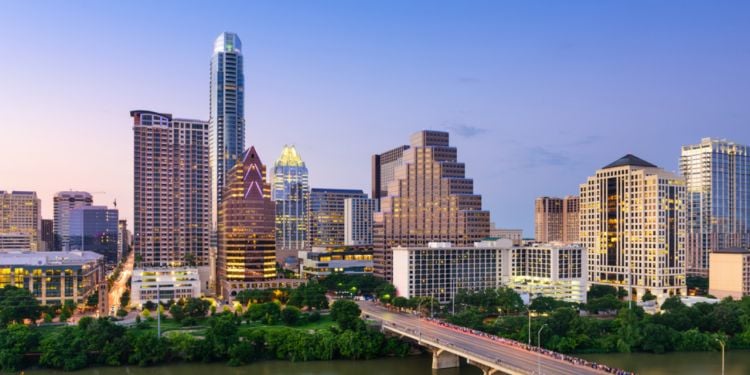
Work in Austin
Over the last few years, Austin has earned its nickname of “Silicone Hills”. With a reputation for innovation and disruption, Austin ...
Higher Education and Universities in Texas
Texas is home to some of the most prestigious universities in the United States, attracting over 80,000 international students each year. The state offers a wide range of programs across more than 260 colleges and universities, with tuition fees that are often more affordable than those in California or New York.
Top Universities for International Students
Rice University in Houston consistently ranks among the top 20 universities in the U.S., with a 6:1 student-to-faculty ratio and 27.2% international students from 113 countries. The University of Texas at Austin offers over 170 undergraduate programs and is renowned for business, engineering, and computer science. Texas A&M University in College Station is one of the largest universities in the country, with strong programs in engineering, agriculture, and research.
Tuition Fees Overview
Tuition costs vary significantly between public and private institutions:
Public Universities (In-State) | $10,000 - $11,000/year |
Public Universities (Out-of-State/International) | $38,000 - $40,000/year |
Private Universities | $50,000 - $58,000/year |
Sources: U.S. News & World Report
Admission Process
International students typically need to submit standardized test scores (SAT or ACT), English proficiency tests (TOEFL or IELTS), transcripts, and letters of recommendation. Application deadlines vary, but most fall applications are due between November and January. Students must obtain an F-1 student visa after receiving an I-20 form from their institution. For more information, visit the official university websites: UT Austin, Rice University, Texas A&M.
Retirement in Texas: A Tax-Friendly Destination
Texas attracts retirees from across the country and abroad thanks to its tax-friendly policies, warm climate, and affordable cost of living. The state does not tax Social Security benefits, pensions, or retirement account withdrawals at the state level. With world-class healthcare facilities and diverse lifestyle options, Texas offers retirees a fulfilling and financially sustainable retirement experience.
Financial Benefits for Retirees
Texas has no state income tax, which means retirees keep more of their retirement income. However, property taxes are higher than the national average, so it's important to factor this into housing decisions. The overall cost of living is approximately 6% below the national average, allowing retirement savings to stretch further.
Best Cities for Retirement
Houston | World-class healthcare (Houston Methodist, MD Anderson), cultural attractions, affordable housing |
San Antonio | Lower cost of living, rich history, River Walk lifestyle, mild winters |
Fredericksburg | Hill Country charm, lower crime rate (56% below national average), near Austin and San Antonio |
El Paso | Most affordable major city, high happiness rating, quality healthcare |
Healthcare Access
Texas boasts some of the finest healthcare facilities in the nation. Houston Methodist Hospital and UT Southwestern Medical Center in Dallas offer comprehensive medical services. MD Anderson Cancer Center in Houston is internationally renowned for cancer treatment. Medicare coverage works nationwide, and many retirees supplement with private insurance for additional coverage.
Schools and Education for Expat Children in Texas
Expat families relocating to Texas will find a variety of educational options for their children, from excellent public schools to international and private institutions. Texas public schools follow the Texas Essential Knowledge and Skills (TEKS) curriculum, and education is compulsory for children ages 6 to 18.
Public Schools
Texas public schools are free for residents and organized into independent school districts. Some districts, such as Carroll ISD in Southlake and Coppell ISD, are nationally recognized for academic excellence. Parents can research school performance through the Texas Academic Performance Reports (TAPR). Public school enrollment is based on residential zoning, which allows children to integrate with local peers.
International and Private Schools
For families seeking international curricula, Texas offers several options:
- British International School of Houston — Offers the British curriculum and IB Diploma Programme, serving students from Pre-K3 to 12th grade. Tuition ranges from $22,000 to $45,000 annually.
- Dallas International School — A bilingual institution offering French, Spanish, German, and Chinese immersion programs. Tuition: $22,000 - $26,500 per year.
- International School of Texas (Austin) — An IB World School offering inquiry-based education from age 3 through high school.
- The Village School (Houston) — Offers the IB Diploma and entrepreneurship programs, with tuition from $45,700 to $67,750.
Sources: World Schools, Private School Review
Enrollment Tips
International schools often have long waiting lists, so begin the application process early. Many schools require proof of residency, immunization records, and previous academic transcripts. Some employers include school fees in expatriate packages, so factor this into employment negotiations.
Housing and Neighborhoods in Texas
Finding housing in Texas is generally more affordable than in other major U.S. states, with housing costs 16% below the national average. Whether you prefer renting an apartment in a bustling city center or purchasing a home in a suburban neighborhood, Texas offers diverse options to suit various budgets and lifestyles.
Rental Market Overview
As of 2025, the average rent across Texas is approximately $1,403 per month. Rental prices vary significantly by city, with Austin being the most expensive and Houston offering more affordable options. The table below shows average monthly rents in major cities:
City | 1-Bedroom | 2-Bedroom |
Houston | $1,062 - $1,355 | $1,273 - $1,569 |
Dallas | $1,201 - $1,422 | $1,436 - $1,841 |
Austin | $1,457 - $1,501 | $1,774 |
San Antonio | $1,052 | $1,300 |
Sources: Numbeo, RentCafe, Apartment List
Expat-Friendly Neighborhoods
In Houston, popular areas include Montrose (average 1-bed: $1,360), Midtown ($1,470), and the Museum District. In Dallas, Uptown, Oak Lawn, and Plano attract many international residents. Austin's Downtown, South Congress (SoCo), and North Austin are popular with expats and tech workers. When renting, expect to provide proof of income, a security deposit (typically one month's rent), and references.
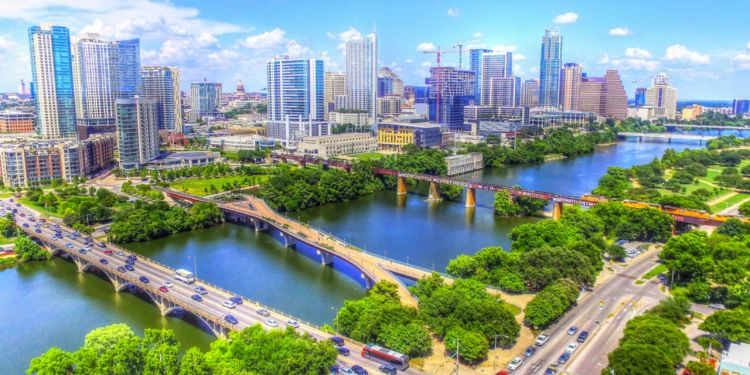
Accommodation in Austin
Austin is an exciting city with amazing cultural diversity and a great arts and live music scene. Its unofficial motto is “Keep Austin ...
Leisure, Culture and Things to Do in Texas
Texas offers an extraordinary array of cultural, recreational, and entertainment options. From world-class museums and live music venues to stunning natural landscapes and professional sports, the Lone Star State provides something for everyone. San Antonio ranks among the top five tourist destinations in the United States, while Austin is celebrated as the Live Music Capital of the World.
Cultural Attractions
History enthusiasts will appreciate The Alamo in San Antonio and the Sixth Floor Museum at Dealey Plaza in Dallas, which chronicles the life and legacy of President John F. Kennedy. Houston's Museum District features 19 museums, including the Museum of Fine Arts and the Houston Museum of Natural Science. The Fort Worth Stockyards offer an authentic cowboy experience with rodeos and Western-themed attractions.
Outdoor Activities
Nature lovers can explore Big Bend National Park for dramatic desert landscapes, Guadalupe Mountains National Park for hiking, and Palo Duro Canyon, the second-largest canyon in the U.S. In Austin, Zilker Park and Barton Springs Pool (a natural spring-fed pool at a constant 68°F) offer urban retreats. The Texas Hill Country is famous for its wineries, scenic drives, and charming small towns like Fredericksburg.
Entertainment and Nightlife
- Live Music — Austin's Sixth Street and the Warehouse District feature hundreds of venues. San Antonio's River Walk offers dining and entertainment along scenic waterways.
- Professional Sports — Watch the Dallas Cowboys (NFL), Houston Rockets (NBA), Texas Rangers (MLB), or San Antonio Spurs (NBA).
- Theme Parks — Six Flags Over Texas in Arlington, SeaWorld San Antonio, and Moody Gardens in Galveston.
- Space Exploration — Space Center Houston, the official visitor center of NASA Johnson Space Center.
Sources: Travel Texas, Visit Austin
Daily Life in Texas: Transportation and Lifestyle
Daily life in Texas is characterized by a car-centric culture, warm hospitality, and a diverse mix of traditions. While major cities are expanding public transportation options, most residents rely on personal vehicles for commuting and daily errands. The state enjoys a warm climate with hot summers and mild winters, though weather can vary significantly from region to region.
Getting Around
Texas cities have developed public transit systems, though coverage varies. Dallas Area Rapid Transit (DART) operates the most extensive network with 93 miles of light rail, 65 stations, and bus services connecting 13 cities. In Houston, METRO provides light rail and bus services, with fares starting at $1.25. Austin's Capital Metro offers bus routes and a 32-mile rail line, with monthly passes around $41. San Antonio's VIA Metropolitan Transit serves the downtown area and suburbs.
Transportation Costs
Average Annual Transportation Cost | $5,509 (single adult) |
DART/METRO Single Fare | $1.25 - $3.00 |
Average Gas Price | $2.92/gallon |
Lifestyle and Culture
Texans are known for their friendliness and hospitality. The culture blends Southern traditions with Hispanic heritage, creating a unique Tex-Mex identity. Grocery shopping is affordable, with popular chains like H-E-B (a Texas favorite), Kroger, and Whole Foods. The average monthly grocery cost is around $279 for a single person. Dining out is popular, with casual restaurant meals costing $15-25 per person. Texas operates cashless toll systems on many highways, so rental car users should be prepared for electronic toll charges.
Cost of Living in Texas: Budgeting for Your Move
Texas offers a cost of living approximately 6% below the national average, making it an attractive destination for expats seeking affordable urban living. The absence of state income tax further enhances financial benefits for residents. However, property taxes and sales taxes are higher than in some states, so it's important to factor these into your budget.
Monthly Budget: Single Person
The following table estimates monthly expenses for a single person in Texas (excluding rent):
Expense Category | Houston | Dallas | Austin |
Living Costs (excl. rent) | $1,130 | $1,275 | $1,109 |
Rent (1-bedroom, city center) | $1,350 | $1,400 | $1,500 |
Utilities (electricity, water, internet) | $250 | $260 | $255 |
Total Monthly | $2,730 | $2,935 | $2,864 |
Sources: Numbeo (December 2025)
Monthly Budget: Family of Four
Estimated monthly expenses for a family of four in Texas:
Expense Category | Houston | Dallas | Austin |
Living Costs (excl. rent) | $4,070 | $4,612 | $4,016 |
Rent (3-bedroom apartment) | $1,850 | $2,100 | $2,300 |
International School Fees (annual) | $22,000 - $45,000 | $22,000 - $26,500 | $20,000 - $35,000 |
Health Insurance (family) | $500 - $1,200 | $500 - $1,200 | $500 - $1,200 |
Total Monthly (excl. school) | $6,420 - $7,120 | $7,212 - $7,912 | $6,816 - $7,516 |
Sources: Numbeo, School websites
In Short: Your Texas Adventure Awaits
Texas offers expatriates an exceptional combination of economic opportunity, affordable living, and cultural diversity. With no state income tax, a thriving job market across industries from energy to technology, and housing costs well below coastal U.S. cities, the Lone Star State provides excellent value for professionals and families alike. Whether you're drawn to Houston's medical and energy sectors, Dallas's business environment, Austin's tech scene, or San Antonio's historic charm, Texas has a city to match your lifestyle and career goals.
The state's warm climate, friendly communities, and world-class amenities make settling in straightforward and enjoyable. From excellent international schools to renowned universities, from outdoor adventures in Big Bend to live music on Austin's Sixth Street, Texas delivers a rich quality of life that extends far beyond the workplace.
Ready to start your Texas journey? Connect with fellow expatriates, ask questions, and share experiences on the Expat.com Texas forum. Welcome to the Lone Star State!
We do our best to provide accurate and up to date information. However, if you have noticed any inaccuracies in this content, please contact us.


Essential services for your expat journey