

Living in Jerusalem: the ultimate expat guide
Everything you need to know for a successful life in Jerusalem.
Jerusalem stands as one of the world's most historically and spiritually significant cities, home to over 966,000 residents and serving as Israel's capital. The city uniquely blends ancient heritage with modern infrastructure, offering expats a distinctive living experience where millennia of history meet contemporary urban life. With its mild Mediterranean climate, world-class healthcare system, and growing economy, Jerusalem attracts professionals, families, and retirees from across the globe.
5 Good Reasons to Move to Jerusalem
- Cultural richness: Experience daily life in a city sacred to three major religions, with unparalleled access to historical sites, museums, and diverse communities.
- Strong job market: Jerusalem boasts the highest net employment outlook in Israel at +25%, with growing government, tech, and healthcare sectors.
- Lower costs than Tel Aviv: Housing and daily expenses are significantly more affordable than Tel Aviv while maintaining high quality of life.
- Excellent healthcare: Access to world-class medical facilities including Hadassah Medical Center and comprehensive universal health coverage.
- Family-friendly environment: Strong international school options, safe neighborhoods, and a community-oriented lifestyle ideal for raising children.
Working in Jerusalem: Jobs, Industries, and Permits
Jerusalem offers diverse employment opportunities across government, technology, healthcare, tourism, and education sectors. The city serves as Israel's administrative center, housing major government offices and international organizations, while also developing a growing tech ecosystem that complements the dominant Tel Aviv scene.
Key Industries and Employment Sectors
The public sector remains Jerusalem's largest employer, including government ministries, the Knesset, and municipal offices. Healthcare provides substantial employment through institutions like Hadassah Medical Center and Shaare Zedek. The technology sector has seen growth, with the Jerusalem district recording increased high-tech employment even during nationwide declines. Tourism and hospitality employ thousands, serving the millions of visitors to the city's religious and historical sites annually. Higher education institutions, particularly Hebrew University, also provide significant employment opportunities.
Work Permits and Visas
Foreign nationals require a B/1 work visa to work legally in Israel. Your employer must first obtain a work permit from the Ministry of Industry, Trade and Labor before you can apply for the visa. Processing typically takes 4 to 12 weeks. Work permits are initially valid for one year and must be renewed annually. From January 2025, travelers from visa-exempt countries must also obtain an ETA-IL electronic authorization before arrival. High-tech specialists hired with salaries at least double the average wage may qualify for expedited processing.
The following table summarizes key employment indicators for Jerusalem:
Net Employment Outlook | +25% (highest in Israel) |
Average Monthly Salary (national) | ILS 12,500 (~USD 3,400) |
High-Tech Sector Average Salary | ILS 31,500–32,300 (~USD 8,500) |
Sources: Taub Center for Social Policy Studies, Israel Central Bureau of Statistics
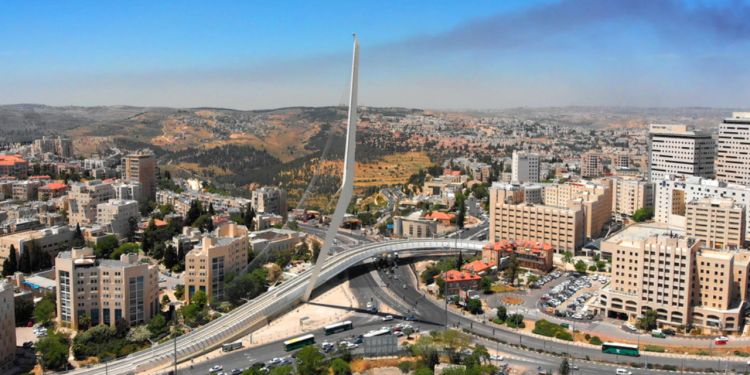
Working in Jerusalem
Explore exciting career opportunities in Jerusalem, the largest city in Israel. Experience a dynamic work environment combining cultural ...
Higher Education and Universities in Jerusalem
Jerusalem hosts Israel's premier academic institutions, offering world-class education and research opportunities. International students benefit from numerous English-taught programs, renowned faculty, and a unique academic environment enriched by the city's cultural and historical significance.
Hebrew University of Jerusalem
The Hebrew University of Jerusalem (HUJI) ranks as Israel's highest-rated university and consistently places among the world's top 250 institutions according to QS World University Rankings. Founded in 1918 with support from Albert Einstein, the university has produced eight Nobel laureates and operates over 100 research centers. The Rothberg International School offers comprehensive English-taught programs for international students, including undergraduate semesters abroad, one and two-year master's degrees, and summer programs. Popular programs include the MA in Israel Studies, MA in Islamic and Middle Eastern Studies, MBA in International Startup, and MA in Smart Cities. The main campus is located on Mount Scopus, offering stunning views of the Old City.
Tuition Fees and Admission
Annual tuition for undergraduate programs stands at approximately ILS 12,017 for Israeli residents and ILS 15,021 for international students. Graduate programs through Rothberg International School cost approximately USD 11,400 per year for most master's programs, with MBA programs priced higher. Early admission and early payment scholarships of USD 2,000–5,000 are available. International students typically need to demonstrate English proficiency through IELTS (minimum 6.5) or TOEFL scores, and may need to take Hebrew language courses depending on their program.
Sources: Hebrew University Rothberg International School, Hebrew University Student Administration
Retiring in Jerusalem
Jerusalem attracts retirees seeking a unique combination of spiritual significance, excellent healthcare, and community connections. While the cost of living is higher than some retirement destinations, the quality of life, safety, and access to medical care make it appealing for those with the financial means.
Healthcare for Retirees
Israel's universal healthcare system, Kupat Cholim, covers all residents including retirees. New immigrants (Olim) making Aliyah receive up to one year of free health coverage. The four health funds—Clalit, Maccabi, Meuhedet, and Leumit—provide comprehensive coverage including doctor visits, hospital care, prescriptions, and specialist treatments. Many retirees add supplemental insurance (Bituach Mashlim) for quicker access to specialists and additional services. Monthly healthcare premiums for retirees are significantly lower than private insurance in countries like the United States.
Retirement Benefits and Considerations
Bituach Leumi, Israel's National Insurance Institute, provides old-age pensions to eligible residents. The basic pension starts at approximately ILS 2,500–3,500 per month (USD 670–940), with potential supplements for low-income retirees. Eligibility typically requires 12 years of contributions. American retirees should note that US Medicare does not provide coverage abroad—international health insurance or Israeli Kupat Cholim is essential. Israel has tax treaties with many countries that may affect retirement income taxation. The retirement community in Jerusalem is active and welcoming, with many English-speaking groups and organizations supporting new arrivals.
Sources: Bituach Leumi, Israel Ministry of Health
Schools for Expat Children in Jerusalem
Jerusalem offers excellent schooling options for expat families, including international schools following American, British, and IB curricula, as well as local Israeli schools. Parents can choose from various educational approaches to suit their children's needs and maintain academic continuity during their time abroad.
International Schools
The Jerusalem American International School (JAIS), a branch of the Walworth Barbour American International School, serves students from Pre-K through Grade 9 with a US standards-based curriculum. Located in the San Simon neighborhood, JAIS welcomes students from over 40 countries and offers small class sizes, swimming instruction, and a unique Jerusalem Studies program. Annual tuition ranges from ILS 54,500 for preschool to ILS 90,800 for grades 5–8, plus a ILS 5,000 annual capital fund fee.
The Anglican International School Jerusalem (AISJ) provides education from Pre-Kindergarten through Grade 12, offering the International Baccalaureate (IB) Diploma Programme. Founded on Christian values, AISJ welcomes students of all faiths and has fostered understanding and reconciliation since 1962. The school is located on Rechov Hanevi'im in central Jerusalem.
French and Other Options
French-speaking families can consider the Lycée français de Jérusalem or Lycée Havat Hanoar Hatsioni, both offering the French baccalauréat curriculum and accredited by the AEFE (Agency for French Education Abroad). For high school students (grades 9–12), JAIS offers a Weekly Boarding Program at the main WBAIS campus in Even Yehuda, approximately 45 minutes from Jerusalem.
Sources: Jerusalem American International School, Anglican International School Jerusalem, U.S. Department of State Office of Overseas Schools
Housing and Neighborhoods in Jerusalem
Jerusalem's housing market offers diverse options across historic neighborhoods, modern developments, and family-friendly suburbs. Expats typically gravitate toward central neighborhoods with good amenities, English-speaking communities, and easy access to international schools and workplaces.
Popular Expat Neighborhoods
German Colony (Moshava Germanit) and Baka are among the most sought-after areas for expats, featuring renovated heritage homes, excellent cafes and restaurants, and a cosmopolitan atmosphere. Rehavia and Talbiya offer prestigious addresses near the city center with beautiful architecture and proximity to cultural institutions. Arnona has become increasingly popular with expats due to its improved infrastructure, green environment, and more affordable prices compared to central neighborhoods. For families seeking more space and budget-friendly options, Ramot and Pisgat Ze'ev in the north offer larger apartments and suburban living.
Rental Prices and Procedures
Jerusalem's rental market is competitive, with prices rising 25–30% in popular neighborhoods over the past year. Expect to pay a security deposit equivalent to 2–3 months' rent and typically one month's rent as a real estate agent commission. Leases are usually for 12 months with options to renew. Rental prices vary significantly by neighborhood and apartment condition.
The following table shows average monthly rental prices in Jerusalem:
1-bedroom (city center) | ILS 4,500–7,000 (~USD 1,200–1,900) |
1-bedroom (outside center) | ILS 3,500–5,500 (~USD 950–1,500) |
3-bedroom (city center) | ILS 7,000–12,000 (~USD 1,900–3,300) |
3-bedroom (outside center) | ILS 5,000–8,500 (~USD 1,350–2,300) |
Sources: Numbeo, Israel Central Bureau of Statistics
Leisure, Culture, and Things to Do in Jerusalem
Jerusalem offers an extraordinary blend of ancient history, world-class museums, vibrant markets, and emerging nightlife. Beyond its famous religious sites, the city provides expats with rich cultural experiences, outdoor activities, and entertainment options throughout the year.
Museums and Cultural Attractions
The Israel Museum ranks among the world's leading art and archaeology museums, housing over 500,000 artifacts including the famous Dead Sea Scrolls in the iconic Shrine of the Book. Yad Vashem, the World Holocaust Remembrance Center, spans a 45-acre campus with museums, monuments, and gardens—admission is free. The Tower of David Museum in the ancient Citadel tells Jerusalem's story through immersive exhibits and a spectacular night show projected onto the fortress walls. For contemporary culture, the Jerusalem Theatre hosts performances, while the Bezalel Academy of Arts and Design showcases emerging Israeli artists.
Markets, Nightlife, and Recreation
Mahane Yehuda Market transforms from a bustling food market by day into a nightlife hub after dark, with bars and restaurants taking over the stalls. The German Colony and Ben Yehuda Street offer dining and café culture, while neighborhoods like Nachlaot feature cozy wine bars and live music venues. For outdoor enthusiasts, the Jerusalem Hills provide excellent hiking trails, and the city is just one hour from the Dead Sea—the lowest point on Earth. Annual events include the Jerusalem Festival of Lights in June, which transforms the Old City with spectacular installations, and various religious celebrations including Easter, Hanukkah, and Sukkot.
Sources: Israel Museum, Yad Vashem, GoJerusalem
Daily Life in Jerusalem: Transport and Lifestyle
Daily life in Jerusalem blends modern convenience with ancient traditions. The city operates on the Israeli work week (Sunday through Thursday), with Shabbat bringing much of the city to rest from Friday afternoon through Saturday evening. Understanding local rhythms and transport options helps expats adapt quickly to their new home.
Public Transportation
Jerusalem's public transport network includes buses, the Light Rail (Red Line), and connections to the national rail system. The Light Rail runs 22.5 kilometers through the city center, connecting Pisgat Ze'ev in the north through Jaffa Street and the Old City walls to Mount Herzl and Hadassah Medical Center. Extensions to Neve Yaakov and Hadassah Ein Kerem have recently been completed. Trains run approximately every 10 minutes during peak hours. A Blue Line is currently under construction.
City buses are operated primarily by Egged, with nearly 100 routes throughout the city. A single ride costs approximately ILS 5.90 using a Rav Kav smartcard, which provides free transfers within 90 minutes. The high-speed train connects Jerusalem to Tel Aviv and Ben Gurion Airport in approximately 30 minutes, departing from Jerusalem–Yitzhak Navon railway station. Note that public transportation does not operate during Shabbat (Friday evening through Saturday night).
Lifestyle and Cultural Considerations
Jerusalem's diverse population includes secular, religious, and ultra-Orthodox Jewish communities, as well as Arab and Christian residents. Many shops, restaurants, and services close for Shabbat, though some areas like the German Colony have cafes open on Saturdays. The famous Mahane Yehuda Market ("The Shuk") is the heart of Jerusalem's food scene, offering fresh produce, spices, and street food. Expats appreciate the city's walkable neighborhoods, mild climate (with occasional winter snow), and strong sense of community.
Sources: Jerusalem Municipality, Jerusalem Light Rail
Cost of Living in Jerusalem
Jerusalem offers a more affordable lifestyle than Tel Aviv while maintaining access to excellent services and amenities. Housing represents the largest expense, followed by groceries, transportation, and healthcare contributions. Understanding the full cost picture helps expats plan their budgets effectively.
Monthly Budget for a Single Person
The following table provides estimated monthly costs for a single person living in Jerusalem:
Rent (1-bedroom, city center) | ILS 5,500 (~USD 1,500) |
Groceries | ILS 1,500–2,200 (~USD 400–600) |
Public Transport (monthly pass) | ILS 215–300 (~USD 60–80) |
Utilities (electricity, water, internet) | ILS 500–900 (~USD 135–245) |
Health Insurance (Kupat Cholim basic) | ILS 250–400 (~USD 70–110) |
Entertainment & Dining | ILS 800–2,000 (~USD 220–550) |
Total (excluding rent) | ILS 3,500–5,800 (~USD 950–1,585) |
Monthly Budget for a Family of Four
The following table provides estimated monthly costs for a family of four:
Rent (3-bedroom, city center) | ILS 9,000 (~USD 2,450) |
Groceries | ILS 3,500–4,500 (~USD 950–1,225) |
International School (per child/year) | ILS 80,000–91,000 (~USD 22,000–25,000) |
Utilities | ILS 800–1,200 (~USD 220–330) |
Health Insurance (family) | ILS 600–1,000 (~USD 165–275) |
Transportation & Entertainment | ILS 2,000–3,500 (~USD 545–950) |
Total (excluding rent & school) | ILS 7,000–10,200 (~USD 1,900–2,780) |
Sources: Numbeo, Easy Aliyah
In Short
Jerusalem offers expats an unmatched living experience where ancient history meets modern life. With Israel's highest employment outlook, world-class healthcare, respected universities, and diverse international schools, the city provides solid infrastructure for professionals and families alike. While the cost of living is significant, it remains more affordable than Tel Aviv, and the cultural richness, strong community connections, and access to historical sites create a quality of life difficult to find elsewhere. Whether you're drawn by career opportunities, educational pursuits, spiritual connection, or retirement, Jerusalem welcomes newcomers into its unique rhythm of life. Ready to start your Jerusalem journey? Join the Expat.com Jerusalem forum to connect with fellow expats, ask questions, and share experiences.
We do our best to provide accurate and up to date information. However, if you have noticed any inaccuracies in this content, please contact us.


Essential services for your expat journey