Living in Fribourg: the ultimate expat guide
Everything you need to know for a successful life in Fribourg.
Fribourg sits at the heart of Switzerland, perched on a dramatic rocky promontory above the Sarine River. This bilingual city of approximately 40,000 residents serves as the capital of the Canton of Fribourg and represents the cultural bridge between French-speaking and German-speaking Switzerland. With one of Europe's best-preserved medieval old towns, featuring over 200 Gothic facades and intact 15th-century fortifications, Fribourg offers a rare blend of historical charm and modern amenities.
The city functions as a major educational hub, home to the University of Fribourg—Switzerland's only fully bilingual university—which brings intellectual energy and international diversity to this compact, walkable city. Located just 25 minutes from Bern and under an hour from Lausanne by train, Fribourg provides excellent connectivity while maintaining a notably lower cost of living than Switzerland's larger cities.
Five Compelling Reasons to Make Fribourg Your New Home
- Bilingual environment: Master both French and German while living in a city where both languages are official and actively spoken.
- Affordable Swiss living: Enjoy rent and daily expenses significantly lower than Zurich, Geneva, or Lausanne while maintaining the high Swiss quality of life.
- Medieval beauty: Live within one of Europe's most intact medieval cityscapes, with cobblestone streets, historic fountains, and Gothic architecture at every turn.
- Strategic location: Access major Swiss cities, the Alps, and three lakes within easy reach, all while living in a peaceful university town.
- Strong job market: Benefit from Switzerland's lowest unemployment rates and the presence of global companies including Alcon, Nespresso, and UCB Pharma.
Building Your Career in Fribourg
The Canton of Fribourg boasts one of Switzerland's most dynamic job markets, with an unemployment rate consistently hovering around 1.5% to 2%—well below both the Swiss and European averages. The region has attracted major multinational corporations while maintaining a robust ecosystem of innovative SMEs and startups.
Key Industries and Major Employers
The life sciences sector stands as Fribourg's economic powerhouse, generating over CHF 1.5 billion in value and employing more than 3,200 professionals. Global pharmaceutical leader UCB Pharma operates significant facilities in the region. The canton also hosts operations from Alcon (eye care), Liebherr (heavy machinery), Cartier and Rolex (luxury watchmaking), Michelin (tires), and Nespresso (food processing). The construction industry represents another major employer, benefiting from the region's expertise in sustainable building practices and the Building Innovation Cluster (BIC).
Work Permits and Employment Regulations
EU/EFTA nationals enjoy freedom of movement and can work in Switzerland without quota restrictions. They may work up to 90 days per calendar year without a permit; longer employment requires registering for a residence permit before starting work. Non-EU/EFTA nationals face stricter requirements: Switzerland issues approximately 8,500 work permits annually to third-country nationals, reserved exclusively for qualified specialists, managers, and university graduates. Employers must demonstrate they couldn't fill positions from the Swiss or EU labor market.
Unemployment Rate (Canton) | 1.5% - 2.0% |
Average Net Monthly Salary | CHF 5,875 |
Key Sectors | Life Sciences, Watchmaking, Food Processing, Construction |
Sources: Swiss Federal Statistical Office, Numbeo
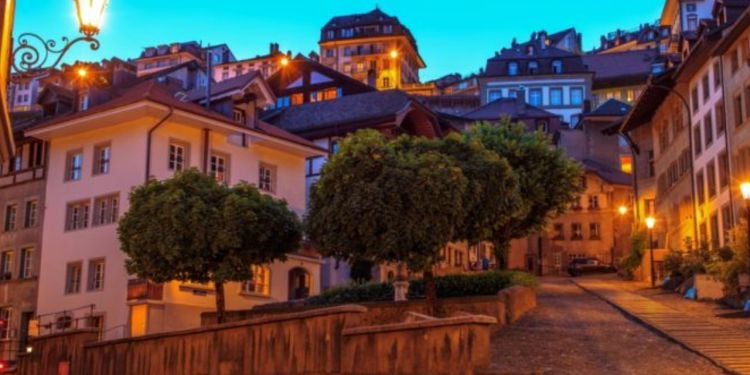
Working in Fribourg
Situated between the French—and German-speaking regions of Switzerland, Fribourg is a vibrant city. As the capital of its canton, it has a ...
Higher Education: Study at Switzerland's Bilingual University
Fribourg stands out as a premier destination for higher education, anchored by the University of Fribourg—the only university in Switzerland (and one of few in Europe) offering complete curricula in both French and German. Founded in 1889, the university attracts approximately 10,000 students from over 100 countries.
University of Fribourg Programs and Fees
The university offers programs across five faculties: Law, Economics and Social Sciences, Arts and Humanities, Science and Medicine, and Theology. Students can pursue degrees entirely in French, entirely in German, or take advantage of the unique "bilingue plus" program to graduate with bilingual certification. Several master's and doctoral programs are also available in English. Tuition fees are remarkably affordable by international standards: approximately CHF 1,970 per year for both Swiss and international students, making it one of Europe's most accessible quality universities.
Additional Higher Education Options
The HES-SO Fribourg (University of Applied Sciences) offers practice-oriented programs in management, engineering, architecture, health sciences, and social work—also in both French and German. The Haute École de Gestion (HEG-FR) holds prestigious AACSB accreditation and welcomes international students to its business programs. Admission typically requires recognized secondary education credentials equivalent to the Swiss Matura, plus language proficiency at B2 level in French or German.
Annual Tuition (University of Fribourg) | ~CHF 1,970 |
Student Population | ~10,000 |
Languages of Instruction | French, German, English (select programs) |
Sources: University of Fribourg, HEG Fribourg
Finding Your Home in Fribourg's Historic Quarters
Fribourg's compact urban layout offers distinct neighborhoods, each with its own character—from the dramatic medieval old town perched above the river gorge to modern residential areas on the surrounding plateau. Rental housing dominates the market, with most residents occupying apartments in small to mid-sized buildings.
Popular Neighborhoods for Expats
The Upper Town (Bourg) and Pérolles district offer proximity to the university, shops, and restaurants, attracting students and young professionals. Beaumont and Schönberg provide quieter, more residential environments favored by families, with good access to schools and green spaces. The neighboring municipality of Villars-sur-Glâne (just 3 km from the city center) offers modern housing at slightly lower prices while remaining well-connected by public transport. For those seeking German-speaking communities, Düdingen (10 minutes by train) provides a family-friendly alternative.
Rental Prices and Process
Renting in Fribourg is notably more affordable than in Zurich or Geneva. Expect to pay around CHF 1,300 per month for a one-bedroom apartment in the city center, or approximately CHF 1,075 in outlying areas. Three-bedroom apartments average CHF 2,060 centrally and CHF 1,720 outside the center. The rental process typically requires proof of income (usually three times the monthly rent), a rental deposit of three months' rent held in a blocked bank account, residence permit documentation, and references from previous landlords. Online platforms like Homegate, ImmoScout24, and local classified ads are primary sources for listings.
1-Bedroom Apartment (City Center) | CHF 1,300/month |
1-Bedroom Apartment (Outside Center) | CHF 1,075/month |
3-Bedroom Apartment (City Center) | CHF 2,060/month |
3-Bedroom Apartment (Outside Center) | CHF 1,720/month |
Sources: Numbeo (December 2025)
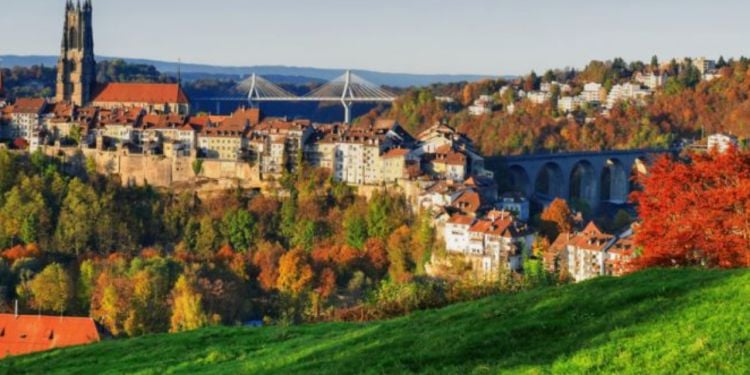
Accommodation in Fribourg
While the rental market in Fribourg is less competitive than in cities like Zurich and Geneva, it's still wise to plan your search in advance and ...
Culture, Leisure, and Things to Do in Fribourg
Despite its modest size, Fribourg punches above its weight culturally, blending medieval heritage with contemporary arts, university energy, and easy access to some of Switzerland's most celebrated landscapes and culinary traditions.
Museums and Cultural Attractions
The Espace Jean Tinguely - Niki de Saint Phalle showcases kinetic sculptures and colorful works by these celebrated artists in a converted tram depot. The Museum of Art and History (Musée d'art et d'histoire) houses collections spanning medieval religious art to contemporary works, while the Natural History Museum delights families with its specimen collections and interactive exhibits. History enthusiasts should visit Espace 1606, featuring an extraordinary 52-square-meter scale model of 17th-century Fribourg with virtual reality experiences. The Cathedral of St. Nicholas, with its 74-meter tower (365 steps!), offers panoramic city views.
Outdoor Activities and Day Trips
The surrounding region provides endless recreational opportunities. Lake Schwarzsee (Black Lake) lies 30 minutes south, offering swimming, hiking, and winter skiing. The famous Gruyères village—home to the iconic cheese and the surrealist H.R. Giger Museum—makes an essential day trip, combined with a visit to the Maison Cailler chocolate factory in nearby Broc. Lake Murten and the Roman ruins at Avenches provide relaxing lakeside excursions. Within the city, the extensive medieval fortifications offer walking routes with spectacular views, while the Saarine River gorge provides dramatic natural scenery accessible by boat or on foot.
Nightlife and Social Scene
The student population ensures a lively café and bar scene, particularly around the old town's Place Georges-Python and the lower town's Planche district. Music venue Fri-Son hosts concerts and club nights. Annual events include the Braderie de Fribourg (September street market), Belluard Bollwerk International (contemporary arts festival), and the legendary Murtenlauf—a 17-kilometer race from Murten to Fribourg commemorating a 1476 battle.
Daily Life: Getting Around and Settling In
Life in Fribourg moves at a gentler pace than in Switzerland's larger cities, yet residents enjoy excellent infrastructure, efficient public services, and easy access to both urban amenities and natural landscapes. The city's compact size makes most daily errands manageable on foot or by bus.
Transportation and Getting Around
The Transports Publics Fribourgeois (TPF) operates an extensive network of buses throughout the city and canton, with most city lines running every 6-12 minutes. A monthly pass for the city zone (Frimobil Zone 10) costs approximately CHF 71. The charming funicular railway (Funi)—one of the last water-ballast funiculars in Switzerland—connects the upper town to the lower neighborhoods and has been running since 1899. Fribourg's main railway station provides direct SBB connections to Bern (25 minutes), Lausanne (45 minutes), Geneva (90 minutes), and Zurich (90 minutes). Many residents combine public transport with cycling; the city maintains dedicated bike lanes and offers bike-sharing services.
Shopping and Daily Essentials
Major supermarkets including Migros and Coop are found throughout the city, with the main shopping areas concentrated around the pedestrianized upper town and the Pérolles district. The Saturday morning market at Place Georges-Python features local farmers selling regional specialties including Gruyère cheese, sausages, and seasonal produce. Banking, post offices, and government services typically operate Monday to Friday, with limited Saturday hours. Most shops close by 6:30 PM on weekdays and 5:00 PM on Saturdays; Sunday closures are standard.
Understanding the Cost of Living in Fribourg
While Switzerland ranks among the world's most expensive countries, Fribourg offers notable savings compared to Zurich, Geneva, or Lausanne—typically 20-30% lower for rent and daily expenses. Understanding the full cost picture helps newcomers budget effectively.
Monthly Budget for a Single Person
A single professional living in Fribourg should expect total monthly expenses of approximately CHF 3,500-4,500, depending on lifestyle and housing choices. Rent represents the largest expense, followed by mandatory health insurance and food costs.
Expense Category | Single Person (Monthly) |
Rent (1-bedroom, center) | CHF 1,300 |
Utilities (electricity, heating, water) | CHF 150-220 |
Health Insurance (mandatory) | CHF 350-400 |
Groceries | CHF 400-500 |
Transportation (monthly pass) | CHF 71 |
Mobile Phone + Internet | CHF 80-120 |
Total Estimate | CHF 2,350-2,610 (excl. leisure) |
Monthly Budget for a Family of Four
Families face higher costs, particularly for housing and childcare. International school fees add significantly to the budget if public schools are not suitable.
Expense Category | Family of Four (Monthly) |
Rent (3-bedroom apartment) | CHF 2,060 |
Utilities | CHF 220-350 |
Health Insurance (4 persons) | CHF 1,000-1,300 |
Groceries | CHF 900-1,200 |
Transportation | CHF 150-200 |
Childcare/School (if private) | CHF 1,500-3,000+ |
Total Estimate | CHF 5,830-8,110 (excl. leisure) |
Sources: Numbeo, Comparis, Federal Office of Public Health
In Short
Fribourg offers a distinctive proposition for those seeking Swiss quality of life without the premium prices of Zurich or Geneva. This bilingual gem delivers medieval beauty, a thriving job market anchored by pharmaceutical and manufacturing giants, and access to world-class higher education at remarkably affordable rates. Families benefit from excellent public schools, while professionals enjoy the strategic location—just minutes from Bern and under an hour from Lausanne. The lower cost of living, combined with genuine cultural richness and proximity to Alpine adventures, makes Fribourg an increasingly attractive choice for expats seeking substance over flash.
Ready to explore your move to Fribourg? Connect with fellow expats, ask questions, and share experiences on the Expat.com Fribourg Forum.
We do our best to provide accurate and up to date information. However, if you have noticed any inaccuracies in this content, please contact us.

Essential services for your expat journey