Living in Basel: the ultimate expat guide
Everything you need to know for a successful life in Basel.
Basel sits at the point where Switzerland, Germany, and France converge, making it one of Europe's most strategically located cities. With a population of approximately 177,000 residents, this compact city on the Rhine River combines world-class pharmaceutical research, exceptional cultural offerings, and a remarkably high quality of life. Basel ranks consistently among the top cities globally for livability, thanks to its clean environment, efficient public transport, and thriving economy centered around companies like Novartis and Roche.
5 Reasons to Make Basel Your New Home
- Leading salaries: Basel offers the highest median wages in Switzerland at approximately CHF 7,405 per month, driven by the pharmaceutical and life sciences sector.
- Cultural capital: With nearly 40 museums, Basel holds the highest museum density in Switzerland, including the renowned Kunstmuseum and Fondation Beyeler.
- Tri-national lifestyle: Enjoy easy access to France and Germany for shopping, dining, and weekend getaways, all within minutes.
- Excellent connectivity: EuroAirport Basel-Mulhouse-Freiburg, three international railway stations, and superb public transport connect you to all of Europe.
- International community: With approximately 35% foreign nationals, English is widely spoken in professional settings, making integration smoother.
Career Opportunities: Working in Basel's Thriving Economy
Basel's economy is dominated by the pharmaceutical and life sciences industries, hosting global headquarters of major companies that drive innovation and employment. The city offers exceptional opportunities for professionals in research, healthcare, finance, and logistics, with salaries that consistently rank among the highest in Europe.
Key Employment Sectors
The pharmaceutical giants Novartis and Roche anchor Basel's economy, employing thousands of researchers, scientists, and business professionals. Beyond pharma, the city hosts the Bank for International Settlements, major logistics companies benefiting from the Rhine port, and a growing technology sector. The unemployment rate in Basel-Stadt canton remains low at approximately 3.5%, reflecting strong labor market conditions.
Work Permits and Visa Requirements
EU/EFTA nationals benefit from the Agreement on the Free Movement of Persons, requiring only registration with cantonal authorities for stays exceeding three months. Non-EU nationals face stricter requirements under Switzerland's quota system. For 2025, Switzerland allocated 4,500 B permits (residence permits for stays over one year) and 4,000 L permits (short-term permits under one year) for non-EU workers. Employers must demonstrate that no suitable Swiss or EU candidate is available before hiring non-EU nationals.
Employment Overview
Median Monthly Salary (Basel Region) | CHF 7,405 |
Minimum Wage (Basel-Stadt) | CHF 22 per hour |
Average Net Salary (After Tax) | CHF 6,497 |
Major Industries | Pharmaceuticals, Life Sciences, Finance, Logistics |
Sources: Swiss Federal Statistical Office, Numbeo 2025
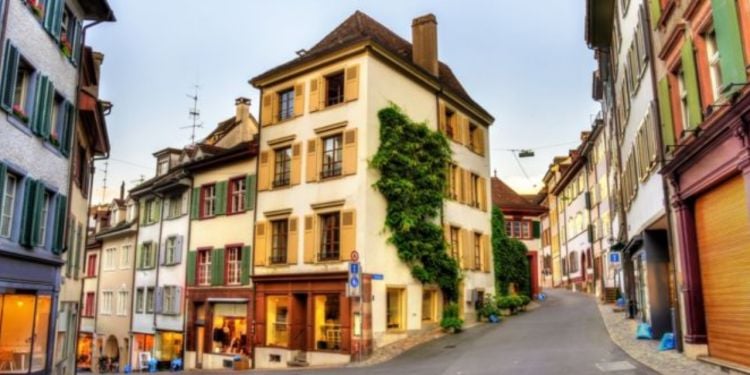
Working in Basel
As Switzerland's third largest city, Basel is also one of the country's most attractive destinations for expatriates. Located in the ...
Higher Education: Studying at Switzerland's Oldest University
Basel boasts a distinguished academic tradition anchored by the University of Basel, founded in 1460 as Switzerland's oldest university. Today, it attracts over 13,000 students from more than 100 countries, offering programs across seven faculties with particular strengths in life sciences, nanosciences, and European studies.
University of Basel
The university maintains an outstanding research reputation, ranking #131 in the QS World University Rankings and #126 in the Times Higher Education Rankings for 2025. Notable research centers include the Biozentrum, the Swiss Tropical and Public Health Institute, and the Center for Sustainable Energy. The acceptance rate ranges between 19% and 28%, reflecting competitive admissions standards.
Tuition fees are remarkably affordable compared to international standards. All students pay CHF 850 per semester (approximately CHF 1,700 annually), regardless of nationality. German and English serve as the principal languages of instruction, with most master's programs offered in English. International students must demonstrate German proficiency at C1 level for German-taught programs or submit IELTS/TOEFL scores for English programs.
Application and Admission
Application deadlines for the fall semester 2026 run from 1 February to 30 April 2026. International applicants must submit certified academic transcripts, language proficiency certificates, and proof of a recognized secondary school qualification. The University of Basel Student Administration Office provides detailed guidance on admission requirements by country. Students can access over 400 exchange partnerships with universities in more than 40 countries through the university's extensive mobility programs.
Education for Children: International and Local Schooling Options
Families relocating to Basel will find excellent educational options ranging from Swiss public schools to prestigious international institutions. The Swiss public school system provides high-quality, tuition-free education, while international schools cater specifically to the expatriate community with English-language curricula.
Swiss Public Schools
Basel's public schools follow the Swiss German curriculum with instruction primarily in German. Children are typically welcomed regardless of language background, with intensive German support provided during the first years. The system comprises Kindergarten (ages 4-6), Primarschule (ages 6-12), and Sekundarschule (ages 12-15), followed by academic or vocational tracks. Public schooling is free, making it an attractive option for families planning long-term stays.
International Schools
International School Basel (ISB) serves as the premier English-language institution, offering all three International Baccalaureate programs (PYP, MYP, and Diploma) for students aged 3-19 across three campuses. The school welcomes over 60 nationalities and achieved a 97% pass rate on IB Diploma exams in 2024, well above the 80% world average. Annual tuition ranges from CHF 24,500 to CHF 31,200, with a one-time development fee of CHF 4,500.
Additional options include SIS Swiss International School Basel (bilingual German-English, CHF 22,820-34,020), Academia International School (British curriculum with IGCSEs and A-Levels, CHF 27,900), and ELA Basel – The Swiss British School (ages 1-12, CHF 26,000-28,000). Most international schools follow the IB or British curriculum, ensuring globally recognized qualifications.
School Fees Overview
International School Basel (IB) | CHF 24,500 – CHF 31,200/year |
SIS Swiss International School | CHF 22,820 – CHF 34,020/year |
Academia International School | CHF 27,900/year |
Private Kindergarten (Monthly) | CHF 1,600 – CHF 2,500 |
Sources: International School Basel, International Schools Database 2025
Finding Your Home: Housing and Neighborhoods in Basel
Basel's housing market remains competitive but is generally more accessible than Zurich or Geneva. The city divides naturally into Grossbasel (Greater Basel) on the Rhine's left bank and Kleinbasel (Lesser Basel) on the right, each offering distinct neighborhood atmospheres to suit different lifestyles.
Popular Neighborhoods for Expats
Altstadt Grossbasel forms the historic heart with medieval architecture, cobblestone streets, and proximity to major cultural attractions. St. Alban, often called the "Venice of Basel" for its charming canals, offers an upscale, tranquil residential experience popular with families and professionals. Gundeldingen, south of the main train station, provides excellent value with a family-friendly atmosphere and strong community feel.
On the Kleinbasel side, Wettstein has transformed from working-class roots into a trendy riverside quarter with alfresco cafés and nearly 50% immigrant residents, making it particularly welcoming for newcomers. Clara and Matthäus offer multicultural vibes with international restaurants and the popular Saturday Matthäusmarkt. Bachletten combines residential calm with easy city-center access and green spaces.
Rental Prices
The median annual rent stands at approximately CHF 310 per square meter. Expect to provide references, proof of income (typically three times the monthly rent), and sometimes a criminal record extract when applying. Apartments are usually unfurnished, and deposits equal to three months' rent are standard.
1-Bedroom Apartment (City Center) | CHF 1,300 – CHF 2,500/month |
1-Bedroom Apartment (Outside Center) | CHF 1,000 – CHF 1,500/month |
3-Bedroom Apartment (City Center) | CHF 2,500 – CHF 3,500/month |
3-Bedroom Apartment (Outside Center) | CHF 1,950 – CHF 2,950/month |
Sources: Numbeo 2025, RealAdvisor
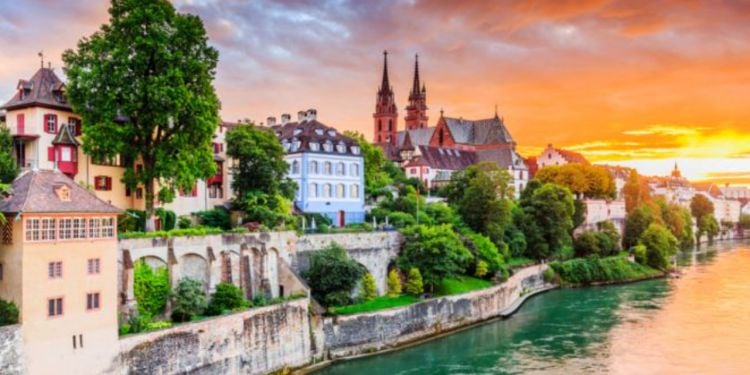
Accommodation in Basel
Basel, the capital of the canton of Basel-Stadt, is Switzerland's third-largest city, with a population of over 173,000. It's a magnet for ...
Culture and Leisure: Enjoying Life in Basel
Basel proudly claims the title of Switzerland's cultural capital, offering an extraordinary concentration of world-class museums, vibrant festivals, and year-round artistic programming. The Rhine River provides the backdrop for outdoor recreation, while the city's compact size makes cultural exploration effortlessly accessible.
Museums and Art
The Kunstmuseum Basel houses the oldest public art collection in the world, spanning from the 15th century to contemporary works. The Fondation Beyeler in nearby Riehen ranks among the world's finest modern art museums, featuring masterpieces from Monet, Picasso, and Warhol. Museum Tinguely, designed by architect Mario Botta, celebrates the kinetic sculptures of Basel's beloved artist Jean Tinguely. The Vitra Design Museum, just across the border in Germany, showcases cutting-edge furniture and industrial design.
The annual Art Basel fair every June transforms the city into a global contemporary art hub, attracting collectors and enthusiasts from around the world. Hotel guests receive the BaselCard, providing 50% discounts on museum admissions.
Festivals and Events
Basler Fasnacht, the city's legendary carnival, begins at 4:00 AM on the Monday after Ash Wednesday with the magical Morgestraich lantern procession. This UNESCO-recognized tradition fills the streets with masks, music, and revelry for three days. The Basel Christmas Market at Barfüsserplatz and Münsterplatz creates a festive atmosphere throughout December. In 2025, Basel will host the Eurovision Song Contest at St. Jakobshalle, marking a major international cultural moment.
Outdoor Activities
Swimming in the Rhine with a Wickelfisch (waterproof bag) ranks among Basel's most beloved summer traditions. The Basel Zoo, Switzerland's oldest and largest, welcomes over one million visitors annually. Cycling paths along the Rhine, the Merian Gärten botanical gardens, and nearby hiking in the Jura mountains provide ample outdoor recreation. Day trips to Lucerne, the Swiss Alps, or France's Alsace wine region are easily accessible.
Everyday Life: Getting Around and Living in Basel
Basel offers an exceptionally high quality of daily life, combining Swiss efficiency with a relaxed, livable atmosphere. The compact city size means most amenities are within walking or cycling distance, while an excellent public transport network connects all neighborhoods seamlessly.
Public Transportation
The Basler Verkehrs-Betriebe (BVB) operates Basel's iconic green trams and buses, forming part of the Tarifverbund Nordwestschweiz (TNW) regional network. Single tickets cost CHF 4.20 for one zone (valid 60 minutes), while a monthly U-Abo pass costs approximately CHF 86 for residents registered in the region. Hotel guests receive the BaselCard for free unlimited public transport throughout their stay.
The tram network includes cross-border lines reaching into France and Germany, reflecting Basel's tri-national character. Three international railway stations (Swiss SBB, French SNCF, and German DB) connect Basel to major European cities. EuroAirport Basel-Mulhouse-Freiburg lies just 15 minutes from the city center.
Daily Practicalities
Shops typically open Monday-Friday from 9:00 to 18:30 and Saturdays until 17:00, with most businesses closed on Sundays. Major supermarket chains include Migros, Coop, and budget options Aldi and Lidl. Many residents cross into neighboring Germany or France for grocery shopping at significantly lower prices.
Health insurance is mandatory within three months of arrival. The average premium in Basel-Stadt runs approximately CHF 360-400 per month for adults, among the highest in Switzerland due to the canton's concentration of medical facilities. Registering with the local Einwohnerdienste (residents' registration office) within 14 days of arrival is required, after which you receive your residence permit.
Transport Costs
Single Ticket (1 Zone) | CHF 4.20 |
Day Pass (Basel Zones) | CHF 10.70 |
Monthly Pass (U-Abo) | CHF 86 |
Taxi Start Fare | CHF 6.50 |
Sources: BVB, TNW Tarifverbund
Managing Your Budget: Cost of Living in Basel
Basel ranks among Switzerland's more expensive cities, though costs are generally 10-15% lower than Zurich or Geneva. High salaries typically offset the elevated expenses, with many residents enjoying strong purchasing power. Careful budgeting and smart choices—like shopping across the border—can significantly reduce monthly outlays.
Monthly Budget for a Single Person
The following table outlines typical monthly expenses for a single professional living in Basel.
Expense Category | Monthly Cost (CHF) |
Rent (1-bedroom, city center) | 1,650 |
Utilities (electricity, heating, water) | 150 – 230 |
Health Insurance | 360 – 400 |
Groceries | 400 – 600 |
Public Transport (U-Abo) | 86 |
Mobile Phone + Internet | 80 – 100 |
Dining Out (occasional) | 200 – 300 |
Estimated Total | 2,926 – 3,366 |
Monthly Budget for a Family of Four
Families should anticipate higher costs for larger accommodation, additional health insurance premiums, and potentially school fees.
Expense Category | Monthly Cost (CHF) |
Rent (3-bedroom, city center) | 2,800 – 3,500 |
Utilities | 250 – 350 |
Health Insurance (family) | 1,100 – 1,400 |
Groceries | 800 – 1,000 |
Public Transport | 160 – 200 |
International School (2 children) | 4,000 – 5,200 |
Miscellaneous | 500 – 800 |
Estimated Total | 9,610 – 12,450 |
Sources: Numbeo 2025, Swiss Federal Statistical Office
In Short
Basel offers an exceptional combination of career opportunity, cultural richness, and quality of life that few cities can match. The pharmaceutical industry provides lucrative employment, while the Rhine River, world-class museums, and vibrant neighborhoods create an enviable lifestyle. Yes, costs are high—but so are salaries, and the city's compact, international character makes integration surprisingly smooth. Whether you're drawn by career advancement, academic pursuits, or simply the promise of a well-connected European base, Basel delivers on its reputation as one of Switzerland's most livable cities. Ready to start your Basel journey? Connect with fellow expats and find practical advice on the Expat.com Basel Forum.
We do our best to provide accurate and up to date information. However, if you have noticed any inaccuracies in this content, please contact us.

Essential services for your expat journey