Living in Alicante: the ultimate expat guide
Everything you need to know for a successful life in Alicante.
Alicante is a sun-drenched coastal city on Spain's southeastern coast, offering an exceptional quality of life that attracts thousands of expatriates each year. With over 300 days of sunshine annually, a population of approximately 370,000 residents, and a well-established international community, this Mediterranean gem combines modern amenities with traditional Spanish charm. The city serves as the capital of Alicante Province in the Valencian Community and hosts the European Union Intellectual Property Office (EUIPO), bringing a significant population of European professionals to the area.
5 Good Reasons to Move to Alicante
- Affordable Mediterranean lifestyle – Cost of living is 30-40% lower than major European capitals while offering excellent healthcare and infrastructure.
- Exceptional climate – Mild winters and warm summers make outdoor living possible year-round.
- Established expat community – Large British, German, and Scandinavian communities with English widely spoken in key areas.
- Excellent connectivity – Alicante-Elche Airport offers direct flights to major European cities, and high-speed rail connects to Madrid.
- Rich cultural heritage – Historic landmarks, vibrant festivals, and a thriving gastronomic scene.
Working in Alicante: Employment Opportunities
Alicante's economy has diversified significantly in recent years, moving beyond its traditional tourism base to embrace technology, services, and innovation. The city is home to the Distrito Digital, a growing tech hub attracting international companies and startups in software development, AI, and cybersecurity.
Key Employment Sectors
The services sector dominates Alicante's economy, accounting for 87% of businesses, followed by construction (10%) and industry (3%). Major employers include companies in retail, pharmaceuticals, banking, tourism, and technology. The presence of EUIPO provides opportunities for legal and administrative professionals. Tourism and hospitality remain strong, with growing demand for multilingual staff in hotels, restaurants, and travel services.
Work Permits and Job Market
EU citizens can work freely in Spain. Non-EU nationals require a work visa, typically sponsored by an employer. Remote workers may apply for Spain's Digital Nomad Visa, which allows working for non-Spanish companies while residing in the country.
Unemployment Rate (Valencian Community) | ~11% |
Average Monthly Net Salary | €1,721 |
Main Sectors | Services, Tourism, Technology, Retail |
Sources: Trading Economics, Numbeo 2025
Higher Education and Universities in Alicante
Alicante offers quality higher education options for international students, with programs taught in Spanish and increasingly in English. The city's universities are well-regarded and provide pathways to employment in Spain and across Europe.
University of Alicante (UA)
The University of Alicante is the city's main public institution, located on a modern campus in San Vicente del Raspeig, about 8 km from the city center. It serves approximately 30,000 students and offers degrees in Arts and Humanities, Social Sciences, Law, Natural Sciences, Engineering, Health Sciences, and Education. Many courses are available in English for exchange students. Annual tuition for EU students ranges from €900 to €2,400, while non-EU students pay approximately €1,500 to €3,600 depending on the program.
Admission and International Programs
International students must demonstrate equivalency to the Spanish Bachillerato (similar to A-Levels or high school diploma) for undergraduate programs. Spanish language proficiency (DELE or SIELE) is typically required, though some programs accept English (TOEFL/IELTS). The university offers a buddy program pairing international students with locals.
Sources: University of Alicante Official Website, QS Top Universities
Retiring in Alicante: A Popular Choice
Alicante and the Costa Blanca are among Europe's most popular retirement destinations, attracting tens of thousands of retirees from the UK, Germany, Scandinavia, and increasingly from the United States. The combination of climate, affordability, healthcare quality, and established expat infrastructure makes it ideal for those seeking an active retirement.
Visa Requirements for Non-EU Retirees
Non-EU citizens typically apply for Spain's Non-Lucrative Visa (NLV), which requires proof of passive income of at least €2,400/month (€28,800/year) for the main applicant, plus €600/month for each dependent. Applicants must also show private health insurance valid in Spain and a clean criminal record. The visa is initially granted for one year and can be renewed for two-year periods.
Healthcare for Retirees
Spain's healthcare system is highly rated. Non-lucrative visa holders must maintain private health insurance, which typically costs €65 to €150/month depending on age and coverage. After obtaining permanent residency, retirees may access the public system. Alicante has excellent medical facilities with English-speaking doctors, particularly in private clinics catering to the expat community.
Sources: MySpainVisa, Global Citizen Solutions
Finance and banks in Alicante
Tips to manage your money in Alicante: from opening a bank account, transferring funds to filling your tax and understanding the fiscal system.
Schools and Education for Expat Children
Alicante and the surrounding Costa Blanca region offer excellent schooling options for expat families, including numerous international and bilingual schools following the British curriculum. Spanish public schools are free but primarily teach in Spanish and Valencian.
International School Options
The region hosts over 30 international schools, with the majority following the British National Curriculum. Notable options include King's College Alicante, ranked among Spain's top IB schools with an average score of 36 points. El Limonar International School (ELIS) Villamartín and Newton College are also highly regarded. The European School of Alicante offers a unique multilingual education with Spanish, English, French, and German sections.
Fees and Enrollment
Annual tuition at international schools typically ranges from €6,000 to €14,000 depending on the school and grade level. The average fee for a 12-year-old student is approximately €8,400. Schools often require enrollment fees, uniform costs, and materials separately. Registration usually opens in January for the following academic year.
Sources: International Schools Database, King's College Alicante
Housing and Neighborhoods in Alicante
Alicante offers diverse housing options from beachfront apartments to suburban villas. Rental prices have increased significantly in recent years but remain competitive compared to other European coastal cities. The average price per square meter reached €13/month for rentals in late 2025.
Popular Neighborhoods for Expats
Playa de San Juan is the most sought-after area, offering a 7 km sandy beach, modern apartments, excellent schools, and family-friendly amenities. El Centro suits those who prefer urban living with historic charm, walkable streets, and vibrant nightlife. Cabo de las Huertas is an upscale coastal neighborhood with luxury villas and stunning coves. Benalúa offers affordable housing close to the train station and city center.
Rental Prices
1-Bedroom Apartment (City Center) | €850 – €1,000/month |
1-Bedroom Apartment (Outside Center) | €650 – €900/month |
3-Bedroom Apartment (City Center) | €1,200 – €1,900/month |
3-Bedroom Apartment (Outside Center) | €900 – €1,500/month |
Sources: Numbeo 2025, Idealista
Leisure, Culture and Things to Do
Alicante offers a rich blend of cultural attractions, outdoor activities, and social experiences that make it easy to settle into Mediterranean life. The city's beaches, historic sites, and vibrant festival calendar ensure there's always something to explore.
Cultural Attractions
The Castillo de Santa Bárbara, perched on Mount Benacantil at 166 meters, offers panoramic views and houses the city history museum (MUSA). The MARQ Archaeological Museum is internationally recognized for its interactive exhibitions spanning prehistory to modern times. MACA (Contemporary Art Museum) features works by Dalí, Miró, and Picasso. The Ocean Race Museum celebrates Alicante's connection to the famous sailing regatta.
Beaches and Outdoor Life
Playa del Postiguet is the central urban beach, while Playa de San Juan offers 7 km of golden sand perfect for families. Water sports including sailing, kayaking, and paddleboarding are popular year-round. Parc Lo Morant is the city's largest green space with sports facilities, playgrounds, and walking trails.
Festivals and Nightlife
The Hogueras de San Juan (Bonfires of Saint John) in late June is Alicante's biggest festival, featuring elaborate sculptures, fireworks, and street parties. The city's tapas bars concentrate around El Barrio (old town) and the port area, while clubs in Playa de San Juan cater to a younger crowd.
Daily Life in Alicante
Daily life in Alicante follows the relaxed Mediterranean rhythm, with late lunches, evening paseos (strolls), and a strong emphasis on outdoor living. The city is highly walkable, and most errands can be accomplished on foot or by efficient public transport.
Getting Around
The TAM (Transporte Alicante Metropolitano) integrates buses and the TRAM light rail system, connecting the city center with Playa de San Juan, the university, and surrounding towns up to Denia. A single ticket costs €1.45, while a 10-trip pass is approximately €5.25 (with current subsidies). Monthly passes are available for around €22. The TRAM runs underground in the city center and overground along the coast. Taxis are affordable, with a base fare of €2.10.
Lifestyle and Practicalities
Shops typically close for siesta from 2pm to 5pm, though supermarkets and shopping centers remain open. The Mercado Central is the city's main fresh food market, open mornings Monday through Saturday. Healthcare is excellent, with access to both public (after obtaining residency) and private facilities with English-speaking doctors. Most administrative tasks require an NIE (foreigner identification number) and empadronamiento (municipal registration).
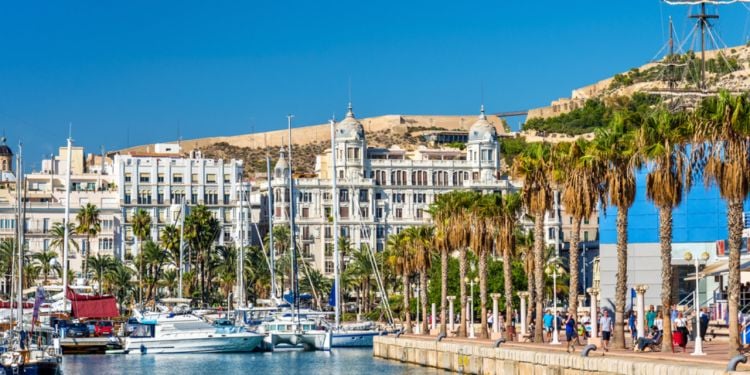
Discovering Alicante
Alicante is basically known as a tourist city, located in the Valencia community and in the province bearing the same name. Its population amounts to ...
Cost of Living in Alicante
Alicante offers one of the most affordable coastal lifestyles in Western Europe. The cost of living is approximately 40% lower than London and 30% lower than major US cities. Below are typical monthly expenses based on 2025 data.
Monthly Budget: Single Person
Rent (1-bedroom, city center) | €860 |
Utilities (electricity, water, internet) | €140 |
Groceries | €250 |
Transport (monthly pass) | €22 |
Dining/Entertainment | €200 |
Total (Single Person) | €1,470 |
Monthly Budget: Family of Four
Rent (3-bedroom, outside center) | €1,100 |
Utilities | €180 |
Groceries | €500 |
Transport | €60 |
International School (1 child) | €700 |
Private Health Insurance | €200 |
Leisure | €300 |
Total (Family of 4) | €3,040 |
Sources: Numbeo 2025
In Short
Alicante offers an unbeatable combination of Mediterranean climate, affordable living, and modern amenities that make it one of Europe's top destinations for expatriates and retirees alike. Whether you're drawn by career opportunities in the growing tech sector, seeking quality international schools for your children, or looking for a sun-soaked retirement, Alicante delivers on all fronts. The established expat community means you'll find support networks, English-speaking services, and fellow newcomers navigating the same journey. With excellent transport links to the rest of Europe and a rich cultural calendar, boredom is never an option. Ready to take the next step? Join the Expat.com Alicante forum to connect with expats already living your dream and get firsthand advice on making Alicante your new home.
We do our best to provide accurate and up to date information. However, if you have noticed any inaccuracies in this content, please contact us.