

Living in Warsaw: the ultimate expat guide
Everything you need to know for a successful life in Warsaw.
Warsaw, the vibrant capital of Poland, has emerged as one of Europe's most dynamic cities for international professionals and families. With a population of 1.86 million in the city proper and over 3.27 million in the metropolitan area, Warsaw ranks as the 6th largest city in the European Union. The city sits on the banks of the Vistula River and serves as Poland's political, economic, and cultural centre.
Often called the "Phoenix City" for its remarkable reconstruction after World War II, Warsaw blends rich history with modern innovation. Today, it attracts multinational corporations, thriving tech startups, and a growing expat community drawn by career opportunities, affordable living costs, and high quality of life. The city offers excellent infrastructure, world-class healthcare, and a strategic location that makes exploring Europe easy.
Five good reasons to move to Warsaw
- Booming job market – Warsaw has one of the lowest unemployment rates in Europe at around 2-3%, with strong demand in IT, finance, and business services.
- Affordable cost of living – Despite being a major European capital, Warsaw offers significantly lower living costs compared to London, Paris, or Amsterdam.
- Excellent public transport – Two metro lines, extensive tram and bus networks, and commuter rail provide efficient city-wide connectivity.
- Rich cultural scene – World-class museums, theatres, concerts, and a UNESCO-listed Old Town offer endless cultural experiences.
- Central European hub – Warsaw Chopin Airport connects to major European cities, making weekend getaways easy and accessible.
Working in Warsaw: Career opportunities in Poland's economic capital
Warsaw stands as Poland's undisputed economic powerhouse, hosting the headquarters of major corporations, financial institutions, and a rapidly growing tech sector. The city has attracted significant foreign investment, creating abundant opportunities for skilled professionals from around the world.
Job market and key industries
The Warsaw job market remains exceptionally strong, with unemployment hovering around 2-3% – well below the European average. Key sectors driving employment include information technology, financial services, business process outsourcing (BPO), shared services centres, and manufacturing. Major international companies including Google, Samsung, Goldman Sachs, and JP Morgan have established operations in Warsaw, creating thousands of positions for international talent.
The IT sector particularly thrives, with software developers often earning above 15,000 PLN gross monthly. Poland hosts over 400 R&D centres and has become a European hub for tech innovation.
Work permits and employment requirements
Citizens of the EU, EEA, and Switzerland can work freely in Poland without permits. Non-EU nationals require a work permit obtained by their employer from the local Voivodeship Office, followed by a Type D national visa. Highly qualified professionals may qualify for the EU Blue Card, which requires a minimum gross salary of approximately PLN 12,273 monthly in 2025. Processing typically takes 4-8 weeks for permits and 2-4 weeks for visas.
The following table summarises key employment indicators in Warsaw:
Unemployment rate (Warsaw region) | 2-3% |
Average gross salary (Warsaw) | PLN 8,500-9,500/month |
Minimum gross salary (2025) | PLN 4,666/month |
Top sectors | IT, Finance, BPO, Manufacturing |
Sources: Statistics Poland (GUS), Statistical Office in Warsaw
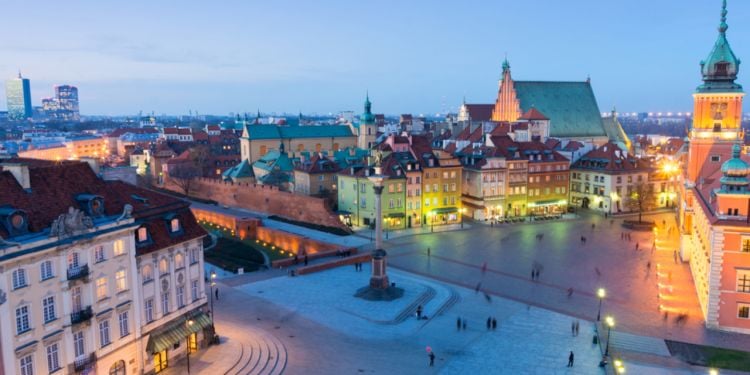
Work in Warsaw
Poland's vibrant capital is open towards foreign expertise. In this article, find out how to find a work in Warsaw and get useful tips on your job ...
Higher education in Warsaw: Universities and international programmes
Warsaw hosts some of Central Europe's most prestigious universities, attracting over 230,000 students annually – ranking third among European cities. The city offers numerous English-taught programmes across various disciplines, making it an attractive destination for international students.
Leading universities
The University of Warsaw (UW) ranks among Poland's oldest and most respected institutions, offering over 100 degree programmes including many in English. Popular fields include international relations, economics, and European studies. The Warsaw University of Technology (Politechnika Warszawska) excels in engineering, computer science, and technical fields, with English-taught programmes such as Computer Science and Data Science attracting strong international interest.
Other notable institutions include the Warsaw School of Economics (SGH), renowned for business and economics programmes, Warsaw University of Life Sciences (SGGW), and the Medical University of Warsaw for healthcare studies.
Tuition fees and admission
EU/EEA citizens may study free at public universities in Polish-language programmes. English-taught programmes typically cost between EUR 2,000 and EUR 5,000 annually for EU citizens and EUR 3,000 to EUR 6,000 for non-EU students, depending on the field of study. Technical and medical programmes tend toward the higher end.
Admission generally requires secondary school completion equivalent to the Polish matura, language proficiency certification, and programme-specific requirements. Applications typically close in mid-June to early July for September intake. Students can work part-time during studies, and Poland offers various scholarship programmes including the Stefan Banach Scholarship for developing country nationals.
Sources: University of Warsaw Admissions, Warsaw University of Technology
Schools in Warsaw: Education options for expat children
Warsaw offers diverse educational options for international families, from Polish public schools to prestigious international institutions following British, American, or International Baccalaureate curricula. The city has become a regional hub for international education, with schools catering to the growing expat community.
International schools
The American School of Warsaw (ASW) follows an American curriculum leading to the IB Diploma, serving students aged 3-18. Annual tuition for first-year students reaches approximately PLN 63,000 including registration fees. The British School Warsaw, part of Nord Anglia Education, offers the English National Curriculum through to A-Levels and IB, with annual fees around PLN 56,000.
Other respected options include the Thames British School offering Cambridge and IB programmes (PLN 56,500 annually), the International American School of Warsaw, and the Canadian School of Warsaw. These schools typically require registration fees of PLN 3,000-6,500 and refundable deposits.
Polish public and bilingual schools
Polish public education is free and maintains high standards. Some public schools offer bilingual sections with enhanced English instruction at significantly lower costs – around PLN 900 monthly in international departments. The Polish system includes primary school (ages 7-15) and secondary school (ages 15-19).
Enrollment in international schools typically remains open year-round, though starting in September aligns best with the academic calendar. Waiting lists exist at popular schools, so early application is advisable. Most international schools provide bus services, after-school activities, and extensive extracurricular programmes.
Sources: American School of Warsaw, The British School Warsaw
Housing in Warsaw: Neighbourhoods and rental prices
Warsaw's rental market has experienced significant growth, with rents increasing substantially over recent years due to strong demand from professionals, students, and international residents. Understanding neighbourhood characteristics helps newcomers find the right fit for their lifestyle and budget.
Expat-friendly neighbourhoods
Mokotów remains Warsaw's most popular district for expats, offering green spaces, excellent restaurants, embassy proximity, and diverse housing from pre-war villas to modern apartments. Wilanów attracts families with its upscale developments, international schools, and proximity to the historic Wilanów Palace – though it requires longer commutes to the centre.
Żoliborz charms residents with tree-lined streets, parks, and a village-like atmosphere despite its central location. Powiśle, along the Vistula River, has transformed into a trendy district popular with young professionals, featuring renovated industrial spaces, riverside cafes, and excellent nightlife. Śródmieście (city centre) suits those wanting urban convenience with cultural attractions at their doorstep.
Rental prices and procedures
The following table shows current average monthly rents in Warsaw:
1-bedroom apartment (city centre) | PLN 4,200-4,900 |
1-bedroom apartment (outside centre) | PLN 3,300-3,500 |
3-bedroom apartment (city centre) | PLN 7,500-8,000 |
3-bedroom apartment (outside centre) | PLN 5,400-5,700 |
Rental agreements typically require a one or two-month deposit plus the first month's rent upfront. Leases usually run for 12 months with one to three months' notice for termination. Utilities (electricity, heating, water, garbage) average PLN 1,300-1,400 monthly for an 85m² apartment and are often paid separately from rent.
Sources: Numbeo
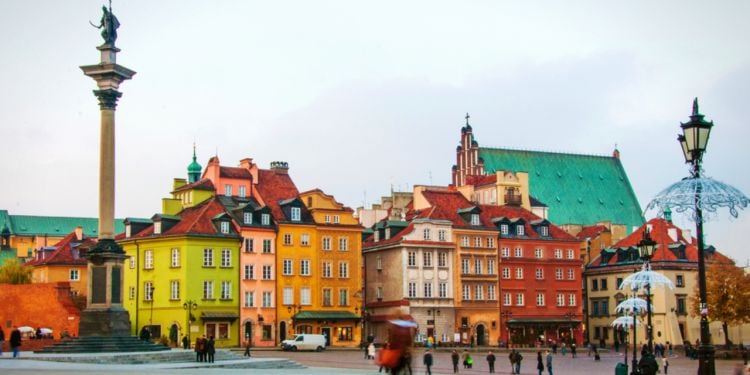
Accommodation in Warsaw
Looking forward to moving to Warsaw? Find out, in this article, how to find accommodation in Poland's dynamic capital.
Leisure and culture: Things to do in Warsaw
Warsaw surprises visitors with its cultural richness, from meticulously reconstructed historic sites to cutting-edge contemporary venues. The city offers abundant entertainment options year-round, catering to diverse interests and age groups.
Museums and cultural attractions
The UNESCO-listed Old Town (Stare Miasto) showcases Warsaw's remarkable post-war reconstruction, featuring colourful townhouses, the Royal Castle, and charming cobblestone streets. The POLIN Museum of the History of Polish Jews presents a world-class permanent exhibition in a stunning contemporary building. The Warsaw Uprising Museum offers a powerful, immersive experience documenting the 1944 resistance.
Art enthusiasts appreciate the National Museum and the newly opened Museum of Modern Art (MSN). The Copernicus Science Centre provides excellent family entertainment with interactive exhibits. The iconic Palace of Culture and Science, a controversial Soviet-era gift, offers panoramic city views from its observation deck.
Parks and outdoor activities
Łazienki Park, covering 76 hectares, ranks among Europe's most beautiful urban parks. Highlights include the Palace on the Isle and free Chopin concerts every Sunday from May through September. The Vistula River boulevards have transformed into popular recreational areas with beaches, bars, and cycling paths.
Nightlife and entertainment
Powiśle and Praga districts lead Warsaw's nightlife scene with trendy bars, clubs, and live music venues. Fabryka Norblina and Elektrownia Powiśle offer revitalised industrial spaces with restaurants, shops, and entertainment. The city hosts major festivals including Orange Warsaw Festival and cultural events throughout the year. Dining options range from traditional Polish cuisine to international restaurants, with the emerging food scene gaining regional recognition.
Sources: City of Warsaw
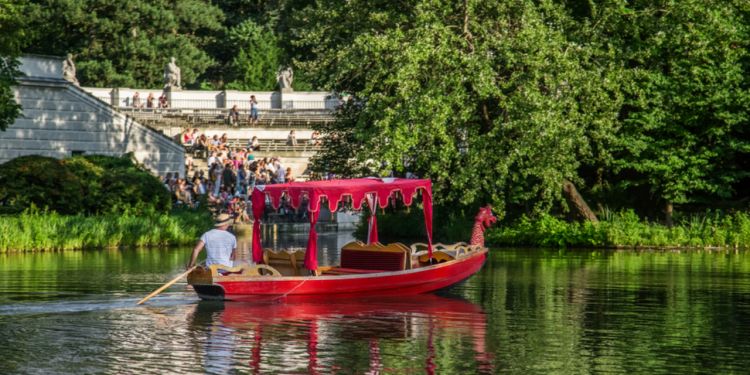
Leisure activities in Warsaw
Find, in this article, everything you need to know about the leisure activities available in Warsaw, the Polish capital city.
Daily life in Warsaw: Transport and local culture
Warsaw offers an efficient, affordable lifestyle with modern infrastructure that makes daily routines convenient. Understanding local transport options and cultural nuances helps newcomers adapt quickly to life in Poland's capital.
Public transport
Warsaw's public transport network, managed by ZTM (Warsaw Public Transport Authority), integrates two metro lines, extensive tram and bus networks, and SKM commuter trains. The metro operates from 5:00 AM to approximately midnight on weekdays, extending to 3:00 AM on weekends. Night buses (marked with "N") serve the city after regular hours.
Tickets work across all transport modes within validity periods. A single 75-minute ticket costs PLN 4.40, while a monthly pass for Zone 1 (city limits) costs PLN 110. Students receive 50% discounts, and seniors over 70 ride free with valid ID. The jakdojade.pl app provides real-time journey planning in English.
Lifestyle and cultural tips
Warsaw residents enjoy a café culture, with excellent coffee shops throughout the city. Supermarkets like Lidl, Biedronka, and Auchan offer affordable groceries, while Żabka convenience stores provide late-night shopping options. Most shops close on Sundays under Polish trading laws, though restaurants, petrol stations, and some small shops remain open.
English proficiency among younger Poles is generally good, particularly in business districts and tourist areas. Learning basic Polish phrases earns appreciation from locals. The city enjoys a continental climate with warm summers (averaging 20-25°C) and cold winters (often below freezing), so layered clothing is essential.
Sources: Warsaw Public Transport (WTP), City of Warsaw
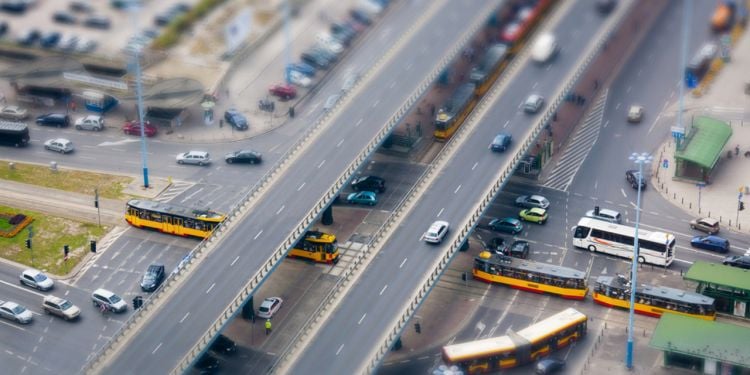
Getting around in Warsaw
Like most European capital cities, Warsaw has a rather developed transport system. Find out more in this article.
Cost of living in Warsaw: Monthly budget breakdown
Warsaw offers a favourable cost of living compared to Western European capitals while maintaining excellent quality of life. Understanding typical expenses helps newcomers plan realistic budgets for their relocation.
Single person monthly budget
The following table estimates monthly costs for a single person living modestly in Warsaw:
Category | Budget (PLN) | Mid-range (PLN) |
Rent (1-bedroom, outside centre) | 3,300 | 4,300 |
Utilities | 500 | 700 |
Groceries | 800 | 1,200 |
Transport (monthly pass) | 110 | 110 |
Mobile + Internet | 100 | 150 |
Leisure + dining out | 500 | 1,000 |
Total | 5,310 | 7,460 |
Family of four monthly budget
Category | Budget (PLN) | Mid-range (PLN) |
Rent (3-bedroom) | 5,500 | 7,700 |
Utilities | 1,200 | 1,500 |
Groceries | 2,000 | 3,000 |
Transport | 220 | 400 |
International school (1 child) | 0 (public) | 5,000 |
Health insurance | 400 | 800 |
Leisure + activities | 1,000 | 2,000 |
Total | 10,320 | 20,400 |
Restaurant meals cost approximately PLN 40 at inexpensive venues and PLN 200-210 for a three-course meal for two at mid-range establishments. Gym memberships average PLN 180 monthly.
Sources: Numbeo (2025)
In short
Warsaw offers an exceptional combination of career opportunities, affordable living, and rich cultural experiences that make it increasingly attractive for international residents. The city's strong job market, efficient public transport, diverse neighbourhoods, and growing expat community create an environment where newcomers can thrive professionally and personally.
Whether you're drawn by tech sector opportunities, seeking quality education for your family, or simply looking for an affordable European capital with character, Warsaw delivers on multiple fronts. The city continues to evolve, balancing its historic heritage with modern ambitions.
Ready to start your Warsaw adventure? Join thousands of expats who have made this vibrant city their home. Connect with the Expat.com Warsaw forum to ask questions, share experiences, and build your network before and after your move!
We do our best to provide accurate and up to date information. However, if you have noticed any inaccuracies in this content, please contact us.


Essential services for your expat journey



