Living in Turin: the ultimate expat guide
Everything you need to know for a successful life in Turin.
Turin sits at the foot of the Alps in northwest Italy, where royal history meets modern innovation. As the capital of the Piedmont region and Italy's fourth-largest city, Turin offers a unique blend of baroque architecture, world-class museums, and a thriving tech scene. With a population of just under 900,000 residents, the city provides all the amenities of a major European capital without the overwhelming crowds of Rome or Milan.
The city earned the prestigious title of European Capital of Innovation 2024-2025 and was designated European Capital of Smart Tourism 2025, recognizing its achievements in sustainability, accessibility, and cultural heritage. Turin's refined cafe culture, famous chocolate traditions, and proximity to alpine ski resorts and Mediterranean beaches make it an attractive destination for expatriates seeking quality of life.
5 Good Reasons to Move to Turin
- Affordable cost of living – approximately 30% lower than Milan while offering comparable urban amenities and career opportunities.
- Strategic location – two hours from the French Riviera, one hour from Milan, and surrounded by the Alps for weekend skiing.
- Innovation hub – home to Italy's new Institute of Artificial Intelligence for Industry and a growing aerospace sector employing 35,000 people regionally.
- Cultural richness – world-renowned Egyptian Museum, elegant royal palaces, and 18 kilometers of historic porticoes for year-round strolling.
- Quality education – two top-tier universities with strong international programs and affordable tuition fees.
Working in Turin: Careers in a Transforming Economy
Turin's economy is undergoing a significant transformation. While the city remains synonymous with Stellantis (formerly Fiat), which still employs tens of thousands in the metropolitan area, new sectors are rapidly emerging. The aerospace industry generates approximately €8 billion annually and employs around 35,000 people in the Piedmont region, with major players including Leonardo, Avio, Thales Alenia Space, and Altec.
Key Employment Sectors
The Italian government established the Italian Institute of Artificial Intelligence for Industry (AI4I) in Turin in May 2024, driving research in manufacturing, aerospace, and automotive applications. Technology startups are thriving, with Turin hosting Italian Tech Week each October, attracting global industry leaders. Traditional strengths in banking (Intesa Sanpaolo headquarters), food production (Lavazza coffee, Ferrero chocolate), and design continue to provide stable employment.
Work Permits and Requirements
EU, EEA, and Swiss citizens can work freely in Italy. Non-EU nationals require a Nulla Osta (work permit) obtained through Italy's annual Decreto Flussi quota system, with the 2025 quota set at 165,000 foreign workers. Highly skilled professionals may qualify for the EU Blue Card, which offers faster processing and is not subject to quota limits. The Blue Card requires a university degree, a binding job offer of at least one year, and a minimum salary threshold of approximately €25,000–€28,000 annually.
The following table summarizes key employment indicators for Turin and the Piedmont region:
Regional unemployment rate (Piedmont) | Approximately 5.5%–6% |
Average gross annual salary (Turin) | €35,000–€40,000 |
Key sectors | Aerospace, automotive, AI/tech, banking, food production |
Sources: EURES – European Commission, ISTAT, Salary Expert
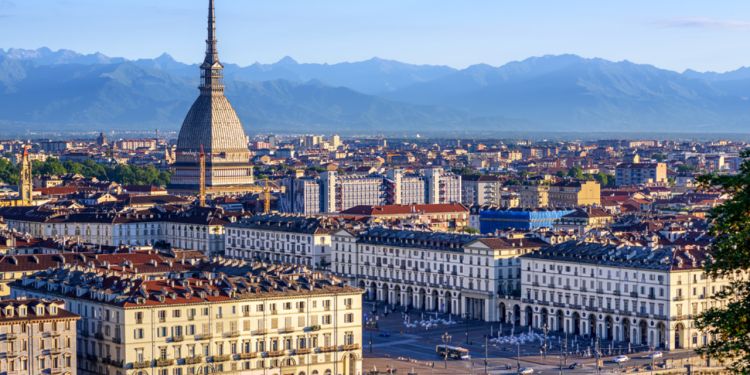
Working in Turin
Like many industrial cities in northern Italy, Turin has weathered the effects of the global economic crisis. Employees in the city continue to enjoy ...
Higher Education: World-Class Universities at Affordable Fees
Turin is home to two prestigious universities attracting students from over 120 countries. The city's academic tradition dates back to 1404, making the University of Turin one of Europe's oldest institutions. Both universities offer numerous programs taught in English and maintain strong connections with industry partners.
Politecnico di Torino
Ranked among the top 250 universities worldwide (QS World University Rankings) and considered one of Europe's leading technical universities, Politecnico di Torino specializes in engineering, architecture, and design. The university enrolls nearly 39,000 students, with more than one in five coming from abroad. Tuition fees are remarkably affordable: undergraduate programs range from €2,600 to €3,800 annually, while master's programs cost between €4,000 and €5,000. Various scholarships are available for international students, including the TOPoliTO program aimed at attracting top talent.
Università degli Studi di Torino (UNITO)
With over 80,000 students across 55 departments and 13 faculties, UNITO is one of Italy's largest universities. It consistently ranks among Italy's top five universities and offers programs in humanities, sciences, medicine, and economics. Tuition fees are based on the GDP per capita of the student's home country, ranging from €300 to €1,000 annually for most international students. The university provides degrees unique to Italy, including programs in Military Strategy, Biotechnology, and Restoration.
Admission and Student Life
International students must typically demonstrate B2-level English proficiency through IELTS, TOEFL, or Cambridge certifications. Student housing through EDISU (the regional student services agency) offers affordable accommodation assigned by competition based on income and merit. Average rental prices for student rooms in Turin range from €400 to €600 monthly.
Sources: Politecnico di Torino, University of Turin
Schooling in Turin: Options for Expat Families
Families moving to Turin will find a range of schooling options, from the Italian public system to international schools offering IB, British, and American curricula. The Italian education system is divided into primary school (ages 6–11), lower secondary (ages 11–14), and upper secondary (ages 14–19). Public schools are free but taught primarily in Italian.
International Schools
The International School of Turin (IST), founded in 1963, is Piedmont's oldest and only full-continuum International Baccalaureate (IB) World School, offering programs from nursery through Grade 12. Accredited by the Council of International Schools (CIS) and the New England Association of Schools and Colleges (NEASC), IST enrolls approximately 400 students from 33 nationalities. Annual tuition fees range from €5,950 to €11,630, with additional costs for registration (€3,000 one-time), lunch (€1,100), and bus services (€1,400).
The World International School of Torino (WINS) is another IB World School offering the Primary Years, Middle Years, and Diploma Programmes for students aged 2.5 to 18. The Lycée Français International Jean Giono provides French-curriculum education from preschool through high school, with annual fees between €6,464 and €7,497. The Vittoria International School Torino, founded in 1975, offers bilingual education leading to the IB diploma.
Enrollment Process
International schools typically require academic records, recommendation letters, and English proficiency assessments. Applications should be submitted several months in advance, especially for popular grade levels. Most schools offer virtual and in-person campus tours for prospective families.
Sources: International School of Turin, International Schools Database
Housing in Turin: Neighborhoods and Rental Prices
Turin's housing market offers excellent value compared to other major Italian cities, with rental prices approximately 45% lower than Milan. The average rental price reached €12.10 per square meter monthly in early 2025, reflecting strong demand from young professionals and students. Property values average €2,049 per square meter for purchases, with significant variation by neighborhood.
Popular Neighborhoods for Expats
Centro Storico (Historic Center) commands the highest prices at approximately €3,800–€4,500 per square meter for purchases, offering proximity to cultural attractions, restaurants, and the city's famous arcaded streets. Crocetta, south of the center, is a prestigious residential area featuring Liberty-style architecture and a renowned daily market, popular with families seeking tranquility. San Salvario attracts young professionals with its vibrant nightlife, diverse restaurants, and proximity to Parco del Valentino. Vanchiglia, near the university, offers trendy bars and cafes, making it ideal for students and creatives.
Rental Costs
Expect to pay €600–€900 monthly for a one-bedroom apartment in peripheral areas like Aurora or Barriera di Milano, while central neighborhoods command €800–€1,400 for similar units. Two-bedroom apartments range from €800–€1,200 in outer districts to €1,200–€2,000 in prime locations. The average time on market for well-priced properties in desirable areas has dropped to just 28–34 days.
Renting Process
Landlords typically require proof of income (usually three times the monthly rent), a security deposit (generally two to three months' rent), and identity documents. Rental contracts are usually for 4+4 years (renewable) or 3+2 years for transitional contracts. Furnished apartments are readily available, particularly for shorter-term rentals.
Sources: Numbeo, Investropa
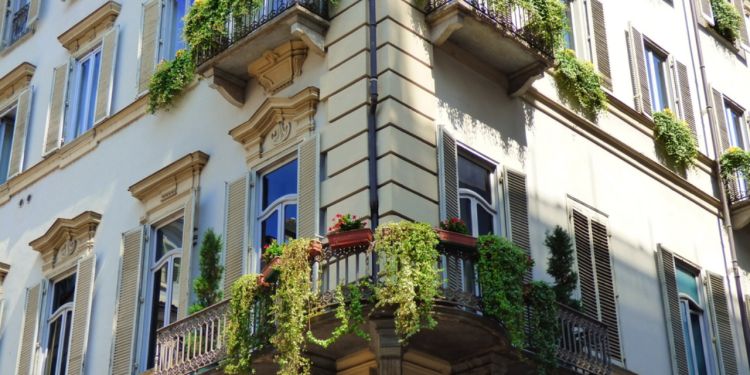
Accommodation in Turin
Located at the foot of the Alps, Turin is a city renowned for design, innovation and a remarkable combination of industry, gastronomy, and the ...
Leisure, Culture, and Things to Do in Turin
Turin's cultural offerings rival those of any European capital. The city boasts world-class museums, elegant royal residences, and a vibrant contemporary arts scene. Its position as Italy's first capital (1861–1865) left a legacy of grand architecture that continues to define the cityscape today.
Must-Visit Museums
The Egyptian Museum (Museo Egizio) is the world's oldest museum dedicated to Ancient Egyptian culture and second only to Cairo's collection, housing over 40,000 artifacts including mummies, papyrus scrolls, and the complete tomb of architect Kha. The National Cinema Museum, located inside the iconic Mole Antonelliana, offers an immersive journey through film history with interactive exhibits. Take the panoramic elevator to the top for spectacular city views. The Museo Nazionale dell'Automobile celebrates Turin's automotive heritage with over 200 vehicles spanning 80 brands.
Royal Palaces and Architecture
Palazzo Reale (Royal Palace) anchors Piazza Castello with lavish royal apartments, the Royal Armory (one of Europe's most important weapons collections), and the Royal Library housing Leonardo da Vinci drawings. The Palace of Venaria, a UNESCO World Heritage Site just outside the city, rivals Versailles in grandeur. The elegant Piazza San Carlo, known as Turin's "living room," features twin baroque churches and historic cafes beneath stunning porticoes.
Parks and Outdoor Life
Parco del Valentino stretches along the Po River, offering cycling paths, botanical gardens, and a reconstructed Medieval Village (Borgo Medievale). The Superga Basilica, reached by historic rack railway, provides panoramic alpine views. Day trips to nearby Langhe wine country (home to Barolo and Barbaresco) or the ski resorts of Sestriere are easy weekend escapes.
Nightlife and Events
Neighborhoods like San Salvario, Vanchiglia, and Quadrilatero Romano buzz with bars, live music venues, and restaurants. The annual Kappa FuturFestival (July) draws electronic music fans from across Europe. Football enthusiasts can catch Juventus at the Allianz Stadium, one of Italy's most modern arenas.
Sources: Italia.it, Turismo Torino
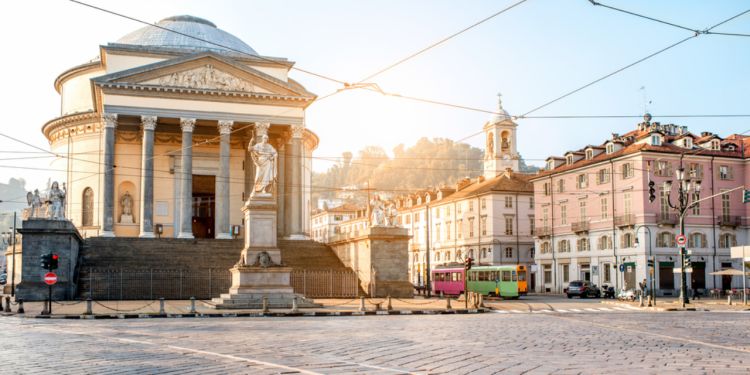
Leisure activities in Turin
Located in the Western Alps, overlooked by snow-capped peaks and surrounded by the River Po, Turin offers expatriates an abundance of leisure ...
Daily Life in Turin: Transport, Culture, and Local Customs
Life in Turin moves at a gentler pace than in Milan or Rome, with locals placing great value on quality of life, good food, and cultural traditions. The city's compact layout and 18 kilometers of historic porticoes make it ideal for walking year-round, while an efficient public transport network connects all neighborhoods.
Getting Around
GTT (Gruppo Torinese Trasporti) operates one metro line, nine tram lines, and over 80 bus routes. A single City 100 ticket costs €2.00, valid for 100 minutes on buses and trams or a single metro journey. Monthly passes (Abbonamento Mensile) cost approximately €38 for adults, with discounted rates for those under 26. Buses and trams run from 5 AM until midnight, with Night Buster services on weekends until 5 AM. The metro connects western suburbs (Collegno) to Lingotto in about 20 minutes. Contactless payment is accepted at metro turnstiles and on many bus routes.
Local Lifestyle
Turin's cafe culture is legendary. The city invented the Bicerin, a rich drink of espresso, chocolate, and cream, best enjoyed at the historic Caffè al Bicerin (established 1763). The Merenda Reale (Royal Snack) tradition dates to the Savoy nobility and remains a beloved afternoon ritual. Aperitivo culture thrives, with neighborhoods like San Salvario and Quadrilatero Romano offering endless options from 6 PM onwards.
Practical Considerations
Most shops close on Monday mornings, and many museums are closed on Mondays entirely. The historic center has a ZTL (Zona Traffico Limitato) restricting private vehicle access during certain hours. Italian bureaucracy requires patience; obtaining residence permits and opening bank accounts typically takes multiple visits. Learning basic Italian is highly recommended, as English proficiency varies outside tourist areas and universities.
Sources: GTT Official Website, Muoversi a Torino
Cost of Living in Turin: Monthly Budget Breakdown
Turin offers one of the best value propositions among major European cities. You would need approximately €5,700 in Milan to maintain the same standard of living that €4,100 provides in Turin. The city combines northern Italian quality of life with significantly lower expenses, making it attractive for remote workers, students, and families alike.
Monthly Budget for a Single Person
The following table provides estimated monthly costs for a single person living in Turin:
Rent (1-bedroom, city center) | €800–€1,100 |
Rent (1-bedroom, outside center) | €550–€750 |
Utilities (electricity, heating, water) | €120–€180 |
Groceries | €250–€350 |
Public transport (monthly pass) | €38 |
Dining out (mid-range meal for two) | €60–€70 |
Estimated monthly total (single) | €1,500–€2,200 |
Monthly Budget for a Family of Four
The following table provides estimated monthly costs for a family of four in Turin:
Rent (3-bedroom, city center) | €1,400–€2,000 |
Rent (3-bedroom, outside center) | €900–€1,300 |
Utilities | €200–€280 |
Groceries | €600–€800 |
International school fees (per child, monthly) | €500–€970 |
Health insurance (private, family) | €200–€400 |
Estimated monthly total (family) | €3,500–€5,500 |
Sources: Numbeo, HousingAnywhere
In Short
Turin offers a compelling combination of affordability, cultural richness, and career opportunity that's hard to match elsewhere in Europe. With living costs significantly lower than Milan or Rome, world-class universities charging modest fees, and a growing innovation ecosystem in aerospace and AI, the city provides an accessible entry point to Italian life without compromising on quality. The Alps provide a stunning backdrop to daily life, weekend ski trips are just an hour away, and the French Riviera beckons for summer escapes. Whether you're drawn by professional opportunity, academic pursuits, or simply the allure of elegant piazzas, legendary chocolate, and some of Italy's finest wine country, Turin deserves serious consideration as your next home abroad.
Connect with fellow expatriates, ask questions, and share experiences on the Expat.com Turin forum.
We do our best to provide accurate and up to date information. However, if you have noticed any inaccuracies in this content, please contact us.


Essential services for your expat journey