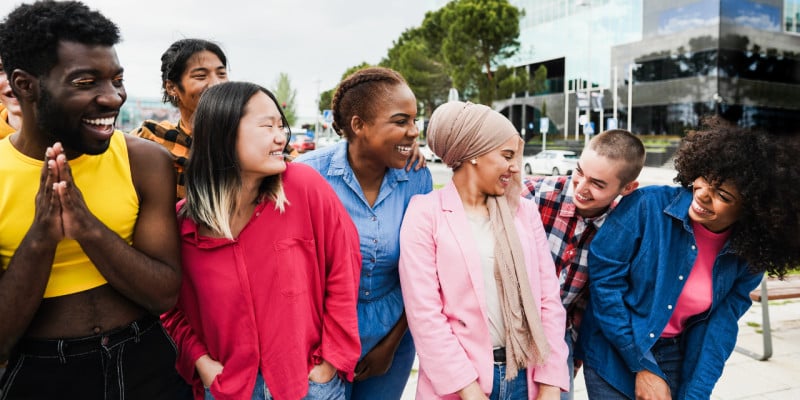
Diversity in Ireland
From being a country that once saw many of its youth emigrating overseas, Ireland has in recent years welcomed significant numbers of immigrants from the four corners of the world, attracted by its booming economy. Bringing with them their unique languages, religions and customs, Ireland has become an increasingly diverse country, with one in ten of the population made up of non-Irish citizens (according to the latest figures from the Central Statistics Office).
The country is renowned for its friendly locals and for making newcomers feel welcomed and accepted. Its rich tapestry of cultures, religions, and languages offers a welcoming environment for expats. Facebook groups, meetups, and community events help newcomers integrate quickly. Instances of discrimination are relatively low. And the Irish government actively supports integration through language programs, work permits, and social support.
Read also Living in Dublin
Inclusivity in Irish schools and colleges
In Ireland, there is a growing number of students for whom English is not their first language. These students bring diverse cultural and linguistic backgrounds to the classroom. To support their language development, the Department of Education has provided resources aimed at fostering inclusive and effective learning environments. Many schools now offer English as a Second Language support and promote inclusivity. International schools and bilingual programs are also available in the bigger cities.
Diversity, equity, and inclusion programmes are widely implemented on university campuses across Ireland to ensure everyone is treated fairly regardless of gender, sex, age, race, disability, ethnic origin, religion, sexual orientation, civil status, family status, or membership of the travelling community (an indigenous ethnic minority in Ireland).
Read also Study in Ireland
Workplace inclusion in Ireland
Ireland is a world leader in workplace inclusivity. The country's progressive policy of fostering diverse and inclusive workplace cultures has attracted international talent, establishing it as a global hub for expats. Many large international companies in Ireland have progressive diversity and inclusion policies. According to the Immigrant Council of Ireland, diversity benefits business in Ireland by enriching skill-sets, building a multicultural workplace, and facilitating integration, while also empowering migrants.
Read also Work in Ireland
Gender diversity in Ireland
Ireland is committed to promoting gender diversity, and has even surpassed the European Union average by 2 per cent. The country proudly boasts that 32 per cent of its software developers are women. Through various initiatives and support networks, Ireland actively encourages women to pursue careers in the technology sector.
Gender equality
Ireland stands 7th in the EU's Gender Equality Index. Ireland strengthened its gender pay gap legislation in 2021, ensuring greater transparency around equal pay. The Gender Pay Gap Information Act requires employers to report their gender pay gap each year, and the measures that are being taken to eliminate or reduce the gap.
LGBTQ rights
Ireland became the first country in the world to legalise same-sex marriage by popular vote in a historic referendum in May 2015. Cities like Dublin, Cork, and Galway are known for their vibrant LGBTQ communities, and celebrations like Pride Month are even more evidence of the nation's adoption of diversity and inclusion.
Read also Getting married in Ireland
Ireland also ranks high in terms of representation of people who are LGBTQ in leadership. Ireland's former Taoiseach Leo Varadkar is a gay man.
LGBTQ couples in Ireland can now adopt children. Under the Adoption (Amendment) Act 2017, it is legally viable for an LGBTQ couple to adopt a child, even if unmarried.
Trans people in Ireland can apply to change their legal gender since 2015. Anyone over 18 can apply to change their gender. You can also apply if you are 16 or 17, but the process is slightly different.
An inclusive president for all
Ireland's new president, Catherine Connolly, pledged to be “an inclusive President for all” in her acceptance speech in Dublin Castle in October 2025 and has long been a staunch advocate for LGBTQ rights, equality, and social justice.
Cultural festivals in Ireland
The local communities across Ireland have embraced a wide range of cultural festivals from India, Nigeria, Brazil, Mexico, the Philippines, and Eastern Europe, along with international celebrations including Thanksgiving, Day of the Dead, and Chinese New Year.
Diversity and inclusion calendar
There are lots of cultural celebrations and festivals held throughout the year across Ireland to educate, raise awareness or funds, and celebrate diversity and inclusion. Here are some of the most popular.
January:
World Braille Day
World Religion Day
Chinese New Year
February:
International Day of Women and Girls in Science
Ramadan
UN World Day of Social Justice
International Stand up to Bullying Day
Mother Tongues Festival
March:
Traveller Ethnicity Day
International Women's Day
World Down Syndrome Day
International Day to Combat Islamophobia
The UN International Day for the Elimination of Racial Discrimination
International Transgender Day of Visibility
April:
World Autism Awareness Day
International Roma Day
International Girls in ICT Day
May:
Africa Day
International Day Against Homophobia, Transphobia, and Biphobia
Global Accessibility Awareness Day
Cultural Diversity Day
International Workers' Day
June:
Pride month
Traveller Pride Week
National Refugee Day
Women in Engineering Day
July:
National Diversity and Inclusion Day
International Non-Binary People's Day
August:
Ireland's Festival of Nations
International Day of the World's Indigenous peoples
November:
Transgender Awareness Week
Thanksgiving
Día de los Muertos
December:
International Day of Persons with Disabilities
Human Rights Day
Useful links
Immigrant Council of Ireland
Irish Immigration Service
Inclusion Ireland
Irish Human Rights and Equality Commission
Workplace Relations Commission
Irish Council for Civil Liberties
National Women's Council of Ireland
LGBT Ireland