

Living in Hamburg: the ultimate expat guide
Everything you need to know for a successful life in Hamburg.
Hamburg, Germany's second-largest city, sits proudly at the mouth of the Elbe River, combining maritime heritage with modern innovation. With a population of 1.9 million, this city-state offers a cosmopolitan atmosphere shaped by centuries of international trade. Known as the "Gateway to the World," Hamburg boasts more bridges than Venice and Amsterdam combined, winding canals, and a dynamic cultural scene. The city ranks among Germany's top economic hubs, home to global companies like Airbus, Beiersdorf, and the Otto Group. English is widely spoken, making integration smoother for newcomers, while the quality of life consistently ranks high in European surveys.
5 Good Reasons to Move to Hamburg
- Strong job market – Leading sectors include logistics, aerospace, media, tech, and renewable energy, with major employers actively recruiting international talent.
- Excellent public transport – The HVV network of U-Bahn, S-Bahn, buses, and ferries connects the entire metropolitan region efficiently.
- High quality of life – Abundant green spaces, waterfront living, world-class cultural institutions, and a balanced work-life culture.
- International community – A welcoming expat population with numerous networking events, international schools, and English-friendly services.
- Cultural richness – From the iconic Elbphilharmonie to the legendary Reeperbahn nightlife, Hamburg offers entertainment for every taste.
Working in Hamburg: Opportunities and Employment
Hamburg's economy thrives on diversity, offering excellent career prospects across multiple industries. As Europe's third-largest port, the city serves as a major hub for logistics, maritime trade, and shipping, with companies like Hapag-Lloyd headquartered here. The aerospace sector is particularly strong, with Airbus employing thousands at its Hamburg facilities. Beyond traditional industries, Hamburg has emerged as a growing center for tech startups, digital media, and renewable energy.
Key Industries and Employers
The city's economic landscape features prominent sectors including media and publishing (home to major German broadcasters and publishers), life sciences and healthcare (Asklepios clinics), and consumer goods (Beiersdorf, manufacturer of Nivea). The startup ecosystem is thriving, particularly in fintech, gaming, and green energy, supported by co-working spaces and innovation centers throughout the city.
Work Permits and Visa Requirements
EU/EEA nationals can work freely in Hamburg without a permit. Non-EU professionals typically require the EU Blue Card, which demands a recognized university degree and a job offer with a minimum annual salary of €48,300 (or €43,759.80 for shortage occupations like IT and engineering, as of 2025). The Skilled Immigration Act has simplified pathways for qualified professionals, and the new Opportunity Card allows jobseekers to stay for up to one year while searching for employment.
The following table summarizes key employment indicators:
Unemployment rate (Hamburg) | 7.4% (2023) |
Average gross salary (Germany) | €50,250/year (2025) |
Top sectors | Logistics, Aerospace, Media, Tech, Renewable Energy |
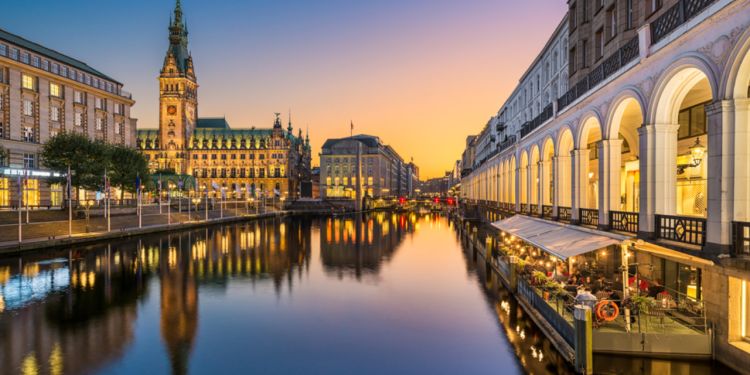
Working in Hamburg
Located in Northern Germany, near the mouth of the Elbe River, Hamburg is the country's second-largest city after Berlin. Stretching over some ...
Higher Education and Universities in Hamburg
Hamburg is a major academic center with 34 universities and higher education institutions offering over 700 study programs. The city attracts more than 12,000 international students annually, drawn by quality education, affordable tuition, and a dynamic urban environment. Most public universities charge no tuition fees, requiring only a semester contribution that typically includes a public transport pass.
Leading Universities
The University of Hamburg (Universität Hamburg) is the city's flagship institution, ranking 191st globally (QS 2025) with over 43,000 students. It offers 170+ degree programs across eight faculties, including many English-taught master's courses in fields like international business, environmental sciences, and public policy. The semester contribution is approximately €384 (winter 2025/26), which includes an HVV transport pass.
The Hamburg University of Technology (TUHH) specializes in engineering, computer science, and applied sciences, with strong industry ties to companies like Airbus and Siemens. Over 22% of its 8,000+ students are international. HafenCity University (HCU) focuses on architecture, urban planning, and metropolitan studies, located in the innovative HafenCity district.
Admission and Costs
International students typically apply through university portals, submitting transcripts, language proficiency scores (German and/or English depending on the program), and a statement of purpose. Application fees for non-EU students are around €75. Living costs range from €9,000 to €12,000 per year, covering accommodation, food, insurance, and transport.
Sources: University of Hamburg, TUHH, HafenCity University
Schools and Education for Expat Children
Hamburg offers a range of educational options for expat families, from excellent public schools to prestigious international institutions. The German public school system is free and of high quality, though instruction is primarily in German. For families seeking English-medium education or international curricula, several private international schools cater specifically to the expatriate community.
International Schools
The International School of Hamburg (ISH), founded in 1957, is Germany's oldest international school and remains the only institution in Hamburg accredited by both the Council of International Schools and the New England Association of Schools and Colleges. It serves over 730 students from 55+ nationalities, offering the International Baccalaureate (IB) curriculum from preschool through Grade 12. Annual tuition fees range from approximately €12,000 for preschool to €23,000 for Grades 11-12, plus a campus development fee.
Other options include WABE International School and Moderne Schule Hamburg, which offer bilingual programs at more accessible price points starting around €8,000 per year.
German Public Schools
Hamburg's public schools (Grundschule for primary, Gymnasium or Stadtteilschule for secondary) are tuition-free and provide excellent education. Integration classes and German language support are available for newcomers. Registration is done through the local school authority (Schulbehörde), and children are typically assigned to schools based on their residential address.
Sources: International School of Hamburg, U.S. Department of State
Housing and Neighborhoods in Hamburg
Finding accommodation in Hamburg can be competitive due to high demand, particularly in central and popular districts. The rental market requires preparation: start your search 2-3 months in advance, gather necessary documents (proof of income, SCHUFA credit report, ID), and expect to pay a deposit of up to three months' rent. Platforms like ImmobilienScout24, WG-Gesucht, and Wunderflats are essential tools for apartment hunting.
Expat-Friendly Neighborhoods
Eimsbüttel is popular among young professionals and families for its Art Nouveau architecture, leafy streets, cafes, and relaxed atmosphere. Altona offers a multicultural vibe with waterfront views, excellent markets, and a mix of modern apartments and historic buildings—studios start around €1,100/month. Winterhude is an upscale area near the Alster Lake and Stadtpark, ideal for families seeking green spaces and prestigious schools. Sternschanze attracts creatives with its bohemian energy, street art, and nightlife. HafenCity is the modern architectural showpiece, featuring the Elbphilharmonie and contemporary apartments for professionals.
Rental Prices
Expect to pay between €1,200 and €1,500/month for a one-bedroom apartment in the city center, dropping to €900-€1,150 in outer districts. Three-bedroom family apartments range from €1,600-€2,100 outside the center to €2,300-€2,900 in prime locations. Shared flats (WG) offer more affordable options at €500-€750/month for a private room.
1-bedroom (city center) | €1,200 – €1,500/month |
1-bedroom (suburbs) | €900 – €1,150/month |
3-bedroom (city center) | €2,300 – €2,900/month |
3-bedroom (suburbs) | €1,600 – €2,100/month |
Sources: Numbeo, ImmobilienScout24
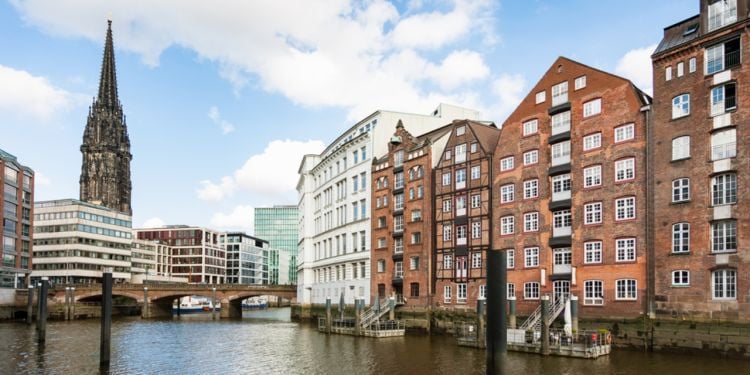
Accommodation in Hamburg
Are you looking for accommodation in Hamburg? This probably means that you are ready to move to this unique city in northern Germany, which has about ...
Leisure, Culture, and Things to Do in Hamburg
Hamburg's cultural scene rivals that of any European capital, blending maritime heritage with cutting-edge arts and entertainment. From world-class concert halls to legendary nightlife, the city offers something for every taste and budget.
Landmarks and Museums
The Elbphilharmonie is Hamburg's architectural crown jewel—a stunning concert hall rising from the harbor with exceptional acoustics and a free public viewing plaza. The Speicherstadt, a UNESCO World Heritage Site, features red-brick warehouses converted into museums, including the wildly popular Miniatur Wunderland (world's largest model railway). Art lovers flock to the Hamburger Kunsthalle, housing seven centuries of European art, while the International Maritime Museum celebrates the city's seafaring legacy.
Parks and Outdoor Life
Planten un Blomen is a sprawling urban park with botanical gardens, water-light concerts in summer, and ice skating in winter. The Alster Lake, in the city center, offers sailing, kayaking, jogging paths, and picturesque café terraces. Stadtpark hosts open-air concerts and provides ample space for barbecues and relaxation. Jenischpark offers English-style landscaping and the Ernst Barlach Museum.
Nightlife and Entertainment
The legendary Reeperbahn in St. Pauli is Hamburg's entertainment heart—a mile-long strip of clubs, bars, theaters, and music venues where The Beatles famously honed their craft. Beyond the Reeperbahn, neighborhoods like Sternschanze and St. Georg offer trendy bars, live music venues, and late-night eateries. The Sunday Fischmarkt (fish market) is a beloved Hamburg tradition, starting at 5 AM with fresh seafood, live music, and a unique atmosphere.
Sources: Hamburg Tourism, Elbphilharmonie
Daily Life and Getting Around Hamburg
Hamburg offers a high quality of life with efficient infrastructure and a culture that values work-life balance. Daily routines are made easier by excellent public services, widespread English proficiency in business settings, and a straightforward bureaucratic system once you understand the basics.
Public Transportation
The Hamburger Verkehrsverbund (HVV) operates an extensive network of U-Bahn (metro), S-Bahn (suburban trains), buses, and ferries. Services run frequently—every 5 minutes during rush hour on major lines—and connect the entire metropolitan region. The Deutschlandticket costs €58/month (as of 2025) and provides unlimited access to all local and regional public transport across Germany. School children in Hamburg ride free. Employers often subsidize tickets through the HVV Jobticket program, reducing costs to around €30-€41/month. Single tickets for the Hamburg AB zone cost approximately €3.60, while day passes start at €8.80.
Registration and Essentials
Upon arrival, you must register your address at the local Bürgeramt (citizens' office) within 14 days—this is mandatory for all residents. You'll need your passport, rental contract, and a landlord confirmation form (Wohnungsgeberbestätigung). Health insurance is compulsory; most residents use statutory health insurance (GKV), with monthly contributions around 14.6% of gross salary shared between employee and employer.
Lifestyle and Culture
Hamburgers tend to be reserved initially but warm up over time. The city embraces a practical, no-nonsense attitude while offering abundant leisure options. Sundays are traditionally quiet (most shops closed), but restaurants and cultural venues remain open. The waterfront lifestyle, abundant parks, and café culture make Hamburg an enjoyable place to settle.
Sources: HVV, City of Hamburg
Cost of Living in Hamburg: What to Expect
Hamburg ranks among Germany's more expensive cities but remains more affordable than Munich or major capitals like London and Paris. The cost of living is approximately 30% lower than New York and 5-10% lower than Munich. Careful budgeting allows for comfortable living, especially with Hamburg's high average salaries offsetting expenses.
Monthly Budget: Single Person
A single professional can expect monthly expenses (excluding rent) of approximately €1,150-€1,200. Combined with average rent for a one-bedroom apartment, total monthly costs typically range from €2,100 to €2,700.
Rent (1-bedroom, average) | €1,000 – €1,350 |
Groceries | €250 – €350 |
Transport (Deutschlandticket) | €58 |
Utilities (electricity, heating, water) | €150 – €200 |
Health insurance (employee share) | ~€300 – €400 |
Dining/entertainment | €200 – €350 |
Monthly Budget: Family of Four
Families should budget for higher housing costs (3-bedroom apartments), groceries for multiple people, potential childcare or school fees, and additional activities.
Rent (3-bedroom, average) | €1,800 – €2,500 |
Groceries | €600 – €800 |
Transport (2 adults) | €116 |
Utilities | €250 – €350 |
International school (annual) | €12,000 – €23,000 |
Childcare/Kita (monthly) | €0 – €300 (subsidized) |
Sources: Numbeo (2025), Destatis
In Short
Hamburg combines the efficiency and opportunities of a major German city with the charm of a historic port town. Its strong job market in logistics, aerospace, tech, and media attracts professionals worldwide, while tuition-free universities welcome international students. The efficient HVV transport network makes getting around effortless, and neighborhoods like Eimsbüttel, Altona, and Winterhude offer welcoming communities for expats and families alike. Yes, the weather can be gray and the housing market competitive—but the quality of life, cultural richness, and the warmth beneath Hamburg's reserved exterior make it a rewarding place to call home. Ready to take the plunge? Join the Hamburg forum on Expat.com to connect with fellow expats, ask questions, and share your experiences!
We do our best to provide accurate and up to date information. However, if you have noticed any inaccuracies in this content, please contact us.


Essential services for your expat journey