Living in Charleroi: the ultimate expat guide
Everything you need to know for a successful life in Charleroi.
Charleroi, the largest city in Wallonia with a metropolitan population of approximately 419,000, is undergoing a remarkable transformation. Located in the Sambre valley just 50 km south of Brussels, this former industrial powerhouse has reinvented itself as a hub for culture, education, and new economic opportunities. Once known as the heart of Belgium's coal and steel industry, Charleroi now attracts newcomers with its affordable cost of living, improving infrastructure, and unique urban character.
The city benefits from excellent connectivity through Brussels South Charleroi Airport, Belgium's second-busiest airport serving over 10.5 million passengers annually with low-cost flights to more than 140 destinations. Combined with direct rail links to Brussels, Namur, and Liège, Charleroi offers easy access to the rest of Europe while maintaining significantly lower living costs than the Belgian capital.
5 Good Reasons to Move to Charleroi
- Affordable living: Rent and property prices are among the lowest in Belgium, with costs up to 50% lower than Brussels.
- Cultural renaissance: World-class museums including Europe's largest photography museum and the BPS22 contemporary art center.
- Growing university presence: The CampusUCharleroi brings together ULB, UMONS, and provincial colleges in the city center.
- Excellent connectivity: Low-cost flights across Europe plus direct trains to Brussels in under an hour.
- Urban renewal: Major investment in public spaces, street art, and modern infrastructure is reshaping the city.
Working in Charleroi: Employment Opportunities and Key Industries
Charleroi's economy has diversified significantly since the decline of heavy industry. While the city has faced higher unemployment than the Belgian average, ongoing regeneration efforts are creating new opportunities, particularly in healthcare, education, logistics, and the airport sector.
Key Employment Sectors
The regional economy is driven by six main sectors: health and social work, education, trade, public administration, industry, and administrative services. The Brussels South Charleroi Airport has become a major employer, generating thousands of direct and indirect jobs through its operations and the adjacent Aéropole business park. The city also maintains a presence in telecommunications, transportation, and healthcare, with the new Grand Hôpital de Charleroi representing a significant investment in medical infrastructure.
Work Permits and Employment Conditions
Citizens of EU/EEA countries and Switzerland can work freely in Belgium without a permit. Non-EU nationals require a Single Permit for employment exceeding 90 days, which combines work and residence authorization. Employers must apply through the regional employment service, and a labor market test may be required. Highly skilled workers may qualify for the EU Blue Card with a minimum salary of approximately €55,000 annually. Job seekers can access support through Le Forem, the Walloon public employment service.
The following table presents key employment indicators for the region:
Unemployment rate (Wallonia, Q3 2024) | 7.5% |
Average gross monthly salary (Belgium) | €4,076 |
Median gross monthly salary (Wallonia) | €3,100 |
Minimum wage (Belgium, 2025) | €2,111.89/month |
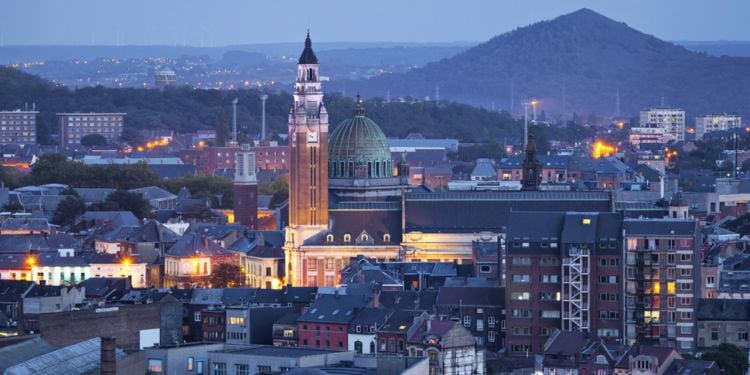
Finding a job in Charleroi
Are you considering working in Charleroi? The city is establishing itself as a revitalizing economic hub, with numerous opportunities available. ...
Higher Education in Charleroi: Universities and Programs
Charleroi has developed a strong higher education presence through the CampusUCharleroi, a collaborative initiative bringing together major Belgian universities and colleges in the city center. This growing academic hub offers diverse programs and is transforming Charleroi into a genuine university city.
Universities and Institutions
The Université Libre de Bruxelles (ULB) operates a campus in Charleroi offering programs in social sciences, political sciences, economics, and urban planning. The Université de Mons (UMONS) provides day and evening courses at its Charleroi campus, including options for working adults returning to education. The Haute École Provinciale de Hainaut – Condorcet offers professional bachelor's degrees in various fields. Together, these institutions form part of the Pôle hainuyer, an academic cluster serving over 30,000 students across Hainaut province with nearly 600 courses in 21 fields.
Tuition Fees and Admissions
Belgium offers affordable higher education compared to many countries. EU/EEA students pay maximum annual fees of approximately €835 at universities in the Wallonia-Brussels Federation. Non-EU students pay registration fees plus an additional contribution, totaling approximately €5,010 per year from the 2025-2026 academic year, though students from certain countries may qualify for exemptions. Some programs, particularly MBAs and specialized master's degrees, may have different fee structures. Admission typically requires equivalent secondary education credentials, language proficiency, and program-specific requirements.
Sources: ULB, Study in Belgium, UMONS
Schools for Expat Children: Education Options in Charleroi
Families relocating to Charleroi have access to Belgium's well-regarded education system, with schooling compulsory from ages 6 to 18. The region primarily offers French-language education, though options exist for international families seeking English-language or bilingual programs.
Local and Public Schools
The Belgian education system in Wallonia operates primarily in French. Public schools are free and generally well-equipped, following the curriculum of the Wallonia-Brussels Federation. Children typically adapt to French-medium instruction within 6-12 months, and many schools offer language support for newcomers. The system includes three types: community schools run by the Federation, municipal schools managed by local councils, and subsidized free schools, predominantly Catholic institutions.
International School Options
While Charleroi itself has limited international school options, families often look to the Brussels area, approximately 50 km north, which offers extensive international education. Notable options within commuting distance include the British School of Brussels (ages 1-18, offering A-Levels, IB Diploma, and BTEC), International School of Brussels (ages 3-19, IB curriculum), and St. John's International School in Waterloo (ages 3-18, IB programs). These schools charge annual fees typically ranging from €15,000 to €35,000 depending on grade level. Several schools offer bus services from surrounding areas. The European Schools in Brussels provide multilingual education for EU institution employees and others.
Sources: British School of Brussels, International School of Brussels, John Catt's International School Search
Finding a Home in Charleroi: Housing and Neighborhoods
One of Charleroi's most attractive features for expats is its affordable housing market. Property prices and rents are among the lowest in Belgium, offering excellent value compared to Brussels or Flanders, making it possible to find spacious accommodation at reasonable rates.
Popular Districts for Expats
Charleroi comprises 15 former municipalities, each with distinct character. Mont-sur-Marchienne is a residential favorite, home to the Photography Museum and offering green spaces and family-friendly streets. Marcinelle provides a mix of housing options near the Bois du Cazier heritage site. Gilly, in the east, offers good metro connections and developing areas. The city center (Ville-Haute) is being revitalized with new student housing and cultural venues. Gosselies, near the airport and Aéropole business park, suits those working in aviation or technology sectors. For a quieter setting, Couillet and Jumet offer suburban living with good transport links.
Rental Prices and Procedures
Rental prices in Charleroi are significantly lower than in major Belgian cities. Apartments can be found through platforms like Immoweb, Zimmo, and local agencies. Standard rental contracts require a security deposit (typically 2-3 months' rent) and proof of income. The table below shows typical rental ranges:
Studio/1-bedroom apartment (city center) | €500 - €700/month |
1-bedroom apartment (outside center) | €400 - €550/month |
3-bedroom apartment (city center) | €750 - €1,000/month |
3-bedroom apartment (outside center) | €600 - €850/month |
Average price per m² (apartments) | €1,380 |
Sources: Immoweb, Investropa
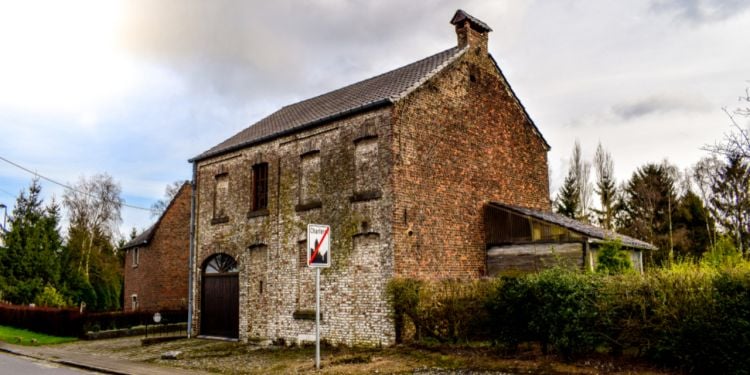
How to find accommodation in Charleroi
Charleroi is a city undergoing transformation. Long known for its industrial past, it is now reinventing itself as a dynamic, greener, more cultural, ...
Leisure, Culture, and Things to Do in Charleroi
Charleroi has transformed from an industrial center into a city with a surprisingly rich cultural scene. World-class museums, street art, and a growing events calendar offer diverse leisure options for residents and visitors alike.
Museums and Cultural Attractions
The Musée de la Photographie in Mont-sur-Marchienne is the largest photography museum in Europe, housed in a former Carmelite convent with a collection of over 90,000 photographs spanning the entire history of the medium. The BPS22 is the provincial contemporary art museum, occupying a striking glass and iron industrial building from 1911, featuring rotating exhibitions focused on social and political themes. The Bois du Cazier, a UNESCO World Heritage site, preserves the memory of the 1956 mining disaster that claimed 262 lives, while its museums explore the region's industrial heritage, glass-making history, and coal mining legacy. The Musée des Beaux-Arts showcases Belgian art from the 19th and 20th centuries.
Street Art, Sports, and Entertainment
Charleroi has embraced street art as part of its urban renewal, with guided trails leading visitors past murals by international artists throughout the city center and along the Sambre riverbanks. Sports enthusiasts can follow Royal Charleroi SC (football) at the 30,000-seat Stade du Pays de Charleroi, or Spirou Charleroi (basketball). The Rive Gauche Shopping Center, opened in 2017, provides modern retail and dining in the city center. For green spaces, Parc Reine Astrid offers a peaceful retreat, while the Sambre riverbanks provide pleasant walking routes. Annual events include the Charleroi Festivals in summer and the International Comedy Film Festival in autumn.
Sources: Visit Wallonia, Discovering Belgium, The Culture Trip
Daily Life in Charleroi: Transport, Language, and Lifestyle
Daily life in Charleroi combines the practicalities of a medium-sized city with the affordability that allows for a comfortable lifestyle. The city's ongoing transformation means new amenities and improved infrastructure are regularly emerging.
Getting Around: Public Transport
Charleroi boasts the Métro Léger de Charleroi, a light rail system spanning approximately 33 km with 48 stations. Four metro lines (M1, M2, M3, M4) connect the city center with suburbs including Gilly, Gosselies, and Anderlues, with trains running at intervals of 10-30 minutes. The TEC Charleroi bus network complements the metro with 80 bus routes covering the metropolitan area. A monthly City Pass costs €64 for adults (€18 for ages 18-24) and provides unlimited travel on both metro and bus within the Charleroi zone, plus access to 24 SNCB rail stations. Single tickets cost €2.60 for up to 2 zones. The MOBIB contactless card enables seamless payment across all Walloon public transport. Charleroi-Sud railway station provides regular connections to Brussels (approximately 50 minutes), Namur, and Liège.
Language and Cultural Integration
French is the primary language in Charleroi and throughout Wallonia. While some professionals speak English, learning French is essential for daily activities, administrative procedures, and social integration. The city offers French language courses through adult education centers (ECEA) located in several districts. Charleroi's culture reflects its working-class industrial heritage, with residents known for their straightforward, welcoming character. The local dialect, Walloon, is occasionally heard but French suffices for all interactions.
Sources: Ville de Charleroi, Wikipedia - Charleroi Metro, TEC
Cost of Living in Charleroi: Budget Planning for Expats
Charleroi offers one of the most affordable living costs in Belgium, making it an attractive option for expats seeking value. Monthly expenses are typically 30-40% lower than in Brussels, allowing for a comfortable lifestyle on moderate incomes.
Monthly Budget for a Single Person
The following table estimates monthly costs for a single person living in Charleroi:
Expense Category | Estimated Cost |
Rent (1-bedroom, outside center) | €450 - €550 |
Utilities (electricity, heating, water) | €150 - €200 |
Groceries | €250 - €300 |
Public transport (City Pass) | €64 |
Mobile phone + Internet | €70 |
Leisure and personal expenses | €150 - €200 |
Total (Single Person) | €1,134 - €1,384 |
Monthly Budget for a Family of Four
The following table estimates monthly costs for a family of four:
Expense Category | Estimated Cost |
Rent (3-bedroom apartment) | €700 - €900 |
Utilities (electricity, heating, water) | €250 - €300 |
Groceries | €500 - €600 |
Public transport (2 adults + children) | €150 - €180 |
Mobile phones + Internet | €100 |
International school fees (2 children, if applicable) | €2,500 - €5,000 |
Health insurance supplement | €100 - €150 |
Leisure and personal expenses | €300 - €400 |
Total (Family, public school) | €2,100 - €2,630 |
Total (Family, international school) | €4,600 - €7,630 |
Sources: Numbeo, Relocate.me, Livingcost.org
In Short
Charleroi offers a compelling package for expats seeking affordable living in Belgium without sacrificing quality of life. The city's transformation from industrial decline to cultural renewal creates unique opportunities, while its proximity to Brussels and direct low-cost flight connections to over 140 European destinations ensure you're never far from anywhere. Whether you're a student attracted by the growing CampusUCharleroi, a professional exploring new opportunities, or a family seeking value and space, Charleroi welcomes you to be part of its ongoing renaissance. The friendly, unpretentious character of the Carolos (as residents are known) makes integration straightforward for those willing to embrace the French language and local culture.
Ready to start your Charleroi adventure? Connect with other expats, ask questions, and share experiences on the Expat.com Charleroi forum.
We do our best to provide accurate and up to date information. However, if you have noticed any inaccuracies in this content, please contact us.


Essential services for your expat journey