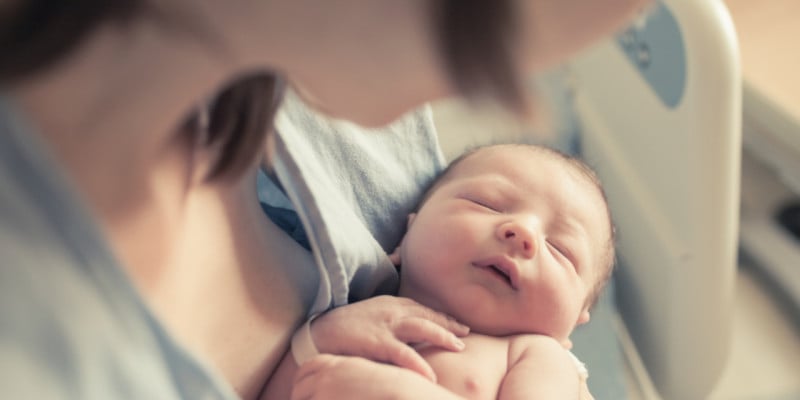
Whether you are considering a first pregnancy or trying to expand your family, it is important to know the options available to you. If you are an expatriate, certain procedures and services may differ from what you are familiar with. From medical follow-up to different ways of giving birth, and including the legal framework of abortion, discover the essentials for best preparing your pregnancy in Belgium, with an overview of the particularities according to the regions.
Wherever you are in Belgium, you can confirm your pregnancy with a general practitioner, a gynecologist, or a midwife. It is also possible to do this with a home test, available in pharmacies or supermarkets, for an average price of €10 to €15. After this initial step, the organization of follow-up care depends on the region where you reside.
In Flanders
In Flanders (Dutch-speaking community), you are cared for by both your general practitioner and your private gynecologist, with the support of midwives. Home visits may be offered.
If you need additional support during your pregnancy, you can consult Kind en Gezin (Dutch-speaking), which offers free advice until your child is three years old.
In Wallonia
In Wallonia (French-speaking community), you are cared for by gynecologists from the public and/or private sectors.
You can also benefit from prenatal consultations organized by the Office of Birth and Childhood (ONE). This follow-up may include the issuance of a Mother's Booklet, to be presented during your medical appointments.
Protect your health and get easy access to treatment for expats in Belgium.
AXA Global Healthcare: providing international health insurance for over 60 years. Working with over 2 million network providers in 190+ countries. Benefit from emergency cover, virtual healthcare services and options to tailor your plan.
Exclusive discounts and additional benefits on Regency for Expats Health Insurance. Get a free quote now and save up to 40% on the best health insurance for Expats.
Specialists in international health insurance for 40 years, offering health cover adapted to your needs as an expatriate, whether for a temporary stay or a long-term expatriation.
The first ultrasound, performed early in the pregnancy, confirms that the pregnancy is properly implanted in the uterus, checks the embryo's vitality, and estimates the expected delivery date.
Generally, you will then have a monthly follow-up until the seventh month, then appointments every two weeks, and weekly in the last month. This schedule can be adjusted according to your health and that of your baby.
The purpose of all these exams is to ensure that your baby is growing normally and is healthy. Additionally, you will also undergo tests that indicate your personal health status and determine any necessary care needs.
3 ultrasounds: one per trimester (11–14 weeks, 20–24 weeks, 30–34 weeks);
Screening for certain chromosomal abnormalities (NIPT) and the Group B strep screening test (at the end of pregnancy).
Other exams (for example, specific tests for certain rare anomalies) may remain at your expense if they are not prescribed for medical reasons.
Join the Belgium community
Get regular tips and advice to make the most of your expat life
Giving birth in Belgium
The time to head to the maternity ward depends on several factors: for a first baby, it is often advised to leave when contractions are regular every 4 to 5 minutes for at least an hour. In case of significant bleeding, rupture of the amniotic sac with colored fluid, absence of baby movements, or intense pain, contact your maternity ward, midwife, or 112 immediately in an emergency.
During your hospitalization in Belgium, bring your identity card, health card, insurance documents, and blood group card.
The average stay duration is 3 to 5 days for a vaginal delivery, and 4 to 7 days for a cesarean section. The choice of a private room depends on availability and your insurance coverage.
Home birth in Belgium
Possible only if the pregnancy is considered low-risk, home birth must be supervised by a midwife trained in this type of care. The presence of two midwives is recommended for safety, but not always required. A medical check-up is scheduled in the week following the birth.
An alternative to home births is Birth Centers. They offer a warmer and less medicalized environment than a hospital, with the accompaniment of a midwife. Some are independent, others integrated into hospital structures, allowing for quick transfer if needed.
Abortion in Belgium
Since April 1990, abortion has been legal in Belgium, provided it is up to 12 weeks of pregnancy or 14 weeks after the last menstrual period.
Beyond this period, it remains possible if the mother's life is in danger or in the case of a serious and incurable fetal anomaly.
The procedure includes a pre-consultationin a hospital or family planning center. This meeting allows for pregnancy confirmation, presentation of possible options, and provision of medical, social, and psychological support. A legal reflection period of 6 days applies before the procedure, unless the maximum term is approaching. The procedure must take place in the same establishment as the pre-consultation.
For these consultations, you need to bring your identity card, social security card, the first ultrasound (if available), and your blood group card. If you do not have the last item, the doctor will prescribe a blood test.
If you are affiliated with a Belgian mutual insurance, abortion is almost entirely reimbursed, excluding any potential costs related to the type of hospital room. Without coverage, the cost depends on the facility and may vary; it is recommended to inquire directly with the chosen establishment.
We do our best to provide accurate and up to date information. However, if you have noticed any inaccuracies in this article, please let us know in the comments section below.
Nina Potentier is an independent consultant with over three years of experience working with both French and international clients. She studied Business Management at IÉSEG in Lille, specializing in digital marketing, and spent a semester abroad on a university exchange in Valencia. She also gained professional experience in Belgium during a placement in Brussels. In her free time, she enjoys photography, sports, and spending time by the sea.