

Living in Daegu: the ultimate expat guide
Everything you need to know for a successful life in Daegu.
Daegu, officially known as Daegu Metropolitan City, is South Korea's fourth-largest city with a population of approximately 2.4 million residents. Located in the southeastern part of the Korean Peninsula, about 80 km from the coast, Daegu sits in a basin surrounded by mountains, earning it the nickname "Apple City" for its famous fruit production. The city blends a rich cultural heritage dating back to the Silla Kingdom with modern urban development, offering expatriates an authentic Korean experience at a fraction of Seoul's cost. Daegu serves as the economic and cultural hub of the Daegu-Gyeongbuk region, with a combined population exceeding 5 million people.
5 Good Reasons to Move to Daegu
- Affordable living costs – Rent prices are approximately 49% lower than Seoul, making Daegu one of the most budget-friendly major cities in South Korea.
- Excellent transportation – A modern metro system with 3 lines, plus the new Daegyeong commuter rail (opened December 2024), connects you to the entire region.
- Rich cultural heritage – From UNESCO World Heritage sites nearby in Gyeongju to traditional markets like Seomun, history is everywhere.
- Growing international community – With major universities and international schools, Daegu welcomes foreign residents warmly.
- Strategic location – Just 2 hours from Seoul by KTX high-speed train and close to Busan, Daegu offers easy access to explore South Korea.
Building Your Career: Working in Daegu
Daegu has transformed from its traditional textile industry roots into a diversified economic center. The city focuses on manufacturing, technology, healthcare, and education, providing various employment opportunities for expatriates. Major companies including Samsung and Kolon were founded here, and the nearby Gumi electronics hub and Pohang steel industries contribute significantly to the regional economy.
Key Industries and Employment Opportunities
The city's economy centers on textiles and fashion, metals and machinery manufacturing, IT and electronics, and medical technology. Daegu has been actively promoting its fashion industry under the "Daegu: Fashion City" initiative, hosting international fashion fairs and textile exhibitions. The healthcare sector is growing rapidly, with major hospitals and research centers offering opportunities for medical professionals. English teaching positions remain consistently available at language academies (hagwons), public schools, and universities.
Work Visas and Permits
Foreign nationals require a valid work visa to be employed in South Korea. The most common categories include the E-2 visa for English teachers, E-7 visa for skilled professionals, and E-1 visa for university professors. Since January 2024, the F-1-D Digital Nomad Visa allows remote workers earning over ₩88,102,000 annually (approximately $66,000) to live in Korea for up to two years. The application process is employer-driven, with companies obtaining approval from the Ministry of Justice before employees apply at a Korean embassy.
Employment Statistics
The table below provides key employment indicators for Daegu:
Average Monthly Salary | ₩3,100,000 – ₩3,500,000 |
Minimum Wage (2025) | ₩10,030/hour (₩2,096,270/month) |
Key Industries | Textiles, Manufacturing, IT, Healthcare, Education |
Sources: Minimum Wage Council Republic of Korea, Statistics Korea (KOSIS)
Finding work in Daegu
Daegu is the fourth largest city in South Korea after Seoul, Busan and Incheon. The city has a population of over 2.5 million. Daegu is the capital ...
Higher Education: Universities and International Programs in Daegu
Daegu is home to several respected universities offering programs for international students. The city's academic institutions provide a range of English-taught courses, particularly at the graduate level, and maintain active exchange programs with universities worldwide. International students benefit from relatively affordable tuition compared to Seoul institutions.
Top Universities for International Students
Kyungpook National University (KNU) is Daegu's flagship institution, ranked among South Korea's top national universities with over 35,000 students. KNU excels in engineering, medicine, natural sciences, and business, offering numerous English-taught programs. The K-SAC (Korean Society and Culture) Program provides international students with comprehensive courses across social sciences. The main campus in Buk-gu features modern research facilities, libraries, and on-campus dormitories costing approximately $500–$1,000 per semester depending on meal plans.
Keimyung University is a prestigious private institution known for its nursing, pharmacy, and business programs. Catholic University of Daegu specializes in medicine, pharmacy, and psychology, operating three campuses in the region. Daegu National University of Education focuses on training elementary school teachers.
Tuition Fees and Admission
Annual tuition for international undergraduate students ranges from ₩5,012,100 to ₩10,199,000, while graduate programs cost between ₩6,000,000 and ₩12,000,000 annually. Around 40% of undergraduate and 80% of postgraduate international students at KNU receive scholarships. Admission typically requires academic transcripts, language proficiency scores (TOPIK or IELTS/TOEFL for English programs), and a personal statement. The fall semester runs September to December; spring semester runs March to June.
Education for Your Children: Schools in Daegu
Families relocating to Daegu have access to both local Korean schools and international education options. While the Korean public education system is highly regarded, many expatriate families prefer international schools that follow familiar curricula and provide English-medium instruction.
International Schools
Daegu International School (DIS) is the city's primary international education option, serving students from kindergarten through grade 12. Established in 2010, DIS follows an American curriculum based on Common Core State Standards and offers Advanced Placement (AP) courses. The school is fully accredited by the Western Association of Schools and Colleges (WASC) and licensed by the Korean Ministry of Education. As a partner school with Lee Academy in Maine, USA, graduates receive dual diplomas from both institutions.
DIS facilities include over 30 classrooms with touchscreen technology, a gymnasium, outdoor athletic field, tennis and basketball courts, a library, technology lab, and boarding facilities. The school hosts students from 14 countries, with class sizes averaging 15 students per teacher.
Tuition and Enrollment
Annual tuition at Daegu International School ranges from ₩21,700,000 to ₩30,600,000 depending on grade level. First-year enrollment includes additional one-time fees bringing the total to approximately ₩24,950,000. Boarding options are available with fees quoted upon request. The admissions office can be contacted at admissions@dis.sc.kr or +82-53-980-2100.
For families seeking Korean-language education, there are no restrictions on foreign children attending local schools. Many districts offer support programs for non-Korean speaking students. Additionally, there are Chinese-language primary and secondary schools in Daegu for overseas Chinese families.
Sources: Daegu International School, Daegu Metropolitan City
Finding Your Home: Housing and Neighborhoods in Daegu
Daegu offers expatriates affordable housing options compared to Seoul and Busan. Understanding the Korean rental system is essential before apartment hunting. The city features modern high-rise apartments, traditional villas (low-rise buildings), and officetels (studio-style units combining living and office space).
Understanding the Korean Rental System
Korea has two primary rental systems: Jeonse (key money deposit) requires a large lump sum deposit (50–80% of property value) with no monthly rent, returned when you leave. Wolse involves a smaller deposit plus monthly rent, which is more common among expatriates. Most foreigners opt for the wolse system. Real estate agents typically charge up to 1% of the annual rent as their fee.
Popular Neighborhoods for Expats
Suseong-gu is Daegu's most upscale district, popular among expatriates for its excellent amenities, restaurants, and proximity to Suseongmot Lake. The area features quality housing and is home to many professional families. Jung-gu is the city center, offering convenient access to shopping at Dongseongro, cultural attractions, and excellent public transportation connections. Buk-gu houses Kyungpook National University and appeals to academics and students with its campus-adjacent housing.
Rental Prices
The table below shows average monthly rent in Daegu:
1-Bedroom Apartment (City Center) | ₩500,000 – ₩800,000/month |
3-Bedroom Apartment (City Center) | ₩1,200,000 – ₩1,800,000/month |
Average Monthly Rent (All Types) | ₩929,908/month |
Sources: Numbeo, Rentola Korea
Explore and Enjoy: Leisure, Culture, and Things to Do
Daegu offers a rich tapestry of cultural experiences, outdoor adventures, and entertainment options. From ancient temples and traditional markets to modern theme parks and vibrant nightlife, the city caters to diverse interests throughout the year.
Parks and Nature
Apsan Park is Daegu's largest urban green space, featuring hiking trails across converging mountain ranges. A cable car (₩14,000 roundtrip) takes visitors to observation platforms offering panoramic city views. The Nakdong River Victory Memorial Hall at the park's base commemorates Korean War history. Palgongsan Mountain offers more challenging hikes, Buddhist temples, and cultural sites. Duryu Park in the city center provides relaxation spaces, cultural facilities, and hosts the annual Dalgubeol Lantern Festival. Suseongmot Lake features walking trails and a musical fountain show from May to October.
Cultural Attractions
Seomun Market, one of Korea's last remaining Joseon Dynasty-era markets, offers local produce, textiles, and famous street food. Daegu National Museum showcases 30,000 artifacts spanning prehistoric times through Korean dynasties. The Yangnyeongsi Museum of Oriental Medicine explores Daegu's herbal medicine heritage with interactive exhibits and an adjacent 365-year-old medicinal herb market. Kim Gwangseok Street features murals honoring the legendary folk singer. Daegu Art Museum presents Korean and international contemporary art collections.
Entertainment and Events
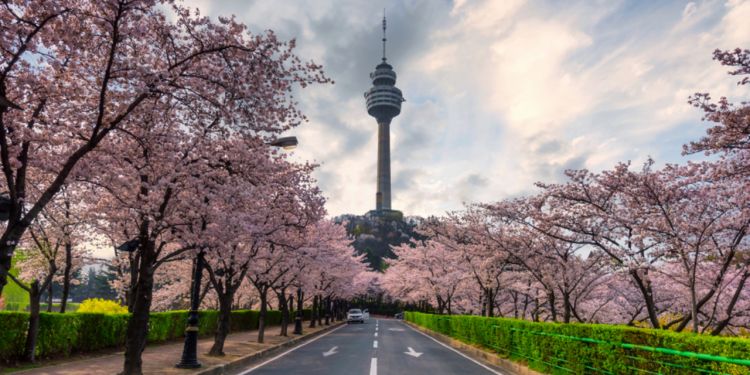
E-World is a sprawling theme park with roller coasters, themed gardens, and the iconic 83 Tower (202 meters), Korea's tallest observation tower featuring a revolving restaurant and city views. The annual Daegu Chimac Festival in July celebrates chicken and beer at Duryu Park, attracting over a million visitors. Nearby Gyeongju (1 hour away), the ancient Silla Kingdom capital, offers UNESCO World Heritage sites including Bulguksa Temple. The Dongseongro district provides shopping, dining, and nightlife options.
Everyday Life: Getting Around and Living in Daegu
Daily life in Daegu offers a comfortable blend of modern convenience and traditional Korean culture. The city's compact urban core, efficient public transportation, and friendly residents make it an accessible destination for newcomers. Most essential services and shopping areas are well-connected by metro and bus.
Public Transportation
Daegu Metro operates three lines covering the city. Line 1 (red) runs 37.1 km from Seolhwa-Myeonggok to Hayang with 35 stations. Line 2 (green) stretches 31.4 km from Munyang to Yeungnam University with 29 stations. Line 3 (yellow) is South Korea's first urban monorail, offering scenic elevated views across 24 km with 30 stations. In December 2024, the Daegyeong Line opened, connecting Daegu to Gumi and Gyeongsan via 61.9 km of commuter rail.
Metro fares are ₩1,500 for adults, ₩850 for teens, and ₩450 for children using transportation cards. Transfers between metro and buses within 30 minutes are free. Popular cards include T-Money, OnePass, and the DaeGyeong transportation card, available at convenience stores and metro stations.
Lifestyle and Culture
Daegu enjoys a humid subtropical climate, making it the warmest major city in South Korea. Summers are hot, while winters are milder than Seoul. The city is known for its traditional medicine heritage, with Yangnyeongsi Market operating as Korea's oldest herbal medicine market since 1658. Daegu residents take pride in their local cuisine, particularly makchang (grilled intestines) and 납작만두 (flat dumplings). The city center, especially Dongseongro, bustles with shopping, restaurants, and entertainment options.
Sources: Daegu Metropolitan Transit Corporation, Daegu Metropolitan City
Budgeting Your Move: Cost of Living in Daegu
Daegu offers one of the most affordable lifestyles among South Korea's major metropolitan cities. With rent prices approximately 49% lower than Seoul and restaurant prices about 17% cheaper, expatriates can enjoy a comfortable standard of living. The tables below provide estimated monthly expenses for individuals and families.
Monthly Budget for a Single Person
Rent (1-bedroom, city center) | ₩600,000 – ₩800,000 |
Utilities (electricity, heating, water) | ₩100,000 – ₩150,000 |
Groceries | ₩300,000 – ₩400,000 |
Transportation (metro/bus pass) | ₩50,000 – ₩80,000 |
Health Insurance (NHIS) | ₩70,000 – ₩150,000 |
Total Estimated | ₩1,120,000 – ₩1,580,000 |
Monthly Budget for a Family of Four
Rent (3-bedroom, city center) | ₩1,200,000 – ₩1,800,000 |
Utilities | ₩200,000 – ₩300,000 |
Groceries | ₩700,000 – ₩900,000 |
Transportation | ₩150,000 – ₩200,000 |
International School (per child/month) | ₩1,800,000 – ₩2,550,000 |
Health Insurance (family) | ₩200,000 – ₩400,000 |
Total Estimated (1 child) | ₩4,250,000 – ₩6,150,000 |
Sources: Numbeo Daegu, Daegu International School, National Health Insurance Service
In Short
Daegu represents an excellent choice for expatriates seeking an authentic Korean experience without the high costs of Seoul. This welcoming city of 2.4 million residents offers affordable housing, efficient public transportation including a modern metro system, quality international education, and diverse employment opportunities in manufacturing, technology, and education sectors. The blend of traditional markets, mountain parks, and contemporary entertainment ensures there's always something to discover. With living costs nearly 50% lower than the capital and a growing international community, Daegu provides the perfect balance of comfort and adventure. Ready to connect with fellow expats and learn more about life in Daegu? Join the conversation on the Expat.com Daegu forum where experienced residents share tips, advice, and support for your Korean journey.
We do our best to provide accurate and up to date information. However, if you have noticed any inaccuracies in this content, please contact us.


Essential services for your expat journey



