

Living in Mumbai: the ultimate expat guide
Everything you need to know for a successful life in Mumbai.
Mumbai, formerly known as Bombay, is India's financial powerhouse and the country's most cosmopolitan metropolis. Home to over 20 million people in its metropolitan area, this vibrant coastal city on the Arabian Sea serves as the headquarters for major Indian corporations, the Bombay Stock Exchange, and the Reserve Bank of India. The city contributes approximately 6% of India's GDP and handles 40% of the nation's foreign trade.
A City That Never Sleeps
Mumbai operates at a relentless pace, offering endless opportunities in finance, entertainment, technology, and manufacturing. The city is home to Bollywood, the world's largest film industry by output, and attracts talent from across the globe. Its unique blend of colonial architecture, modern skyscrapers, and diverse neighborhoods creates an urban experience unlike any other in Asia.
5 Good Reasons to Move to Mumbai
- Career opportunities: Access to India's largest job market in finance, IT, entertainment, and consulting sectors.
- International connectivity: Chhatrapati Shivaji Maharaj International Airport connects to major global destinations with direct flights.
- Cultural diversity: Experience a cosmopolitan lifestyle with communities from across India and the world.
- World-class education: Top-tier universities including IIT Bombay and numerous international schools.
- Vibrant lifestyle: From Marine Drive sunsets to fine dining and nightlife, Mumbai offers endless entertainment.
Working in Mumbai: Career Opportunities and Employment
Mumbai stands as India's undisputed commercial capital, offering expatriates access to the country's most dynamic job market. The city hosts headquarters of major conglomerates including Tata Group, Reliance Industries, and Aditya Birla Group, alongside multinational corporations across diverse sectors.
Key Employment Sectors
The financial services sector dominates Mumbai's economy, with the Bandra Kurla Complex (BKC) serving as the primary business district. Banking, investment management, and insurance firms actively recruit international talent. The information technology sector continues to expand, particularly in areas like Powai, Andheri, and Navi Mumbai, where tech parks house both startups and established companies.
The entertainment industry, centered around Film City in Goregaon, employs thousands in production, post-production, and related creative services. Manufacturing accounts for 25% of India's industrial output, with pharmaceutical, textile, and engineering companies maintaining significant operations in and around the city.
Work Permits and Salary Expectations
Foreign nationals require an Employment Visa (E-Visa) to work in India. The minimum salary threshold is USD 25,000 per annum (approximately INR 21 lakhs). Applicants must be sponsored by a registered Indian company and complete FRRO registration within 14 days of arrival for stays exceeding 180 days. The visa is typically granted for one year, renewable up to five years.
Unemployment rate (Maharashtra, FY24) | 3.6% |
Average salary (mid-level professional) | INR 8-15 lakhs per annum |
Key sectors | Finance, IT, Entertainment, Manufacturing |
Sources: The Quint, Press Information Bureau India
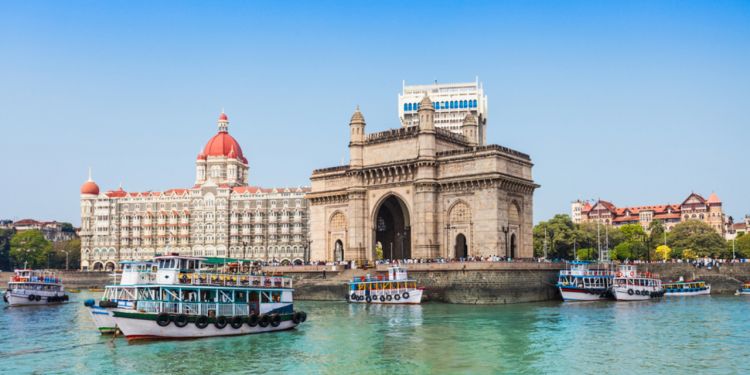
Working in Mumbai
Mumbai is the capital city of the State of Maharashtra and is India's wealthiest city. As of 2018, it was the world's seventh-most densely ...
Higher Education and Universities in Mumbai
Mumbai hosts some of India's most prestigious educational institutions, attracting students from across the globe. The city offers diverse academic programs ranging from engineering and management to arts and social sciences, with several universities maintaining international accreditation and exchange partnerships.
Premier Institutions
The Indian Institute of Technology Bombay (IIT Bombay), established in 1958, ranks among the world's top engineering universities. Located on a scenic campus in Powai between two lakes, IIT Bombay offers undergraduate, postgraduate, and doctoral programs. International students can apply through JEE Advanced for undergraduates or GATE for postgraduate programs. Tuition for international students ranges from USD 4,000-8,000 per year depending on the program.
The University of Mumbai, founded in 1857, is one of India's oldest and largest universities with over 700 affiliated colleges. The Tata Institute of Social Sciences (TISS) offers specialized programs in social work, development studies, and public policy. For business education, institutions like SP Jain Institute of Management and NMIMS attract international MBA candidates.
International Programs and Admissions
Illinois Tech Mumbai, launching in fall 2026, will become the first American university campus in India, offering STEM and business programs with internationally recognized degrees. Most institutions conduct admissions through online applications, with academic calendars following a July-June cycle. English serves as the primary medium of instruction at most universities.
Sources: IIT Bombay, Illinois Tech
International Schools and Education for Children
Mumbai offers excellent international schooling options for expatriate families, with institutions following curricula from the International Baccalaureate (IB), Cambridge (IGCSE), American, and British systems. Demand for places at top schools is high, so early application is essential once relocation is confirmed.
Top International Schools
Dhirubhai Ambani International School (DAIS) in Bandra consistently ranks as India's top international school, offering the IB curriculum from Primary Years to Diploma Programme. The school features students from over 40 nationalities and state-of-the-art facilities. Annual fees range from INR 8-12 lakhs (approximately USD 9,500-14,500).
The American School of Bombay (ASB) in Bandra provides an American curriculum with IB options, serving students from over 50 countries. Oberoi International School, one of Mumbai's first IB continuum schools, offers smaller class sizes and students from 29 countries. DSB International School uniquely provides both the English National Curriculum and German Abitur, making it ideal for European families.
Enrollment and Fees
Most international schools require entrance assessments, parent interviews, and previous academic records. Application deadlines typically fall between October and January for the following academic year starting in August. Annual tuition at premium international schools ranges from INR 5-15 lakhs (USD 6,000-18,000), with additional costs for uniforms, books, transportation, and extracurricular activities. Many expatriate packages include education allowances given these substantial costs.
Sources: Dhirubhai Ambani International School, American School of Bombay
Housing and Neighborhoods for Expatriates
Finding suitable accommodation in Mumbai requires understanding the city's distinct neighborhoods and rental market dynamics. Expatriates typically settle in areas offering proximity to international schools, business districts, and quality amenities. Rental agreements in India follow the Leave and License system, typically requiring an 11-month contract with security deposits of 3-6 months' rent.
Popular Expatriate Neighborhoods
Bandra West remains the preferred choice for expatriates, offering a vibrant social scene, international restaurants, and proximity to BKC. Expect rents of INR 1-2.5 lakhs per month (USD 1,200-3,000) for a 2-bedroom apartment. The area features excellent connectivity via the Bandra-Worli Sea Link and upcoming metro lines.
Powai attracts families seeking a quieter environment with good schools and modern apartment complexes near IIT Bombay. Rents range from INR 60,000-1.5 lakhs (USD 700-1,800) for a 2-bedroom. Juhu offers beachfront living and proximity to the airport, with 2-bedroom apartments ranging from INR 80,000-2 lakhs. Lower Parel and Worli provide premium high-rise living close to central business areas.
Rental Costs Overview
1-bedroom (city center) | INR 30,000-80,000/month |
3-bedroom (city center) | INR 80,000-3,00,000/month |
1-bedroom (suburbs) | INR 20,000-50,000/month |
3-bedroom (suburbs) | INR 45,000-1,20,000/month |
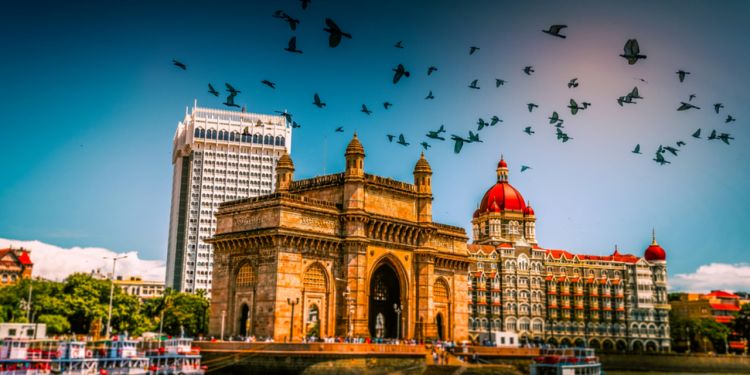
Accommodation in Mumbai
Mumbai is the capital city of Maharashtra, as well as the commercial and financial capital of India. It is one of the biggest metropolitan cities and ...
Leisure, Culture, and Things To Do
Mumbai offers an extraordinary mix of cultural experiences, from UNESCO World Heritage sites to contemporary art galleries and legendary nightlife. The city caters to every interest, whether you seek historical exploration, outdoor activities, or culinary adventures.
Cultural Attractions and Museums
The Chhatrapati Shivaji Maharaj Vastu Sangrahalaya (formerly Prince of Wales Museum) houses over 50,000 artifacts spanning Indian history, art, and natural history. The Elephanta Caves, a UNESCO World Heritage site accessible by ferry from the Gateway of India, features remarkable 5th-century rock-cut temples dedicated to Lord Shiva. The Kala Ghoda Art Precinct hosts galleries, boutiques, and the famous annual Kala Ghoda Arts Festival every February.
Marine Drive, known as the Queen's Necklace for its curved street lighting, offers the perfect evening stroll along the Arabian Sea. The Gateway of India, built in 1924 to commemorate King George V's visit, remains Mumbai's most iconic landmark. For Bollywood enthusiasts, Film City in Goregaon offers studio tours showcasing India's film industry.
Recreation and Nightlife
Sanjay Gandhi National Park, spread across 104 square kilometers within the city, features hiking trails, the ancient Kanheri Caves, and wildlife including leopards and deer. Beaches like Juhu and Girgaum Chowpatty come alive in evenings with street food vendors and families enjoying the sunset. Mumbai's nightlife centers around Bandra, Lower Parel, and Colaba, with rooftop bars, live music venues, and nightclubs operating until the early hours. The city's restaurant scene ranges from legendary street food—vada pav, pav bhaji, and bhel puri—to fine dining establishments helmed by celebrity chefs.
Sources: Lonely Planet, Incredible India
Daily Life and Getting Around Mumbai
Daily life in Mumbai moves at a fast pace, shaped by the city's extensive public transport network and diverse cultural landscape. Understanding transportation options and local customs will help expatriates adapt quickly to this energetic metropolis.
Transportation Options
The Mumbai Suburban Railway, known locally as the "Locals," forms the backbone of city transport, carrying over 7 million passengers daily. While efficient for commuting, trains become extremely crowded during peak hours. The expanding Mumbai Metro network now spans over 80 kilometers with multiple operational lines, including the new underground Aqua Line connecting BKC to South Mumbai. Metro fares range from INR 10-50 per journey.
App-based services like Uber and Ola provide convenient door-to-door transport. Auto-rickshaws operate in suburban areas (not permitted in South Mumbai), while the iconic black-and-yellow taxis serve the entire city. Many expatriates hire drivers, with monthly costs around INR 25,000-40,000 including vehicle expenses.
Lifestyle and Culture
Mumbai embraces a 24/7 culture with restaurants, shops, and entertainment venues open late. The city celebrates festivals from all religions with equal enthusiasm, from Diwali and Ganesh Chaturthi to Christmas and Eid. English is widely spoken in business and social settings. The monsoon season (June-September) brings heavy rainfall, so planning around this period is advisable. Most expatriates employ domestic help for cooking, cleaning, and childcare at reasonable costs.
Sources: Mumbai Metro, Mumbai Suburban Railway
Cost of Living in Mumbai
Mumbai ranks as India's most expensive city, though living costs remain significantly lower than major Western cities. According to Mercer's 2024 survey, Mumbai is the 136th most expensive city globally for expatriates. Careful budgeting around accommodation—the largest expense—allows for a comfortable lifestyle.
Monthly Budget for a Single Person
The following table outlines typical monthly expenses for an expatriate living in a central Mumbai neighborhood:
Category | Amount (INR) | Amount (USD) |
Rent (1-bedroom, city) | 50,000 | ~600 |
Utilities | 5,000 | ~60 |
Groceries | 12,000 | ~145 |
Transportation | 5,000 | ~60 |
Dining/Entertainment | 10,000 | ~120 |
Total (excl. rent) | ~35,000 | ~420 |
Monthly Budget for a Family of Four
Category | Amount (INR) | Amount (USD) |
Rent (3-bedroom, city) | 1,50,000 | ~1,800 |
Utilities | 8,000 | ~95 |
Groceries | 25,000 | ~300 |
School fees (per child/month) | 75,000 | ~900 |
Transportation | 15,000 | ~180 |
Domestic help | 15,000 | ~180 |
Total (excl. rent) | ~1,27,000 | ~1,525 |
Sources: Numbeo 2025, GoDigit
In Short
Mumbai represents the ultimate Indian experience—a city where opportunity meets diversity, and where centuries of history blend with modern ambition. While adjusting to the city's pace and density takes time, expatriates consistently find that Mumbai rewards those who embrace its energy. The professional opportunities are unmatched in India, the cultural experiences are endless, and the warmth of Mumbaikars makes this sprawling metropolis feel surprisingly welcoming. Whether you're drawn by career prospects, educational institutions, or simply the adventure of living in one of Asia's most dynamic cities, Mumbai delivers an unforgettable chapter of life abroad.
Connect with fellow expatriates and get personalized advice on the Expat.com Mumbai Forum.
We do our best to provide accurate and up to date information. However, if you have noticed any inaccuracies in this content, please contact us.


Essential services for your expat journey



