

Living in Siem Reap: the ultimate expat guide
Everything you need to know for a successful life in Siem Reap.
Siem Reap is Cambodia's cultural heart, a city where ancient temples meet modern comforts in a setting that feels more like a large village than an urban center. Located in northwestern Cambodia, approximately 316 km from the capital Phnom Penh, this city of around 245,000 residents serves as the gateway to the UNESCO World Heritage Site of Angkor Wat, one of the most spectacular archaeological complexes in the world. The city blends French colonial architecture in its Old Quarter with traditional Khmer influences, riverside cafés, and a welcoming expat community that has grown steadily over recent years.
5 Good Reasons to Move to Siem Reap
- Exceptionally low cost of living – A comfortable lifestyle is achievable on USD 700–1,000 per month, including rent, food, and leisure activities.
- Rich cultural heritage – Daily access to hundreds of ancient temples, traditional Apsara dance performances, and thriving artisan communities.
- Welcoming expat community – A diverse, established international community engaged in social projects, hospitality, and entrepreneurship.
- Easy visa process – Flexible long-term visa options including the EB business visa with annual renewals for around USD 290–300.
- Relaxed lifestyle – Friendly locals, safe streets, green surroundings, and a pace of life that prioritizes well-being over hustle.
Working in Siem Reap: Opportunities in the Tourism Capital
Siem Reap's economy revolves primarily around tourism and hospitality, driven by the millions of visitors who come to explore Angkor Wat each year. Cambodia aims to welcome 7.5 million international tourists in 2025, with Siem Reap receiving the largest share. Beyond tourism, opportunities exist in education, NGO work, and entrepreneurship. The city has become a hub for socially-minded expats involved in community development projects.
Key Employment Sectors
The hospitality industry dominates employment, with positions available in hotels, restaurants, tour companies, and event coordination. English teaching is popular among expats, with international schools and language centers offering positions to qualified candidates. The NGO sector employs many foreigners in roles related to poverty alleviation, education, and community development. Entrepreneurs have found success opening restaurants, boutique hotels, and creative businesses catering to tourists and expats.
Work Permits and Salaries
To work legally in Cambodia, foreigners require an E-class visa (Ordinary Visa), a work permit, and an employment card issued by the Ministry of Labour and Vocational Training (MLVT). The initial E-class visa costs USD 35 and is valid for 30 days, extendable for 6 or 12 months. Work permits cost approximately USD 200 per year and must be renewed annually between January and March.
Average local salary | USD 150–300/month |
Skilled professionals/managers | USD 400–700/month |
Expat positions (specialized roles) | USD 700–1,500/month |
Minimum wage (garment sector) | USD 204/month |
Sources: Ministry of Labour and Vocational Training, LiveWorkCambodia
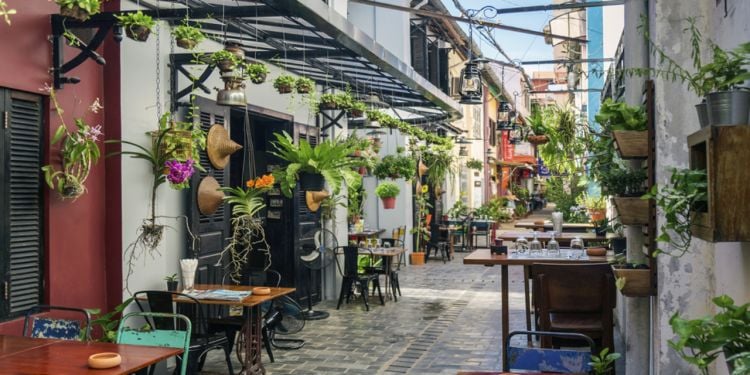
Work in Siem Reap
The town of Siem Reap is most renowned for being the gateway to the iconic temples of Angkor, which are a source of national pride and a point of ...
Higher Education and Universities in Siem Reap
While Cambodia's higher education sector is concentrated in Phnom Penh, Siem Reap offers several options for tertiary studies, particularly in fields related to tourism, business, and public health. The city hosts two accredited universities providing bachelor's and postgraduate programs, making it possible to pursue higher education while enjoying the city's relaxed lifestyle.
Universities in Siem Reap
Angkor University is a private institution established in 2004, offering programs across seven faculties: Public Health, Business Administration and Tourism, Engineering and Architecture, Science and Technology, Sociology and Law, Humanities and Foreign Languages, and Agriculture. The university focuses on producing graduates with practical skills aligned with Cambodia's labor market needs. University of Southeast Asia (USEA) operates on the principle of training highly employable individuals, offering professional and technical courses in high demand. The university emphasizes four key skills for international success: soft skills, technical skills, creativity, and information skills.
Admission and Tuition
Admission typically requires completion of secondary education (Grade 12), submission of transcripts, passport-sized photos, and payment of registration fees. Tuition at Cambodian universities is considerably lower than in Western countries, with annual fees ranging from USD 500–2,000 depending on the program. Pannasastra University of Cambodia also maintains a Siem Reap campus and hosts an EducationUSA advising center providing guidance on studying in the United States.
Sources: Angkor University, EducationUSA
Retirement in Siem Reap: A Peaceful Golden Age
Siem Reap has become one of Southeast Asia's most attractive retirement destinations, combining exceptionally low costs, a welcoming community, and easy visa requirements. Many retirees describe the city as offering the perfect balance between cultural richness and modern convenience, with the added benefit of world-class temples at their doorstep.
Retirement Visa (ER Visa)
Cambodia offers an ER (Retirement) visa extension for foreigners aged 55 and older. The process is straightforward: enter Cambodia on an E-class Ordinary Visa (USD 35), then extend to an ER visa through a local visa agent. The extension costs approximately USD 270–300 per year and is renewable annually. Unlike many countries, Cambodia does not require proof of specific minimum income when applying through agents, making it accessible to retirees on various budgets. The ER visa does not permit employment.
Healthcare for Retirees
Private clinics in Siem Reap handle routine medical needs at affordable prices, with GP consultations costing USD 20–50. For serious medical issues, many expats travel to Bangkok, Thailand (1-hour flight) where world-class hospitals are available. International health insurance is strongly recommended, costing USD 40–100 per month depending on coverage and age. Dental care is affordable, with checkups around USD 25–50.
Why Retirees Choose Siem Reap
- Affordability – Live comfortably on USD 800–1,500 per month
- No tax on foreign pensions – Only local Cambodian income is taxable
- Active expat community – Social clubs, volunteer opportunities, and regular meetups
- Cultural enrichment – Endless temple exploration and traditional arts
- Warm climate – Year-round tropical weather, avoiding harsh winters
Sources: Cambodia Immigration, Khmer Times
International Schools and Education for Children
Siem Reap has experienced significant growth in international schooling options, catering to the needs of expat families. Primary-aged children are well served, with multiple schools following British, American, French, and Waldorf-inspired curricula. Secondary options are more limited but growing, with the International School of Siem Reap (ISSR) offering education through A-Levels.
Leading International Schools
International School of Siem Reap (ISSR) is the largest international school in Siem Reap, with over 300 students from more than 20 nationalities. It follows the British National Curriculum and Cambridge IGCSE/A-Level programs for students aged 2–18. Facilities include a 25-meter swimming pool, football pitch, science labs, and IT computer labs. Annual fees range from USD 2,090–8,250.
Tree House International School follows the British Early Years Foundation Stage (EYFS) and Key Stage framework for children up to age 11. The school features small class sizes, a large garden, and offers daycare from 6 months. Annual fees range from USD 1,700–3,000.
École Française de Siem Reap provides French Ministry of Education curriculum, accredited by AEFE, with instruction primarily in French and English/Khmer as foreign languages. Annual fees range from USD 3,540–4,860.
Hope International School offers Christ-centered education from preschool through Grade 10, following the Cambridge IGCSE program. Annual fees range from USD 2,730–7,040, with scholarships available.
School | Curriculum | Annual Fees (USD) |
ISSR | British/Cambridge | 2,090–8,250 |
Tree House | British EYFS | 1,700–3,000 |
École Française | French National | 3,540–4,860 |
Hope International | Cambridge IGCSE | 2,730–7,040 |
Sources: ISSR, Tree House International School
Housing and Neighborhoods: Finding Your Home
Siem Reap offers diverse housing options at prices significantly lower than other Southeast Asian cities. Whether you prefer a modern apartment near Pub Street, a traditional Khmer house in a quiet village, or a villa with a pool, the rental market caters to various budgets and lifestyles. Most landlords prefer annual leases, though shorter terms are available at higher rates.
Popular Expat Neighborhoods
Sala Kamreuk is the most popular commune among expats, winning 55% of votes in resident surveys. This 8.42 km² area offers proximity to Pub Street, the Angkor Market, and numerous restaurants while maintaining a residential atmosphere. Housing options include townhouses, apartments, condos, and villas.
Wat Bo Village has become a lifestyle hub known for leafy streets, riverside cafés, boutique shops, and yoga studios. It's within walking distance of the river, markets, and international schools.
Svay Dangkum is the city center, home to Pub Street, the Old Market, and most tourist amenities. It's ideal for those who want to be in the heart of the action.
Slor Kram offers a quieter alternative just 10 minutes from downtown, with local businesses and proximity to Angkor National Museum.
Rental Prices (2025)
1-bedroom apartment (city center) | USD 300–450/month |
1-bedroom apartment (outside center) | USD 200–300/month |
3-bedroom apartment (city center) | USD 400–650/month |
3-bedroom apartment (outside center) | USD 300–400/month |
Villa with pool | USD 650–2,000/month |
Sources: Numbeo, IPS Cambodia
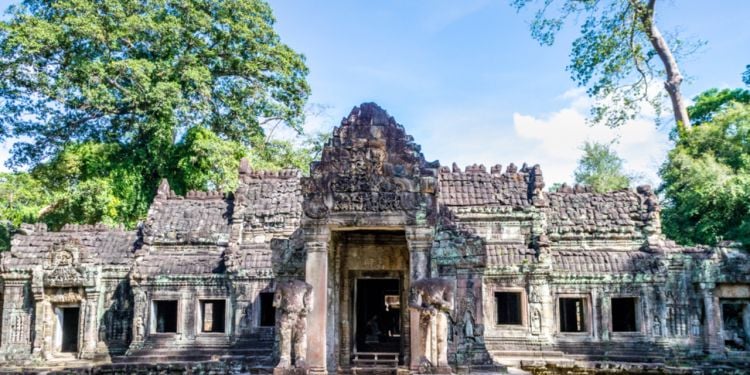
Accommodation in Siem Reap
Lovely weather, a thriving culinary scene, business opportunities, famous temples, an artistic soul, and a generally relaxed way of life continue ...
Leisure, Culture, and Things to Do
Beyond the magnificent temples of Angkor, Siem Reap offers a rich tapestry of cultural experiences, outdoor adventures, and evening entertainment. The city has transformed from a simple gateway to the temples into a destination in its own right, with new attractions opening regularly.
Angkor Archaeological Park
The UNESCO World Heritage Site encompasses over 400 km² with hundreds of temples dating from the 9th to 15th centuries. Angkor Wat, the largest religious monument in the world, is the crown jewel, but equally impressive are Bayon with its enigmatic stone faces, and Ta Prohm, famous from the Tomb Raider film. Entry passes cost USD 37 (1 day), USD 62 (3 days), or USD 72 (7 days), available at the Angkor Enterprise ticket office.
Cultural Experiences
Phare, The Cambodian Circus is the city's top-rated entertainment, combining theater, music, dance, and acrobatics to tell uniquely Cambodian stories. The Angkor National Museum provides excellent context for temple visits through interactive exhibits and ancient artifacts. Artisans Angkor showcases traditional handicrafts and silk weaving, while the Made in Cambodia Market brings together local artisans and designers.
Outdoor Activities
Explore the floating villages of Tonle Sap Lake, Southeast Asia's largest freshwater lake. Angkor Zipline offers adventures through old-growth forest within the archaeological park. Phnom Kulen National Park features waterfalls, jungle hikes, and sacred Buddhist sites. For golf enthusiasts, three international-standard courses are within 20 minutes of town, including the Angkor Golf Resort designed by Sir Nick Faldo.
Nightlife and Dining
Pub Street is the epicenter of nightlife, with bars, restaurants, and clubs open late. The adjacent Old Market area offers more relaxed dining options. Wat Bo Village has emerged as an alternative hub with boutique cafés and riverside venues.
Sources: Angkor Enterprise, Hello Angkor
Daily Life in Siem Reap: Getting Around and Living Well
Daily life in Siem Reap moves at a relaxed pace, with the city's compact size making everything accessible within a 15-minute journey. The warm tropical climate, friendly locals, and affordable services create an environment where expats can enjoy a high quality of life without the stress of larger cities.
Transportation
The primary mode of transport is the tuk-tuk, a motorcycle-pulled carriage that's both affordable and enjoyable for getting around town. Ride-hailing apps have transformed transportation, with PassApp and Grab offering fixed pricing that eliminates negotiation. A typical tuk-tuk ride within town costs USD 1–3, while day trips to Angkor Wat run USD 15–25. The PassApp starting rate is 3,000 riels (USD 0.75) for the first kilometer. Many expats rent motorbikes for USD 50–100 per month or purchase bicycles, as the city has recently built dedicated cycle lanes along the river. There is no public bus system within Siem Reap, but long-distance buses connect to Phnom Penh (5 hours, USD 9) and other cities.
Everyday Essentials
Groceries are available at Angkor Market, local wet markets, and convenience stores. Local produce is inexpensive, while imported goods cost more. Dining out is remarkably affordable, with local meals costing USD 1–5 and Western restaurant meals around USD 8–15. Internet is reliable and cheap, with mobile data plans starting at USD 2–12 per month for 10GB+. Electricity is the highest variable cost, with bills ranging from USD 60–200 depending on air conditioning usage. The city uses a dual currency system: US dollars for most transactions and Cambodian riels for small purchases (1 USD ≈ 4,000 KHR).
Sources: Numbeo, PassApp
Cost of Living: Your Budget in Siem Reap
Siem Reap consistently ranks among the most affordable cities in Southeast Asia for expats. The cost of living is approximately 77% lower than in the United States, allowing newcomers to enjoy a comfortable lifestyle on a modest budget. Your actual expenses will depend significantly on lifestyle choices, particularly regarding housing, dining, and air conditioning usage.
Monthly Budget for a Single Person
Category | Budget (USD) | Comfortable (USD) |
Rent (1-bedroom) | 200–250 | 350–450 |
Utilities (electricity, water, internet) | 50–80 | 80–150 |
Groceries | 100–150 | 200–300 |
Dining out | 100–150 | 200–300 |
Transportation | 30–50 | 50–100 |
Health insurance | 40–80 | 100–200 |
Leisure/entertainment | 50–100 | 150–200 |
TOTAL | 570–860 | 1,130–1,700 |
Monthly Budget for a Family of Four
Category | Budget (USD) | Comfortable (USD) |
Rent (3-bedroom) | 350–450 | 550–800 |
Utilities | 100–150 | 150–250 |
Groceries | 250–350 | 400–500 |
International school (2 children) | 300–500 | 600–1,200 |
Transportation | 80–120 | 150–200 |
Health insurance (family) | 150–250 | 300–500 |
Leisure/dining out | 150–250 | 300–400 |
TOTAL | 1,380–2,070 | 2,450–3,850 |
Sources: Numbeo, Nomads.com, LiveWorkCambodia
In Short
Siem Reap offers a rare combination of ancient wonder and modern convenience, where world-famous temples sit alongside welcoming cafés and a thriving international community. The city's remarkably low cost of living, straightforward visa process, and genuine warmth of the Khmer people make it an exceptional choice for expats seeking adventure, culture, or a peaceful retirement. Whether you're drawn by professional opportunities in tourism and education, the chance to raise a family in a safe and enriching environment, or simply the dream of living near one of humanity's greatest achievements, Siem Reap welcomes you with open arms. Ready to start your journey? Connect with fellow expats and get firsthand advice on the Siem Reap forum on Expat.com.
We do our best to provide accurate and up to date information. However, if you have noticed any inaccuracies in this content, please contact us.


Essential services for your expat journey



