

Living in Tunis: the ultimate expat guide
Everything you need to know for a successful life in Tunis.
Tunis, the capital and largest city of Tunisia, offers a unique blend of Mediterranean charm, rich history, and affordable living. Situated on the Gulf of Tunis, this city of approximately 2.8 million inhabitants in the metropolitan area serves as the political, economic, and cultural heart of the country. The city seamlessly combines ancient medinas with modern business districts, creating an environment where tradition meets progress.
A City of Contrasts and Opportunities
From the UNESCO-listed Medina to the modern business hub of Les Berges du Lac, Tunis presents diverse neighborhoods that cater to different lifestyles. The city enjoys a Mediterranean climate with mild winters and warm summers, making outdoor activities possible year-round. The cost of living is significantly lower than in most Western cities, allowing for a comfortable lifestyle on a modest budget.
5 Good Reasons to Move to Tunis
- Affordable cost of living — approximately 60% lower than major European cities, with rent up to 85% cheaper than cities like London or New York.
- Strategic location — a two-hour flight from major European capitals, serving as a gateway between Europe, Africa, and the Middle East.
- Rich cultural heritage — home to ancient Carthage ruins, the historic Medina, and world-class museums like the Bardo.
- Growing international community — international schools, diverse dining options, and an established network of professionals from around the world.
- Mediterranean lifestyle — beautiful beaches, vibrant café culture, and a relaxed pace of life in picturesque neighborhoods like Sidi Bou Said.
Working in Tunis: Employment and Career Opportunities
The Tunisian economy is diversified, with key sectors including services (52% of employment), industry (34%), and agriculture (14%). Tunis serves as the main business hub, hosting headquarters of major national and international companies, particularly in the areas around Les Berges du Lac and Centre Urbain Nord.
Key Employment Sectors
The services sector dominates the economy, particularly tourism, banking, telecommunications, and information technology. The manufacturing sector is strong in textiles, automotive components, and electronics, with many European companies operating production facilities. The growing technology and outsourcing industry offers opportunities for IT professionals, with competitive salaries for skilled workers. Other expanding fields include renewable energy, healthcare, and education.
Work Permits and Employment Requirements
Foreign nationals wishing to work in Tunisia must obtain a work permit (Permis de Travail) through their employer, who must demonstrate that the position cannot be filled by a qualified Tunisian national. The employer submits the application to the Ministry of Vocational Training and Employment. Once approved, foreign workers apply for a long-stay visa (Visa D) at a Tunisian embassy and must obtain a residence permit (Carte de Séjour) within one month of arrival. Work permits are typically valid for one to two years and can be renewed alongside the employment contract. Processing times range from 4 to 12 weeks, with fees approximately TND 150-300 for work permits and TND 100-200 for residence permits.
The following table presents key employment indicators for Tunisia:
Unemployment Rate (Q3 2025) | 15.4% |
Average Monthly Salary | TND 1,570 (~USD 530) |
Minimum Wage (48h/week) | TND 480/month |
Main Economic Sectors | Services, Manufacturing, Agriculture |
Sources: Trading Economics, National Institute of Statistics Tunisia (INS)

Work in Tunis
Tunis is the capital city of Tunisia. As the national economic and commercial capital city, it has been attracting many expatriates over the years. ...
Higher Education and Universities in Tunis
Tunis is home to Tunisia's leading universities and higher education institutions, offering programs in French, Arabic, and increasingly in English. The city hosts over 56 universities and colleges, including both public and private institutions that attract students from across Africa and the Middle East.
Major Universities
The University of Tunis El Manar, founded in 2000, is the highest-ranked Tunisian university, featuring faculties of medicine, engineering, sciences, and law. The University of Tunis offers programs in humanities, social sciences, and education. For English-language programs, the Université Internationale de Tunis (UIT) provides business, engineering, and management degrees with international accreditation. The University of Tunis Carthage has partnered with international institutions to offer programs meeting global standards.
Admission and Tuition
Public universities offer highly subsidized education for Tunisian students, while international students pay modest fees ranging from TND 1,000 to TND 5,000 per year depending on the program. Private universities charge higher fees, typically between TND 8,000 and TND 20,000 annually for undergraduate programs and up to TND 25,000-60,000 for MBA and specialized master's degrees. International students should apply through the university's international admissions office, providing academic transcripts, language proficiency certificates (French or English depending on the program), and a valid passport. Application deadlines typically fall between March and June for the following academic year.
Sources: University of Tunis El Manar, Université Internationale de Tunis
Schooling for Children: International and Local Options
Families relocating to Tunis will find a range of educational options, from international schools following American, British, or French curricula to local private and public schools. Most international schools are located in the northern suburbs, near areas popular with the foreign community.
International Schools
The American Cooperative School of Tunis (ACST) is accredited by the Middle States Association and offers the IB Diploma Programme for grades 11-12. Located in La Aouina, it serves students from pre-kindergarten through grade 12, with tuition ranging from USD 23,000 to USD 26,000 per year. The British International School of Tunis (BIST) follows the National Curriculum of England and Wales, with COBIS accreditation and BSO (British Schools Overseas) inspection. It offers education from Early Years through Sixth Form, serving over 2,500 students. The CIS International School of Tunis is accredited by Cognia, Cambridge, and Pearson Edexcel, offering flexible programs recognized globally.
Enrollment and Fees
International schools typically require application forms, previous school records, immunization certificates, and copies of passports. Many schools have waiting lists, so early application is recommended. Local private schools teaching in French or Arabic offer more affordable options, with fees ranging from TND 3,000 to TND 8,000 annually. Public education is free for residents but primarily conducted in Arabic with French as a second language.
Sources: American Cooperative School of Tunis, British International School of Tunis, CIS International School of Tunis
Housing and Neighborhoods: Where to Live in Tunis
Tunis offers a variety of housing options, from modern apartments in business districts to traditional homes in historic quarters. Rent prices are significantly lower than in Western cities, making quality housing accessible on most budgets. The northern suburbs are particularly popular among the international community.
Popular Neighborhoods for Foreigners
Les Berges du Lac (Lac 1 and Lac 2) is the premier business and diplomatic district, home to embassies, multinational companies, and upscale apartments. This modern area offers excellent infrastructure and is close to international schools. La Marsa is a coastal suburb known for its beaches, restaurants, and relaxed atmosphere, popular with families. Sidi Bou Said, famous for its blue-and-white architecture, offers charm and Mediterranean views but limited rental availability. Carthage combines historical significance with upscale residential areas, and Jardins de Carthage has emerged as a luxury real estate hotspot. Gammarth provides beachfront living with hotels and residential complexes.
Rental Prices and Procedures
Rental contracts typically require a security deposit of one to three months' rent, and leases are usually renewed annually with a standard 5% increase. Furnished apartments command higher prices. Most rentals are found through real estate agencies, online platforms, or word of mouth.
1-Bedroom Apartment (City Centre) | USD 350-450/month |
1-Bedroom Apartment (Outside Centre) | USD 200-300/month |
3-Bedroom Apartment (City Centre) | USD 600-800/month |
3-Bedroom Apartment (Outside Centre) | USD 400-550/month |
Luxury Apartment (Les Berges du Lac) | USD 800-1,200/month |
Sources: Global Property Guide, Numbeo
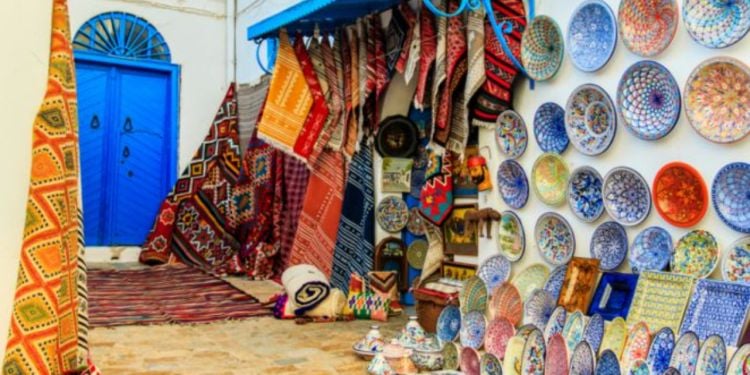
Accommodation in Tunis
Stretching over 212,63 km², Tunis is the biggest and most densely populated Tunisian city, with around 1,056,247 inhabitants. It is thus deemed ...
Leisure, Culture, and Things to Do in Tunis
Tunis offers a rich cultural scene combining ancient history, Mediterranean lifestyle, and vibrant arts. From world-class museums to beautiful beaches, there is no shortage of activities for residents and visitors alike.
Museums and Historical Sites
The Bardo National Museum, housed in a 19th-century Ottoman palace, contains one of the world's finest collections of Roman mosaics, with admission at just TND 13 (~USD 4.50). The UNESCO-listed Medina of Tunis, dating from 698 CE, features winding alleys, traditional souks, and the magnificent Zitouna Mosque with its 160 Roman columns. The Archaeological Site of Carthage, also a UNESCO World Heritage Site, includes the Baths of Antoninus, Byrsa Hill, and Punic ports. Nearby, the charming village of Sidi Bou Said offers blue-and-white architecture and stunning Mediterranean views.
Recreation and Nightlife
The northern suburbs offer beautiful beaches at La Marsa, Gammarth, and Raoued. Golf enthusiasts can play at The Residence Golf Course in Gammarth. The city has numerous fitness centers with monthly memberships around TND 100-200. Gammarth is the center of nightlife, with beach clubs, restaurants, and bars. The Tunis Medina Festival during Ramadan brings cultural events throughout the old city. Cinema tickets cost approximately TND 15-25, while a meal at a mid-range restaurant runs TND 30-60 per person. The Marché Centrale in downtown Tunis is perfect for experiencing local food culture and purchasing fresh produce.
Sources: Bardo National Museum, UNESCO World Heritage Centre
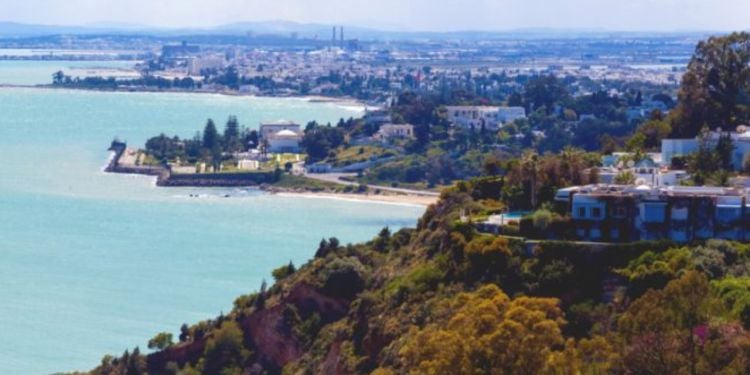
Leisure in Tunis
Whether you are planning to move to Tunis or you have already settled there, you are probably wondering what you can do during your free time. As a ...
Daily Life in Tunis: Getting Around and Local Culture
Daily life in Tunis blends Mediterranean ease with Arab-African traditions. The city operates at a relaxed pace, with café culture deeply embedded in social life. Understanding local customs and transportation options will help you settle in smoothly.
Transportation Options
Tunis has a comprehensive public transport network managed by Transtu. The Métro Léger (light rail) operates six lines covering 61.3 kilometers with 65 stations, connecting major neighborhoods including the city center, Ariana, and Ben Arous. Single tickets cost approximately TND 0.5-1 depending on the distance. The TGM (Tunis-Goulette-Marsa) suburban train connects downtown Tunis to coastal suburbs including La Goulette, Carthage, Sidi Bou Said, and La Marsa, with frequent service and fares around TND 0.8-1.25. City buses cover extensive routes throughout the metropolitan area. Taxis are affordable (look for the red light indicating availability) and use meters, though ride-hailing apps have limited availability. Monthly transport passes cost approximately TND 30-50.
Cultural Norms and Lifestyle
Tunisia is a moderate Muslim country with a progressive social outlook compared to other North African nations. French is widely spoken alongside Arabic, particularly in business and education. Tunisians are generally welcoming to foreigners. The work week runs Sunday through Thursday in some sectors, though many businesses follow a Monday-Friday schedule. During Ramadan, business hours and restaurant availability change significantly. Tipping is customary but modest, typically 5-10% at restaurants. Shopping at traditional souks involves bargaining, while modern supermarkets and malls offer fixed prices.
Sources: Transtu, Tunis Light Metro
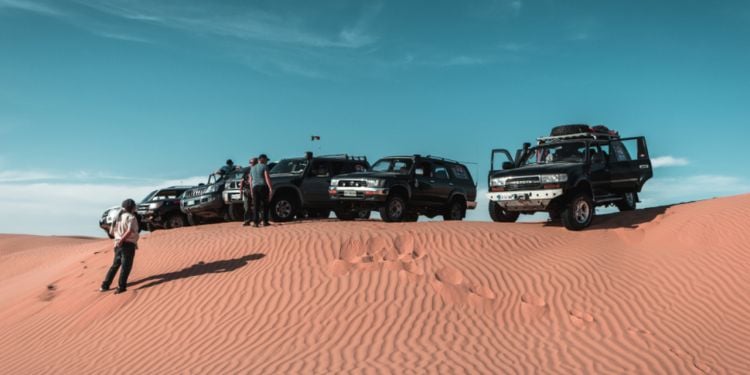
Transports in Tunis
Whether you are planning to move to Tunis or you have just settled there, moving around could not have been easier. Indeed, the capital city has a ...
Cost of Living in Tunis: What to Expect
Tunis offers one of the most affordable costs of living among Mediterranean cities. Overall expenses are approximately 60% lower than in major European cities and 70% lower than in the United States. However, imported goods and international school fees can add up for foreign families.
Monthly Budget for a Single Person
The following table outlines typical monthly expenses for a single professional living in Tunis:
Rent (1-bedroom, city centre) | USD 350-400 |
Utilities (electricity, water, gas) | USD 40-60 |
Groceries | USD 150-200 |
Transportation | USD 30-50 |
Internet & Phone | USD 25-40 |
Dining & Entertainment | USD 100-150 |
Total Estimated | USD 700-900/month |
Monthly Budget for a Family of Four
Families should expect higher expenses, particularly for housing and education:
Rent (3-bedroom apartment) | USD 600-900 |
Utilities | USD 80-120 |
Groceries | USD 350-450 |
Transportation | USD 80-120 |
International School (2 children) | USD 3,500-4,500 |
Health Insurance | USD 200-400 |
Total Estimated | USD 4,800-6,500/month |
Sources: Numbeo 2025, LivingCost.org
In Short
Tunis presents a compelling destination for those seeking an affordable Mediterranean lifestyle with rich cultural experiences. The city offers a unique position as a crossroads between Europe, Africa, and the Middle East, with a welcoming local population and an established international community. While challenges exist, including bureaucratic processes and language barriers for non-French speakers, the low cost of living, pleasant climate, and proximity to Europe make Tunis worth considering for your next chapter abroad. Whether you're drawn by career opportunities, retirement plans, or simply a desire for adventure, Tunis delivers authenticity that many other destinations have lost. Ready to explore more? Join the Tunis forum on Expat.com to connect with fellow foreigners, ask questions, and get firsthand advice from those already living in Tunisia's capital.
We do our best to provide accurate and up to date information. However, if you have noticed any inaccuracies in this content, please contact us.


Essential services for your expat journey