Living in Pretoria: the ultimate expat guide
Everything you need to know for a successful life in Pretoria.
Pretoria, known officially as Tshwane, is South Africa's administrative capital and a city that offers expatriates a compelling blend of history, culture, and opportunity. Famous for its jacaranda-lined streets that burst into purple bloom each spring, Pretoria provides a more relaxed atmosphere than nearby Johannesburg while maintaining excellent access to business opportunities and amenities. As the seat of government and host to over 130 foreign embassies, the city has developed a sophisticated infrastructure to support its large international community.
Why Choose Pretoria?
Pretoria offers expatriates a unique combination of professional opportunities, quality of life, and affordability that is hard to match elsewhere in South Africa. The city's strong government and diplomatic presence creates a stable employment environment, while its world-class universities and research institutions attract talent from around the globe.
5 Good Reasons to Move to Pretoria
- Lower cost of living than Cape Town or Johannesburg, with comparable amenities and services.
- Strong job market in government, automotive manufacturing, and research sectors.
- Excellent educational institutions, including the University of Pretoria and multiple international schools.
- Established expat community with diplomatic and NGO networks offering social connections and support.
- Pleasant climate with warm summers, mild winters, and over 300 sunny days per year.
Working in Pretoria: Employment Opportunities and Key Industries
Pretoria's economy is anchored by the public sector, with national government departments, state-owned enterprises, and foreign embassies providing substantial employment. Beyond government, the city has developed into a major hub for automotive manufacturing, research and development, and higher education. Expatriates with skills in engineering, IT, healthcare, and management will find the strongest opportunities.
Key Economic Sectors
The automotive industry is a cornerstone of Pretoria's manufacturing sector. BMW's Rosslyn plant produces vehicles for export to over 40 countries, while Ford's Silverton facility and Nissan's Rosslyn plant add to the region's automotive cluster. The Tshwane Automotive Special Economic Zone continues to attract investment and create skilled jobs. Research institutions like the Council for Scientific and Industrial Research (CSIR), the Human Sciences Research Council, and the Agricultural Research Council offer positions for scientists and researchers. The city's three major universities also employ significant numbers of academics and support staff.
Work Permits and Visas
Foreign nationals require a valid work visa to be employed in South Africa. The Critical Skills Work Visa, introduced under a points-based system in October 2024, is the primary route for skilled professionals. Applicants must score at least 100 points based on qualifications, salary, experience, and occupation. The visa is valid for up to five years and requires a formal job offer from a South African employer. Professions on the Critical Skills List—including engineers, IT specialists, healthcare workers, and financial professionals—receive automatic qualifying points.
The following table provides an overview of key employment indicators in Pretoria:
Unemployment Rate (National, Q3 2025) | 31.9% |
Average Monthly Net Salary (After Tax) | ZAR 25,094 |
Key Industries | Government, Automotive, Research, Education |
Sources: Statistics South Africa, Numbeo 2025
Working in Pretoria
Pretoria, located about 50 km from Johannesburg, is the administrative capital and seat of the government of South Africa. The city offers a ...
Higher Education and Universities in Pretoria
Pretoria is one of South Africa's leading educational centres, home to several prestigious universities and research institutions. The city attracts thousands of international students annually, drawn by quality programs, relatively affordable tuition, and diverse campus communities. English is the primary language of instruction at most institutions.
Major Universities
The University of Pretoria (UP) is one of Africa's largest and most research-intensive universities, with over 50,000 students across nine faculties. It offers more than 1,800 academic programs ranging from engineering and medicine to law and humanities. Tuition fees for international students start at approximately ZAR 84,000 to ZAR 188,000 per year (double the domestic rate), plus an international levy. The university is well-regarded for engineering, veterinary science, and business programs.
The University of South Africa (UNISA), headquartered in Pretoria, is Africa's largest distance-learning institution. It offers flexible study options ideal for working professionals, with undergraduate module fees ranging from ZAR 1,925 to ZAR 8,005 per module. International students can study remotely from anywhere in the world.
The Tshwane University of Technology (TUT) focuses on applied sciences and technology, offering diplomas and degrees in engineering, business, and the arts. It has multiple campuses across Pretoria and provides strong industry links for graduates.
Admission Process
International students must apply directly to their chosen university, typically by September of the preceding year for programs starting in February. Requirements include certified academic transcripts, proof of English proficiency (IELTS or TOEFL), and a valid passport. Successful applicants must then apply for a Study Visa through the Department of Home Affairs. All foreign qualifications must be evaluated by the South African Qualifications Authority (SAQA).
Sources: University of Pretoria, UNISA
Schools for Expat Children in Pretoria
Pretoria offers a solid range of international and private schools catering to expatriate families. While the selection is smaller than in Johannesburg, several excellent options provide internationally recognized curricula, smaller class sizes, and strong pastoral care. Most international schools are located in the eastern suburbs, convenient to diplomatic and expat-heavy neighborhoods.
International School Options
The American International School of Johannesburg (AISJ) – Pretoria Campus serves students from Pre-Kindergarten through Grade 8 on a purpose-built campus in Midrand/Pretoria East. The school follows an American curriculum with the International Baccalaureate (IB) Diploma Programme available at the Johannesburg campus for high school. Annual tuition for 2024/25 ranges from approximately ZAR 380,000 for Pre-K to ZAR 560,000 for Middle School, plus a capital fee of around ZAR 209,000 for new students. The school represents over 100 nationalities and offers extensive extracurricular activities.
The Deutsche Internationale Schule Pretoria (German International School) provides education from kindergarten through Grade 12, following the German curriculum alongside South African and European university entrance qualifications. It is ideal for German-speaking families or those seeking bilingual education.
The Lycée Jules Verne is the French international school in Pretoria, offering education from nursery through the French Baccalaureate. It serves the French-speaking community, including diplomatic families.
Enrollment and Considerations
Applications for international schools should be submitted as early as possible, ideally six to twelve months before the intended start date. Most schools require previous academic records, references, and may conduct assessments. South African public schools are also an option, offering the National Senior Certificate curriculum at significantly lower cost, though quality varies considerably by school and location.
Sources: AISJ, U.S. Department of State Office of Overseas Schools
Housing and Neighbourhoods in Pretoria
Pretoria offers diverse housing options, from modern security estates to gracious older homes in established suburbs. Rental prices are generally 10-15% lower than in Johannesburg, making the city attractive for families seeking space and value. Most expatriates choose to live in the eastern suburbs, which offer proximity to embassies, international schools, and shopping centers.
Popular Expat Neighbourhoods
Waterkloof is Pretoria's most prestigious suburb, home to many embassies and diplomatic residences. Properties here range from ZAR 3.9 million to ZAR 45 million, with 24-hour security, beautiful gardens, and proximity to the Union Buildings. Brooklyn offers a mix of historic homes and modern apartments, excellent restaurants, and proximity to Brooklyn Mall. Property prices range from ZAR 1.8 million to ZAR 10 million.
Lynnwood and Menlo Park are popular with families and academics due to their proximity to the University of Pretoria. These suburbs offer a mix of houses and sectional-title properties with good security. Faerie Glen is a family-friendly suburb with security estates, good schools, and affordable housing starting around ZAR 1.5 million.
Rental Prices and Process
The rental market in Pretoria is competitive but accessible. Most landlords require a deposit equal to one to two months' rent plus the first month in advance. Leases typically run for 12 months. Many expats use property agents to find suitable accommodation, and viewing properties in person before signing is strongly recommended.
The following table shows average monthly rental prices in Pretoria:
1-Bedroom Apartment (City Centre) | ZAR 8,122 |
1-Bedroom Apartment (Suburbs) | ZAR 7,456 |
3-Bedroom Apartment (City Centre) | ZAR 17,056 |
3-Bedroom Apartment (Suburbs) | ZAR 13,522 |
Sources: Numbeo 2025

Accommodation in Pretoria
With a conservative and often Afrikaans population, Pretoria is rather welcoming toward expatriates from around the world. Indeed, many of them have ...
Leisure, Culture, and Things to Do in Pretoria
Pretoria offers a rich cultural scene and abundant recreational opportunities. From world-class museums and historic monuments to nature reserves and lively markets, the city provides plenty of options for weekends and evenings. The pleasant climate encourages outdoor activities year-round.
Must-See Attractions
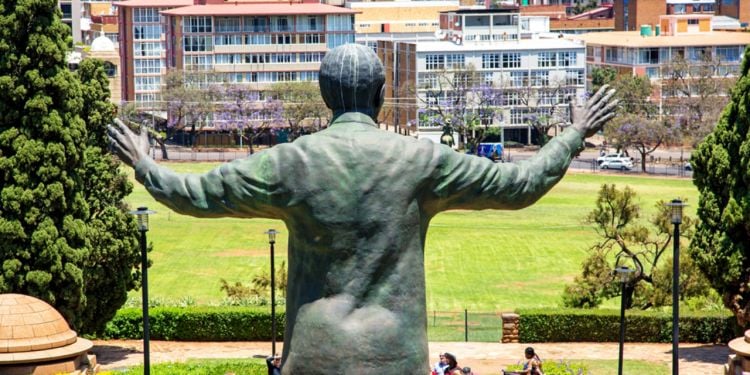
The Union Buildings, designed by Sir Herbert Baker and completed in 1913, are the seat of government and offer stunning terraced gardens with panoramic views of the city. The 9-metre bronze statue of Nelson Mandela on the grounds commemorates his 1994 inauguration. Entry to the gardens is free.
The Voortrekker Monument is a 40-metre granite structure honouring the 19th-century Afrikaner pioneers. The adjacent museum and nature reserve make it a popular destination. Freedom Park provides a poignant exploration of South Africa's struggle for democracy, with interactive exhibitions and memorial gardens.
The Pretoria National Botanical Garden covers 76 hectares and showcases indigenous South African flora. It is an excellent spot for picnics, bird-watching (over 220 species recorded), and peaceful walks. The National Zoological Gardens is one of the largest zoos in the world, housing over 700 species.
Sports, Markets, and Nightlife
Loftus Versfeld Stadium hosts rugby (the Bulls) and football matches, offering an electric atmosphere on match days. The city has excellent golf courses, including Pretoria Country Club and Waterkloof Golf Club. Hiking trails in Groenkloof Nature Reserve and Rietvlei Nature Reserve are popular with outdoor enthusiasts.
The Hazel Food Market operates every Saturday, offering artisan foods, crafts, and live music. For nightlife, Hatfield and Menlyn Maine are the main entertainment districts, with a variety of bars, restaurants, and clubs catering to different tastes. Brooklyn also offers upscale dining and cocktail bars.
Sources: SANBI, Voortrekker Monument
Daily Life in Pretoria: Transport, Climate, and Lifestyle
Daily life in Pretoria moves at a more relaxed pace than in Johannesburg, though the city offers all the conveniences of a modern capital. The climate is pleasant year-round, with warm summers and mild, dry winters. Most residents rely on private vehicles, but public transport options are improving steadily.
Getting Around
The Gautrain rapid rail system connects Pretoria to Johannesburg and OR Tambo International Airport, with stations at Pretoria CBD and Hatfield. The journey to Johannesburg Park Station takes approximately 35 minutes. Gautrain feeder buses connect stations to surrounding suburbs. The A Re Yeng Bus Rapid Transit (BRT) system operates dedicated bus lanes connecting the CBD to Hatfield via Sunnyside, with fares starting at ZAR 8.
Most expatriates choose to drive, as public transport does not reach all suburbs. Traffic can be heavy during peak hours, particularly on routes to Johannesburg. Ride-hailing services like Uber and Bolt are widely available and affordable. Petrol prices are approximately ZAR 22 per litre.
Climate and Lifestyle
Pretoria enjoys a subtropical climate with distinct seasons. Summers (October to March) are warm with afternoon thunderstorms, while winters (May to August) are dry and mild with occasional frost at night. The city receives over 300 sunny days per year.
Shopping is convenient, with major malls like Menlyn Park (the largest in Pretoria), Brooklyn Mall, and The Grove offering international retailers, supermarkets, and dining. Tipping at restaurants is customary, typically 10-20% of the bill. South Africans are generally friendly and welcoming, and English is widely spoken in business and social settings.
Cost of Living in Pretoria: What to Budget
Pretoria offers one of the more affordable cost-of-living profiles among South Africa's major cities. While not as cheap as smaller towns, expenses are generally 10-15% lower than in Cape Town and slightly below Johannesburg. Accommodation, domestic help, and dining out are particularly good value compared to major cities in Europe, North America, or Australia.
Monthly Expenses for a Single Person
A single professional can live comfortably in Pretoria on approximately ZAR 20,000 to ZAR 25,000 per month (after tax), covering rent, groceries, transport, and leisure. This assumes a one-bedroom apartment in a decent suburb, moderate dining out, and a modest lifestyle.
Rent (1-bedroom, suburbs) | ZAR 7,500 |
Utilities (electricity, water, internet) | ZAR 2,300 |
Groceries | ZAR 3,500 |
Transport (fuel/public transport) | ZAR 2,500 |
Leisure and Dining | ZAR 2,500 |
Total (Single Person) | ZAR 18,300 – 22,000 |
Monthly Expenses for a Family of Four
A family of four with children in private or international school should budget ZAR 50,000 to ZAR 70,000 per month, depending on housing choices and school fees.
Rent (3-bedroom house, suburbs) | ZAR 13,500 |
Utilities | ZAR 3,500 |
Groceries | ZAR 8,000 |
Transport (car, fuel, insurance) | ZAR 5,000 |
Private School Fees (per child/month) | ZAR 6,000 – 35,000 |
Medical Aid (family plan) | ZAR 5,000 – 8,000 |
Total (Family of Four) | ZAR 50,000 – 70,000 |
Sources: Numbeo 2025, Wisemove 2025
In Short
Pretoria offers expatriates an attractive combination of professional opportunity, cultural richness, and quality of life at a reasonable cost. As South Africa's administrative capital, the city provides a stable environment with strong government, automotive, and research sectors. The established diplomatic community means excellent international schools, diverse cuisine, and a welcoming atmosphere for newcomers. With its jacaranda-lined avenues, historic monuments, beautiful gardens, and warm climate, Pretoria rewards those who choose to make it home.
Ready to connect with fellow expats in Pretoria? Join the Pretoria expat forum on Expat.com to ask questions, share experiences, and build your network before and after your move.
We do our best to provide accurate and up to date information. However, if you have noticed any inaccuracies in this content, please contact us.


Essential services for your expat journey