Living in Johannesburg: the ultimate expat guide
Everything you need to know for a successful life in Johannesburg.
Johannesburg, locally known as Joburg or Jozi, is South Africa's largest city and the economic heart of the African continent. Built on gold mining wealth, this sprawling metropolis in Gauteng Province now thrives as a modern hub for finance, technology, and commerce. With a population exceeding 5.5 million in the metropolitan area, Johannesburg offers a unique blend of African culture, world-class infrastructure, and entrepreneurial energy that attracts professionals and families from across the globe.
A City of Opportunity and Diversity
Johannesburg stands apart from other African cities with its modern skyline, extensive highway network, and diverse population representing over a dozen languages spoken daily. The city serves as headquarters for major multinational corporations, banks, and the Johannesburg Stock Exchange, Africa's largest. While safety considerations require awareness, the city's secure residential estates and business districts offer comfortable living environments for expatriates.
5 Good Reasons to Move to Johannesburg
- Career opportunities – Home to Africa's largest economy with headquarters of major banks, mining companies, and tech firms.
- Affordable quality of life – Lower cost of living compared to major cities in Europe, North America, and Australia, with access to excellent housing and services.
- World-class healthcare – Private hospitals like Netcare and Mediclinic offer internationally accredited medical care.
- Gateway to Africa – OR Tambo International Airport connects to destinations across the continent and worldwide.
- Year-round sunshine – Enjoy a subtropical highland climate with warm summers and mild, dry winters averaging 300 sunny days annually.
Working in Johannesburg: Careers and Employment
Johannesburg is the undisputed economic capital of South Africa and the wider African continent. The city generates approximately 33% of South Africa's GDP and serves as the headquarters for most of the country's major corporations, banks, and international businesses. For skilled professionals, Johannesburg offers significant career opportunities, though understanding the local job market and visa requirements is essential.
Key Industries and Employment Sectors
The city's economy is anchored by financial services, with virtually all major South African banks and insurance companies headquartered here. The mining sector remains significant, with mining houses and the Chamber of Mines based in Johannesburg. Technology and IT represent the fastest-growing sector, accounting for 53% of new offshoring roles according to recent studies. Other major employers include manufacturing, telecommunications, retail, and business services. Sandton, often called "Africa's richest square mile," hosts the Johannesburg Stock Exchange and numerous corporate headquarters.
Work Permits and Visa Requirements
Foreign nationals require a valid work visa to be employed in South Africa. The Critical Skills Work Visa is the primary route for skilled professionals, valid for up to five years. As of October 2024, applications are assessed through a points-based system requiring a minimum of 100 points. Points are awarded for qualifications (NQF level 7-8: 30 points; NQF level 9-10: 50 points), work experience, salary level, and language proficiency. Occupations on the Critical Skills List automatically qualify for 100 points. All foreign qualifications must be evaluated by the South African Qualifications Authority (SAQA).
Employment Overview
The following table provides key employment indicators for the Johannesburg and Gauteng region:
Unemployment rate (South Africa Q3 2025) | 31.9% |
Gauteng unemployment rate | ~34% |
Average professional salary (Johannesburg) | ZAR 30,000–55,000/month |
National minimum wage (2024) | ZAR 27.58/hour |
Key sectors | Finance, Mining, IT, Manufacturing |
Sources: Statistics South Africa, Trading Economics
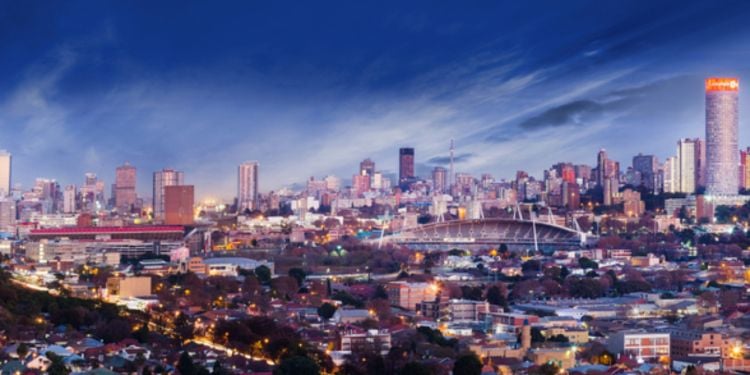
Working in Johannesburg
Johannesburg, the provincial capital and largest city in Gauteng, the country's richest province, is South Africa's largest metropolis. It is ...
Higher Education and Universities in Johannesburg
Johannesburg is home to several of South Africa's most prestigious universities, offering quality education at significantly lower costs than institutions in North America, Europe, or Australia. The city attracts thousands of international students annually, drawn by English-language instruction, recognized qualifications, and diverse academic programs.
Leading Universities
The University of the Witwatersrand (Wits) is South Africa's premier research university, consistently ranked among Africa's top institutions. Located in Braamfontein, Wits offers programs across engineering, medicine, law, and humanities. The University of Johannesburg (UJ), formed in 2005, is one of the country's largest institutions with over 50,000 students, including more than 3,000 international students across four campuses. Both universities offer undergraduate and postgraduate programs taught primarily in English.
Tuition Fees and Admission
International students from outside the Southern African Development Community (SADC) typically pay double the local tuition fees at public universities. At Wits, international undergraduate fees range from approximately ZAR 43,600 to ZAR 181,400 per year depending on the program, plus an International Registration Fee of ZAR 6,970. At UJ, undergraduate programs range from ZAR 35,258 to ZAR 100,248 for local students, with international levies of ZAR 2,000 for SADC students and higher for other nationalities. All international students must provide proof of available funds to obtain a study visa from the Department of Home Affairs.
Useful Links
- University of the Witwatersrand
- University of Johannesburg
- South African Qualifications Authority (SAQA)
Sources: Wits International Student Fees, UJ Student Finance
Schools and Education for Expatriate Children
Johannesburg offers a wide range of schooling options for expatriate families, from international schools following American, British, German, and French curricula to high-quality local private schools. While international school fees are lower than comparable institutions in Asia or Europe, they still represent a significant investment for families relocating to the city.
International Schools
The American International School of Johannesburg (AISJ) is the city's most established international school, founded in 1982. AISJ serves students from Pre-K through Grade 12, offering an American curriculum and the IB Diploma program. The school's student body represents over 107 nationalities across two campuses in Johannesburg and Pretoria. Annual tuition ranges from approximately ZAR 186,200 to ZAR 703,494 depending on grade level, with additional capital fees for new and returning students. Other options include the Deutsche Internationale Schule Johannesburg (German curriculum, ZAR 83,940–111,060/year), British curriculum schools, and the Lycée Jules Verne (French curriculum).
Local Private Schools
South Africa's independent school sector offers excellent education at lower costs than international schools. Schools such as St John's College, King David Schools, and Reddam House follow the South African curriculum leading to the National Senior Certificate (NSC), widely recognized for university admission. These schools typically offer strong sports programs, modern facilities, and smaller class sizes than government schools.
Enrollment Considerations
Most international schools follow an August–June academic calendar aligned with the Northern Hemisphere, while South African schools run from January to December. Waiting lists can apply for popular schools, so early application is recommended. Traffic congestion in Johannesburg makes school location an important factor—many families choose housing near their children's school to minimize commute times.
Sources: American International School of Johannesburg, International Schools Database
Housing and Neighbourhoods in Johannesburg
Finding the right accommodation is crucial when relocating to Johannesburg. The city's sprawling layout means choosing a neighbourhood that minimizes commute time to work and school is essential. Most expatriates live in the northern suburbs, where secure estates and modern apartment complexes provide comfortable, safe living environments.
Expat-Friendly Neighbourhoods
Sandton is Johannesburg's premier business and residential district, home to corporate headquarters, luxury hotels, and upscale shopping at Sandton City. Rental prices are the highest in the city, ranging from ZAR 18,000–35,000 monthly for a one-bedroom apartment. Rosebank offers excellent Gautrain connectivity, arts venues, and restaurants, with one-bedroom rentals averaging ZAR 7,600–15,000. Bryanston features tree-lined streets, family homes, and proximity to international schools. Other popular areas include Parktown North (ZAR 12,000–22,000/month), Hyde Park, and Morningside.
Types of Housing
Most expatriates choose to live in security complexes or gated estates with 24-hour guards, CCTV, and controlled access. Options include freestanding houses with gardens, townhouses (connected units, often multi-storey), and modern apartment blocks. Lifestyle estates offering pools, gyms, and restaurants are increasingly popular with young professionals. Properties typically come unfurnished, though furnished options exist at premium rates.
Rental Prices
The table below shows average monthly rental prices in Johannesburg's popular expatriate areas:
1-bedroom apartment (city centre) | ZAR 7,600–15,000/month |
1-bedroom apartment (Sandton) | ZAR 18,000–35,000/month |
3-bedroom apartment/townhouse | ZAR 20,000–39,000/month |
House in security estate | ZAR 25,000–55,000/month |
Sources: Numbeo, Property24
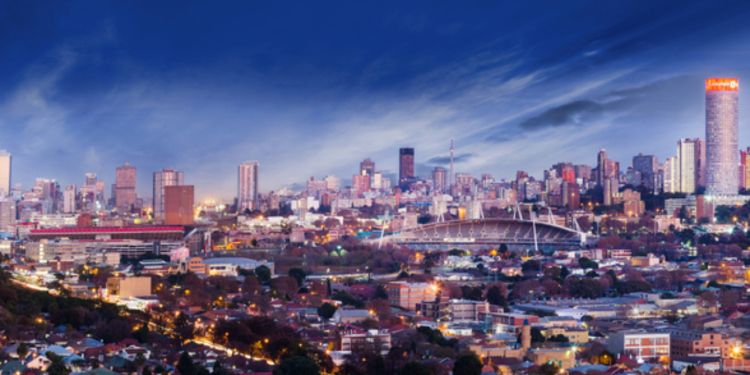
Accommodation in Johannesburg
Looking for accommodation in Johannesburg? Below is an overview of the city's neighborhoods and rental market.
Leisure, Culture and Things To Do in Johannesburg
Johannesburg offers a rich cultural scene, world-class dining, and easy access to wildlife experiences. From exploring the city's complex history to enjoying outdoor activities in the year-round sunshine, there is always something to discover. The city's arts districts, museums, and entertainment venues rival those of any global metropolis.
Museums and Cultural Attractions
The Apartheid Museum is an essential visit, documenting South Africa's journey through segregation to democracy through powerful exhibits and photography. Constitution Hill, a former prison complex that once held Nelson Mandela and Mahatma Gandhi, now houses South Africa's Constitutional Court and an interactive museum. The Cradle of Humankind, a UNESCO World Heritage Site 90 minutes from the city, features the Sterkfontein Caves where fossils dating back over 3 million years have been discovered. Other highlights include Museum Africa in Newtown, the Johannesburg Art Gallery, and the vibrant Maboneng Precinct with its street art and creative studios.
Entertainment and Outdoor Life
Johannesburg's northern suburbs feature excellent restaurants, from fine dining at venues like Marble in Rosebank to casual eateries along Parkhurst's 4th Avenue. Gold Reef City combines a theme park with a museum documenting the city's mining heritage. For outdoor enthusiasts, Zoo Lake and Emmarentia Dam offer green spaces for picnics and walks, while the Johannesburg Botanical Gardens provide tranquil escape. Sports fans can catch rugby at Ellis Park, cricket at Wanderers Stadium, or football matches. Weekend markets like the Rosebank Sunday Market and Neighbourgoods Market in Braamfontein are popular social gatherings.
Day Trips and Wildlife
The Pilanesberg National Park offers Big Five safari experiences within a two-hour drive of the city. For a longer excursion, Kruger National Park is reachable in approximately five hours. The historic town of Cullinan, where the world's largest diamond was discovered, makes for an interesting day trip, as does the scenic Magaliesberg mountain range with its hiking trails and hot air balloon rides.
Sources: South African Tourism, City of Johannesburg
Daily Life in Johannesburg
Daily life in Johannesburg revolves around cars, shopping malls, and the city's pleasant outdoor lifestyle. While public transport options are limited compared to European cities, the Gautrain rapid rail system and private vehicles make navigating the metropolitan area manageable. Expatriates generally adapt quickly to local routines, enjoying the city's excellent restaurants, outdoor activities, and year-round sunshine.
Getting Around
The Gautrain is Johannesburg's modern rapid rail system, connecting key business hubs including Sandton, Rosebank, Midrand, Pretoria, and OR Tambo International Airport. The 80-kilometer network operates from 05:30 to 21:00, with trains running every 12 minutes during peak hours. Single fares range from ZAR 38 (short trips like Rosebank to Sandton) to approximately ZAR 185 for airport journeys. Gautrain buses extend service to areas within a 15-kilometer radius of stations. However, most residents rely on private vehicles for daily transport, as public bus networks are limited and informal minibus taxis are not typically used by expatriates. Traffic congestion is significant, particularly on the N1 highway corridor.
Lifestyle and Practical Considerations
Johannesburg enjoys a subtropical highland climate with warm, wet summers (October–March) and mild, dry winters. Shopping is centered on large malls such as Sandton City, Rosebank Mall, and Mall of Africa, which serve as social and commercial hubs. Load shedding (scheduled power cuts) remains a reality, making backup power solutions like inverters or generators important for home and business. Fiber internet is widely available and affordable, with providers like Afrihost and Vox offering uncapped plans from approximately ZAR 399–758/month. Private security is common, with most residential complexes employing guards and alarm systems.
Sources: Gautrain, City of Johannesburg
Cost of Living in Johannesburg
Johannesburg offers a significantly lower cost of living than major cities in North America, Europe, or Australia, while providing access to quality housing, healthcare, and services. However, expenses vary considerably depending on lifestyle choices, particularly housing location and schooling decisions. The following tables provide realistic monthly budgets for different household types.
Monthly Budget for a Single Person
This estimate covers a single professional living in a one-bedroom apartment in a central area like Rosebank or Sandton:
Category | Monthly Cost (ZAR) | USD Equivalent |
Rent (1-bedroom, central) | 12,000 | ~660 |
Utilities (electricity, water) | 1,500 | ~82 |
Internet (fiber) | 600 | ~33 |
Groceries | 4,000 | ~220 |
Transport (car/Gautrain) | 3,000 | ~165 |
Medical aid (basic) | 2,500 | ~137 |
Dining/entertainment | 3,000 | ~165 |
Total | ~26,600 | ~1,460 |
Monthly Budget for a Family of Four
This estimate covers a family with two children, living in a 3-bedroom house in a security estate, with children attending an international school:
Category | Monthly Cost (ZAR) | USD Equivalent |
Rent (3-bedroom, secure estate) | 30,000 | ~1,650 |
Utilities (electricity, water) | 3,000 | ~165 |
Internet (fiber) | 750 | ~41 |
Groceries | 10,000 | ~550 |
Transport (2 cars) | 6,000 | ~330 |
Medical aid (family) | 8,000 | ~440 |
International school fees (2 children) | 50,000 | ~2,750 |
Domestic help | 5,000 | ~275 |
Dining/entertainment | 5,000 | ~275 |
Total | ~117,750 | ~6,475 |
Sources: Numbeo 2025, WiseMove
In Short
Johannesburg offers expatriates a unique opportunity to live in Africa's economic powerhouse while enjoying a quality of life that combines modern amenities with affordable costs. The city's diverse population, excellent private healthcare, quality international schools, and secure residential options make it an attractive destination for professionals and families alike. Yes, there are challenges—traffic congestion, power supply issues, and security considerations require adaptation—but most expatriates find that the benefits far outweigh the inconveniences. With easy access to world-class safari destinations, year-round sunshine, and a dynamic business environment, Johannesburg rewards those who embrace its energy and complexity.
Ready to connect with others who have made the move? Join the Expat.com Johannesburg forum to ask questions, share experiences, and meet fellow expatriates living in South Africa's City of Gold.
We do our best to provide accurate and up to date information. However, if you have noticed any inaccuracies in this content, please contact us.


Essential services for your expat journey