

Living in Tangier: the ultimate expat guide
Everything you need to know for a successful life in Tangier.
Tangier sits at the northwestern tip of Morocco, where the Mediterranean Sea meets the Atlantic Ocean. Just 14 kilometers from Spain across the Strait of Gibraltar, this port city of 1.2 million residents has long served as a crossroads between continents and cultures. The city blends Moroccan traditions with European influences, creating a unique atmosphere that has attracted artists, writers, and entrepreneurs for centuries. Today, Tangier is experiencing rapid economic growth driven by major infrastructure projects and foreign investment.
A City of Contrasts and Opportunity
Tangier combines a historic medina with modern business districts, beach resorts, and industrial zones. The city serves as the capital of the Tanger-Tétouan-Al Hoceima region, which contributes 10.4% of Morocco's national GDP. With Tanger Med, one of Africa's largest ports, and expanding free trade zones, the city offers genuine economic opportunities alongside a relaxed Mediterranean lifestyle.
5 Good Reasons to Move to Tangier
- Strategic location: A 35-minute ferry ride to Spain and direct flights to major European cities make Tangier ideal for international professionals.
- Affordable cost of living: Living expenses are approximately 38% lower than in the United States while offering modern amenities and quality housing.
- Growing economy: Major investments from Renault, Boeing, and Airbus have transformed the region into an industrial hub with diverse job opportunities.
- Year-round mild climate: Average temperatures range from 12°C in winter to 25°C in summer, with refreshing ocean breezes.
- Rich cultural heritage: From the ancient Kasbah to contemporary art galleries, Tangier offers endless cultural exploration and a thriving international community.
Working in Tangier: Industries, Jobs, and Work Permits
Tangier has emerged as Morocco's northern economic powerhouse. The Tanger-Tétouan-Al Hoceima region attracts billions in investment annually, with projects approved in 2024 worth nearly 69 billion Moroccan dirhams, expected to create around 60,000 jobs. For skilled professionals, the city offers opportunities across multiple industries, though securing employment requires navigating Morocco's work permit system.
Key Industries and Employers
The automotive sector dominates Tangier's industrial landscape. Renault operates a major factory producing over 400,000 vehicles annually, while suppliers and component manufacturers cluster in nearby free zones. The aerospace industry employs 17,000 people across 142 companies, including Airbus, Boeing, Safran, and Thales. Additional opportunities exist in textiles, electronics, logistics, tourism, and the emerging tech sector. The Tanger Free Zone, established in 1999, hosts companies across all these sectors and offers tax advantages to investors.
Work Permits and Visa Requirements
Foreign nationals need both a work visa and work permit to work legally in Morocco. Employers must apply on behalf of employees at the Ministry of Employment and Vocational Training, demonstrating that no qualified Moroccan candidate is available for the position. Processing typically takes 2-4 weeks. After arrival, employees must apply for a Residence Card (Carte de Séjour) at the local police prefecture within 3 months. Citizens from many countries, including the US, UK, Canada, Australia, and EU nations, can enter Morocco visa-free for up to 90 days, allowing time to finalize employment arrangements.
The table below summarizes key employment indicators:
National Unemployment Rate (2024) | 13.3% |
Minimum Daily Wage | MAD 124 (~USD 12) |
Main Industries | Automotive, Aerospace, Textiles, Logistics, Tourism |
Sources: High Commission for Planning (HCP), OECD Economic Survey Morocco 2024
Working in Tangier
The labour market in the city of Tangier is relatively open. It should not be difficult to find a job in this region which has a rather high growth ...
Higher Education and Universities in Tangier
Tangier hosts a growing higher education sector that combines Moroccan public universities with international programs. Students can pursue degrees in Arabic, French, or English, depending on the institution. The city's strategic location attracts study abroad programs from American and European universities, creating a cosmopolitan academic environment.
Public Universities
Abdelmalek Essaâdi University (UAE) is the main public institution serving the Tangier-Tétouan region. Key faculties include the Faculty of Science and Technology of Tangier (FSTT), founded in 1995, offering programs in engineering and sciences, and the National School of Applied Sciences in Tangier (ENSAT), a selective engineering school. Public universities in Morocco charge minimal tuition for residents, with instruction primarily in Arabic and French. International students should verify admission requirements directly with each faculty.
International Programs and Private Institutions
The University of New England (UNE) Morocco operates a full campus in central Tangier, making it the first American university campus established in Morocco. Founded in 2014, UNE Morocco offers semester-long study abroad programs with courses in English covering sciences, humanities, and Arabic language. SIST (Southern Institute of Science and Technology) provides British degrees through a partnership with Cardiff Metropolitan University, offering undergraduate and postgraduate programs in business, with annual tuition ranging from USD 4,000 to USD 8,000. For those seeking English-taught programs, the Institute for American Universities (IAU) also operates a Tangier campus for semester study abroad.
Sources: UNE Morocco, SIST British Education, Abdelmalek Essaâdi University
Schools for Expat Children in Tangier
Tangier offers several international schooling options for expatriate families. Schools follow American, British, French, or Spanish curricula, providing continuity for children from different educational backgrounds. While public Moroccan schools use Arabic as the primary language of instruction, international schools teach predominantly in English, French, or Spanish.
American and British Schools
The American School of Tangier (AST) is the oldest American school in North Africa, founded in 1950. It serves students from kindergarten through grade 12 and follows an American curriculum with Advanced Placement (AP) courses. Annual tuition ranges from approximately USD 8,000 to USD 15,500 depending on grade level. The school prepares graduates for admission to English-language universities worldwide. The Anglo-Moroccan School (AMS) offers a British curriculum as a registered Cambridge International School. Located on a 1.5-hectare campus in the Ziaten suburb, AMS serves students aged 4 to 18 from over 16 nationalities. Everest Cambridge International School is a newer institution also following the Cambridge curriculum with a trilingual approach.
French and Spanish Schools
Lycée Regnault is a French international school managed by the Agency for French Teaching Abroad (AEFE). It offers the French national curriculum leading to the French Baccalaureate. The Colegio Español Ramón y Cajal provides Spanish-language education at the elementary level. Both schools are recognized by their respective national education ministries, ensuring qualifications are valid for continued education in France or Spain.
Sources: American School of Tangier, U.S. Department of State, Everest Cambridge International School
Housing and Neighborhoods in Tangier
Finding accommodation in Tangier is straightforward, with options ranging from modern apartments to traditional riads. Rental prices vary significantly by neighborhood, with beachfront and central locations commanding premium rates. Many expatriates work with local real estate agents (simsaar) or search online platforms like Avito.ma, Mubawab, and Sarouty.
Popular Neighborhoods for Expats
Playa and Marina Bay offer upscale waterfront living with sea views, modern amenities, and proximity to restaurants and cafés. Rents here range from MAD 6,000 to MAD 15,000 for a two-bedroom apartment. Boulevard Pasteur is the heart of the modern city, offering convenience with shops, banks, and services within walking distance. The California and Iberia neighborhoods are popular with families due to their proximity to international schools, parks, and a quieter atmosphere. Marshan provides panoramic views of the Strait of Gibraltar and attracts those seeking a more refined residential setting. For budget-conscious renters, Boukhalef near the universities offers affordable options from MAD 2,500 per month, though it has fewer expatriate amenities.
Rental Prices and Procedures
When renting, expect to pay one to two months' rent as a deposit. Most leases run for one year minimum. Utilities (water, electricity, internet) are typically paid separately and average MAD 500-800 monthly for an apartment. The table below shows typical rental costs:
1-Bedroom Apartment (City Center) | MAD 3,000 - 6,000/month |
3-Bedroom Apartment (City Center) | MAD 6,000 - 12,000/month |
Villa with Garden | MAD 10,000 - 25,000/month |
Sources: Numbeo
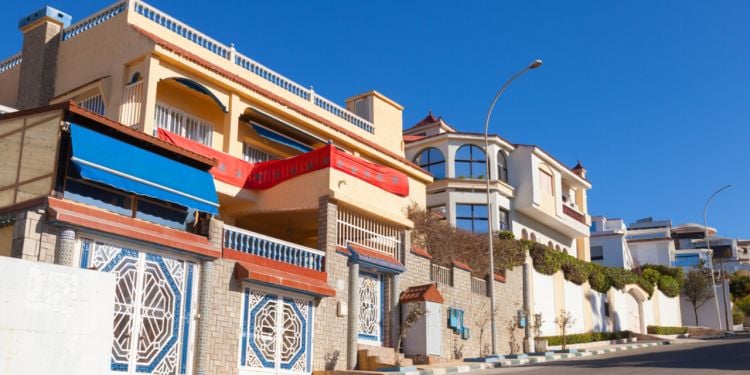
Accommodation in Tangier
Tangier, the fifth largest city of Morocco, is a prime destination for expats after Marrakech and Casablanca. It is not difficult to find housing in ...
Leisure, Culture, and Things to Do in Tangier
Tangier's cultural scene reflects its history as an international crossroads. The city inspired artists like Henri Matisse and Eugène Delacroix, and later became a gathering place for Beat Generation writers including Paul Bowles and William Burroughs. Today, visitors and residents can explore museums, historic sites, beaches, and a lively café culture.
Museums and Historic Sites
The Kasbah Museum (Dar el Makhzen) occupies a 17th-century sultan's palace and displays archaeological and ethnographic collections from northern Morocco, including Roman artifacts from Volubilis. Admission costs MAD 30. The Tangier American Legation Museum is the only U.S. National Historic Landmark on foreign soil, documenting the long diplomatic relationship between Morocco and the United States since 1777. Entry is MAD 50 with guided tours available. The Museum of Contemporary Art, housed in a restored former prison near the Kasbah, showcases works by modern Moroccan artists. Nearby, the Musée Dar Niaba opened in 2022 with Orientalist paintings and diplomatic artifacts.
Natural Attractions and Day Trips
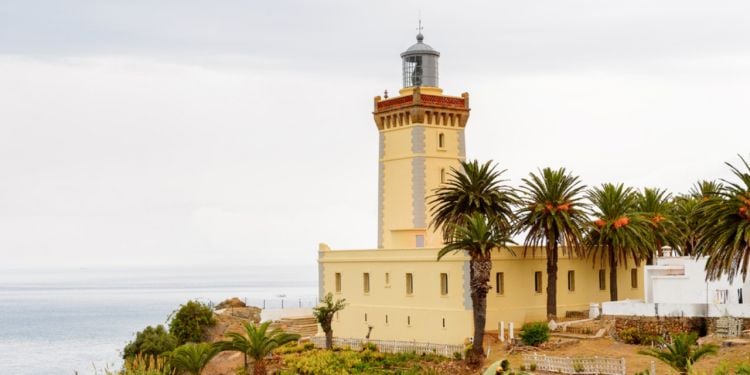
The Caves of Hercules, located 14 kilometers west of the city, feature dramatic rock formations and a cave opening shaped like Africa. Cap Spartel marks the point where the Atlantic meets the Mediterranean, with a historic lighthouse offering panoramic views. For a popular day trip, Chefchaouen, the famous blue-painted mountain town, lies just 2 hours by car or shared taxi (MAD 70 per person). Tetouan, with its UNESCO-listed medina, is only 1 hour away. Within the city, Café Hafa, open since 1921, offers terraced seating with sea views and has hosted everyone from the Rolling Stones to locals playing cards over mint tea.
Sources: Moroccan National Tourist Office, TripAdvisor Tangier
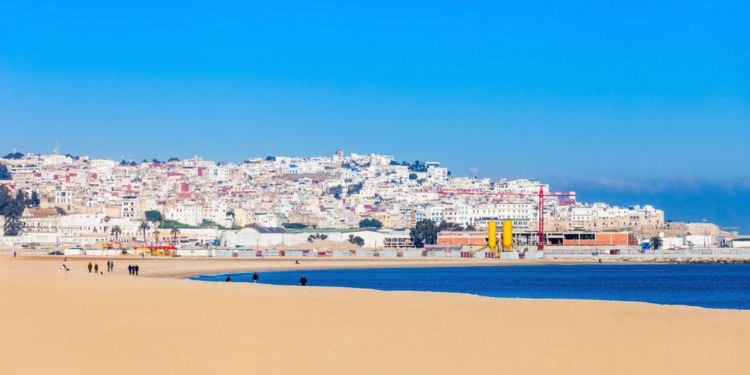
Things to do in Tangier
Tangier is an amazing place to live in. Not only will you get to enjoy the beaches, but you will also enjoy hearing a variety of languages in this ...
Daily Life in Tangier: Transport, Culture, and Practical Tips
Daily life in Tangier blends Moroccan traditions with international influences. The city operates at a relaxed pace compared to Casablanca or Marrakech, with most businesses open from 9:00 AM to 6:00 PM, though many close for a midday break. Friday afternoons see reduced activity as families gather for the traditional couscous lunch.
Getting Around Tangier
Petit taxis (blue and white) operate within the city and are metered, with typical rides costing MAD 10-30. Grand taxis are shared vehicles that travel fixed routes within the city and to nearby towns. The city's bus network, operated by ALSA, covers major routes with fares around MAD 4-5. Tangier Ibn Battouta Airport (TNG) lies 12 kilometers southwest of the city center. Since June 2024, a dedicated bus line connects the airport to the train station for MAD 40, taking approximately 40 minutes. Taxis to the city center cost around MAD 100-150. The train station (Gare Tanger Ville) offers connections to Casablanca, Rabat, Fez, and Marrakech via the national rail network ONCF. The high-speed Al Boraq train reaches Casablanca in just over 2 hours.
Everyday Practicalities
French is widely spoken alongside Arabic and Darija (Moroccan Arabic). English is increasingly common in tourist areas and among younger professionals. Supermarkets like Marjane and Carrefour stock international products, while traditional souks offer fresh produce at lower prices. Mobile networks (Maroc Telecom, Orange, Inwi) provide reliable coverage, and prepaid SIM cards are readily available. Banking services include international banks with ATMs accepting foreign cards. The city enjoys a Mediterranean climate with mild winters and warm summers tempered by Atlantic breezes.
Cost of Living in Tangier: Budgets and Expenses
Tangier offers a significantly lower cost of living than most Western cities while providing comfortable amenities. According to recent data, living in Tangier is approximately 38% cheaper than in the United States and 74% cheaper than New York City. However, costs vary depending on lifestyle choices and neighborhood.
Monthly Budget for a Single Person
A single professional can live comfortably in Tangier on MAD 8,000 to 12,000 per month (approximately USD 800-1,200), including rent. The following table provides a detailed breakdown:
Expense Category | Monthly Cost (MAD) | Monthly Cost (USD) |
Rent (1-bedroom, city center) | 4,000 - 5,500 | 400 - 550 |
Utilities (electricity, water, internet) | 600 - 800 | 60 - 80 |
Groceries | 1,500 - 2,000 | 150 - 200 |
Transport (taxis, bus) | 400 - 600 | 40 - 60 |
Dining out and leisure | 1,000 - 2,000 | 100 - 200 |
Total (Single Person) | 7,500 - 11,000 | 750 - 1,100 |
Monthly Budget for a Family of Four
Expense Category | Monthly Cost (MAD) | Monthly Cost (USD) |
Rent (3-bedroom apartment) | 7,000 - 12,000 | 700 - 1,200 |
Utilities | 800 - 1,200 | 80 - 120 |
Groceries | 3,000 - 4,000 | 300 - 400 |
Transport | 800 - 1,500 | 80 - 150 |
International school fees (per child) | 6,500 - 13,000 | 650 - 1,300 |
Health insurance (family) | 1,500 - 3,000 | 150 - 300 |
Total (Family of 4, 2 children) | 26,000 - 48,000 | 2,600 - 4,800 |
Sources: Numbeo Tangier 2025, LivingCost.org
In Short
Tangier offers expatriates a distinctive blend of African warmth and European accessibility. With its growing economy centered on automotive and aerospace industries, affordable cost of living, and strategic position just a short ferry ride from Spain, the city appeals to professionals, entrepreneurs, and retirees alike. The presence of international schools, universities, and a multilingual population makes integration smoother than in many Moroccan cities. Whether you're drawn by career opportunities in the Tanger Free Zone, the creative legacy of the Medina, or simply the Mediterranean lifestyle at a fraction of Western prices, Tangier rewards those willing to embrace its unique character. To connect with others who have made the move, share experiences, and get practical advice, join the Expat.com Tangier Forum and become part of the community.
We do our best to provide accurate and up to date information. However, if you have noticed any inaccuracies in this content, please contact us.


Essential services for your expat journey



