Living in Grand-Bassam: the ultimate expat guide
Everything you need to know for a successful life in Grand-Bassam.
Grand-Bassam is a historic coastal town located 40 kilometers east of Abidjan, the economic capital of Ivory Coast. Once the first colonial capital of Côte d'Ivoire from 1893 to 1900, this charming destination earned UNESCO World Heritage Site status in 2012 for its outstanding colonial architecture and cultural significance. The town sits on a narrow strip of land between the Atlantic Ocean and the Ouladine Lagoon, offering a unique blend of historical heritage, beach life, and local culture. With a population of approximately 124,500 residents, Grand-Bassam provides a quieter alternative to bustling Abidjan while remaining easily accessible for work, education, and leisure.
5 Good Reasons to Move to Grand-Bassam
- UNESCO Heritage: Live among beautifully preserved colonial buildings and experience a unique blend of African and European architectural history.
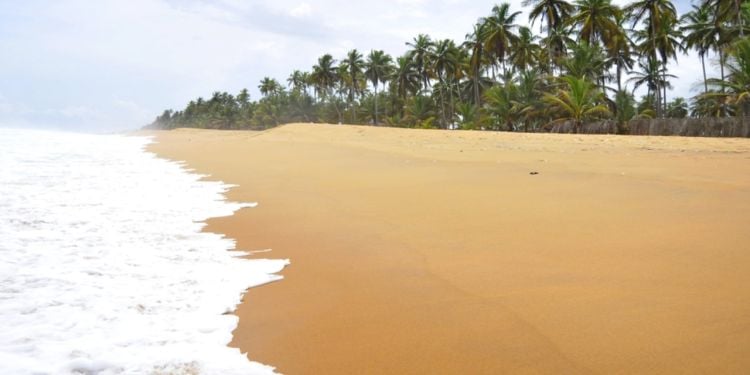
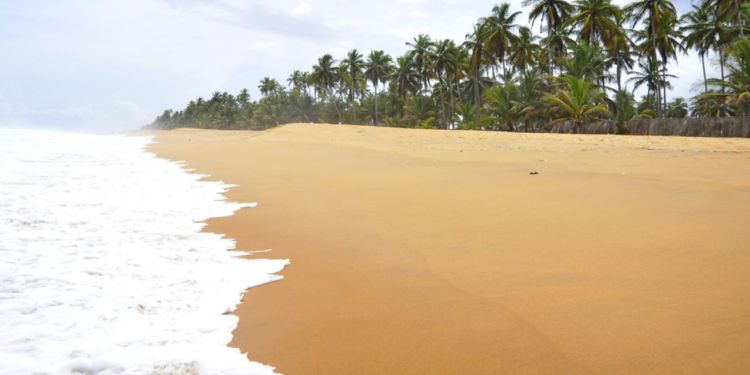
- Beach Lifestyle: Enjoy miles of golden sandy beaches along the Atlantic Ocean, perfect for relaxation and water activities.
- Affordable Living: Benefit from lower housing costs compared to Abidjan while maintaining easy access to the city's amenities.
- English-Language Education: The International University of Grand-Bassam (IUGB) offers American-style higher education programs.
- Thriving Artisan Community: Discover local crafts, pottery, and traditional artwork in numerous workshops and markets.
Working in Grand-Bassam: Employment Opportunities and Work Permits
Grand-Bassam's economy is primarily driven by tourism, fishing, and artisanal crafts, with many residents commuting to Abidjan for employment in larger industries. Ivory Coast is the largest economy in the West African Economic and Monetary Union with a GDP of USD 86.5 billion (2024), offering promising prospects for skilled professionals.
Key Employment Sectors
The main employment opportunities in Grand-Bassam include hospitality and tourism, education (particularly at IUGB), and fishing industries. Many expatriates work in Abidjan in sectors such as telecommunications, finance, agriculture (cocoa and cashew processing), and oil and gas. The informal sector employs over 90% of the workforce, particularly in retail and services.
Work Permits and Visas
Foreign nationals planning to work in Ivory Coast for more than 90 days must obtain a work permit and residence card. The employer must first advertise the position locally for one month. Required documents include a valid passport (minimum 6 months validity), employment contract, yellow fever vaccination certificate, medical certificate, and criminal record check. Processing takes approximately 6 to 8 weeks through the Agence Emploi Jeunes (AEJ). Work permits are valid for one year and renewable annually.
The following table summarizes key employment indicators:
Unemployment rate (2024) | 2.3% |
Minimum wage (non-agricultural) | CFA 75,000/month (~USD 120) |
Average monthly salary | CFA 337,000 (~USD 534) |
Sources: World Bank, WageIndicator
Work in Grand-Bassam
Looking for a job in Grand-Bassam? Here are some tips on this major Ivorian city's labor market.
Higher Education in Grand-Bassam: Universities and International Programs
Grand-Bassam is home to one of West Africa's most distinctive higher education institutions, the International University of Grand-Bassam (IUGB). Founded in 2005 and officially accredited in 2007, IUGB offers an American-style curriculum entirely in English, making it an attractive option for international students and English-speaking expatriates.
International University of Grand-Bassam (IUGB)
IUGB is a non-profit institution partnered with Georgia State University (USA). The university enrolls approximately 870 students from 23 nationalities, with 46% female enrollment. Programs are offered through two schools: the School of Business and Social Sciences (BSS) and the School of Science, Technology, Engineering, and Mathematics (STEM). Bachelor's degrees include Business Administration, Computer Science, Data Science, Economics, Mathematics, and Political Science. The University Preparatory Program (UPP) helps students improve English, mathematics, and technology skills before entering degree programs.
Tuition and Admission
Annual tuition at IUGB ranges from CFA 2,400,000 to CFA 3,456,000 (~USD 3,800 to USD 5,500) depending on student origin (ECOWAS or non-ECOWAS). On-campus housing and board cost approximately CFA 750,000 per semester (~USD 1,200). Admission requires a high school diploma, TOEFL score (minimum 71 ITP), and completed application forms. Scholarships and family reduction programs are available for eligible students.
Sources: IUGB Official Website, QS Top Universities
Schools for Expat Children: International and Bilingual Options
While Grand-Bassam itself has limited international schooling options, families can access excellent educational facilities in nearby Abidjan, just 40 minutes away by car. The Ivorian education system follows the French model, with primary school lasting six years and secondary school spanning seven years, culminating in the baccalauréat.
International Schools in Abidjan
The International Community School of Abidjan (ICSA), founded in 1972, offers an American-style curriculum from pre-kindergarten through grade 12. With over 60 nationalities represented, ICSA provides a truly international environment. Annual tuition ranges from USD 9,350 to USD 15,950 depending on grade level. The school year runs from late August to mid-June.
Other notable options include International Bilingual Schools of Africa (IBSA), offering French-English bilingual education from age 2 with annual fees around USD 4,000. The International English School of Abidjan (IESA) follows the Cambridge International curriculum with IGCSE and A-Level programs. WAAPC American School provides US K-12 curriculum with tuition from USD 6,500 to USD 10,800 per year.
Enrollment Requirements
International schools typically require birth certificate, previous school records, immunization records, passport copies, and application fees. Most schools conduct entrance assessments for English and mathematics proficiency. Early application is recommended as popular schools fill quickly, especially for primary grades.
Housing in Grand-Bassam: Neighborhoods and Rental Prices
Grand-Bassam offers a range of housing options, from colonial-era buildings in the historic quarter to modern villas near the beach. The town is divided into two main areas: Ancien Bassam (the historic French settlement facing the ocean) and Nouveau Bassam (the modern commercial center north of the lagoon), connected by a bridge.
Expat-Friendly Neighborhoods
Ancien Bassam appeals to those seeking character homes with colonial architecture, proximity to beaches, and a quieter atmosphere. Nouveau Bassam offers more modern amenities, local markets, and easier access to transportation. Many expatriates also choose to live in Abidjan suburbs like Cocody or Zone 4 and commute to Grand-Bassam for work or leisure.
Rental Prices
Rental costs in Grand-Bassam are generally 20-30% lower than central Abidjan. Budget for the following monthly ranges:
1-bedroom apartment (town center) | CFA 150,000–300,000 (~USD 240–480) |
3-bedroom house (town center) | CFA 400,000–800,000 (~USD 640–1,280) |
Beachfront villa | CFA 600,000–1,500,000 (~USD 960–2,400) |
Rental agreements typically require 2-3 months deposit plus first month's rent. Utilities (electricity, water, internet) average CFA 80,000–150,000 monthly for a standard apartment. Hotel accommodations for short-term stays start from approximately USD 49 per night.
Sources: Numbeo, local real estate listings
Accommodation in Grand-Bassam
Wondering how to find accommodation in Grand-Bassam? Here is an overview of its rental market.
Leisure, Culture, and Things to Do in Grand-Bassam
Grand-Bassam offers a rich tapestry of historical attractions, beach activities, and cultural experiences that make it one of Ivory Coast's top destinations. Whether you prefer exploring colonial architecture or relaxing on golden sands, the town has something for everyone.
Must-See Attractions
The Historic District (Quartier France) features well-preserved colonial buildings including the former Governor's Palace, now home to the National Museum of Costume showcasing traditional Ivorian clothing and cultural artifacts. The Victory Bridge (Pont de la Victoire), also known as the Eiffel Bridge, connects the historic quarter to the modern town and holds significant historical importance. Don't miss the Grand-Bassam Lighthouse, built between 1913-1914, currently under restoration.
Beach Life and Outdoor Activities
Grand-Bassam Beach stretches for miles along the Atlantic coast, lined with restaurants, beach bars, and thatched umbrellas. Popular activities include swimming (be cautious of strong currents), lagoon boat tours, and horseback riding (available Saturday afternoons). The nearby Sacred Forest of Aboure offers a spiritual and natural experience just outside town.
Arts, Crafts, and Nightlife
The Artisan Village on the western edge of town features hundreds of stalls selling handmade pottery, traditional sculptures, batik fabrics, and jewelry. The Grand-Bassam Ceramic Center offers workshops where visitors can learn traditional techniques. For evening entertainment, venues like Epilogue nightclub host live music and karaoke nights. Local restaurants serve fresh seafood and traditional Ivorian dishes like attieke (cassava couscous) and kedjenou (slow-cooked chicken).
Sources: UNESCO World Heritage Centre, Trip in Africa
Daily Life in Grand-Bassam: Transportation and Local Culture
Daily life in Grand-Bassam moves at a relaxed pace compared to Abidjan, with locals and visitors enjoying the blend of beach culture, colonial heritage, and traditional N'Zima village life. The town offers essential amenities while maintaining its small-town charm.
Getting Around
Grand-Bassam is 45 minutes by road from Abidjan (approximately 40 km). Transportation options include:
- Bush taxis (woro-woro): Shared taxis from Gare de Bassam in Abidjan cost approximately CFA 500 (~USD 0.80).
- Gbaka minibuses: Regular services connecting Grand-Bassam to Abidjan, journey time around 1 hour 15 minutes.
- Private taxis: From Abidjan cost USD 35–50, taking approximately 35-40 minutes.
- From the airport: Félix Houphouët-Boigny International Airport is just 17 miles away (~22 minutes by taxi).
Within town, the historic area is compact and walkable. Local bush taxis are available for longer distances.
Cultural Particularities
Grand-Bassam hosts the annual Fête des Génies de l'Eau (Abissa Festival) in late October or early November, when the N'Zima people honor their ancestors in colorful celebrations. French is the official language, though Dyula and local languages are widely spoken. The local currency is the West African CFA franc (XOF), pegged to the Euro. Banking services and ATMs are available in town.
Sources: Wikivoyage, Rome2Rio
Cost of Living in Grand-Bassam: Monthly Budget Guide
Grand-Bassam offers a moderate cost of living that is generally lower than Abidjan and significantly more affordable than major Western cities. The West African CFA franc (XOF) is pegged to the Euro at a fixed rate, providing currency stability for financial planning.
Monthly Budget for a Single Person
The following table outlines typical monthly expenses for a single expatriate:
Category | Amount (CFA) | Amount (USD) |
Rent (1-bedroom) | 200,000 | 320 |
Utilities | 80,000 | 128 |
Groceries | 150,000 | 240 |
Transportation | 50,000 | 80 |
Dining out | 60,000 | 96 |
Total | 540,000 | ~864 |
Monthly Budget for a Family of Four
Category | Amount (CFA) | Amount (USD) |
Rent (3-bedroom) | 600,000 | 960 |
Utilities | 150,000 | 240 |
Groceries | 350,000 | 560 |
Transportation | 100,000 | 160 |
School fees (per child) | 800,000 | 1,280 |
Health insurance | 200,000 | 320 |
Total | 2,200,000 | ~3,520 |
Sources: Numbeo, World Bank
In Short
Grand-Bassam offers a unique expatriate experience that combines UNESCO-recognized heritage, Atlantic beaches, and an affordable cost of living just 40 minutes from Abidjan's business opportunities. The presence of the International University of Grand-Bassam provides English-language higher education, while international schools in nearby Abidjan serve expatriate families. Whether you're drawn by the colonial architecture, the relaxed beach lifestyle, or the vibrant artisan community, Grand-Bassam delivers an authentic West African experience with modern conveniences. The town's ongoing UNESCO-supported development ensures this historic gem continues to thrive while preserving its remarkable heritage.
Ready to connect with others who have made the move? Join the Expat.com Ivory Coast forum to ask questions, share experiences, and build your network in Grand-Bassam and beyond.
We do our best to provide accurate and up to date information. However, if you have noticed any inaccuracies in this content, please contact us.


Essential services for your expat journey