

Living in Sharm el Sheikh: the ultimate expat guide
Everything you need to know for a successful life in Sharm el Sheikh.
Sharm el Sheikh sits at the southern tip of Egypt's Sinai Peninsula, where the desert meets the crystal-clear waters of the Red Sea. This resort city has transformed from a small fishing village into a world-renowned destination, attracting expats seeking sun, sea, and a relaxed lifestyle. With a population of approximately 73,000 residents, the city offers a unique blend of international tourism infrastructure and local Egyptian culture.
Why Choose Sharm el Sheikh?
The city enjoys year-round sunshine with warm temperatures averaging 25°C to 35°C in summer and 15°C to 25°C in winter. English is widely spoken in tourist and business areas, making daily life accessible for newcomers. The cost of living remains significantly lower than major Western cities, allowing for a comfortable lifestyle on a modest budget.
5 Good Reasons to Move to Sharm el Sheikh
- World-class diving and snorkeling – Access to some of the planet's best coral reefs, including Ras Mohammed National Park.
- Affordable cost of living – Housing, food, and entertainment cost a fraction of prices in Europe or North America.
- Safe environment – The city benefits from strong security presence and a welcoming community.
- International community – A diverse expat population from the UK, Russia, Italy, and beyond.
- Year-round warm climate – Escape cold winters with over 300 sunny days annually.
Working in Sharm el Sheikh: Career Opportunities by the Red Sea
Employment in Sharm el Sheikh centers predominantly on the tourism and hospitality sector, which drives the local economy. International hotel chains, dive centers, and tour operators provide the majority of opportunities for foreign workers. Understanding the job market and visa requirements is essential before relocating.
Key Employment Sectors
The hospitality industry employs the largest number of expats in roles such as guest relations officers, hotel management, diving instructors, and animation staff. Languages are highly valued—fluency in Russian, Italian, German, or French significantly increases employability given the tourist demographics. Dive centers actively recruit PADI-certified instructors and divemasters, with opportunities available year-round. Other sectors include real estate, retail, and food service.
Work Permits and Regulations
Foreign nationals require both a work visa and work permit to be legally employed in Egypt. The employer typically initiates the application through the Ministry of Manpower and Immigration. Work permits are valid for one year and renewable for up to three years. Egyptian labor law limits foreign workers to 10% of a company's workforce and 20% of total payroll. Applicants must undergo an HIV test at a certified facility. The process takes approximately 1 to 3 months from start to finish.
The following table provides key employment indicators for Egypt:
Unemployment Rate (2024) | 6.6% |
Average Monthly Salary (Hospitality) | EGP 6,340 (~USD 130) |
Minimum Wage (2025) | EGP 7,000 (~USD 140) |
Sources: CAPMAS, Trading Economics
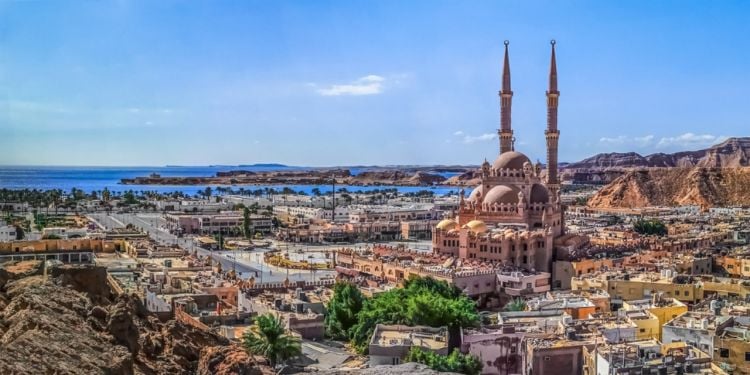
Work in Sharm el-Sheikh
If you are planning to settle and work in Sharm el-Sheikh, here is what you need to know about its labor market.
Higher Education in Sharm el Sheikh: Universities and Programs
Higher education options in Sharm el Sheikh have expanded significantly with the establishment of King Salman International University (KSIU), Egypt's first smart university in South Sinai. International students can now pursue degree programs without relocating to Cairo, benefiting from modern facilities and proximity to the Red Sea's natural resources.
King Salman International University – Sharm el Sheikh Campus
Established in 2020 by presidential decree, KSIU operates across three campuses in South Sinai: El Tor, Sharm el Sheikh, and Ras Sidr. The Sharm el Sheikh campus specializes in programs aligned with the region's economic strengths. Available faculties include Tourism and Hospitality, Administrative Sciences, Al-Alsun and Applied Languages, Art and Design, Architecture, and Physical Therapy. The university follows a credit-hour system with academic guidance to support student progress.
Admission and Tuition
KSIU accepts both Egyptian and international students. The university has established partnerships with prestigious institutions worldwide, offering dual degree programs and exchange opportunities. Tuition fees vary by program but remain competitive compared to private universities in Cairo. Scholarships based on academic merit and financial need are available for qualifying students. For current program offerings and application deadlines, visit the official university website.
Retiring in Sharm el Sheikh: A Sunny Retirement Destination
Sharm el Sheikh attracts a growing number of retirees seeking affordable living, warm weather, and a relaxed lifestyle. While Egypt does not offer a specific retirement visa, pathways exist for long-term residency that make retiring here feasible.
Residency Options for Retirees
Foreign nationals can apply for a residence permit valid for up to five years, renewable upon proof of continued financial stability. Applicants must demonstrate sufficient income or savings to support their lifestyle. After ten years of continuous residence, expats may apply for Egyptian citizenship. Property ownership can facilitate residency; however, foreigners must hold property for at least five years before selling. Tourist visas allow 30-day stays and can be renewed, though long-term residents should pursue proper residency status.
Healthcare for Retirees
Medical facilities in Sharm el Sheikh have improved significantly. Sharm el Sheikh International Hospital, a government facility, is JCI-accredited and designated as Egypt's first green hospital model. South Sinai Hospital offers private healthcare with modern equipment and specialists from Cairo teaching hospitals. Sinai Clinic Hospital provides services with English-speaking staff and patient transfer assistance. Many retirees opt for private health insurance, which remains affordable compared to Western countries. For complex procedures, Cairo's world-class hospitals are a one-hour flight away.
Why Retirees Choose Sharm el Sheikh
The combination of low costs, year-round sunshine, active social scene, and outdoor lifestyle appeals to retirees from across Europe. The welcoming expat community provides social support, while the climate benefits those with certain health conditions. Pensions and savings stretch considerably further here than in most Western countries.
Schools in Sharm el Sheikh: Education for Expat Families
Families relocating to Sharm el Sheikh will find educational options ranging from international schools following British curricula to local Egyptian schools. While the selection is more limited than in Cairo, quality institutions exist to serve the expat community's needs.
International Schools
Sharm International British School (SIBS) is the city's primary international option, located in Naama Bay. The school serves students aged 2 to 17 years and follows the National Curriculum for England and Wales combined with the Cambridge International curriculum. All instruction is delivered by UK-qualified, native English-speaking teachers supported by teaching assistants. Class sizes remain small to maximize individual attention. The curriculum includes Arabic language and Islamic studies alongside core subjects. The school is registered with the Egyptian Ministry of Social Affairs as a non-profit entity and collaborates with the British Council of Egypt and Pearson Edexcel.
Enrollment and Fees
Private preschool and kindergarten fees in Sharm el Sheikh average approximately EGP 5,500 per month (~USD 110). International school annual tuition varies but remains considerably lower than equivalent institutions in major cities. Enrollment typically requires a copy of the child's passport, previous school records, and vaccination certificates. Contact schools directly for current fee structures and availability, as spaces can be limited.
Sources: Sharm International British School, Numbeo
Housing in Sharm el Sheikh: Neighborhoods and Rental Guide
Finding accommodation in Sharm el Sheikh is relatively straightforward, with options ranging from modern apartments within resort compounds to standalone villas. Rental prices remain affordable by international standards, though they have increased in recent years with the city's development.
Popular Neighborhoods for Expats
Naama Bay serves as the city's main hub, offering convenient access to shops, restaurants, nightlife, and the beach promenade. It is ideal for those who prefer a walkable lifestyle. Hadaba (El Hadaba) is a quieter residential area popular with long-term expats, featuring local markets and more affordable housing options. Nabq Bay has developed rapidly with modern compounds and five-star resorts. Many British expats reside here, attracted by amenities including supermarkets like Metro and Ragab Sons. Sharks Bay offers proximity to excellent snorkeling spots and a more relaxed atmosphere. Sharm el Maya (Old Market) provides a local Egyptian experience with vibrant souks and access to the port.
Rental Prices and Process
Apartments are typically rented furnished, with utilities sometimes included. The rental market favors negotiation, and many expats find accommodation through word of mouth or local agents.
1-Bedroom Apartment (City Center) | EGP 16,500–20,000/month (~USD 330–400) |
1-Bedroom Apartment (Outside Center) | EGP 12,000–16,000/month (~USD 240–320) |
3-Bedroom Apartment (City Center) | EGP 27,500–35,000/month (~USD 550–700) |
Sources: Numbeo 2025
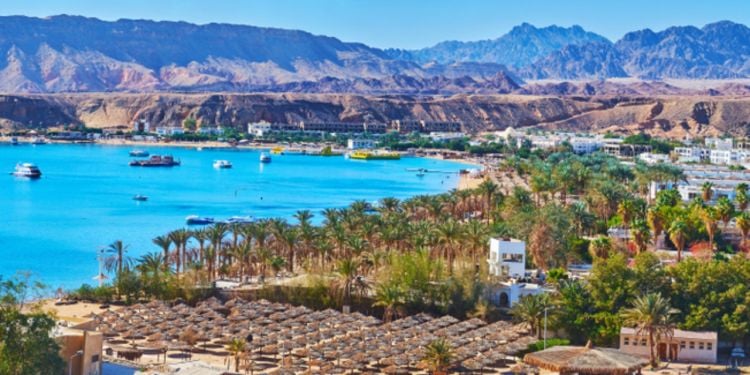
Accommodation in Sharm el-Sheikh
Looking for accommodation in Sharm el-Sheikh? Find all that you need to know about its rental market in this article.
Leisure and Culture: Things to Do in Sharm el Sheikh
Sharm el Sheikh offers a wealth of activities centered on its spectacular natural environment and international resort infrastructure. From world-class diving to desert adventures, boredom is not an option.
Diving and Snorkeling
The Red Sea's coral reefs are the city's crown jewels. Ras Mohammed National Park, Egypt's first marine reserve established in 1989, lies just 12 km south of the city. It features over 220 types of coral and 1,000 species of fish. The SS Thistlegorm wreck, a British cargo ship sunk in 1941, ranks among the world's top dive sites. Tiran Island offers four spectacular reefs with opportunities to spot sharks and sea turtles. Numerous PADI-certified dive centers operate throughout the city, catering to beginners and experts alike. Snorkeling is accessible directly from many beaches, including Ras Um Sid and Sharks Bay.
Desert Adventures and Cultural Experiences
Safari excursions into the Sinai desert provide camel rides, Bedouin dinners under the stars, and quad biking. Overnight trips to Mount Sinai and St. Catherine's Monastery offer spiritual and historical significance. The Old Market (Sharm el Maya) presents traditional souvenirs, spices, and authentic Egyptian atmosphere.
Entertainment and Nightlife
Naama Bay hosts the city's vibrant nightlife scene with clubs like Pacha and Hard Rock Café. SOHO Square features shopping, dining, restaurants, and a dancing fountain show. Farsha Café in Hadaba offers a unique cliffside shisha experience with Red Sea views. For families, Hollywood Sharm el Sheikh amusement park and various water parks provide entertainment.
Daily Life in Sharm el Sheikh: Getting Around and Local Culture
Daily life in Sharm el Sheikh follows a relaxed rhythm shaped by the warm climate and tourism-oriented economy. Understanding transportation options and cultural nuances will help newcomers settle in smoothly.
Transportation
Public transportation is limited compared to larger cities. Minibuses operate along main roads—simply wave to flag one down. They provide the cheapest option but follow irregular schedules. Taxis are the most common transport method and are readily available throughout the city. Always negotiate the fare before departure as meters are rarely used. A typical ride within the city costs EGP 20–50 (~USD 0.50–1). Many expats opt for car rentals, which are economical and provide flexibility for exploring the region. Sharm el Sheikh International Airport (SSH) lies approximately 12 km north of the city center, with transfers to Naama Bay taking around 15–20 minutes. No trains serve Sharm el Sheikh; buses connect to Cairo and other Egyptian cities for longer journeys.
Cultural Tips and Lifestyle
Residents typically avoid outdoor activities during peak afternoon heat, with social life picking up after sunset. Evenings are lively, with filled cafes and restaurants along the promenades. Friday is the main day of rest and prayer. During Ramadan, expect adjusted business hours and quieter daytimes. While Sharm is more relaxed than other parts of Egypt regarding dress codes, modest attire is appreciated outside beach and resort areas. Tipping (baksheesh) is customary for services. The expat community is welcoming—online groups and local meetups provide networking opportunities for newcomers.
Cost of Living in Sharm el Sheikh: Monthly Budget Breakdown
One of Sharm el Sheikh's greatest appeals is its affordability. Living costs are approximately 59% lower than in the United States and significantly below Western European levels. This section provides realistic budget estimates for singles and families.
Monthly Budget for a Single Person
A comfortable lifestyle for one person is achievable on USD 800–1,200 per month, including rent. Those willing to live more modestly can manage on less.
Expense Category | Monthly Cost (USD) | Monthly Cost (EGP) |
Rent (1-bedroom, center) | USD 330–400 | EGP 16,500–20,000 |
Groceries | USD 150–200 | EGP 7,500–10,000 |
Dining Out (occasional) | USD 80–120 | EGP 4,000–6,000 |
Transport (taxi/fuel) | USD 50–100 | EGP 2,500–5,000 |
Utilities & Internet | USD 50–80 | EGP 2,500–4,000 |
Health Insurance | USD 50–100 | EGP 2,500–5,000 |
Monthly Budget for a Family of Four
Expense Category | Monthly Cost (USD) | Monthly Cost (EGP) |
Rent (3-bedroom, center) | USD 550–700 | EGP 27,500–35,000 |
Groceries | USD 350–450 | EGP 17,500–22,500 |
International School (2 children) | USD 400–600 | EGP 20,000–30,000 |
Transport | USD 100–150 | EGP 5,000–7,500 |
Utilities & Internet | USD 80–120 | EGP 4,000–6,000 |
Health Insurance (family) | USD 150–250 | EGP 7,500–12,500 |
Sources: Numbeo 2025, LivingCost.org
In Short
Sharm el Sheikh offers a unique proposition for expats: stunning natural beauty, affordable living, and a welcoming international community at the edge of the Red Sea. Whether you're drawn by world-class diving, career opportunities in hospitality, or simply the prospect of trading grey skies for endless sunshine, this Egyptian resort city delivers. The cost of living allows for a comfortable lifestyle, while modern amenities ensure you won't feel cut off from the world. Yes, it's different from life in a major metropolis—but for many, that's precisely the appeal. Ready to explore your options? Join the Sharm el Sheikh community on Expat.com to connect with fellow expats, ask questions, and get insider tips for your move to the Red Sea.
We do our best to provide accurate and up to date information. However, if you have noticed any inaccuracies in this content, please contact us.


Essential services for your expat journey



