


 Guide updated by Veedushi Bissessur on 16 November 2026
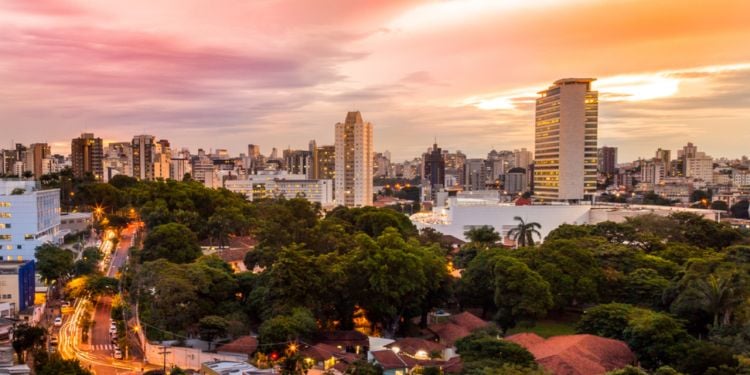
Belo Horizonte, known locally as BH, is the capital of the state of Minas Gerais in south-east Brazil. It is a large, planned city set among green hills, about 850 metres above sea level. Many newcomers choose it because it offers big-city services at a lower cost than São Paulo or Rio de Janeiro.
5 good reasons to move to Belo Horizonte
- Lower living costs: everyday costs, excluding rent, are about 20% lower than in São Paulo.
- Affordable rent: a one-bedroom flat in the centre costs about BRL 2,990 (~USD 548) a month.
- Strong universities: the federal university UFMG offers free tuition and ranks among Brazil's best.
- A broad job market: BH is a hub for services, mining, industry and the San Pedro Valley tech scene.
- Culture and food: the Pampulha Modern Ensemble is a UNESCO World Heritage Site, and UNESCO also named BH a Creative City of Gastronomy.
Your setup journey
Guide in 8 steps. Click any step below to jump directly to the section you need.
01Working in Belo Horizonte: Jobs, Key Industries and Permits
Belo Horizonte has one of the healthier job markets among Brazil's big cities. Unemployment is below the national average, and incomes are higher than in the rest of Minas Gerais. Most roles still require good Portuguese, so language skills are your main asset.
The job market in figures
The table below shows the main labour indicators for the city in 2026. The income figure is the average monthly pay from all work, as measured by the national household survey. The minimum wage applies across the whole country.
Unemployment rate, Belo Horizonte (Q2 2026) | 4.4% (Brazil: 5.4%) |
Average monthly income from work (Q2 2026) | BRL 5,321 (~USD 975) |
Average net salary after tax (Numbeo) | BRL 3,692 (~USD 676) |
National minimum wage (2026) | BRL 1,621 a month (~USD 297) |
Main sectors | Services, tech and startups, mining, steel and car industry |
Sources: IBGE PNAD Contínua Q2 2026 via Diário do Comércio, Decree No. 12,797/2025 (Planalto), Numbeo – Belo Horizonte (November 2026)
Key industries
Services drive most of the local economy and most new businesses. Technology is the fastest-growing niche. The San Pedro Valley community, started in 2011 in the São Pedro district, groups about 429 startups, eight accelerators and five incubators, according to the city hall. Google has run an engineering centre in BH since 2005, and well-known Brazilian firms such as Hotmart, Sympla and Méliuz started here. The city's investor desk also targets biotechnology, the creative economy, the green economy and fashion. Across the metro area, steel, the car industry in Betim and iron-ore mining remain big employers. Minas Gerais has Brazil's third-largest economy, worth about BRL 700 billion.
Work permits and residence
Brazil has no free-movement scheme for foreigners. If you plan to stay longer than 90 days, you need a temporary visa (VITEM) or a residence authorisation, and you must register with the Polícia Federal within 90 days of arrival to get your CRNM (national migration ID card). Your employer or a Brazilian consulate can tell you which permit fits your job offer.
Starting a business
BH is an easy place to register a company. Between January and April 2026, 12,286 new companies opened in the city, up 10.36% on a year earlier. The average time to open a business was about 9 hours. The usual steps are: get a CPF tax number, run a viability check with the city through Redesim, register with the Junta Comercial (JUCEMG), obtain a CNPJ from the federal tax office and then apply for local licences. Official 2026 fees were not available, so check them with JUCEMG before you start.
Discover more
02Housing & Neighbourhoods: Where to Live in Belo Horizonte
Renting in Belo Horizonte is affordable by Brazilian big-city standards. In August 2026, the average residential rent was BRL 50.38 per m² (~USD 9.23), below the average of the 36 cities tracked by the FipeZap index. Rents still rose 7.45% over 12 months, so budget for increases.
Types of housing
Most expats rent an apartment in a residential building, often with a doorman (portaria) and a monthly building fee (condomínio). A one-bedroom flat in the centre costs about BRL 2,990 (~USD 548) a month, against BRL 1,709 (~USD 313) outside the centre. Families looking for space often rent a three-bedroom flat at BRL 4,521 (~USD 828) in the centre or BRL 3,208 (~USD 588) further out. Houses in gated communities (condomínios fechados) are mostly found on the outskirts and in Nova Lima. If you prefer to buy, central flats cost around BRL 12,130 per m² (~USD 2,222).
Popular neighbourhoods
The most sought-after areas are in the Centro-Sul (south-central) region. Savassi and Lourdes are lively and close to shops and restaurants. Belvedere is quieter and modern, while Funcionários and Santo Agostinho are central and well served. Buritis, in the west, is home to the American school. The table below lists the five most expensive areas by rent per m² in August 2026.
Neighbourhood | Region | Rent per m² (BRL) | Rent per m² (USD) |
Santo Agostinho | Centro-Sul | 73.40 | 13.44 |
Savassi | Centro-Sul | 69.00 | 12.64 |
Belvedere | Centro-Sul | 68.20 | 12.49 |
Lourdes | Centro-Sul | 68.00 | 12.45 |
Funcionários | Centro-Sul | 62.20 | 11.39 |
Buritis | Oeste | 53.10 | 9.73 |
Sources: FipeZap index via Diário do Comércio (September 2026)
Just outside the city limits, Nova Lima and its Vila da Serra district, next to Belvedere, attract many foreign families. Pampulha, in the north, is close to UFMG and the lake.
Average rents for planning
These Numbeo averages give a quick reference for your budget.
One-bedroom apartment, city centre | BRL 2,990 (~USD 548) |
One-bedroom apartment, outside centre | BRL 1,709 (~USD 313) |
Three-bedroom apartment, city centre | BRL 4,521 (~USD 828) |
Three-bedroom apartment, outside centre | BRL 3,208 (~USD 588) |
Sources: Numbeo – Belo Horizonte (November 2026)
Renting tips
Get your CPF tax number before you start viewing homes, as you will need it for most contracts and utilities. Always check the monthly condomínio fee and property tax on top of the rent, and visit the area at different times of day.
03Cost of Living in Belo Horizonte: What to Budget in 2026
Belo Horizonte is one of the more affordable large cities in Brazil. According to Numbeo, a single person spends about BRL 3,117 (~USD 571) a month, excluding rent, while a family of four spends about BRL 11,478 (~USD 2,102). Everyday costs in São Paulo are about 20.2% higher.
How BH compares
For people arriving from abroad, the gap is even wider. Numbeo estimates that living costs in Belo Horizonte, excluding rent, are 67.7% lower than in New York, and rents are about 89.8% lower. Keep in mind that local salaries are also lower: the average net salary after tax is about BRL 3,692 (~USD 676). If you earn a local wage, your budget will feel tighter than these comparisons suggest.
Budget for a single person
The table below shows typical monthly costs for one person living in a central one-bedroom flat. Food costs are included in the overall estimate above, as Numbeo does not publish a separate grocery total for single people.
Expense | BRL | USD |
Rent, one-bedroom, city centre | 2,990 | ~548 |
Utilities (electricity, water, waste, 85 m²) | 390 | ~71 |
Internet and mobile plan | 159 | ~29 |
Monthly public transport pass | 345 | ~63 |
Gym membership | 146 | ~27 |
Cinema ticket | 40 | ~7 |
Total living costs excluding rent | 3,117 | ~571 |
Sources: Numbeo – Belo Horizonte (November 2026)
Budget for a family of four
This second table shows the main monthly and yearly costs for a family with two children. School fees are by far the largest item if you choose an international school.
Expense | BRL | USD |
Rent, three-bedroom, city centre | 4,521 | ~828 |
Rent, three-bedroom, outside centre | 3,208 | ~588 |
Food and drinks at home (monthly) | ~3,640 | ~667 |
Utilities | 390 | ~71 |
Four monthly transport passes | 1,380 | ~253 |
Private full-day preschool (per child, monthly) | 2,300 | ~421 |
International primary school (per child, yearly) | 73,752 | ~13,508 |
Total living costs excluding rent | 11,478 | ~2,102 |
Sources: Numbeo – Belo Horizonte (November 2026), Numbeo cost estimator
Health insurance
Private health plans (planos de saúde) are regulated by the national health agency ANS. No official average price exists for BH, but national prices in 2026 range from about BRL 200 (~USD 37) to more than BRL 3,000 (~USD 549) per person each month, depending on age and cover. The ANS capped the 2026 increase for individual plans at 5.11%. Sources: Tribuna PR – ANS 2026, Monitor do Mercado (2026).
Money-saving tips
Living outside the centre can cut your rent by around 40%. Shopping at markets, using a monthly transport pass and eating the lunchtime set menus found in local restaurants also help keep costs down.
04Higher Education & Universities in Belo Horizonte
Belo Horizonte is one of Brazil's main student cities. It is home to a top federal university, a large Catholic university and a federal technology institute. Public federal universities do not charge tuition fees, which makes them very attractive for international students who speak Portuguese.
UFMG: the flagship public university
The Universidade Federal de Minas Gerais (UFMG) has its main campus in Pampulha. It offers more than 6,000 undergraduate places a year and over 70 master's and PhD programmes. In the QS World University Rankings 2026, UFMG placed 595th, up almost 80 places on the year before. Like all federal universities, it charges no tuition fees. Its international office, the Diretoria de Relações Internacionais (DRI), runs exchange calls and a buddy programme for international students. For admission routes, see the UFMG international admissions page.
Other institutions
The Pontifícia Universidade Católica de Minas Gerais (PUC Minas) is a private Catholic university with a wide range of courses. It also works with the city hall on training about migrants' rights. Fees vary by course, so ask the university directly for 2026 prices. The Centro Federal de Educação Tecnológica de Minas Gerais (CEFET-MG) is a federal institute known for engineering and technology. As a federal body, it is also tuition-free.
Admission and student visas
Brazilian students usually enter federal universities through the national exam ENEM and the SISU selection system. International students more often join through exchange agreements or specific calls. For exchanges, the steps are simple: get an acceptance letter from UFMG, apply for a student visa at a Brazilian consulate, then register with the Federal Police after arrival. UFMG does not accept exchange students without a student visa.
Student life and support
Places at federal universities are competitive. Courses such as Medicine, Law, Engineering and Computer Science at UFMG are among the best rated in Brazil, so entry scores are high. Once enrolled, international students get help from the DRI's welcome team. Its buddy programme pairs each newcomer with at least one UFMG student or staff member; applications for the second half of 2026 ran from 29 May to 10 June 2026. Living costs for students are also moderate, as a room or small flat outside the centre costs far less than in São Paulo.
Getting your degree recognised
Foreign degrees are not recognised automatically. A bachelor's degree needs revalidação, while a master's or PhD needs reconhecimento. All requests go through the Ministry of Education's Plataforma Carolina Bori. Medical degrees also require the Revalida exam. In BH, UFMG handles bachelor's revalidations under Edital UFMG No. 708/2026. Details are on the UFMG degree revalidation page and the Ministry of Education guide (September 2026).
05Schooling for Children: Local, Bilingual and International Options
Families moving to Belo Horizonte can choose between free public schools, private Brazilian schools and a small number of international options. Teaching in local schools is in Portuguese, so younger children usually adapt faster. Plan early, because international places are limited.
The Brazilian school system
Public schools, run by the city and by the state of Minas Gerais, are free and open to foreign children. The system has three stages: Educação Infantil (ages 0–5), Ensino Fundamental (ages 6–14) and Ensino Médio (ages 15–17), which ends with a diploma similar to a high school diploma. The school year runs from February to December. The state also launched the Minas Bilíngue programme in 2025, and it now runs in 30 state schools from the 2026 school year. Private nurseries are common: in 2026, a morning place in a private maternal (nursery class) cost on average BRL 1,658 (~USD 304) a month, up 5.7% on 2025. A full-day private preschool costs about BRL 2,300 (~USD 421), with prices ranging from BRL 1,200 to BRL 4,000.
International and bilingual schools
The best-known international school is the Escola Americana de Belo Horizonte (EABH) in the Buritis district. Founded in 1956, it is the only American school in Minas Gerais. It offers an American curriculum alongside the Brazilian one and has been an International Baccalaureate (IB) World School since 2008. A new bilingual English–Portuguese school from the Swiss International School (SIS) network will open in the Belvedere district in 2027, covering nursery to the end of secondary school.
The table below compares the main options with the fee data available in 2026. EABH does not publish its fees online, so the Numbeo average for international primary schools gives a useful benchmark.
School | Curriculum | Annual cost |
Escola Americana de Belo Horizonte (EABH) | American + Brazilian, IB | Not published – ask the school |
Swiss International School (opening 2027) | Bilingual English–Portuguese | Not yet published |
International primary schools (city average) | Various | BRL 73,752 (~USD 13,508) |
Public schools (city and state) | Brazilian, in Portuguese | Free |
Sources: International Baccalaureate – EABH, Estado de Minas – SIS Belvedere, Numbeo – Belo Horizonte (November 2026), Agência Minas – Minas Bilíngue
Enrolment tips
Contact international schools as soon as your move is confirmed, as waiting lists are common. Ask each school which documents it needs, such as school reports, vaccination records and your child's migration ID. For more details, visit the EABH website.
06Daily Life in Belo Horizonte: Transport, Food and Local Habits
Day-to-day life in Belo Horizonte is practical and relaxed. The city is hilly, so walking can be tiring, but buses, the metro and ride-hailing cover most needs. Food is a central part of local culture, and prices for basics stay reasonable.
Getting around
The Metrô BH has one main line, Line 1, which runs 29.8 km with 21 stations from Vilarinho in the north to Novo Eldorado in Contagem. The first two stations of Line 2, Nova Suíça and Amazonas, opened in July 2026, and the full line, with seven stations over 10.5 km to Barreiro, is due by 2028. A metro ride has cost BRL 6.00 (~USD 1.10) since July 2026, and integrated tickets with metropolitan buses cost BRL 10.40 to 14.20. City buses cost BRL 5.75 (~USD 1.05) per trip, and a monthly pass costs about BRL 345 (~USD 63). Taxis start at BRL 5.15, plus about BRL 4.31 per km.
Many residents drive. Petrol costs about BRL 6.49 (~USD 1.19) per litre, and a new compact car such as a VW Golf costs around BRL 117,000 (~USD 21,429). Traffic can be heavy at rush hour, so choose a home close to work or a metro station if you can.
Food and shopping
Supermarkets such as the local chain Supernosso stock everything you need. The historic Mercado Central downtown is the place for cheese, spices, cachaça and local snacks. Typical prices in November 2026 were BRL 5.02 for a litre of milk, BRL 11.55 for 12 eggs and BRL 40 (~USD 7) for a mid-range bottle of wine. A cheap restaurant meal costs about BRL 30 (~USD 5.50), and a cappuccino about BRL 11.55.
Local lifestyle
People from Minas Gerais, called mineiros, are known for being welcoming and fond of long meals with friends. Social life often centres on the boteco, a casual neighbourhood bar serving cold beer and snacks. The city has no beach, so weekends often mean trips to the countryside, parks or historic towns nearby.
Staying connected is cheap. A fibre internet plan of 60 Mbps or more costs about BRL 106 (~USD 19) a month. Numbeo also ranks BH's mobile plans as the second cheapest among the 170 cities it tracks across the Americas. Sources: Estado de Minas – Metrô BH (October 2026), Portal Tela – bus fares (July 2026), Numbeo – Belo Horizonte (November 2026).
07Leisure, Culture & Things To Do in Belo Horizonte
Belo Horizonte mixes modern architecture, football, nature and a strong food culture. Weekends are easy to fill, whether you prefer museums, lakeside walks or day trips to colonial towns. Many cultural venues are free or cheap.
A 2026 survey by the city tourism office, Belotur, found that 43.58% of visitors to Pampulha said its UNESCO status influenced their decision to come. The city is now investing in restoration work and new tourist signs around the lake.
Culture and heritage
The Pampulha Modern Ensemble, designed by Oscar Niemeyer with gardens by Burle Marx, became a UNESCO World Heritage Site on 17 July 2016. Highlights include the Church of Saint Francis of Assisi, the Pampulha Art Museum (a former casino), the Casa do Baile and the Casa Kubitschek. In the centre, the Circuito Liberdade groups several museums around the Praça da Liberdade. UNESCO has also named BH a Creative City of Gastronomy, and the city archives of its founding commission are part of the Memory of the World register.
Sport and outdoor life
Football is a passion here. The Mineirão stadium in Pampulha hosted matches of the 2013 Confederations Cup and the 2014 World Cup. The city has three main clubs: Atlético-MG, Cruzeiro and América-MG. Around the Pampulha lake, locals cycle, run and take the tourist boat Capivarã, which now offers sunset trips. A decree published in June 2026 set clear rules for tourist boats on the lake. The Parque das Mangabeiras, on the slopes of the Serra do Curral, is a candidate for UNESCO Global Geopark status. A gym membership costs about BRL 146 (~USD 27) a month.
Food and going out
Evenings often start at a boteco, where friends share snacks and cold beer. The Savassi and Lourdes areas have many bars and restaurants close together. The Mercado Central is a good place to try local cheese and cachaça. A meal for two at a mid-range restaurant costs about BRL 180 (~USD 33), and a pint of local draft beer about BRL 11.
Day trips
About 55 km away in Brumadinho, the Instituto Inhotim is a large open-air museum of contemporary art set in botanical gardens. Ouro Preto, a colonial gold-rush town listed by UNESCO, is an easy day trip with baroque churches and steep cobbled streets. Sources: Estado de Minas – Belotur survey (May 2026), Estado de Minas – Capivarã (June 2026), Diário do Comércio – Mangabeiras.
08In short
Belo Horizonte offers a rare balance in Brazil: the services of a major capital with lower rents and a calmer pace than São Paulo or Rio. You can find work in services, tech or industry, study for free at UFMG, and give your children an IB education at the American school. Weekends bring Niemeyer's Pampulha, football at the Mineirão, lively botecos and easy trips to Inhotim and Ouro Preto. Learning Portuguese will open many doors, and the welcoming mineiros make settling in easier. Ready to take the next step? Join the Expat.com Belo Horizonte forum to ask questions, share tips and meet people who already call BH home.
Join the Belo Horizonte community
Get regular tips and advice to make the most of your expat life
Essential services for your expat journey




Forum topics on living in Belo Horizonte
Discover forums topics on expat life in Belo Horizonte: join the conversation, ask your questions, get advice and share your experience.