

Living in Ankara: the ultimate expat guide
Everything you need to know for a successful life in Ankara.
Ankara, Turkey's capital city, offers a compelling alternative to the bustle of Istanbul. With a population of nearly 6 million, this modern metropolis combines political significance with a relaxed lifestyle and affordable living costs. Situated in the heart of Anatolia, Ankara serves as the country's administrative center and home to numerous embassies, international organizations, and government institutions.
The city features a continental climate with cold winters and hot, dry summers. Unlike coastal cities, Ankara provides a distinctly Turkish experience less influenced by tourism, allowing newcomers to integrate more authentically into local culture. The cost of living runs approximately 20-30% lower than Istanbul, making it particularly attractive for families and professionals seeking value without sacrificing urban amenities.
5 Good Reasons to Move to Ankara
- Affordable living costs – Housing, food, and daily expenses are significantly lower than in Istanbul or major European capitals.
- Strong job market – As the administrative capital, Ankara offers opportunities in government, education, defense, and technology sectors.
- Quality education – Home to prestigious universities and international schools serving the diplomatic community.
- Modern infrastructure – Efficient metro system, modern housing developments, and excellent healthcare facilities.
- Rich cultural heritage – World-class museums, ancient sites, and a vibrant arts scene often overlooked by tourists.
Working in Ankara
Ankara's economy centers on public administration, education, and defense industries. As Turkey's political capital, the city hosts all government ministries, foreign embassies, and numerous international organizations, creating substantial employment opportunities for skilled professionals. The technology and aerospace sectors have grown significantly, with major defense contractors and tech firms establishing headquarters here.
Key Employment Sectors
The government and public sector remains the largest employer, followed by education (with over 20 universities), defense and aerospace, and increasingly, information technology. International organizations, NGOs, and diplomatic missions frequently seek multilingual staff. Teaching English remains a popular option for native speakers, with positions available at language schools and universities.
Work Permits and Regulations
Foreign nationals require a work permit issued by the Ministry of Labor and Social Security before commencing employment. Your employer must sponsor the application, and the process typically takes 4-6 weeks. Initial permits are granted for one year and can be extended. After 8 years of continuous legal employment, you may apply for a permanent work permit. The permit fee is approximately TRY 4,000 (around USD 130).
The following table summarizes key employment indicators:
National unemployment rate | 8.5% (2025) |
Minimum gross monthly wage | TRY 26,005 (~USD 730) |
Average monthly salary | TRY 35,000 (~USD 910) |
Sources: Trading Economics, Invest in Turkey
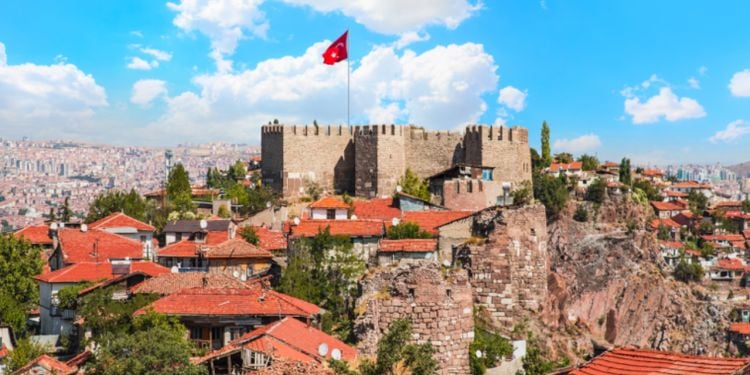
Working in Ankara
Ankara is Türkiye's political capital and second-largest city after Istanbul. Modern infrastructure and proximity to the nation's ...
Higher Education & Universities
Ankara stands as Turkey's academic capital, hosting some of the nation's most prestigious universities. International students benefit from relatively affordable tuition fees, diverse English-taught programs, and a supportive environment shaped by the city's cosmopolitan character. The concentration of embassies and international organizations also creates valuable networking and internship opportunities.
Top Universities in Ankara
Middle East Technical University (METU) consistently ranks among Turkey's best institutions, offering programs primarily in English across engineering, sciences, and social sciences. Hacettepe University excels in medical sciences and offers comprehensive English-taught graduate programs. Bilkent University, Turkey's first private nonprofit university, provides an entirely English-medium education modeled on American liberal arts traditions. Ankara University, founded in 1946, offers a broad range of programs with increasing English-language options.
Tuition Fees and Admission
Public universities charge international students between USD 300 and USD 2,500 annually for most programs, with medicine and dentistry costing USD 9,000-12,000. Private universities range from USD 6,000 to USD 20,000 per year. Most institutions require foreign students to pass the YÖS exam (Foreign Student Examination) or present SAT/IB scores. Application deadlines typically fall between April and July for fall enrollment.
For official admission requirements, visit: Ankara University International Students, Bilkent University, METU.
Schooling for Children
Families relocating to Ankara will find a strong selection of international schools catering to the diplomatic and expatriate community. Due to the high concentration of embassies, competition for places can be fierce, making early application essential. Turkish public schools are free but conduct instruction entirely in Turkish, making them challenging for non-Turkish-speaking children.
International Schools
Oasis International School (OIS) follows an American curriculum for ages 4-18 and serves over 400 students from more than 70 countries. British Embassy School Ankara (BESA) offers the English National Curriculum for ages 3-14. TED Ankara College provides IB programs alongside Turkish national curriculum, popular among both local and international families. Bilkent Laboratory and International School (BLIS) offers IGCSE and IB Diploma programs in a purpose-built campus setting.
Fees and Enrollment
Annual tuition at international schools ranges from USD 10,000 to USD 25,000 depending on grade level and institution. Additional costs include registration fees (typically USD 1,000-2,000), uniforms, transportation, and meals. Most schools require academic transcripts, recommendation letters, and assessment tests. Given Ankara's diplomatic community, waiting lists are common, so families should apply 6-12 months in advance when possible.
Sources: Oasis International School, Global Citizen Solutions
Housing & Neighbourhoods
Ankara offers diverse housing options at prices considerably lower than Istanbul. The rental market includes modern high-rise apartments, gated residential complexes (sites), and traditional Turkish homes. Most expats settle in central or upscale districts with proximity to embassies, international schools, and commercial areas. Lease agreements typically run for one year, with deposits of 1-3 months' rent required upfront.
Popular Neighborhoods for Expats
Çankaya is the most prestigious district, home to embassies, government buildings, and upscale residences. It offers green spaces, excellent restaurants, and international schools. Gaziosmanpaşa (GOP) features luxury apartments near diplomatic missions and fine dining. Oran provides modern apartment complexes with amenities and panoramic city views. Ümitköy is a quiet, family-friendly area with good schools and shopping centers. For more affordable options, Batıkent and Eryaman offer newer developments with metro access at lower prices.
Rental Prices
The following table shows average monthly rents:
1-bedroom apartment (city center) | TRY 15,000-25,000 (~USD 420-700) |
1-bedroom apartment (outside center) | TRY 10,000-15,000 (~USD 280-420) |
3-bedroom apartment (city center) | TRY 30,000-45,000 (~USD 840-1,260) |
3-bedroom apartment (outside center) | TRY 18,000-28,000 (~USD 500-780) |
Sources: Hepsiemlak
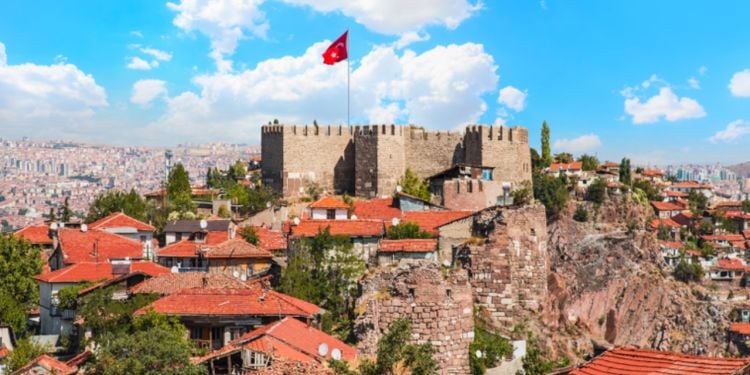
Accommodation in Ankara
Türkiye's second-largest city with over 5 million inhabitants, Ankara is first and foremost the country's political capital. The city is ...
Leisure, Culture & Things To Do
While often overshadowed by Istanbul's glamour, Ankara rewards curious residents with world-class museums, ancient heritage sites, and a thriving local arts scene. The city offers ample green spaces, vibrant nightlife in select districts, and cultural events throughout the year. Weekend escapes to Cappadocia (4 hours) or Black Sea towns add further appeal.
Museums and Historic Sites
Anıtkabir, the mausoleum of Mustafa Kemal Atatürk, is Turkey's most important national monument and a must-visit for understanding modern Turkish identity. The Museum of Anatolian Civilizations, housed in a restored Ottoman bazaar, displays extraordinary Hittite, Phrygian, and Neolithic artifacts. Ankara Castle offers panoramic city views and access to the historic Hamamönü district, where restored Ottoman houses now host cafés and artisan workshops. Rahmi M. Koç Museum showcases industrial heritage in a converted caravanserai.
Parks, Sports, and Nightlife
Gençlik Park features an artificial lake, walking paths, and family attractions near the train station. Seğmenler Park and Kuğulu Park (Swan Park) provide green retreats in the embassy district. Outdoor enthusiasts can explore Lake Eymir for cycling, jogging, and picnics. The Tunalı Hilmi and Kavaklıdere districts buzz with restaurants, bars, and live music venues. Annual events include the Ankara International Music Festival (April) and various cultural festivals throughout the year.
Sources: TripAdvisor Ankara, Holidify
Daily Life
Daily life in Ankara unfolds at a slower pace than Istanbul, offering a more authentically Turkish urban experience. The city combines modern conveniences with traditional culture, from bustling bazaars to contemporary shopping malls. Most residents work standard hours (09:00-18:00), with businesses typically closed on Sundays. Learning basic Turkish phrases significantly enhances daily interactions, though English is understood in diplomatic areas and upscale establishments.
Getting Around
Ankara boasts an efficient public transportation network operated by EGO. The metro system comprises four lines connecting major districts, operating from 06:00 to 01:00. The Ankaray light rail links the intercity bus terminal (AŞTİ) to the city center. Buses and minibuses (dolmuş) complement rail services. The AnkaraKart smart card is essential for all public transport and can be purchased at metro stations and kiosks. Taxis are affordable and readily available via apps like BiTaksi. Esenboğa International Airport lies 28 km northeast of the city center.
Cultural Particulars
Turkish hospitality runs deep, and neighbors often welcome newcomers with food or tea. Removing shoes before entering homes is customary. Tipping 10-15% is expected at restaurants. Shops and markets may close during Friday noon prayers. The local cuisine centers on kebabs, mantı (Turkish dumplings), and regional specialties like Ankara Tava (lamb casserole). Grocery shopping is convenient at chains like Migros, CarrefourSA, and local markets (pazar) held weekly in each neighborhood.
Cost of Living
Ankara remains one of Turkey's most affordable major cities, offering excellent value compared to Istanbul or Western European capitals. While inflation continues to affect prices, those earning in foreign currencies (USD, EUR, GBP) find considerable purchasing power. The following estimates provide a realistic monthly budget framework based on 2025 data.
Monthly Budget for a Single Person
The table below outlines typical monthly expenses for a single expat:
Rent (1-bedroom, city center) | USD 420-700 |
Utilities (electricity, water, heating, internet) | USD 80-120 |
Groceries | USD 200-300 |
Transportation | USD 40-60 |
Health insurance (private) | USD 50-100 |
Dining and leisure | USD 150-250 |
Total (single person) | USD 940-1,530 |
Monthly Budget for a Family of Four
Rent (3-bedroom, city center) | USD 840-1,260 |
Utilities | USD 120-180 |
Groceries | USD 400-550 |
Transportation | USD 80-120 |
International school fees (per child/month) | USD 850-2,100 |
Health insurance (family) | USD 150-300 |
Dining and leisure | USD 300-400 |
Total (family of 4, 2 children) | USD 3,590-6,010 |
Sources: Numbeo
In Short
Ankara offers a compelling package for expatriates seeking an affordable, authentic Turkish experience in a modern, well-organized city. As the nation's capital, it provides stable employment opportunities, excellent educational institutions, and a strong international community centered around the diplomatic district. The lower cost of living compared to Istanbul, combined with efficient infrastructure and rich cultural attractions, makes Ankara particularly attractive for families and professionals.
Whether you're drawn by career opportunities, academic pursuits, or simply a desire to experience Turkey beyond the tourist trail, Ankara delivers substance over flash. Connect with fellow expats and get insider advice on the Expat.com Ankara forum.
We do our best to provide accurate and up to date information. However, if you have noticed any inaccuracies in this content, please contact us.


Essential services for your expat journey



