

Living in Munich: the ultimate expat guide
Everything you need to know for a successful life in Munich.
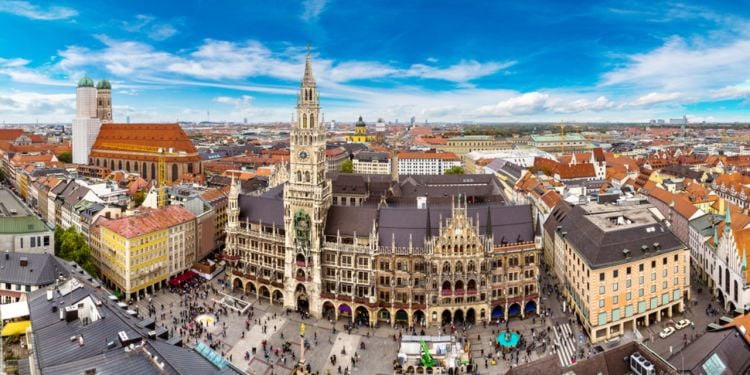
Munich, the capital of Bavaria, stands as Germany's third-largest city and one of Europe's most prosperous urban centres. Nestled close to the Alps, this city of 1.5 million residents combines economic strength with exceptional quality of life. Munich ranks consistently among the world's most liveable cities, offering clean streets, efficient public transport, abundant green spaces, and a rich cultural heritage that blends tradition with innovation.
The city serves as headquarters for global corporations including BMW, Siemens, Allianz, and Munich Re, making it a magnet for international professionals. With over 30% of residents being foreign-born and neighbourhoods featuring 20-40% expat populations, newcomers find a welcoming, cosmopolitan atmosphere. English is widely spoken in business settings and among younger residents, though learning German enhances daily life and career prospects.
Five Good Reasons to Move to Munich
- Economic powerhouse: Munich boasts Germany's lowest unemployment rate among major cities at just 4.5%, with thriving sectors in technology, automotive, finance, and biotechnology.
- Exceptional quality of life: Clean air, extensive parks including the famous English Garden, and proximity to Alpine hiking and skiing within an hour's drive.
- World-class education: Home to two of Germany's most prestigious universities (TUM and LMU) and numerous international schools.
- Rich cultural scene: From Oktoberfest to world-renowned museums, opera houses, and vibrant beer garden culture.
- Safety and efficiency: One of Germany's safest cities with excellent infrastructure and a reliable public transport network.
Working in Munich: Jobs, Industries and Work Permits
Munich's economy stands as one of Europe's strongest, offering abundant opportunities for skilled professionals. The city maintains Germany's lowest unemployment rate among major cities, creating a competitive job market that actively seeks international talent, particularly in technology, engineering, and healthcare sectors.
Key Industries and Employment Opportunities
The city's economic landscape is dominated by several thriving sectors. Automotive and engineering remain central, with BMW headquartered here alongside numerous suppliers and tech companies. The information technology sector has experienced remarkable growth, with Munich emerging as a major European tech hub attracting startups and established firms alike. Financial services and insurance employ thousands, with giants like Allianz and Munich Re based in the city. The biotechnology and life sciences sector continues expanding, supported by world-class research institutions.
Work Permits and the EU Blue Card
Non-EU citizens require a work visa to take employment in Germany. The EU Blue Card offers an attractive pathway for highly skilled professionals. As of 2025, applicants need a recognised university degree and a job offer with a minimum annual gross salary of €48,300 (or €43,759.80 for shortage occupations including IT specialists, engineers, and healthcare professionals). The Blue Card provides a path to permanent residency after just 21-27 months depending on German language proficiency. Germany's new Opportunity Card (Chancenkarte), introduced in 2024, allows skilled workers to enter Germany for up to 12 months to seek employment without a prior job offer.
Unemployment Rate (Munich) | 4.5% (2024) |
Average Gross Salary (Munich) | €56,200/year |
Key Sectors | IT, Automotive, Finance, Biotech, Engineering |
Sources: City of Munich, Make it in Germany
Working in Munich
Munich is the capital city of the state of Bavaria (Bayern), which is Germany's largest state with the second-largest population (13M) after ...
Higher Education and Universities in Munich
Munich hosts some of Europe's most prestigious universities, attracting students and researchers from around the world. The city's academic institutions maintain strong connections with industry leaders, creating excellent career pathways for graduates in fields ranging from engineering to medicine.
Top Universities
The Technical University of Munich (TUM) ranks among the world's leading technical universities and holds "University of Excellence" status. TUM offers over 60 English-taught programmes and maintains partnerships with major corporations including BMW and Siemens. Since winter 2024/25, non-EU students pay tuition fees of €1,500-€3,000 per semester, though numerous scholarships and fee waivers are available.
The Ludwig Maximilian University (LMU) is Germany's second-largest university with over 54,000 students. Founded in 1472, LMU offers more than 300 degree programmes and 30+ English-taught master's programmes. Remarkably, most programmes remain tuition-free for all students regardless of nationality, with only a semester contribution of approximately €85 required.
Admission and Fees
Both universities welcome international applicants. Requirements typically include recognised secondary school qualifications or bachelor's degrees, proof of English proficiency (IELTS 6.5+ or TOEFL 90+), and German language certification for German-taught programmes (usually DSH-2 or TestDaF TDN 4). Applications are processed through university portals or Uni-Assist for international students. Key intake periods are the winter semester (October start, apply April-July) and summer semester (April start, apply November-January).
Sources: Technical University of Munich, Ludwig Maximilian University
Study in Munich
Munich is a charming, multicultural city that has gained popularity among expats and international students. Firstly, it hosts prestigious ...
Schools and Education for Children in Munich
Families relocating to Munich find a robust education system with options ranging from excellent public schools to prestigious international institutions. Understanding the different pathways helps parents make informed decisions based on their family's needs and long-term plans.
German Public Schools
Germany's public school system is free and maintains high standards. Children typically attend Grundschule (primary school) from ages 6-10, then transition to secondary schools based on academic aptitude: Gymnasium (academic track leading to university), Realschule (intermediate), or Mittelschule (practical track). While instruction is entirely in German, many schools offer integration programmes for non-German-speaking children. The Bavarian school system is considered particularly rigorous.
International Schools
Munich offers 13 international schools providing curricula in English and other languages. The Munich International School (MIS), located in nearby Starnberg, offers the full IB programme from Pre-K to Grade 12, welcoming 1,300 students from over 60 nationalities. Annual tuition ranges from €11,534 to €23,408 depending on grade level. The Bavarian International School (BIS) operates two campuses in Schwabing and Haimhausen, serving 1,200 students with tuition from €16,340 to €22,090 annually. St. George's British International School follows the English National Curriculum and IB Diploma, with fees starting at €11,900. The European School Munich offers a multilingual European curriculum with more affordable fees around €5,000-€8,200 annually.
Sources: Munich International School, Bavarian International School, European School Munich
Housing and Neighbourhoods in Munich
Finding accommodation in Munich presents one of the biggest challenges for newcomers. As Germany's most expensive rental market, competition is fierce, and preparation is essential. Understanding the housing landscape and popular neighbourhoods helps navigate this competitive market.
Rental Market Overview
Munich's average rent stands at approximately €19.30 per square metre for cold rent (excluding utilities) as of 2025. Central neighbourhoods command €18-25 per square metre, while suburban areas offer €14-18 per square metre. For a one-bedroom apartment in the city centre, expect to pay €1,500-2,000 monthly; in the suburbs, €1,200-1,500. Three-bedroom apartments range from €2,800-3,500 centrally to €2,000-3,000 in outer districts. Prepare essential documents including proof of income, SCHUFA credit report, and identification. Most apartments are rented unfurnished, often without kitchens.
Popular Neighbourhoods for Expats
Schwabing and Maxvorstadt attract young professionals and academics with their proximity to universities, cultural venues, and the English Garden. Expect rents of €23-25 per square metre with 30-40% expat populations. Haidhausen offers a trendy, village-like atmosphere along the Isar River, popular with creative professionals and young families. Bogenhausen appeals to corporate executives and families seeking upscale, quieter surroundings near international schools, with 25-35% international residents. For budget-conscious newcomers, Giesing and Berg am Laim offer more affordable options while maintaining good transport connections.
1-bedroom (City Centre) | €1,500 - €2,000/month |
1-bedroom (Suburbs) | €1,200 - €1,500/month |
3-bedroom (City Centre) | €2,800 - €3,500/month |
3-bedroom (Suburbs) | €2,000 - €3,000/month |
Sources: Numbeo, ImmobilienScout24

Accommodation in Munich
Munich is one of Germany's most popular cities among expats due to its prosperous economy and thriving labor market characterized by low ...
Leisure, Culture and Things to Do in Munich
Munich offers an exceptional quality of life with diverse cultural, recreational, and social activities year-round. From world-class museums to vast urban parks and the famous Oktoberfest, residents enjoy countless ways to spend their free time.
Parks and Outdoor Activities
The English Garden (Englischer Garten) ranks among the world's largest urban parks, covering 3.7 square kilometres—larger than New York's Central Park. Highlights include the Eisbach wave where surfers ride a standing wave year-round, the Chinese Tower beer garden seating 7,000, and the Monopteros temple offering panoramic city views. Olympiapark, built for the 1972 Olympics, hosts concerts, festivals, and recreational activities including swimming and rowing. The Isar River provides cycling and walking paths extending southward toward the Alps, with popular swimming spots in summer.
Museums and Cultural Attractions
Munich's museum landscape rivals any European capital. The Deutsches Museum is the world's largest science and technology museum. The Pinakothek trio (Alte, Neue, and Moderne) houses masterpieces spanning centuries. The BMW Museum and BMW Welt showcase automotive history and innovation. Nymphenburg Palace and Residenz Munich offer glimpses into Bavarian royal history. Many museums offer €1 admission on Sundays.
Festivals and Nightlife
Oktoberfest draws over 6 million visitors annually for 16 days of beer tents, traditional music, and fairground rides at Theresienwiese. Christmas markets transform the city from late November through December. Year-round, the Glockenbachviertel offers trendy bars and clubs, while traditional beer halls like Hofbräuhaus provide authentic Bavarian experiences.
Sources: City of Munich Tourism, Deutsches Museum
Daily Life in Munich: Transport and Local Culture
Daily life in Munich blends efficiency with a distinctly Bavarian character. The city functions smoothly thanks to excellent infrastructure, while local traditions and outdoor culture create a unique lifestyle that newcomers quickly embrace.
Public Transportation
Munich's MVV network (Münchner Verkehrs- und Tarifverbund) ranks among Europe's best public transport systems. It integrates U-Bahn (metro), S-Bahn (commuter trains), trams, and buses into a seamless network covering the city and surrounding areas. The Deutschlandticket at €58 per month offers unlimited travel on all local and regional transport nationwide—exceptional value for daily commuters. Students benefit from reduced rates at €38 per month. Single tickets in Zone M (central Munich) cost around €3.50, while day tickets run €9.20. Most residential areas connect to the city centre within 30 minutes.
Lifestyle and Cultural Habits
Munich embraces outdoor living. Residents flock to beer gardens from spring through autumn, with the Chinese Tower in the English Garden seating 7,000. Sunday is traditionally family time, with most shops closed—plan grocery shopping accordingly. The city takes punctuality seriously; arriving late is considered disrespectful. Learning to separate waste into multiple recycling categories becomes second nature. Cash remains more common than in many countries, though card payments are increasingly accepted. The Bavarian greeting "Grüß Gott" replaces the standard German "Guten Tag" in most situations.
Sources: MVV Munich, City of Munich
Cost of Living in Munich: Monthly Budgets
Munich consistently ranks as Germany's most expensive city, though higher salaries typically offset the elevated costs. Understanding realistic budgets helps newcomers plan finances effectively before and after relocating.
Monthly Budget for a Single Person
A single professional should anticipate monthly expenses of €2,600-3,300 depending on lifestyle choices and housing location. Rent represents the largest expense, followed by utilities, food, and transportation.
Rent (1-bedroom, city) | €1,500 - €1,800 |
Utilities (electricity, heating, water) | €150 - €200 |
Groceries | €300 - €400 |
Public Transport (Deutschlandticket) | €58 |
Health Insurance | €80 - €400 |
Internet & Mobile | €50 - €60 |
Leisure & Dining Out | €200 - €400 |
Monthly Budget for a Family of Four
Families with children face significantly higher costs, particularly for housing and education if choosing international schools.
Rent (3-bedroom apartment) | €2,500 - €3,200 |
Utilities | €250 - €350 |
Groceries | €600 - €800 |
Public Transport (family) | €120 - €180 |
International School (per child/month) | €1,000 - €2,000 |
Health Insurance (family) | €300 - €800 |
Leisure & Activities | €400 - €600 |
Sources: Numbeo Munich, MVV Munich
In Short
Munich offers an exceptional combination of economic opportunity, safety, and quality of life that attracts professionals and families from around the world. While housing costs and competition for apartments require patience and preparation, the city rewards newcomers with a clean, efficient, and culturally rich environment. World-class universities, thriving industries in technology and engineering, excellent healthcare, and easy access to Alpine nature make Munich a compelling choice for international relocation. The strong expat community ensures you'll find support networks and familiar faces as you build your new life in Bavaria's capital.
Ready to connect with others who've made the move? Join the Munich forum on Expat.com to ask questions, share experiences, and get advice from fellow expatriates living in Munich.
We do our best to provide accurate and up to date information. However, if you have noticed any inaccuracies in this content, please contact us.


Essential services for your expat journey