

Living in Santa Ana: the ultimate expat guide
Everything you need to know for a successful life in Santa Ana.
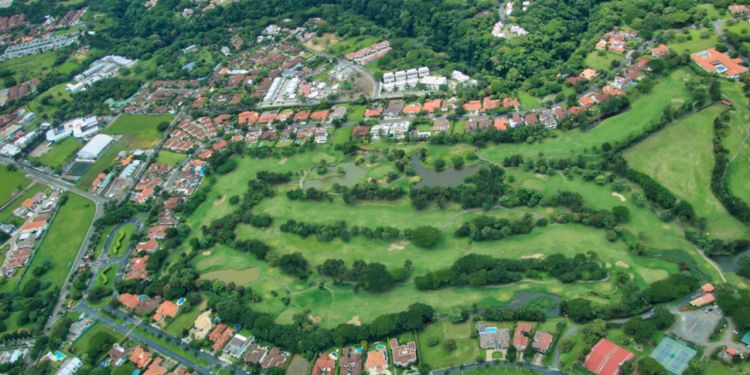
Santa Ana is a modern suburb nestled in Costa Rica's Central Valley, just 15 kilometers west of San José. Known locally as the "Valley of the Sun" for its warm, dry climate, this former agricultural town has transformed into one of the country's most desirable locations for expats and affluent Costa Ricans alike. At an elevation of approximately 900 meters, Santa Ana enjoys year-round mild temperatures averaging 22–27°C, with less humidity than coastal areas. The town preserves its traditional charm with ceramic pottery workshops and weekly farmers' markets while offering upscale shopping centers, international restaurants, and world-class healthcare facilities nearby.
5 Good Reasons to Move to Santa Ana
- Ideal climate: Enjoy consistent warm weather without the need for air conditioning or heating, reducing utility costs significantly.
- Strategic location: Just 15 minutes from downtown San José and 20 minutes from Juan Santamaría International Airport via the Próspero Fernández highway.
- Top-tier healthcare: Close proximity to CIMA Hospital, Clínica Bíblica Santa Ana, and Hospital Metropolitano—all offering international-standard medical care.
- Strong expat community: A well-established international population means English-speaking services, familiar amenities, and easy social integration.
- Modern amenities with local charm: Access shopping malls, gourmet restaurants, and international schools while enjoying traditional pottery workshops and Sunday farmers' markets.
Working in Santa Ana
Santa Ana and the broader Central Valley region serve as Costa Rica's economic hub, hosting numerous multinational corporations, tech companies, and free trade zones. While the town itself offers employment in commercial centers and corporate offices, many residents commute to nearby San José or Escazú for work. The country has made significant investments in technology and education, creating opportunities in IT, shared services, and medical devices manufacturing.
Employment Landscape
Costa Rica's unemployment rate dropped to 6.9% in Q4 2024, the lowest since 2010, reflecting strong economic recovery. Key employment sectors include technology and IT services, tourism and hospitality, financial services, and manufacturing. The average monthly salary in Costa Rica is approximately USD 820 (₡411,151), though expats in professional roles typically earn significantly more, particularly in tech and finance sectors.
Unemployment rate (Q4 2024) | 6.9% |
Average monthly salary | USD 820 |
Key sectors | Technology, Tourism, Finance, Manufacturing |
Sources: Trading Economics, INEC Costa Rica
Work Permits and Visas
Foreign nationals require a work permit to be legally employed in Costa Rica. The employer must sponsor the application and demonstrate that the position cannot be filled by a local candidate. Processing typically takes 3–8 months. Alternatively, the Digital Nomad Visa allows remote workers earning at least USD 3,000/month from foreign sources to live and work legally for up to two years. Other options include the Rentista visa (requiring USD 2,500/month passive income) and the Inversionista visa (requiring USD 150,000 investment).
Work in Santa Ana
How to proceed to find a job in Santa Ana? What are the most promising fields? Find out in this article.
Higher Education and Universities
Costa Rica boasts one of Latin America's strongest education systems, with a literacy rate exceeding 97%. The country is home to five public universities and over 50 private institutions, many offering programs in English or bilingual formats. For expats and international students, the Central Valley provides convenient access to the country's leading universities.
Public Universities
The Universidad de Costa Rica (UCR) is the nation's oldest and most prestigious institution, established in 1843, with approximately 35,000 students. It is recognized as one of Central America's top research universities. The Costa Rica Institute of Technology (TEC) specializes in engineering and science programs, while the National University (UNA) in Heredia focuses on social sciences and humanities. Public university tuition for international students ranges from USD 2,000–4,000 per year.
Private Universities
ULACIT (Latin American University of Science and Technology) is consistently ranked as the top private university in Costa Rica and Central America by QS rankings. It offers bilingual programs and uses Harvard's Teaching for Understanding methodology. Universidad Veritas is renowned for art, design, and architecture programs. The University for Peace, established by the United Nations, offers master's programs in conflict resolution and peace studies. Private university tuition typically ranges from USD 4,000–12,000 per year.
Sources: Universidad de Costa Rica, ULACIT
Retirement in Santa Ana
Costa Rica consistently ranks among the world's top retirement destinations, and Santa Ana represents an ideal choice for retirees seeking modern amenities, excellent healthcare, and a welcoming expat community. The country's Pensionado visa program offers one of the most accessible retirement residency options globally.
Pensionado Visa Requirements
The Pensionado (retirement) visa requires proof of a guaranteed lifetime pension of at least USD 1,000 per month from sources such as Social Security, government pensions, military retirement, or private annuities. There is no minimum age requirement. The visa covers the applicant, spouse, and dependent children under 25. Initial residency is granted for two years, renewable indefinitely. After three years of temporary residency, you may apply for permanent residency, and citizenship is available after seven years.
Minimum monthly pension | USD 1,000 |
Minimum age | None required |
Initial validity | 2 years (renewable) |
Path to citizenship | 7 years residency |
Sources: Dirección General de Migración Costa Rica
Healthcare for Retirees
Retirees can enroll in Costa Rica's public healthcare system (CCSS or "Caja") by contributing 7–11% of their declared monthly income. This provides comprehensive coverage including doctor visits, hospital care, and medications. Many expats supplement public coverage with private insurance for faster access to facilities like CIMA Hospital in nearby Escazú, which offers over 65 medical specialties and is Joint Commission International accredited. Private consultations typically cost USD 50–100.
Schooling for Children
Santa Ana and the surrounding Central Valley offer Costa Rica's highest concentration of international and bilingual schools. The academic year runs from February to December, with breaks in July, April (Easter), and September. Families relocating with children will find excellent options ranging from fully international curricula to bilingual programs that blend local and international standards.
International Schools
Several prestigious international schools operate in or near Santa Ana. United World College Costa Rica (UWC), located in Santa Ana, offers the International Baccalaureate program and attracts students from around the globe. Country Day School provides a US-accredited curriculum with AP classes and partnerships with Juilliard and MIT programs. Pan-American School was the first IB Continuum School in Costa Rica, offering PYP, MYP, and DP programs. Annual tuition at top international schools ranges from USD 11,000–20,000.
Country Day School | USD 14,500–19,000/year |
Pan-American School | USD 8,800–17,500/year |
Blue Valley School | USD 10,600–17,750/year |
Sources: Country Day School, Pan-American School
Bilingual and Alternative Schools
More affordable bilingual options follow the Costa Rican national curriculum while providing significant English instruction. Schools like Lincoln School and Berkeley Academy in Santa Ana offer quality education at USD 6,000–10,000/year. Alternative education approaches include Monteverde Friends School (Quaker) and Centro Educativo Montessori in Santa Ana for families seeking specialized pedagogies.
Housing and Neighborhoods
Santa Ana offers diverse housing options, from modern condominiums in gated communities to spacious single-family homes with mountain views. As one of the Central Valley's most sought-after suburbs, housing costs are higher than the national average but remain competitive compared to major cities in North America or Europe. Most expats choose to rent initially before considering a purchase.
Popular Expat Neighborhoods
Alto de Las Palomas and Villa Real feature upscale homes and condos favored by expats seeking security and amenities. Lindora offers newer developments with commercial conveniences, while Río Oro and Piedades provide more traditional neighborhoods with larger lots and mountain views. Pozos has emerged as a commercial hub with proximity to Clínica Bíblica and modern apartment complexes. For those preferring urban walkability, Central Santa Ana offers proximity to the town center, farmers' market, and local restaurants.
Rental Prices
Rental costs in Santa Ana vary considerably based on location and amenities. Expats can expect to pay approximately USD 800–1,500/month for a modern one-bedroom apartment in a good area, while three-bedroom homes or apartments range from USD 1,500–3,000/month. Luxury properties in exclusive communities can exceed USD 4,000/month.
1-bedroom apartment (city center) | USD 800–1,500/month |
3-bedroom apartment/house | USD 1,500–3,000/month |
Luxury property | USD 3,500+/month |
Sources: Numbeo, Encuentra24

Accommodation in Santa Ana
Wondering where to settle in Santa Ana and how to find accommodation? Find out in this article.
Leisure, Culture and Things to Do
Santa Ana seamlessly combines traditional Costa Rican culture with modern recreational opportunities. From artisan workshops to upscale shopping, outdoor adventures to culinary experiences, residents enjoy a rich variety of activities year-round.
Arts and Culture
Santa Ana is renowned for its ceramic pottery tradition, dating back to pre-Columbian times. Over 100 family-owned pottery workshops operate in the area, particularly in Salitral district, where visitors can watch artisans create pieces on traditional kick-wheels. The Container Platz offers a unique open-air food court made from recycled shipping containers, hosting restaurants, bars, and live entertainment. Downtown San José's National Theater, National Museum, and Gold Museum are just 20 minutes away.
Outdoor Activities and Excursions
Golf enthusiasts enjoy Valle del Sol, an 18-hole championship course in an exclusive residential community open to the public. The Refugio Animal de Costa Rica offers educational wildlife encounters. Pacific beaches including Jacó and Herradura are approximately 90 minutes away via Route 27, while Manuel Antonio National Park is a three-hour drive south. Coffee tours at Café Britt and Hacienda Alsacia (Starbucks Reserve farm) showcase Costa Rica's renowned coffee culture.
Shopping and Dining
Santa Ana Town Center and City Place Santa Ana offer modern shopping experiences, while Multiplaza Escazú features high-end boutiques and international brands. The Sunday Feria del Agricultor and Saturday organic market provide fresh local produce. Restaurants range from traditional sodas serving casados and gallo pinto to international cuisines including Japanese, Peruvian, Indian, and Italian.
Daily Life
Life in Santa Ana blends Costa Rican traditions with modern convenience. The famous "Pura Vida" lifestyle emphasizes a relaxed approach to life, friendly interactions, and appreciation for nature. Spanish is the official language, though English is widely spoken in expat-frequented areas, healthcare facilities, and international businesses.
Transportation
While Costa Rica has an extensive bus network connecting Santa Ana to San José and other Central Valley towns for under USD 1 per trip, most expats opt to own or rent a car for flexibility. The Próspero Fernández highway (Route 27) provides quick access to San José and the Pacific coast. Taxis and ride-sharing apps like Uber and DiDi operate throughout the area. Traffic congestion during rush hours (7–9 AM and 4–7 PM) is common on main routes. Fuel costs approximately USD 5–6 per gallon.
Lifestyle and Culture
Costa Ricans ("Ticos") are known for their warmth, politeness, and laid-back attitude. Business hours typically run 8 AM to 5 PM, with many shops closing for lunch in smaller towns. Supermarkets like Auto Mercado and Mas x Menos stock both local and imported products. The weekly Feria del Agricultor (farmers' market) on Sundays is a social highlight where residents purchase fresh produce and local specialties like tamal asado and agua de pipa (coconut water).
Cost of Living
The cost of living in Santa Ana is higher than Costa Rica's national average but remains significantly lower than comparable suburbs in the United States or Canada. Your budget will depend largely on housing choices, dining habits, and whether you opt for private healthcare and international schools. Those embracing local lifestyle choices can live comfortably on less.
Monthly Budget for a Single Person
Rent (1-bedroom apartment) | USD 900–1,200 |
Utilities (electricity, water, internet) | USD 100–150 |
Groceries | USD 300–400 |
Transportation | USD 150–250 |
Health insurance (private) | USD 100–200 |
Dining and entertainment | USD 200–350 |
Total estimate | USD 1,750–2,550 |
Monthly Budget for a Family of Four
Rent (3-bedroom house/apartment) | USD 1,800–2,800 |
Utilities (electricity, water, internet) | USD 150–250 |
Groceries | USD 600–800 |
Transportation (car + fuel) | USD 300–450 |
International school (2 children) | USD 2,000–3,000 |
Health insurance (family) | USD 300–500 |
Dining and entertainment | USD 400–600 |
Total estimate | USD 5,550–8,400 |
Sources: Numbeo, INEC Costa Rica
In Short
Santa Ana offers a compelling combination of modern comfort and traditional Costa Rican charm. Its ideal climate, strategic location near San José and the international airport, world-class healthcare options, and strong expat community make it one of the country's most desirable destinations for international residents. Whether you're relocating for work, raising a family, or planning retirement, Santa Ana delivers the infrastructure and lifestyle that support a smooth transition to life in Costa Rica. The town's blend of upscale amenities, cultural authenticity, and access to beaches and nature embodies the "Pura Vida" philosophy that draws people to this remarkable country.
Connect with other expats, ask questions, and share experiences on the Expat.com Santa Ana forum.
We do our best to provide accurate and up to date information. However, if you have noticed any inaccuracies in this content, please contact us.


Essential services for your expat journey