

Living in Hue: the ultimate expat guide
Everything you need to know for a successful life in Hue.
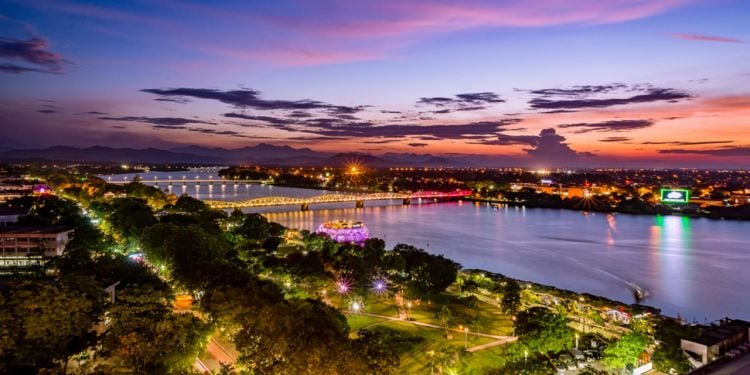
Hue sits on the banks of the Perfume River in central Vietnam, serving as the country's cultural and historical heart. This former imperial capital of the Nguyen Dynasty (1802-1945) offers expatriates a unique blend of rich heritage, affordable living, and a slower pace compared to Hanoi or Ho Chi Minh City. With its UNESCO World Heritage monuments, renowned cuisine, and welcoming local community, Hue attracts those seeking authentic Vietnamese culture without the intensity of larger urban centers.
A City Steeped in History
The city's population of approximately 500,000 residents creates an intimate atmosphere where foreigners quickly become familiar faces. Located just 100 kilometers south of Da Nang and accessible via Phu Bai International Airport, Hue provides convenient connections while maintaining its distinct character. The tropical monsoon climate brings hot summers and rainy winters, with temperatures ranging from 20°C to 34°C throughout the year.
5 Good Reasons to Move to Hue
- Exceptional affordability — Living costs run 30-40% lower than Vietnam's major cities, stretching your budget significantly further.
- Rich cultural immersion — Daily life unfolds amid imperial palaces, ancient pagodas, and living traditions preserved for centuries.
- Renowned gastronomy — Hue's royal cuisine and street food scene rank among Vietnam's finest culinary experiences.
- Peaceful lifestyle — Escape the traffic and noise of bigger cities while enjoying riverside cafés and tree-lined boulevards.
- Strategic central location — Easy access to beaches, mountains, and other destinations including Hoi An and Da Nang.
Working in Hue: Career Opportunities in Central Vietnam
Employment opportunities in Hue center around the city's core economic drivers: tourism, education, and hospitality. While the job market is smaller than Vietnam's major metropolitan areas, expatriates with specialized skills find rewarding positions in this growing regional hub. The province of Thua Thien Hue has been investing heavily in sustainable tourism development, creating new opportunities for professionals in this sector.
Key Industries and Employment Sectors
The tourism and hospitality sector dominates Hue's economy, employing thousands across hotels, resorts, tour operators, and restaurants. Major employers include international hotel chains like Banyan Tree Lang Co, Anantara, and various boutique properties. English teaching remains a consistent opportunity, with positions available at language centers, public schools, and Hue University. Teachers typically earn between USD 1,200-2,000 monthly depending on qualifications and experience. The healthcare sector at Hue Central Hospital occasionally recruits international medical professionals for specialized roles.
Work Permits and Requirements
Foreign nationals require a work permit to work legally in Vietnam. Employers must sponsor the application through the Department of Labor, Invalids and Social Affairs (DoLISA). Requirements include a bachelor's degree or equivalent, relevant work experience (minimum 3 years for specialists), a clean criminal record, and health certification. Work permits are valid for up to 2 years and can be renewed once. Processing typically takes 15-20 working days after document submission.
The following table presents key employment indicators for the region:
Average Monthly Salary (Vietnam) | VND 7.5-10 million (USD 300-420) |
English Teacher Salary Range | VND 30-50 million (USD 1,200-2,000) |
Unemployment Rate (National) | Approximately 2% |
Key Sectors | Tourism, Education, Hospitality, Healthcare |
Sources: General Statistics Office of Vietnam, Ministry of Labor, Invalids and Social Affairs
Working in Hue
Located in the central region of Vietnam, Huế is recognized as a cultural hub of the country and full of natural resources. While it has a very ...
Higher Education in Hue: Universities and Academic Programs
Hue serves as a major educational center for central Vietnam, anchored by the comprehensive Hue University system. International students and academics find opportunities for study, research, and collaboration at several institutions offering programs in Vietnamese and increasingly in English. The city's academic heritage dates back to the imperial era, making it a fitting location for scholarly pursuits.
Hue University System
Hue University (Đại học Huế) ranks among Vietnam's top regional universities, established in 1957 and reorganized in 1994. The system comprises 8 member universities covering diverse disciplines: Agriculture and Forestry, Arts, Economics, Education, Foreign Languages, Law, Medicine and Pharmacy, and Sciences. With over 50,000 students and 300+ international students, the university offers 153 undergraduate programs, 102 master's programs, and 58 doctoral programs. Annual tuition for international students ranges from USD 1,500-3,000 depending on the program, significantly lower than Western institutions.
International Programs and Admissions
The Hue University International School provides programs taught in English, particularly at the graduate level. Research opportunities exist in fields aligned with the region's needs: agriculture, medicine, environmental science, tourism, and cultural preservation. Admission requirements include completion of secondary education equivalent to Vietnamese standards, proof of English proficiency (IELTS or TOEFL for English-taught programs), transcripts, and a statement of purpose. Several scholarship programs are available for international students, including government-sponsored and university-specific awards. The academic year runs from September to June with two main semesters.
For detailed admission information, visit the official Hue University Portal or contact the International Relations Office.
Schools for Expat Children: Education Options in Hue
Families relocating to Hue face more limited international schooling options compared to Vietnam's largest cities. However, solutions exist through local schools, bilingual programs, and accessible international institutions in nearby Da Nang, just 40 minutes away by car. Understanding the educational landscape helps parents make informed decisions for their children's academic journey.
Local and Bilingual Schools in Hue
Within Hue, several schools cater to expatriate families seeking quality education. Hue International School offers a curriculum designed for expat children from kindergarten through Grade 12, with emphasis on English language acquisition and cultural integration. The school features modern classrooms, a library, and sports facilities. American Academy Hue provides an internationally-oriented education following American educational standards. Local Vietnamese schools accept foreign students, offering immersive language experiences at minimal cost, though instruction is primarily in Vietnamese. Some private schools offer bilingual Vietnamese-English programs suitable for families planning extended stays.
International Schools in Da Nang
Many Hue-based expat families opt for international schools in Da Nang, accessible within a 40-minute drive. Options include British Vietnamese International School (English National Curriculum), Green Shoots International School (British system with eco-friendly approach), and St. Nicholas International School (American curriculum with AP courses). Annual tuition at these institutions ranges from USD 7,000-25,000 depending on grade level and school. School bus services may be available for Hue residents. The Hoi An International School, 30 minutes from Hue, follows the Cambridge curriculum for students ages 5-19.
Enrollment typically requires academic transcripts, proof of previous education, and English proficiency assessment. Early application is recommended as popular schools maintain waiting lists.
Sources: International Schools Database
Housing in Hue: Neighborhoods and Rental Prices
Finding accommodation in Hue proves straightforward and remarkably affordable compared to Vietnam's major cities. The compact city layout means most areas remain accessible, while distinct neighborhoods offer different atmospheres and amenities. Expatriates typically rent furnished apartments or houses, with options ranging from modern serviced apartments to traditional Vietnamese homes.
Popular Neighborhoods for Expats
The Citadel area and surroundings on the north bank of the Perfume River offer proximity to historical sites and local markets, with many traditional houses available for rent. South bank districts near Trang Tien Bridge provide a more modern atmosphere with newer apartments, restaurants, and cafés popular with foreigners. The university district around Le Loi Street attracts academics and students with affordable housing and convenient amenities. Areas near Dong Ba Market suit those seeking authentic local living with excellent food options. For those with vehicles, outlying areas offer larger properties with gardens at lower prices.
Rental Prices and Procedures
Hue's rental market offers exceptional value. Furnished one-bedroom apartments in central locations typically range from VND 4-7 million (USD 160-280) monthly. Three-bedroom houses or larger apartments rent for VND 8-15 million (USD 320-600) depending on condition and location. Serviced apartments with housekeeping run slightly higher. Utilities (electricity, water, internet) add approximately VND 1-2.5 million (USD 40-100) monthly, with air conditioning usage being the main variable. Rental agreements typically require 1-2 months deposit and are negotiable for 6-12 month terms. Landlords generally expect payment monthly in Vietnamese Dong. Local real estate agents and online platforms like Facebook groups facilitate property searches.
1-Bedroom Apartment (Central) | USD 160-280/month |
3-Bedroom House/Apartment | USD 320-600/month |
Utilities (Average Monthly) | USD 40-100 |
Sources: Local rental listings, Numbeo
Leisure and Culture: Things To Do in Hue
Hue offers an exceptionally rich cultural and recreational scene, blending imperial heritage with natural beauty and contemporary leisure options. From exploring ancient monuments to savoring world-class cuisine, residents find endless opportunities for enrichment and enjoyment in this historically significant city.
Historical Sites and Museums
The Imperial City (Citadel) stands as Hue's crown jewel—a vast UNESCO World Heritage complex containing palaces, temples, and the Forbidden Purple City. Entry costs VND 200,000 (USD 8) and offers hours of exploration. The Royal Tombs of Nguyen Dynasty emperors dot the countryside, each with distinctive architectural styles; notable examples include Tu Duc Tomb (poetic garden setting), Minh Mang Tomb (classical symmetry), and Khai Dinh Tomb (French-influenced design). Thien Mu Pagoda, the iconic seven-story structure overlooking the Perfume River, remains an active Buddhist site and symbol of the city. The Museum of Royal Antiquities displays imperial artifacts, while performances of Nha Nhac (Royal Court Music)—recognized by UNESCO as intangible cultural heritage—occur regularly at Duyet Thi Duong Royal Theater.
Recreation, Nature, and Nightlife
The Perfume River provides a scenic backdrop for evening walks, boat cruises, and riverside dining. Cycling enthusiasts enjoy routes through the countryside to villages and tombs. Bach Ma National Park, an hour's drive away, offers hiking trails, waterfalls, and wildlife spotting at elevations reaching 1,450 meters. Lang Co Beach and Thuan An Beach provide coastal escapes within 30-45 minutes. The city's café culture thrives along both riverbanks, while bars and restaurants cluster near Trang Tien Bridge and the backpacker area. Dong Ba Market buzzes daily with local produce, crafts, and street food. The biennial Hue Festival (next edition in 2026) transforms the city with cultural performances, art installations, and community celebrations.
Daily Life in Hue: Transportation and Local Culture
Life in Hue moves at a gentler pace than Vietnam's bustling metropolises, allowing newcomers to settle into routines shaped by local customs and the city's historical character. Understanding transportation options and cultural particulars helps expatriates navigate daily activities smoothly and integrate into the community.
Getting Around Hue
Most residents, including expats, rely on motorbikes as the primary mode of transportation. Monthly rentals cost approximately VND 1.5-3 million (USD 60-120), while purchasing a used motorbike runs VND 10-20 million (USD 400-800). The ride-hailing app Grab operates throughout the city, offering convenient motorbike (GrabBike) and car options (GrabCar) at affordable rates—typical trips within the city cost VND 15,000-40,000 (USD 0.60-1.60). Local xe om (motorbike taxis) provide another option for short journeys. Bicycles work well for the city center and are often provided free by hotels and homestays. Public buses exist but routes are limited and schedules can be irregular. For inter-city travel, Phu Bai International Airport offers domestic flights, while the train station connects Hue to Hanoi and Ho Chi Minh City along the scenic Reunification Express line.
Cultural Considerations and Lifestyle
Hue residents take pride in their city's imperial heritage and refined traditions. The local dialect differs notably from standard Vietnamese, though patience and basic phrases earn appreciation. Royal cuisine represents a source of local pride—expect elaborate meals with many small dishes. Markets open early, typically by 6:00 AM, and the midday heat encourages afternoon rest periods. The city hosts the biennial Hue Festival, a major cultural event celebrating traditional arts and heritage. Buddhist influences remain strong, with many residents observing vegetarian days twice monthly. The expatriate community, while smaller than in larger cities, proves welcoming and connected through informal gatherings and online groups.
Cost of Living in Hue: Monthly Budget Breakdown
Hue ranks among Vietnam's most affordable cities for expatriates, with living costs running 30-40% lower than Hanoi or Ho Chi Minh City. This affordability allows for comfortable living on modest budgets while enabling significant savings for those with higher incomes. The following tables provide realistic monthly expense estimates for different household compositions.
Monthly Costs for a Single Person
A single expatriate can live comfortably in Hue on USD 600-1,000 monthly, with the lower end representing a local lifestyle and the upper end including more Western comforts. Key expenses break down as follows:
Rent (1-bedroom, furnished) | USD 160-280 |
Utilities (electricity, water, internet) | USD 40-80 |
Groceries | USD 100-150 |
Dining Out | USD 80-150 |
Transportation | USD 30-60 |
Health Insurance | USD 50-100 |
Leisure/Entertainment | USD 50-100 |
Total Monthly (Single Person) | USD 510-920 |
Monthly Costs for a Family of Four
Families with children should budget more substantially, particularly if opting for international schooling. A comfortable family lifestyle requires approximately USD 1,500-2,500 monthly, depending on schooling choices:
Rent (3-bedroom house) | USD 350-600 |
Utilities | USD 80-150 |
Groceries | USD 250-400 |
Dining Out | USD 150-250 |
Transportation | USD 60-120 |
School Fees (2 children, local/bilingual) | USD 200-600 |
Health Insurance (Family) | USD 150-300 |
Leisure/Entertainment | USD 100-200 |
Total Monthly (Family of Four) | USD 1,340-2,620 |
Sources: Numbeo, local market research, expat community reports
In Short
Hue presents a compelling option for expatriates seeking affordable living amid profound cultural heritage. Vietnam's former imperial capital delivers a rare combination: UNESCO-listed monuments at your doorstep, exceptional cuisine, genuine local community, and costs that stretch your budget remarkably far. While the job market focuses primarily on tourism and education, those who find their niche discover a city that rewards curiosity and rewards engagement. The smaller expat community fosters meaningful connections, and the central location enables easy exploration of Vietnam's diverse landscapes. Whether you're drawn by history, gastronomy, or simply the appeal of a slower pace, Hue welcomes you to experience Vietnam at its most authentic.
Connect with fellow expatriates and get practical advice on the Expat.com Vietnam Forum to help plan your move to this remarkable city.
We do our best to provide accurate and up to date information. However, if you have noticed any inaccuracies in this content, please contact us.


Essential services for your expat journey



