

Living in Busan: the ultimate expat guide
Everything you need to know for a successful life in Busan.
Busan is South Korea's second-largest city with a population of 3.45 million, located on the southeastern tip of the Korean peninsula. Known for its stunning coastline, bustling port, and vibrant cultural scene, Busan offers a compelling alternative to Seoul for those seeking a more relaxed pace while still enjoying world-class urban amenities. The city seamlessly blends traditional Korean heritage with modern development, featuring ancient temples nestled among mountains, beaches that stretch along the coast, and a thriving food scene centered on fresh seafood from the famous Jagalchi Market.
Why Choose Busan?
As an expat destination, Busan stands out for its lower cost of living compared to Seoul (approximately 32% cheaper), excellent public transportation, and welcoming local community. The city serves as an economic hub for maritime trade, shipbuilding, and manufacturing, while also developing rapidly in technology and tourism sectors. With direct international connections via Gimhae International Airport and ferry routes to Japan, Busan provides easy access to regional travel.
5 Good Reasons to Move to Busan
- Affordable living – Housing and daily expenses cost significantly less than in Seoul while maintaining high quality of life.
- Beach lifestyle – Famous beaches like Haeundae and Gwangalli offer year-round recreation and stunning ocean views.
- Strong job market – Record-high employment rates and growing industries in tech, maritime, and manufacturing.
- Excellent connectivity – Four metro lines, international airport, and KTX high-speed rail link to Seoul in under 2.5 hours.
- Rich cultural scene – Host to the Busan International Film Festival and numerous museums, temples, and festivals.
Working in Busan: Career Opportunities and Employment
Busan's economy is thriving, with the city recording its highest-ever employment rate of 59% in June 2025. The job market has shown remarkable resilience, with the number of regular workers surpassing 1 million for the first time—a 6.7% increase year-on-year. For expats, opportunities exist across diverse sectors, though securing legal employment requires appropriate work authorization.
Key Industries and Sectors
Busan's economy is anchored by several major industries. The maritime and shipbuilding sector remains dominant, with companies like Hanwha Ocean and Samsung Heavy Industries establishing R&D centers in the city. The manufacturing sector added 12,000 jobs in 2024-2025, bucking national trends. Emerging sectors include information technology, particularly in AI and cybersecurity, supported by the Busan Digital Innovation Academy training 10,000 ICT professionals by 2026. The tourism and hospitality industry continues expanding, driven by major events like the Busan International Film Festival.
Work Permits and Visas
Foreign nationals require appropriate work authorization. Common options include the E-7 Special Occupation Visa for skilled professionals in designated occupations, the E-2 Visa for foreign language instructors (primarily English teachers), and the D-10 Job Seeking Visa for those seeking employment after graduation or career transition. Since January 2024, South Korea also offers an F-1-D Workation (Digital Nomad) Visa for remote workers earning at least twice Korea's per-capita GNI, valid for up to two years. Processing typically takes 2-4 weeks once documentation is complete.
The following table summarizes key employment indicators for Busan:
Employment Rate (June 2025) | 59.0% (record high) |
Unemployment Rate | 2.6% |
Average Monthly Salary | KRW 3,300,000–3,600,000 (~USD 2,400–2,600) |
Minimum Wage (2025) | KRW 10,030/hour (~USD 7.30) |
Sources: Busan Metropolitan City, Statistics Korea
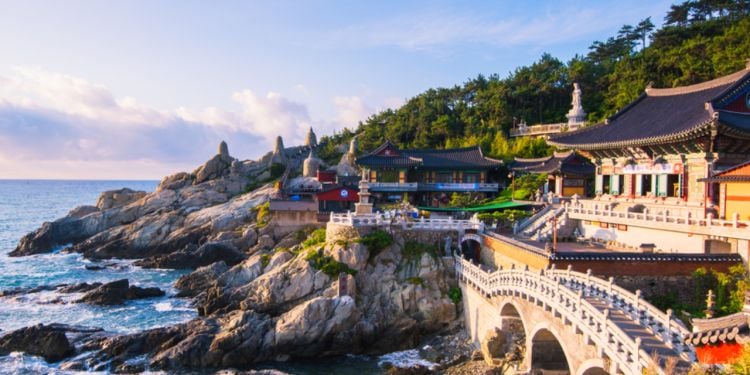
Finding work in Busan
Busan is the second most popular location for expatriates living in South Korea after the capital of Seoul. With a population of over 3.5 million, it ...
Higher Education and Universities in Busan
Busan hosts over 14 universities and colleges, providing diverse academic opportunities for international students. The city's higher education institutions offer programs in English and Korean across various disciplines, with tuition fees generally lower than in Seoul. International students benefit from scholarship programs, modern campus facilities, and integration support services.
Top Universities for International Students
Pusan National University (PNU) is the highest-ranked institution in Busan, consistently appearing in the top 100 of Asian university rankings. As a flagship national university, PNU offers undergraduate and graduate programs across humanities, sciences, engineering, and medicine. Minimum IELTS score of 5.5 is typically required for English-taught programs. Pukyong National University (PKNU) excels in marine and fisheries studies, reflecting Busan's maritime heritage. Dong-A University, Dongseo University, and Busan University of Foreign Studies also welcome international students with dedicated support offices and exchange programs.
Tuition Fees and Admission
Tuition fees for international students vary by institution and program. At the bachelor's level, annual fees range from KRW 3,260,000 to KRW 8,950,000 (~USD 2,400–6,500), with humanities programs at the lower end and medical or engineering programs higher. Master's programs range from KRW 3,810,000 to KRW 13,230,000 annually. Admission requirements typically include academic transcripts, language proficiency (TOPIK for Korean programs or TOEFL/IELTS for English programs), passport copies, and financial proof of approximately USD 7,000–14,000 for living expenses. Applications open in spring and fall semesters, with deadlines usually 3-4 months before term starts.
Sources: Pusan National University, Pukyong National University
Schools and Education for Children in Busan
Families relocating to Busan will find quality educational options for children, including international schools offering globally recognized curricula. While the Korean public school system provides free education through high school, most expat families opt for international schools that offer instruction in English and follow familiar academic standards.
International Schools
The International School of Busan (ISB) is the city's premier IB World School, offering the Primary Years Programme, Middle Years Programme, and IB Diploma Programme from ages 3 to 18. The campus, built by Busan Metropolitan City at a cost of over USD 42 million, features state-of-the-art facilities across 30,000 square meters. Annual tuition ranges from KRW 28,008,000 to KRW 44,905,000 (~USD 20,000–32,000), depending on grade level. Busan Foreign School (BFS) follows an American curriculum with AP courses and WASC accreditation. Tuition ranges from USD 5,700 to USD 11,200 annually, with one-time enrollment fees including a KRW 3,000,000 technology development fee and KRW 4,000,000 capital development fee. BFS educates approximately 250 students from 25 nationalities.
Enrollment and Requirements
Both schools require standard documentation including previous school records, passport copies, immunization records, and application forms. ISB requires families to declare any medical, behavioral, or special educational needs. The academic year typically runs from August to June, with semester breaks in December-January and summer. Waiting lists may apply for popular grades, so early application is recommended. Most international schools offer English language support (EAL) for non-native speakers and provide bus transportation across major residential areas.
Sources: International School of Busan, Busan Foreign School
Housing and Neighborhoods in Busan
Finding accommodation in Busan is considerably easier and more affordable than in Seoul. The city offers diverse housing options from high-rise apartments to traditional villas, with rent prices varying significantly by neighborhood. Understanding Korea's unique rental system is essential before beginning your housing search.
Popular Neighborhoods for Expats
Haeundae is Busan's most popular expat district, known for its famous beach, modern apartments, shopping centers, and proximity to international schools. Expect to pay premium rents but enjoy excellent amenities and a large foreign community. Marine City and Centum City offer luxury high-rise living with stunning ocean views, upscale dining, and easy access to BEXCO convention center—ideal for professionals seeking premium accommodation. Gwangalli provides a more relaxed beach atmosphere with vibrant cafés, bars, and views of the iconic Gwangan Bridge at more moderate prices. Seomyeon is the commercial heart of Busan, popular with young professionals and students for its central location, nightlife, and transport connections. For families seeking quieter surroundings, Namcheon-dong offers a residential feel with good schools nearby.
Rental System and Prices
Korea has two main rental systems. Jeonse requires a large deposit (50-80% of property value) with no monthly rent—the deposit is returned at lease end. Wolse is more familiar to Western expats: a smaller deposit plus monthly rent. Standard leases run one year with three months' notice for termination. Many employers, especially schools, provide housing or a housing allowance.
1-Bedroom (City Center) | KRW 600,000–1,000,000/month (~USD 450–750) |
1-Bedroom (Outside Center) | KRW 400,000–600,000/month (~USD 300–450) |
3-Bedroom (City Center) | KRW 1,500,000–2,500,000/month (~USD 1,100–1,800) |
Typical Deposit (Wolse) | KRW 10,000,000–30,000,000 (~USD 7,500–22,000) |
Sources: Numbeo, Busan Metropolitan City
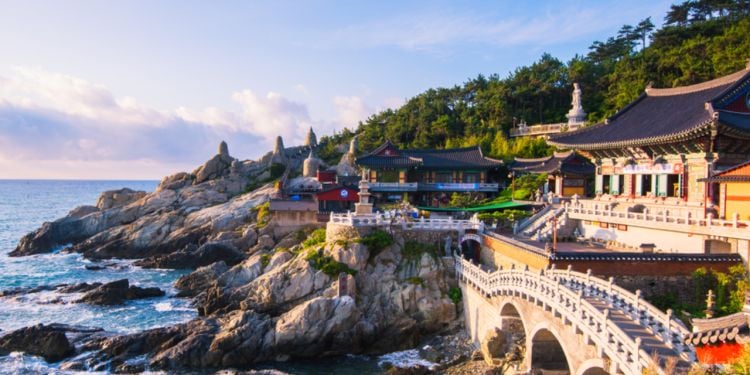
Accommodation in Busan
Busan is located around 450 km from Seoul and is the second largest city in the country. It is a very popular destination with a population of more ...
Leisure, Culture and Things to Do in Busan
Busan offers a rich cultural calendar and diverse recreational opportunities throughout the year. From world-class film festivals to pristine beaches and ancient temples, the city caters to every interest. The blend of natural beauty, urban excitement, and traditional heritage makes weekends and holidays truly rewarding.
Cultural Highlights and Events
The Busan International Film Festival (BIFF), held each September at the Busan Cinema Center in Centum City, is Asia's largest film festival, attracting global cinema talent and enthusiasts. The Busan Fireworks Festival in autumn draws hundreds of thousands to Gwangalli Beach for spectacular pyrotechnic displays over the ocean. Other annual highlights include the Busan One Asia Festival (BOF) featuring K-pop performances, the Haeundae Sand Festival in summer, and the Lotus Lantern Festival celebrating Buddha's birthday. The city hosts numerous museums, including the Busan Museum showcasing regional history, Busan Museum of Art, and the fascinating Busan Modern and Contemporary History Museum documenting the city's transformation.
Beaches, Nature and Recreation
Haeundae Beach is Korea's most famous beach, offering excellent swimming in summer, a lively promenade, and spectacular sunrise views year-round. Gwangalli Beach provides iconic night views of the illuminated Gwangan Bridge, with regular drone light shows every Saturday. For nature lovers, Geumjeongsan Mountain offers hiking trails with panoramic city views, while Taejongdae coastal park features dramatic cliffs and forest walks. The colorful Gamcheon Culture Village, often called the "Santorini of Korea," is a photogenic hillside neighborhood with art installations. Beomeosa Temple, founded in 678 CE, provides a serene escape into Buddhist heritage. Sports fans can catch professional baseball at Sajik Stadium (Lotte Giants), soccer at Asiad Main Stadium, or basketball featuring the local KCC Egis team.
Sources: Visit Busan, Busan Metropolitan City Events
Daily Life in Busan
Daily life in Busan combines modern convenience with a relaxed coastal atmosphere. The city's efficient public transportation, excellent healthcare, and diverse dining options make it easy for newcomers to settle in. While Korean language skills are helpful, many services in expat-friendly areas are accessible to English speakers.
Getting Around
Busan's public transportation network is comprehensive and affordable. The Metro system operates four main lines (1-4) plus the Busan-Gimhae Light Rail Transit and Donghae Line, connecting most areas of the city. A single adult fare is KRW 1,600 using a transportation card, with transfer discounts available within 30 minutes. Monthly unlimited metro passes are available for commuters. Buses cover areas not reached by subway, with fares starting at KRW 1,400. The Hanaro Card or T-money card works across all public transport and can be purchased at convenience stores. Taxis are readily available and affordable by international standards, with a base fare of approximately KRW 4,800. The KTX high-speed train connects Busan to Seoul in about 2 hours 15 minutes for around KRW 60,000.
Healthcare and Lifestyle
South Korea's National Health Insurance System (NHIS) covers all residents, including registered foreigners. Monthly premiums are approximately 3.5% of income, with employers covering half for employees. A typical doctor's visit with NHIS coverage costs KRW 15,000–30,000. Many expats supplement with private insurance for additional coverage. Busan offers superb fresh seafood, with traditional markets like Jagalchi Fish Market and modern supermarkets (E-mart, Homeplus, Costco) throughout the city. Internet speeds are among the world's fastest, with home connections costing approximately KRW 30,000–50,000/month. Mobile plans run KRW 55,000–70,000/month for unlimited data.
Cost of Living in Busan
Busan offers an attractive cost of living, approximately 32% lower than Seoul, while maintaining excellent quality of life. Housing represents the largest expense, but groceries, dining, and transportation remain affordable. The tables below provide realistic monthly budgets based on current 2025 data.
Monthly Budget: Single Person
A single professional in Busan can live comfortably on a moderate budget. The following estimates assume a 1-bedroom apartment in a mid-range neighborhood and a mix of home cooking and dining out:
Category | Monthly Cost (KRW) | USD Equivalent |
Rent (1-bedroom, city center) | 700,000 | ~510 |
Utilities (electricity, heating, water) | 150,000 | ~110 |
Groceries | 400,000 | ~290 |
Dining out | 200,000 | ~145 |
Transportation | 100,000 | ~75 |
Internet & Mobile | 80,000 | ~60 |
Health Insurance (NHIS) | 110,000 | ~80 |
TOTAL | 1,740,000 | ~1,270 |
Monthly Budget: Family of Four
Families should budget for larger accommodation and additional expenses like children's activities and international school fees:
Category | Monthly Cost (KRW) | USD Equivalent |
Rent (3-bedroom, city center) | 2,000,000 | ~1,460 |
Utilities | 250,000 | ~180 |
Groceries | 800,000 | ~585 |
Dining out | 400,000 | ~290 |
Transportation | 200,000 | ~145 |
Internet & Mobile (2 lines) | 130,000 | ~95 |
Health Insurance (family) | 200,000 | ~145 |
TOTAL (excl. school fees) | 3,980,000 | ~2,900 |
Note: International school fees add KRW 2,300,000–3,750,000/month per child. 7
Sources: Numbeo
In Short
Busan combines the energy of a major metropolis with the relaxed pace of a coastal city. With its record-high employment rates, affordable cost of living (32% lower than Seoul), stunning beaches, and rich cultural scene, the city offers an appealing destination for expats seeking quality of life alongside career opportunities. Whether you're drawn by the thriving maritime industries, the excellent international schools, or simply the prospect of fresh seafood and ocean sunsets, Busan welcomes newcomers with warmth. The city's efficient public transportation, modern healthcare system, and growing international community make settling in straightforward. Ready to explore life in South Korea's coastal gem? Connect with fellow expats and get personalized advice on the Expat.com Busan forum.
We do our best to provide accurate and up to date information. However, if you have noticed any inaccuracies in this content, please contact us.


Essential services for your expat journey