

Living in Uruguay: the ultimate expat guide
Everything you need to know for a successful life in Uruguay.
Uruguay has emerged as South America's most stable destination for international relocation. This nation of 3.4 million people offers a rare combination of political stability, economic resilience, and social tolerance that's increasingly hard to find. Between 2013 and 2022, approximately 62,000 foreigners established residency, with major communities from Spain, Italy, France, Argentina, Brazil, Venezuela, Germany, and the United States.
5 Compelling Reasons to Relocate to Uruguay
- World-class healthcare accessible through private mutualistas for just USD 100-200 monthly
- Territorial tax system: zero tax on foreign-source income for 11 years as a new resident
- Top-ranked quality of life in Latin America according to Mercer's global survey
- Exceptional political stability earning the nickname "Switzerland of South America"
- Temperate climate with mild winters at 50°F (10°C) and comfortable summers at 79-81°F (26-27°C)
The country delivers modern infrastructure, quality education, and an open society. Here's a snapshot of key figures:
Total Population | 3.4 million |
Foreign Residents (2013-2022) | 62,000 |
Official Language | Spanish |
Currency | Uruguayan Peso (UYU) |
GDP per Capita (2024) | USD 23,907 |
Sources: Worldometers, Wikipedia, Statista
Visas and Residency: Your Legal Pathway to Uruguay
Uruguay simplifies immigration with multiple residency pathways suited to different circumstances. Citizens from the US, Canada, UK, Australia, New Zealand, South Africa, and Japan enter visa-free for up to 90 days, allowing you to initiate residency procedures on the ground.
Standard Permanent Residency
Permanent residency offers the most straightforward path to long-term settlement. You'll need demonstrable monthly income of at least USD 1,500, and you receive permanent status immediately upon approval. Processing takes 6 to 12 months. This route works well for remote workers, retirees with pension income, or investors with steady passive income streams.
Residency by Investment
Four investment options cater to different financial capacities. Option one requires a USD 513,950 real estate investment with 60 days annual physical presence. Option two demands USD 2,202,640 invested in a local business creating 15 full-time jobs. Option three allows a USD 544,000 investment with only 60 days presence required. The premium option four requires USD 7 million in special interest activities with no presence requirement whatsoever.
Retirement and Rentier Visa
The Rentier visa targets individuals with stable passive income. Requirements include USD 1,500 monthly passive income plus a USD 100,000 investment in Uruguayan real estate or government bonds. Valid for 2 years and renewable, this visa prohibits local employment. It suits retirees with comfortable pensions or investors living off investment income.
Digital Nomad Visa
Uruguay recently introduced a visa for remote workers. This permits 180-day stays with possible renewal for an additional 180 days. The process involves entering as a tourist, then applying online while demonstrating financial self-sufficiency. This appeals to professionals working remotely for international companies while enjoying Uruguay's lifestyle.
MERCOSUR Residency
Citizens of MERCOSUR member states (Argentina, Brazil, Paraguay, Bolivia, Chile, Peru, Ecuador, Colombia, Venezuela, Suriname, Guyana) benefit from simplified procedures. No income proof is required, and health cards aren't mandatory, significantly easing the settlement process.
Family Reunification
Spouses, cohabitants, parents, and siblings of Uruguayan citizens can obtain residency through streamlined procedures, facilitating family reunification.
General Application Process
Regardless of your chosen route, the procedure follows similar steps. After entry, gather required documents: birth certificate, marriage certificate if applicable, criminal record from the past 5 years, health certificate (except MERCOSUR nationals), and proof of income. All documents require apostille certification and translation into Spanish by a certified Uruguayan translator.
Submit your application to the Dirección Nacional de Migración, either in person or online. Complete a medical examination at an approved clinic. After 6 to 12 months processing, you'll receive your cédula de identidad (Uruguayan identity card), formalizing your resident status.
Pathway to Citizenship
After 3 years of residence for married couples or 5 years for single individuals, with minimum 6 months annual presence, citizenship becomes available. Requirements include conversational Spanish proficiency and demonstrated integration into Uruguayan society. The Uruguayan passport grants visa-free access to 156 countries, ranking 23rd globally on the Henley Index. Uruguay permits dual citizenship, so you can maintain your original nationality.
The Working Holiday Visa for Uruguay
Uruguay is actually the perfect place to see some amazing scenery, away from the tourist crowds found in more popular places — the perfect ...
Employment and Business: Professional Opportunities
Uruguay's job market presents specific characteristics that international residents need to understand. With unemployment at 7.0% as of August 2025, down from 8.4% in August 2024, the country shows relative stability. The capital concentrates most professional opportunities.
Employment Landscape
The employment rate stands at 59.8% with a 64.4% activity rate. The market shows disparities: unemployment affects women (8.3%) more than men (5.9%), and youth aged 14-24 face a concerning 23.2% rate. The average net salary sits around UYU 40,249 monthly, approximately USD 1,000, while the legal minimum wage is set at UYU 22,268 per month.
For international residents, finding local employment proves challenging. Spanish fluency remains essential for virtually all positions, and the market's limited size restricts opportunities. The most accessible sectors remain information technology, foreign language teaching, and remote work for overseas companies. The optimal strategy typically involves relocating with secured remote employment or planning to establish your own business.
Key Economic Sectors
Uruguay's economy rests on several pillars. Technology and IT services position the country as a Latin American outsourcing hub, with major partnerships like Tata Consultancy Services' Spanish-speaking headquarters in Uruguay. Agriculture and agribusiness remain traditionally strong, particularly in beef, wool, and grain production. Financial services benefit from the country's "Switzerland of America" reputation with a developed banking sector. Tourism represents approximately 10% of GDP, while renewable energy and biotechnology and pharmaceuticals emerge as growth sectors.
Starting Your Business
Entrepreneurship often provides a better alternative to local job hunting. Uruguay ranks 66th globally for ease of doing business with an 89.6% World Bank score. The creation process requires just 6.5 days and 5 major procedures, placing the country among the region's most efficient.
Several legal structures serve entrepreneurs. Sociedad Anónima (SA) resembles a corporation requiring minimum 2 shareholders and 1 director. Sociedad Anónima Uruguay (SAU) functions like an LLC with at least one share, 2 shareholders, and 1 director. Sociedad Anónima Simplificada (SAS) provides an ideal form for SMEs, limited to 6 associates maximum with great structural flexibility. Sole proprietorship suits smaller individual activities.
The procedure begins with name reservation at the AIN (National Internal Audit Office), valid 60 days. A notary drafts articles of incorporation requiring AIN approval. Next comes declaration of beneficial owners to Uruguay's Central Bank (BCU), followed by registration at the National Taxpayer Registry (RNC). Articles must be published in the Official Gazette (IMPO) and a national newspaper. Final beneficial owner declaration to BCU and obtaining your tax number (RUT) complete the process.
Total costs remain manageable: USD 65 for RNC registration, notary fees represent 5% of capital with a USD 1,639 minimum, Official Gazette publication costs approximately USD 315 for standardized articles, and state fees total USD 400. Recurring annual costs (accounting, legal) range from USD 1,425 to USD 7,450 depending on business complexity.
Entrepreneurial Advantages
Uruguay presents several major advantages. Shareholders and directors can be non-resident foreigners, facilitating international investments. Access to the MERCOSUR market opens opportunities to 270 million consumers. Free zones offer complete exemption from corporate tax, customs duties, and VAT, creating highly attractive fiscal conditions for certain activities.
Employer Obligations
Employers must pay 7.5% payroll contributions plus 5% for health coverage. Employee contributions represent 18.5% of salary. A mandatory 13th-month salary paid in two installments (June and December) significantly increases social charges to budget for.
The following table summarizes key employment market indicators for Uruguay in 2025:
Indicator | Value |
Unemployment Rate (Aug 2025) | 7.0% |
Employment Rate | 59.8% |
Average Net Monthly Salary | UYU 40,249 (~USD 1,000) |
Monthly Minimum Wage | UYU 22,268 |
Business Creation Timeline | 6.5 days |
Sources: FX Empire, Numbeo, Multiplier
Taxation: Understanding Uruguay's Territorial System
Uruguay's tax system operates on a territorial principle particularly attractive to international residents: only Uruguayan-source income faces taxation. This fundamental characteristic, combined with tax benefits for new residents, positions Uruguay among Latin America's most fiscally interesting destinations.
Territorial Principle and New Resident Benefits
Uruguay applies strict territorial taxation. Foreign-generated income remains untaxed regardless of fiscal residence. New residents benefit from complete exemption on foreign capital income for 10 years for those establishing residency before 2026. From 2026 onwards, this regime will be conditional on local investment, with specifics detailed in the 2025 Budget. A 5-year extension at 50% reduced rate (6%) may be granted after the initial period.
Fiscal residence is acquired by spending over 183 days in 12 months, conducting economic activities, or maintaining personal interests in Uruguay. A presumption applies: spouses and dependents are automatically considered residents if the primary person qualifies.
Personal Income Tax (IRPF)
IRPF applies differently depending on income type. For employment income, progressive brackets apply. For single individuals, 2025 brackets range from 0% up to UYU 127,080, then progress through tiers (10%, 15%, 24%, 25%, 27%, 31%) reaching 36% above UYU 2,194,590. A more favorable family bracket exists when each household member earns over 12 minimum wages, with a maximum rate of 30%.
Capital income (interest, dividends, royalties, capital gains, rent) faces a flat 12% rate on gross income. This simple, predictable taxation facilitates financial planning for investors.
Non-residents face IRNR with rates ranging from 7% to 25% depending on income nature, with 25% for income from low-tax jurisdictions.
VAT and Consumption Taxes
VAT (IVA) stands at 22% as the standard rate, among the region's highest. A reduced 10% rate applies to food, medications, hotel services, healthcare, and agricultural machinery. Certain transactions are exempt, notably first property sales and some banking services. Exports benefit from zero rate with VAT recovery via tax credits.
Social Contributions
Employees contribute 18.5% of their compensation, capped at UYU 272,564 monthly through December 31, 2025. Employers pay 7.5% plus 5% for health coverage, with the same cap. These contributions apply to regular and permanent compensation.
Corporate Income Tax (IRAE)
IRAE applies a standard 25% rate on corporate profits. Companies established in free zones enjoy complete exemption (0%), creating significant opportunities for certain activities. From 2026, a 15% domestic minimum complementary tax (IMCD) will apply to multinational groups with revenue exceeding EUR 750 million, under OECD's Pillar Two framework.
Net Worth Tax (IPAT)
IPAT constitutes a wealth tax applied on the difference between assets and liabilities year-over-year. The amount varies according to wealth level. Notably, Uruguay levies no inheritance or gift tax, facilitating wealth transfer.
2026 Tax Reforms
The 2025 Budget introduces several major changes to anticipate. Banking transparency will be strengthened: the tax administration (DGI) can request financial information without court order, with a 15-day response deadline and USD 317,000 penalty for non-compliance. CRS (Common Reporting Standard) extension will include electronic money issuing entities.
For new residents, from January 1, 2026, foreign capital gains will be taxed on asset sales and foreign real estate rental income. Indirect transfers will also be taxed: gains on transfer of non-resident entity shares will be taxed if over 50% of assets are located in Uruguay or Uruguayan assets exceed USD 5 million. Foreign dividends will be taxed at 7% if the foreign jurisdiction taxes dividends and recognizes Uruguayan tax credit.
A simplified regime will be introduced for technology and science professionals, with advantageous IRNR status and social security contribution waiver under conditions. Finally, maximum payment plan duration will extend from 36 to 72 months.
Tax Treaties
Uruguay has signed double taxation agreements with several European and Asian countries. It participates in the OECD Multilateral Convention on Mutual Administrative Assistance and applies CRS for automatic information exchange. For US citizens, it's crucial to note that no treaty exists with the United States and no FATCA agreement has been signed with US authorities, requiring careful tax planning with specialized advisors.
Healthcare: Quality Coverage at Reasonable Costs
Uruguay's healthcare system ranks among Latin America's most advanced. Created in 2007, the National Integrated Health System (SNIS) funded by the National Health Fund (FONASA) represents approximately 9% of GDP with projections reaching 10% by 2024. Life expectancy reaches 73 years for men and 81 for women, while infant mortality stands at 8.73 per 1,000 births.
Public System ASSE
The State Health Services Administration (ASSE) offers universal coverage to all residents. Free or requiring minimal co-payments, this system serves approximately 39% of the population. While universal, ASSE suffers from chronic underfunding resulting in significant wait times and overcrowding. Most international residents prefer the private system for superior care quality.
Mutualistas: The Preferred Choice
Over 50% of Uruguay's population joins mutualistas, private health organizations operating through hospital membership that provides access to a complete care network. This system offers excellent value with monthly fees ranging between USD 100-200 per person, reaching USD 154 for VIP plans.
The advantages are considerable: no deductibles, no lifetime caps, fixed and predictable co-payments around USD 5 per consultation, and 50% discounts on medications. Leading mutualistas distinguish themselves through excellence. Hospital Británico remains the favorite among international residents with English-speaking staff and modern facilities in Montevideo. Asociación Española enjoys excellent reputation for specialized treatments. La Asistencial in Maldonado offers rates from USD 57 to USD 154 monthly with no age restrictions, a rare and appreciated feature. Médica Uruguaya maintains an extensive network of clinics and hospitals across the country.
Some limitations exist: mutualistas impose age restrictions, making enrollment difficult after age 60. Pre-existing conditions may be refused. Coverage excludes optometry, non-emergency dental care, and psychology. For international residents, enrolling before age 60 is strongly recommended to guarantee access to the best options.
Traditional Private Insurance
Less than 2% of the population opts for American-style private insurance offered by Blue Cross Blue Shield Uruguay or Seguro Americano. These plans, significantly more expensive than mutualistas, offer greater choice of doctors and clinics, multi-country coverage including Uruguay, Argentina, and sometimes the United States, plus access to Hospital Británico. This option suits international residents with comfortable budgets seeking maximum flexibility.
Emergency Ambulance Services
Emergencias Médicas Móviles like SUAT, UCM, or Cardio Movil constitute essential complements to primary coverage. For USD 25-50 monthly, these services dispatch a medical team to your home within minutes and offer 24/7 hotlines. Their responsiveness and professionalism make them a wise investment complementing a mutualista or insurance plan.
Modern Medical Infrastructure
Uruguay has invested heavily in healthcare system modernization. The national electronic health record (HCEN) has existed since 2017, enabling centralized tracking. Digital prescriptions with home delivery option have functioned since 2019. The National Diagnostic Imaging Network offers secure access to exam results. The doctor-to-population ratio remains exceptionally good for the region.
Major Facilities
Hospital Británico in Montevideo stands as the reference with English-speaking staff and international standards. Emergency consultations without a plan cost approximately USD 85. Asociación Española and Médica Uruguaya maintain extensive clinic networks. Sanatorio Americano offers personalized services and cutting-edge surgical units. The SAPP network covers Costa de Oro with 4 facilities in Parque del Plata, La Floresta, Salinas, and Atlántida. Centro Clínico del Este in Villa Argentina completes the coastal offering.
Access for International Residents
All legal residents access Uruguay's healthcare system. Joining a mutualista before age 60 guarantees the best options. Spanish proficiency remains important, except at Hospital Británico where English is widely practiced. For tourists, travel insurance is mandatory upon entry. The new AUVISA agency planned for 2025 will strengthen regulation of medications and health technologies, further improving the system's overall quality.
Education: Local Schools and International Options
Uruguay distinguishes itself with a free, democratized education system since the 1877 Vareliana reform, which established common, secular, and mandatory education. International families can choose between the local public system in Spanish and several quality international schools offering curricula in other languages.
Uruguayan Education System
The local system comprises four levels: preschool, primary, secondary, and higher education. Entirely free at all levels, it offers regionally recognized quality education. Instruction occurs entirely in Spanish, meaning complete linguistic immersion for non-Spanish-speaking children. Public schools welcome the majority of Uruguayan students and constitute a viable option for families seeking deep cultural integration.
International Schools in Montevideo
Uruguayan American School (UAS) located at Saldún de Rodríguez 2375 serves approximately 330 students from nursery through Grade 12. As Uruguay's only school following the American calendar, it offers US high school diploma, Uruguayan diploma, and IB diploma. Accredited by the New England Association of Schools and Colleges, UAS conducts classes in English and offers varied sports programs including basketball, soccer, swimming, and volleyball. Annual fees range from USD 11,400 for preschool classes to USD 21,800 for high school (Grades 6-12), with one-time enrollment fees of USD 9,500.
The British Schools, founded in 1908, stands as one of the oldest institutions with approximately 1,390 students and 180 teachers. It offers IGCSE and IB programs from preschool through secondary, with fees estimated between USD 5,000 and USD 20,000 annually depending on level.
International College provides a bilingual curriculum combining IB program and Uruguayan national curriculum, from pre-nursery through Grade 12. Its holistic approach attracts families seeking balance between international standards and local integration.
St. Brendan's School offers bilingual, bicultural education from preschool through high school, with strong English emphasis while maintaining Uruguayan curriculum. This dual approach facilitates student adaptation to both international standards and local context.
Schools Offering Other Languages
Lycée Français de Montevideo delivers the complete French program from preschool through terminale, culminating in the French baccalauréat. Integrated into the international French schools network, it emphasizes multilingualism and intercultural understanding.
Deutsche Schule Montevideo offers a German-Uruguayan bilingual curriculum leading to German International Abitur and Uruguayan Bachillerato. Part of the German schools abroad network, it maintains rigorous academic standards in a multicultural environment.
Scuola Italiana di Montevideo provides trilingual instruction (Italian, Spanish, English) based on the Italian education system with Uruguayan elements. Its modern facilities and broad range of cultural and sports activities appeal to Italian-speaking families.
Local Bilingual Schools
Elbio Fernandez offers a Spanish-English bilingual curriculum with extended hours from 8 AM to 5:30 PM. For approximately USD 600 monthly, the school includes sports activities (swimming, soccer, basketball), offering excellent value for families seeking bilingualism without strictly international school fees.
Early Childhood
Full-time private daycare and preschools cost an average of UYU 19,109 monthly, approximately USD 475. This significant expense must be integrated into family budgets, particularly for families with multiple young children.
Costs and Considerations
International schooling annually ranges generally between USD 5,000 and USD 20,000 depending on school and level, with some premium establishments exceeding USD 25,000. The estimated average cost sits around USD 8,700 per child annually. These amounts must be multiplied by the number of children to obtain total family education budget.
Several points deserve attention. Most schools require Spanish proficiency for subsequent access to local universities. Institutions welcome a mix of Uruguayans and children of diplomats or international residents, fostering a multicultural environment. Admission procedures vary by school, and waiting lists exist for the most sought-after establishments. Homeschooling is not legal in Uruguay, requiring enrollment in a recognized institution.
Housing: Neighborhoods and Property Costs
Uruguay's real estate market offers options suited to different budgets and lifestyles. From capital Montevideo to beach resorts like Punta del Este, each region presents specific characteristics regarding prices, neighborhoods, and available housing types.
Housing Types
Apartments constitute the most popular option, particularly economical with minimal maintenance. Gastos comunes (condo fees) cover common services. Modern buildings offer studios through 3+ bedroom apartments. In Montevideo, apartments are generally unfurnished, while in Punta del Este, furnished remains the standard.
Single-family homes are found primarily in Montevideo suburbs, Punta del Este, and coastal towns. Prices vary significantly: high in sought-after areas, more affordable in small coastal towns. Gated communities like La Tahona (golf) and Carmel (lake) east of Montevideo offer houses between USD 400,000 and USD 1 million for purchase, or from USD 3,000 monthly for rent, with community charges of USD 350-600 monthly.
Montevideo's Prime Neighborhoods
Pocitos stands as the favorite among international residents. This modern beachfront residential zone offers Pocitos Beach where volleyball and bocce are popular. The safe, lively atmosphere with numerous restaurants and shops attracts a high concentration of international residents. Rents for a one-bedroom apartment in the center range from UYU 25,000-35,000 monthly (USD 625-875), while two-bedrooms rent for USD 800-1,200.
Punta Carretas represents premium living with distinctive elegance. The neighborhood houses a major shopping center, numerous restaurants, and dynamic nightlife. It's one of Montevideo's most expensive areas, with prices similar to high-end Pocitos.
Carrasco constitutes the premium residential neighborhood par excellence. Its proximity to the international airport, calm atmosphere, and generous green spaces attract affluent families and international residents seeking tranquility and prestige.
Ciudad Vieja (Old Town) and Centro offer historical charm with partially renovated colonial architecture. Proximity to culture, restaurants, and theaters attracts some international residents. Prices remain lower than Pocitos or Punta Carretas, but some areas may present security concerns with homelessness and drug-related issues.
Buceo provides a residential beachfront alternative, calmer than Pocitos and very family-friendly. Prices are slightly more accessible while maintaining coastal quality of life.
Punta del Este and Surroundings
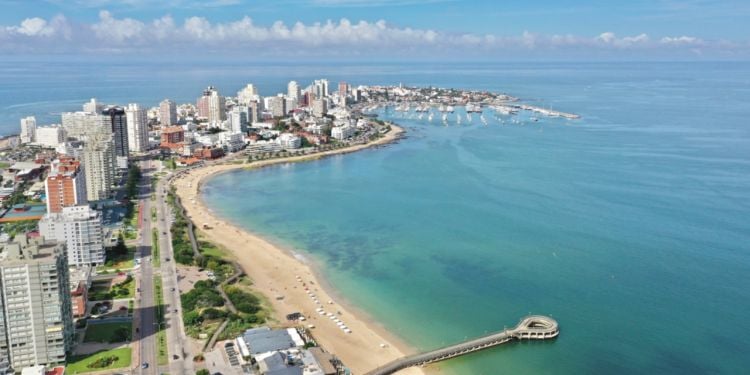
The Punta del Este peninsula marks the division point between Río de la Plata and the Atlantic. Playa Brava (east/Atlantic side) offers waves prized by surfers, while Playa Mansa (west/Río de la Plata side) presents calm waters ideal for families. The resort nature means many second homes and high prices during peak season.
Aidy Grill and Roosevelt prove more practical, close to shops, malls, and transport. A furnished 2-bedroom apartment rents for approximately USD 1,200 monthly (utilities included), while a furnished studio costs around USD 700. For purchase, a furnished two-bedroom averages USD 200,000 with USD 200 monthly gastos comunes, and a furnished studio USD 125,000 with USD 155 charges.
Other Cities and Regions
Small coastal towns like Atlantida, Piriapolis, and La Paloma offer 2-bedroom houses between USD 125,000-180,000 for purchase, with rentals from USD 500-900 monthly. These destinations offer excellent value for those seeking tranquility and beachfront living.
Salto, in the country's north, shows rents for a one-bedroom apartment in the center between UYU 30,000-45,000 monthly (USD 750-1,130). Maldonado, an important coastal city with international schools, presents among the country's lowest unemployment rates (5.7%) and offers a more affordable alternative to Punta del Este.
2025 Average Prices
The following table presents average rents in Montevideo and purchase prices per square meter for 2025, according to Numbeo data:
Housing Type | Monthly Price/Price per sqm |
1-bedroom city center | UYU 24,622 (~USD 615) |
1-bedroom outside center | UYU 19,219 (~USD 480) |
3-bedroom city center | UYU 41,515 (~USD 1,035) |
3-bedroom outside center | UYU 31,697 (~USD 790) |
Purchase city center | UYU 11,583/sqm (~USD 290/sqm) |
Purchase outside center | UYU 9,877/sqm (~USD 247/sqm) |
Sources: Numbeo
Gastos Comunes and Practical Considerations
Gastos comunes (condo fees) in Montevideo generally range between UYU 200-600 per square meter monthly (USD 5-15/sqm). In Punta del Este, these charges are typically higher due to additional services: standard services (doorman, pool, gym, WiFi) cost over USD 200 monthly, with apartment cleaning over USD 600, and hotel-style services exceeding USD 1,000.
For real estate purchase, no restrictions apply to foreigners. Mortgage financing is available with a 6.46% annual rate (20-year fixed). Permanent residents benefit from duty-free importation of their belongings. For rentals, a one-month security deposit is generally required, accompanied by references, guarantor, or proof of income.
Relocation: Complete Checklist for a Smooth Move
Preparing your move to Uruguay requires careful planning and several months' anticipation. From preparing administrative documents to organizing transport of your belongings, each step counts toward ensuring a smooth transition to your new South American life.
Essential Administrative Documents
Start by gathering and preparing all necessary official documents. You'll need apostille certification for all official documents: birth certificate, marriage certificate, diplomas, and criminal record. This apostille authenticates your documents for international use. Next, all these documents require translation into Spanish by a certified Uruguayan translator, except Brazilian documents which are accepted as is.
Simultaneously, initiate your visa or residency application before departure or prepare to do so as a tourist once there. Plan for your medical examination which must be performed at an approved clinic in Uruguay, accompanied by approved vaccinations. Remember to secure travel insurance, mandatory for entering as a tourist on Uruguayan territory.
Financial Preparation
On the financial front, several aspects merit attention. Plan to open a local bank account, which becomes easier once you've obtained resident status. Carefully study tax implications in your country of origin, particularly concerning double taxation treaties. Build an initial budget including 3-6 months of expenses, allowing time to settle and find your bearings. This financial reserve will provide necessary peace of mind during the adaptation period.
Housing Search
Launch your rental or purchase search in advance. Familiarize yourself with gastos comunes (condo fees) representing a significant additional monthly cost. Visit neighborhoods virtually or physically to identify the one matching your lifestyle and needs.
Language Learning
Learning Spanish, even at a basic level, proves essential for your integration. Start before departure with online courses or apps. Even elementary knowledge will greatly facilitate your first months and demonstrate your integration commitment.
Shipping Your Belongings
For importing personal belongings, permanent residents benefit from customs duty exemption. Prepare a detailed and exhaustive inventory of everything you plan to import. Regarding vehicles, importation is possible but taxes are high. It's often more economical to purchase a vehicle locally once settled.
Driver's License and Pets
Research driver's license exchange possibilities according to your country of origin. If exchange isn't possible, you'll need to obtain a Uruguayan license. For your pets, ensure you have an up-to-date health certificate, all required vaccinations, and prepare for a possible quarantine period.
Children's Schooling
If you have children, enroll them in schools well in advance. Sought-after international establishments may have waiting lists. Anticipate this step by several months to guarantee a place in your chosen establishment.
Utilities and Services
Once there, you'll need to subscribe to essential services: internet, phone, and electricity. Some providers may request an initial deposit, particularly if you don't yet have local credit history. Include these fees in your initial budget.
This methodical organization, while requiring time and energy, will allow you to approach your relocation serenely and focus on the essential: discovering your new country and building your new life in Uruguay.
Lifestyle and Recreation: Enjoying Uruguay Daily
Uruguay offers a wealth of cultural, sports, and tourist activities contributing to the country's renowned quality of life. From Montevideo's beaches to Punta del Este's festivals, including the famous Carnaval, international residents find numerous ways to enjoy their new life.
Cultural Activities
Uruguay's cultural scene proves particularly dynamic. Museums like Museo Nacional de Artes Visuales and Museo del Carnaval in Montevideo offer entries between UYU 150-300 (USD 4-7), with monthly free days or student/senior discounts at certain establishments.
Teatro Solís in Montevideo serves as the temple of opera, theater, and dance, with performances starting from UYU 400 (USD 10). The city vibrates to rhythms of tango, live music, and varied performances throughout the year. Cinemas offer screenings at approximately UYU 415 (USD 10), with a general range of UYU 300-500.
Uruguayan Carnaval holds the record as the world's longest, spanning over 40 continuous days between January and March. Candombe, with its African-influenced drum rhythms and street parades, constitutes a unique cultural experience. Summer also sees numerous music and arts festivals enliven the country.
Sports and Physical Activities
Gym and fitness memberships average UYU 2,204 monthly (USD 55), ranging from UYU 1,200-4,000 depending on facilities. Tennis court rental on weekends costs UYU 772 per hour (USD 19).
Beaches constitute the country's major asset, omnipresent along Montevideo's coast and throughout the Atlantic coastline. Swimming, volleyball, surfing (particularly at Playa Brava in Punta del Este) punctuate summer days. Montevideo's Rambla, a continuous 13-mile (21-kilometer) waterfront promenade, perfectly suits walking, jogging, rollerblading, cycling, or fishing. Beach yoga and numerous often free or low-cost activities complete the offering.
Golf enthusiasts will appreciate courses like La Tahona, while interior estancias offer authentic horseback riding activities. Water sports (sailing, surfing, aquatic activities) are widely practiced along the coast.
Must-See Tourist Sites
In Montevideo, Ciudad Vieja captivates with preserved colonial architecture, while the Rambla offers its 13-mile uninterrupted promenade. Mercado del Puerto gathers crafts and traditional parrilladas. Numerous parks and tree-lined avenues give the capital a bucolic charm rare for a South American city.
Punta del Este, nicknamed the "Monaco of South America," shines with its beaches, nightlife, and upscale restaurants. The artistic district of La Barra with its Art Street attracts contemporary art enthusiasts.
Colonia del Sacramento, a UNESCO colonial town facing Buenos Aires, enchants with preserved architecture and cobblestone streets. Cabo Polonio offers a unique bohemian experience in a village without grid electricity, with its lighthouse, sea lions, and wild beaches. Piriápolis, a family beach resort, features Cerro San Antonio for spectacular views.
The wine route in Canelones and Montevideo periphery regions allows discovery of boutique wineries and local production tastings. Traditional estancias offer stays or visits to immerse in Uruguayan rural culture. Hot springs, like Termas de Daymán in Salto, provide relaxation and wellness.
Nightlife
Bars and clubs charge entry between UYU 300-700 (USD 7-17), often including one drink. Local beer costs UYU 150-250 (USD 4-6), while cocktails range from UYU 300-600 (USD 7-15). The liveliest areas concentrate in Montevideo, Punta del Este (high season), and La Barra. The atmosphere varies from tango to DJ sets, including jazz and live music. The summer season (December-March) marks peak activity, with calmer pace in winter.
Markets and Local Life
Ferias (open-air markets) constitute essential weekly gatherings. Feria de Villa Biarritz animates Saturday mornings at Parque Villa Biarritz in Punta Carretas. Feria de Tristán Narvaja, every Sunday morning in Cordón neighborhood, is the most famous. Mercado Agrícola offers a permanent covered market atmosphere with cafes and food court. Fruits, vegetables, meats, cheeses, crafts, and clothing mingle in a convivial, typically Uruguayan atmosphere.
Free Activities
Numerous activities cost nothing: walking or jogging along the Rambla, public events and outdoor concerts, weekend markets, numerous well-maintained parks, and of course beaches accessible to all. This free offering allows full enjoyment of the country regardless of budget.
Everyday life in Uruguay
Want to know what life in Uruguay is really like? Here's a taste: explore the country, find tips to use transportation, to set up internet and phone services, and everything you need to live like a local.
Cost of Living: Detailed Budgets for Planning
Uruguay's cost of living positions advantageously compared to developed countries while remaining higher than most Latin American destinations. The country offers good value, particularly for those seeking stability and security. On average, living in Uruguay costs 20.8% less than the United States (excluding rent) and 43.5% less than New York. Rents are 65.1% cheaper than the US and 84.1% cheaper than New York.
Monthly Budget for Single Person
Here's a detailed breakdown of monthly expenses for a single person living in Uruguay, based on Numbeo data from August 2025. These amounts reflect average prices in Montevideo and may vary by neighborhood and city:
Expense Category | Monthly Amount |
Rent 1-bedroom center | UYU 24,622 (~USD 615) |
Rent 1-bedroom outside center | UYU 19,219 (~USD 480) |
Utilities (85 sqm) | UYU 5,921 (~USD 148) |
Internet 60 Mbps+ | UYU 1,747 (~USD 44) |
Mobile 10 GB+ | UYU 739 (~USD 18) |
Groceries | UYU 15,000-25,000 (~USD 375-625) |
Public transport (pass) | UYU 1,800 (~USD 45) |
Mutualista (health) | USD 100-200 |
Gym membership | UYU 2,204 (~USD 55) |
Dining out and entertainment | USD 150-300 |
Total excluding rent | USD 907-979 |
Total with city center rent | USD 1,522-1,594 |
Total with outside center rent | USD 1,387-1,459 |
Sources: Numbeo (August 2025)
Monthly Budget for Family of Four
Families must budget significantly higher expenses, particularly when choosing international schooling. Here's a realistic estimate of monthly costs for a family of 4 (2 adults, 2 children):
Expense Category | Monthly Amount |
Rent 3-bedroom center | UYU 41,515 (~USD 1,038) |
Rent 3-bedroom outside center | UYU 31,697 (~USD 792) |
Utilities | UYU 8,000-10,000 (~USD 200-250) |
Internet | UYU 1,747 (~USD 44) |
Family groceries | UYU 50,000-70,000 (~USD 1,250-1,750) |
Schooling (2 children international) | ~USD 1,458 |
Daycare (1 preschool child) | UYU 19,110 (~USD 478) |
Transport (pass × 2) | UYU 3,600 (~USD 90) |
Family mutualista | USD 300-500 |
Family entertainment | USD 300-500 |
Total excluding rent | USD 4,257-5,357 |
Total with city center rent | USD 5,295-6,395 |
Total with outside center rent | USD 5,049-6,149 |
Sources: Numbeo (August 2025), Pacific Prime
Regional Variations and Considerations
These budgets primarily concern Montevideo. Punta del Este proves significantly more expensive, with prices potentially increasing 50-100% depending on season. Small interior towns offer much more affordable costs, allowing monthly budget reduction of 30-40%.
Important to note: gastos comunes (condo fees) aren't included in stated rents and generally represent 5-15% of rent as additional cost. Uruguay remains considered expensive by regional standards but offers superior stability and quality of life in return. Inflation remains moderate compared to neighboring countries. Gasoline prices rank among South America's highest, a factor to consider if you plan regular vehicle use.
In a Nutshell: Uruguay Awaits
Uruguay reveals itself as a balanced relocation destination, combining political stability, recognized quality of life, and advantageous taxation. While cost of living exceeds many Latin American countries, the nation offers exceptional security, high-performing healthcare, and a tolerant, welcoming society in return.
From cosmopolitan Montevideo to beach resort Punta del Este, from affordable small coastal towns to authentic rural estancias, every international resident finds a setting matching their aspirations. Spanish proficiency, though essential, develops progressively in this country where human warmth facilitates integration.
Ready to take the leap? Join the international expat community in Uruguay on the Expat.com forum to exchange advice, experiences, and insights with those who've already made the move.
We do our best to provide accurate and up to date information. However, if you have noticed any inaccuracies in this content, please contact us.


Essential services for your expat journey



