

Living in Salvador da Bahia: the ultimate expat guide
Everything you need to know for a successful life in Salvador da Bahia.
Salvador da Bahia, Brazil's first capital and the largest city in the state of Bahia, offers expatriates a unique blend of Afro-Brazilian culture, tropical climate, and coastal living. Founded by the Portuguese in 1549, this historic port city on the northeastern coast is home to approximately 2.4 million residents and serves as the economic and cultural heart of the Bahia region. The city sits on a peninsula between the Atlantic Ocean and the Bay of All Saints (Baía de Todos os Santos), the largest bay in Brazil.
Why Choose Salvador?
Salvador attracts expatriates seeking an authentic Brazilian experience away from the more commercialized cities of São Paulo and Rio de Janeiro. The city's rich heritage, affordable cost of living compared to southern Brazilian cities, and warm year-round climate make it an appealing destination for professionals, retirees, and digital nomads alike.
5 Good Reasons to Move to Salvador
- Affordable living costs approximately 20-30% lower than São Paulo or Rio de Janeiro.
- Rich cultural heritage as the center of Afro-Brazilian traditions, music, and cuisine.
- Over 50 kilometers of beaches along the city's coastline with warm waters year-round.
- UNESCO World Heritage Site in Pelourinho, featuring stunning colonial architecture.
- Tropical climate with temperatures averaging 25-30°C throughout the year.
Working in Salvador: Employment Opportunities and Key Industries
Salvador's economy is driven by tourism, services, petrochemicals, and maritime industries. While the job market presents challenges, particularly for foreigners without Portuguese language skills, opportunities exist in sectors that value international experience and qualifications.
Key Employment Sectors
The tourism and hospitality industry represents one of Salvador's largest employers, with the city welcoming approximately 2.7 million visitors during Carnival alone. The petrochemical industry, centered around the Camaçari Industrial Complex north of Salvador, employs thousands of workers in manufacturing and processing. The service sector, including banking, retail, and healthcare, accounts for the majority of formal employment in the metropolitan area.
Work Permits and Employment Regulations
Foreign nationals require a VITEM V temporary work visa to work legally in Brazil. This visa is valid for up to 2 years and can be converted to permanent status afterward. Employers must sponsor the visa application through the Ministry of Justice and Public Security. Applicants need either a university degree with one year of relevant experience, or two years of professional experience with nine years of education. Brazil requires that at least two-thirds of a company's workforce be Brazilian nationals.
Employment Overview
The following table presents key employment indicators for the Salvador region.
Unemployment rate (Bahia state, 2024) | 9.9% |
Average monthly earnings (Bahia) | BRL 2,165 (~USD 430) |
Main industries | Tourism, petrochemicals, services, maritime |
Sources: IBGE - Brazilian Institute of Geography and Statistics, 2024
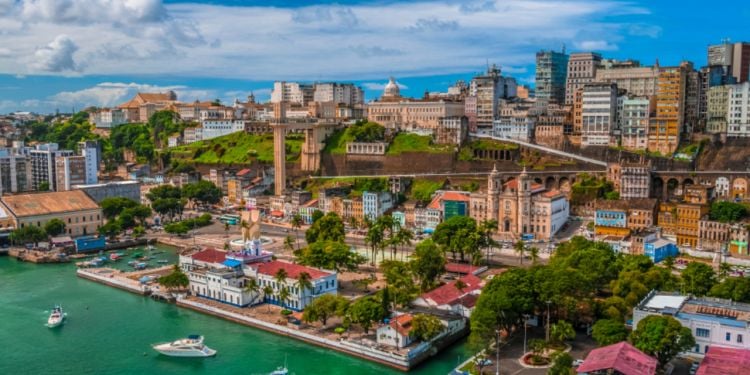
Working in Salvador de Bahia
Salvador de Bahia has long been one of Brazil's leading economic centers. The economy today is diversifying, and there are jobs. But as an expat, ...
Higher Education and Universities in Salvador
Salvador hosts several respected universities offering programs across all major disciplines. The city's academic institutions attract students from across Brazil and increasingly from abroad, particularly those interested in Afro-Brazilian studies, tropical medicine, and Portuguese language programs.
Federal University of Bahia (UFBA)
The Federal University of Bahia (UFBA) is the largest and most prestigious institution in the state, founded in 1808 as Brazil's first medical school. Today, UFBA offers 101 undergraduate and 143 graduate programs to approximately 39,000 students. As a public federal university, UFBA charges no tuition fees for regular students. The university maintains 213 active international cooperation agreements across 41 countries and welcomed 61 international exchange students in 2024. Classes are taught primarily in Portuguese, with intermediate Portuguese proficiency required for admission. The main campuses are located in the Ondina, Canela, and Federação neighborhoods.
Other Higher Education Options
Private institutions including Universidade Salvador (UNIFACS) and Universidade Católica do Salvador (UCSAL) offer additional program options with more flexible admission processes for international students. Several technical institutes provide vocational training in areas such as hospitality, technology, and healthcare.
Admission for International Students
International students at UFBA can apply through cooperation agreements with partner universities or as special students. Requirements include Portuguese language certification at intermediate level (Celpe-Bras), academic transcripts, and a valid student visa. The academic year runs from March to July (first semester) and August to December (second semester). Registration deadlines are November 30 for the first semester and May 30 for the second semester.
Sources: UFBA International Affairs Office
Schools for Expat Children in Salvador
Expatriate families in Salvador have access to several international schools offering curricula recognized worldwide. While options are more limited than in São Paulo or Rio de Janeiro, the available schools maintain high standards and prepare students for university admission both in Brazil and abroad.
Pan American School of Bahia (PASB)
The Pan American School of Bahia (PASB) is Salvador's premier international school, founded in 1960. Located in the Patamares neighborhood, PASB serves students from Pre-K through Grade 12 and offers three diploma options: American, Brazilian, and International Baccalaureate (IB). All classes are taught in English except for Brazilian curriculum subjects and Spanish. The school is accredited by the New England Association of Schools and Colleges (NEASC) and the Council of International Schools (CIS), and is recognized by both the U.S. Department of Education and Brazil's Ministry of Education. PASB provides extracurricular activities including sports, robotics, Model United Nations, and arts programs.
Land School (Gurilândia)
Land School, an expansion of Gurilândia School (established over 60 years ago), offers the only full IB Continuum in northeastern Brazil, from the Primary Years Programme through the Diploma Programme. The school provides bilingual instruction in English and Portuguese with a blend of international and Brazilian curricula. Part of the Inspired Education global network, Land School offers modern facilities and college counseling support for international university applications.
Enrollment and Fees
International school tuition in Salvador typically ranges from BRL 3,000 to BRL 6,000 per month (approximately USD 600-1,200), depending on grade level. Enrollment requires academic records, vaccination certificates, and valid residency documentation. Most schools begin enrollment for the following academic year in September-October.
Sources: Pan American School of Bahia, Land School
Housing and Neighborhoods in Salvador
Salvador's housing market offers diverse options from historic colonial buildings in the city center to modern high-rise apartments in beachfront neighborhoods. Expatriates typically settle in the southern peninsula neighborhoods, which offer better security, infrastructure, and proximity to beaches.
Popular Neighborhoods for Expats
Barra sits at the southern tip of the peninsula, offering stunning sunsets, the iconic Farol da Barra lighthouse, and excellent beach access. It is one of the safest neighborhoods with visible police presence and a good selection of restaurants and shops. Rio Vermelho is known as Salvador's bohemian quarter, featuring lively nightlife, live music venues, and a mix of cafés and restaurants. The neighborhood attracts artists and young professionals. Pituba and Caminho das Árvores are upper-middle-class residential areas with modern apartment buildings, shopping malls (including Salvador Shopping), and good infrastructure. Ondina offers a quieter residential atmosphere near the beach and is close to the Carnival circuit. Vitória and Graça are elegant neighborhoods with tree-lined streets, museums, and panoramic bay views.
Rental Prices
The following table shows typical monthly rent for unfurnished apartments in Salvador.
1-bedroom apartment (city center) | BRL 1,500 - 2,500 (~USD 300-500) |
1-bedroom apartment (outside center) | BRL 1,000 - 1,800 (~USD 200-360) |
3-bedroom apartment (city center) | BRL 3,000 - 5,000 (~USD 600-1,000) |
3-bedroom apartment (outside center) | BRL 2,000 - 3,500 (~USD 400-700) |
Sources: Numbeo, local real estate listings 2024-2025
Renting Process
Most rental contracts require a guarantor (fiador) who owns property in Brazil, or alternatively a security deposit of 3 months' rent. Contracts typically run for 30 months. Expatriates without a CPF (Brazilian tax number) may face additional requirements. Websites like VivaReal, QuintoAndar, and ZAP Imóveis list available properties.
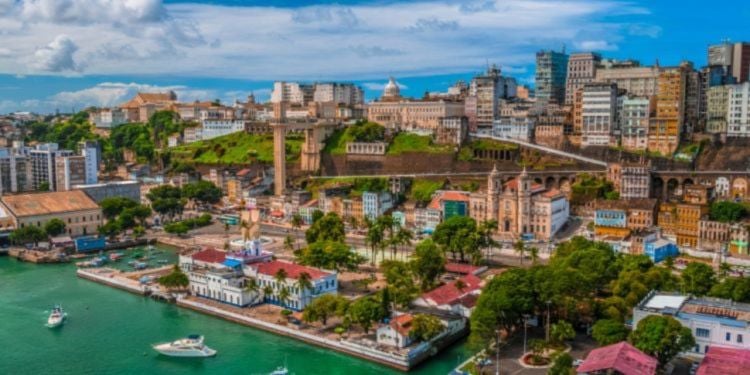
Accommodation in Salvador de Bahia
Salvador, the capital of the state of Bahia and Brazil's first colonial capital, is a world-known tourist destination. Located in the northeast ...
Leisure, Culture and Things To Do in Salvador
Salvador stands as the heart of Afro-Brazilian culture, offering expatriates an extraordinary range of cultural experiences, festivals, beaches, and nightlife unmatched elsewhere in Brazil.
Cultural Attractions
Pelourinho, the historic center and UNESCO World Heritage Site, features colorful colonial architecture, cobblestone streets, and numerous museums. Key institutions include the Afro-Brazilian Museum showcasing African heritage, the Jorge Amado Foundation honoring the beloved Bahian author, the Museum of Sacred Art, and the Casa do Carnaval celebrating the city's famous festival. The Farol da Barra Lighthouse (1698) houses the Nautical Museum within the Santo Antônio Fort. The Museum of Modern Art (MAM) hosts weekly outdoor concerts called Jam no MAM every Saturday evening.
Festivals and Music
Salvador Carnival is the world's largest street party, recognized by Guinness World Records, attracting approximately 2.5 million participants over six days in February. Unlike Rio's samba-focused celebration, Salvador's Carnival features Axé music, trio elétricos (music trucks), and Afro blocos like Olodum and Ilê Aiyê. Other major festivals include Lavagem do Bonfim (January), the Festa de Iemanjá (February 2), and São João celebrations in June. Capoeira, the Afro-Brazilian martial art combining dance and acrobatics, originated in Bahia and remains central to local culture.
Beaches and Outdoor Activities
Porto da Barra offers calm, sheltered waters ideal for swimming, while Farol da Barra provides dramatic sunset views. Beaches along the Atlantic coast including Rio Vermelho, Pituba, Itapuã, and Stella Maris offer surfing conditions and beachfront dining. Day trips to Morro de São Paulo and islands in the Bay of All Saints provide additional beach escapes.
Nightlife and Dining
Rio Vermelho is the center of nightlife, with live music bars, restaurants, and the famous Dinha's Acarajé stand. Bahian cuisine features African-influenced dishes including moqueca (seafood stew), acarajé (fried bean fritters), and vatapá.
Daily Life in Salvador
Life in Salvador moves at a relaxed pace shaped by tropical weather, beach culture, and strong community traditions. Understanding local customs and transportation options will help expatriates adapt to daily routines in this coastal city.
Getting Around Salvador
Salvador's public transportation system includes metro, buses, and BRT (Bus Rapid Transit). The Salvador Metro operates two lines covering 38 kilometers with 22 stations, connecting the airport to the city center and key neighborhoods. A single metro fare costs BRL 4.10 (approximately USD 0.80). The metro runs daily from 5:00 AM to midnight. The BRT Lapa-Iguatemi corridor connects the historic center to commercial districts like Rio Vermelho and Pituba. Buses cover extensive routes throughout the metropolitan area with fares around BRL 5.20. Ride-sharing apps Uber and 99 are widely used and often more convenient for reaching areas not served by metro. The city also features historic funiculars connecting the upper and lower city, and the famous Elevador Lacerda public elevator.
Climate and Lifestyle
Salvador enjoys a tropical climate with temperatures between 24°C and 30°C year-round. The rainy season runs from April to June, with brief afternoon showers common even in dry months. Beach culture is central to local life, with Porto da Barra and Farol da Barra beaches particularly popular. Soteropolitanos (Salvador residents) typically start work early and take extended lunch breaks. Many businesses close during the hottest afternoon hours.
Language and Communication
Portuguese is the official language and essential for daily life. English proficiency is limited outside tourist areas and international businesses. Learning basic Portuguese significantly improves the expatriate experience. Several language schools in Salvador offer Portuguese courses for foreigners, including programs at UFBA.
Cost of Living in Salvador
Salvador offers one of the more affordable cost structures among Brazil's major cities, with living expenses approximately 20-30% lower than São Paulo. The following tables provide estimated monthly budgets based on current market data.
Monthly Budget for a Single Person
This table estimates monthly costs for a single expatriate living in Salvador.
Category | BRL | USD (approx.) |
Rent (1-bedroom, city center) | 2,000 | 400 |
Utilities (electricity, water, internet) | 400 | 80 |
Groceries | 1,200 | 240 |
Transportation | 300 | 60 |
Health insurance (private) | 500 | 100 |
Dining and leisure | 800 | 160 |
Total | 5,200 | 1,040 |
Sources: Numbeo, LivingCost.org, 2024-2025
Monthly Budget for a Family of Four
This table estimates monthly costs for a family with two children, including school fees.
Category | BRL | USD (approx.) |
Rent (3-bedroom, good area) | 4,000 | 800 |
Utilities | 700 | 140 |
Groceries | 2,500 | 500 |
Transportation | 600 | 120 |
International school (2 children) | 8,000 | 1,600 |
Health insurance (family) | 1,500 | 300 |
Dining and leisure | 1,500 | 300 |
Total | 18,800 | 3,760 |
Sources: Numbeo, international school fee estimates, 2024-2025
In Short
Salvador da Bahia offers expatriates a deeply cultural, affordable, and welcoming environment unlike anywhere else in Brazil. From the rhythms of Olodum echoing through Pelourinho's colonial streets to sunset views at Farol da Barra, the city rewards those who embrace its unique Afro-Brazilian heritage. While Portuguese language skills are essential and the job market presents challenges, Salvador's lower cost of living, tropical climate, and strong sense of community create an enriching experience for professionals, families, and retirees alike. The city's expanding metro system, quality international schools, and respected universities make practical life increasingly manageable. Whether you're drawn by career opportunities, cultural immersion, or simply the promise of beach life year-round, Salvador delivers an authentic Brazilian experience. Connect with fellow expatriates and get local advice by joining the Salvador da Bahia forum on Expat.com.
We do our best to provide accurate and up to date information. However, if you have noticed any inaccuracies in this content, please contact us.


Essential services for your expat journey



