Living in Fortaleza: the ultimate expat guide
Everything you need to know for a successful life in Fortaleza.
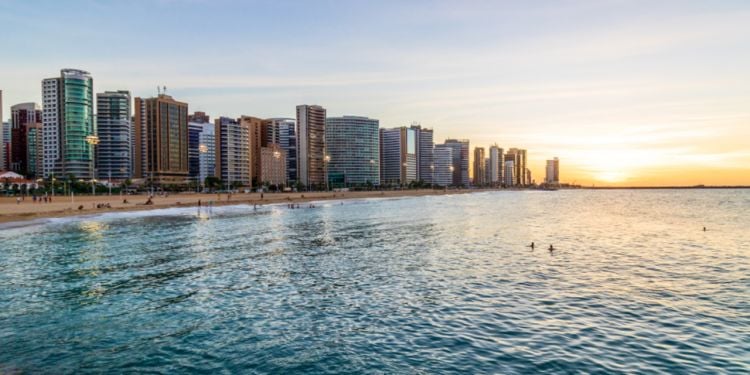
Fortaleza, the capital of Ceará state, is Brazil's fifth-largest city and one of the country's most attractive destinations for those seeking a coastal lifestyle combined with urban convenience. Located on the northeastern Atlantic coast, just a few degrees south of the equator, the city enjoys year-round warm weather with average temperatures around 27°C (80°F). With a population of approximately 2.5 million in the city proper and nearly 4 million in the metropolitan area, Fortaleza offers the infrastructure of a major Brazilian metropolis while maintaining a more relaxed atmosphere than São Paulo or Rio de Janeiro.
Why Choose Fortaleza?
The city has become increasingly popular among remote workers, retirees, and lifestyle-focused residents drawn by its lower cost of living, excellent beaches, and growing international community. Fortaleza serves as a gateway to some of Brazil's most stunning coastal destinations, including Jericoacoara and Canoa Quebrada, while offering direct international flights to Europe and North America.
5 Good Reasons to Move to Fortaleza
- Affordable beach lifestyle – Enjoy oceanfront living at a fraction of the cost compared to Rio de Janeiro or São Paulo, with rent and daily expenses significantly lower than major Brazilian cities.
- Year-round sunshine – Fortaleza is the northeastern capital with the least rainfall, offering a dry season from August to December and warm temperatures throughout the year.
- World-class water sports – The Ceará coast is a global hotspot for kitesurfing and windsurfing, with consistent trade winds from July to January attracting athletes from around the world.
- Growing international community – A thriving digital nomad and expat scene concentrated in neighborhoods like Meireles and Aldeota, with coworking spaces and international restaurants.
- Friendly local culture – Cearenses are known for their warmth, humor, and welcoming attitude toward foreigners, making integration smoother than in larger Brazilian cities.
Working in Fortaleza: Employment Opportunities and Work Permits
Fortaleza is an important industrial and commercial center for northeastern Brazil, with a diversified economy spanning tourism, manufacturing, technology, and services. While the local job market primarily serves Portuguese speakers, opportunities exist for English-speaking professionals in tourism, education, and the growing tech sector.
Key Industries and Employment Sectors
The city's economy benefits from its position as a major tourist destination, with the hospitality and tourism sector employing a significant portion of the workforce. Manufacturing industries include textiles, footwear, and food processing, while the technology sector is expanding with startups and IT companies establishing offices in the metropolitan area. The renewable energy sector, particularly wind power, has created new opportunities in Ceará state.
Work Visa Requirements
Foreign nationals require a work visa to be employed legally in Brazil. The most common option is the VITEM V (Temporary Work Visa), which is employer-sponsored and valid for up to two years, with the possibility of renewal. Requirements include at least two years of professional experience plus nine years of education, or a university degree with one year of experience. The employer initiates the application process with the Ministry of Labor and Employment. Remote workers can apply for Brazil's Digital Nomad Visa, which allows stays of up to one year (renewable) for those working for companies outside Brazil and earning at least USD 1,500 per month.
Employment Overview
National unemployment rate (2025) | 5.6% |
National minimum wage (2025) | BRL 1,518/month (~USD 280) |
Average monthly salary in Fortaleza | BRL 2,500–4,500 (~USD 460–830) |
Key sectors | Tourism, Manufacturing, Technology, Education |
Sources: IBGE – Brazilian Institute of Geography and Statistics, Brazilian Government Portal
Working in Fortaleza
Fortaleza is the capital city of the northeastern state of Ceará and is Brazil's fifth-largest city with a year-round population of about ...
Higher Education and Universities in Fortaleza
Fortaleza is home to several respected universities offering undergraduate and postgraduate programs. The city serves as an educational hub for northeastern Brazil, attracting students from across the region. While most programs are taught in Portuguese, some institutions offer courses in English, particularly in business and international studies.
Federal University of Ceará (UFC)
The Universidade Federal do Ceará (UFC) is the leading public institution in the state, founded in 1955. It is a tuition-free federal university with three main campuses in Fortaleza: Campus do Pici (science and technology), Campus do Benfica (humanities, business, and law), and Campus do Porangabussu (medical school). UFC offers over 100 undergraduate programs and approximately 100 graduate programs, including 50 doctoral programs. The university maintains 99 international cooperation agreements with institutions in 17 countries. International students can apply through the PEC-G program (Brazilian Program for Exchange Students) for free undergraduate studies.
University of Fortaleza (UNIFOR)
UNIFOR is the best-ranked private university in northern and northeastern Brazil, established in 1973. The institution has over 25,000 students and offers 40 undergraduate courses, 17 master's and doctoral programs, and more than 80 specializations and MBAs. UNIFOR provides some courses taught in English, particularly in business fields, and offers Portuguese as a Foreign Language courses for international students. The 72-hectare campus includes modern facilities, a sports park, health center, and cultural spaces. Annual tuition for undergraduate programs starts at approximately USD 1,000.
Admission for International Students
International students can access Brazilian higher education through several pathways. For public universities, the PEC-G program offers free tuition for students from developing countries with which Brazil has cultural agreements. Private institutions like UNIFOR have their own international admissions processes. All students must demonstrate Portuguese proficiency or enroll in language preparation courses. Academic credentials may require validation by Brazilian authorities, and documents must be translated and apostilled.
Sources: Universidade Federal do Ceará, University of Fortaleza, Brazilian Ministry of Foreign Affairs
Retiring in Fortaleza: A Tropical Coastal Option
Fortaleza has emerged as an attractive retirement destination for foreigners seeking an affordable coastal lifestyle with year-round warm weather. The combination of low living costs, quality healthcare options, and welcoming local culture makes it worth considering for those planning retirement abroad.
Retirement Visa Options
Brazil offers a Retirement Visa (VITEM XIV) for foreign nationals receiving a pension or retirement income. Applicants must demonstrate a minimum monthly income of approximately BRL 6,000 (~USD 1,100) per person, or BRL 2,000 (~USD 370) additional per dependent. The visa initially grants a two-year temporary residence, which can be renewed and eventually converted to permanent residency. Required documents include proof of pension or retirement income, criminal background check, and health insurance valid in Brazil. Processing typically takes 2–4 months through a Brazilian consulate.
Healthcare for Retirees
Brazil's public healthcare system (SUS – Sistema Único de Saúde) is available to all legal residents, including visa holders, at no cost. However, most retirees opt for private health insurance to access faster service and more comfortable facilities. Private insurance plans for retirees cost approximately BRL 1,200–1,800/month (~USD 220–330), increasing with age. Fortaleza has several private hospitals with good standards, including Hospital São Mateus, Hospital Monte Klinikum, and Hospital Antônio Prudente. Routine doctor visits typically cost BRL 200–400 (~USD 37–75) without insurance.
Retirement Budget Considerations
Retirees can live comfortably in Fortaleza on USD 1,500–2,500/month including rent, healthcare, and leisure activities. Those choosing more modest accommodations or living outside premium neighborhoods can manage on less. Key advantages include the favorable USD/BRL exchange rate, significantly lower costs compared to retirement destinations in the United States or Europe, and an active lifestyle facilitated by the warm climate and outdoor opportunities.
Sources: Brazilian Ministry of Foreign Affairs, Brazilian Ministry of Health
Schools and Education for Children in Fortaleza
Fortaleza offers a range of educational options for families with children, from Brazilian public and private schools to international and bilingual institutions. While the city has fewer international schools than São Paulo or Rio de Janeiro, several quality options exist for families seeking English-language or bilingual education.
International and Bilingual Schools
The Escola Americana de Fortaleza (EAF) is the primary American-style school in the city, offering an American curriculum from preschool through Grade 12 with instruction in English. The school is accredited by AdvancED and serves both the international and local Brazilian community. Maple Bear Fortaleza follows a Canadian bilingual methodology, providing English immersion education from early childhood through high school. For families seeking Brazilian education with strong English components, several bilingual schools offer quality programs.
Top Bilingual Schools
Colégio 7 de Setembro is one of Fortaleza's most prominent bilingual institutions, integrating Brazilian and international educational practices with an emphasis on English proficiency and critical thinking. The school offers programs from preschool through high school across multiple campuses. Colégio Ari de Sá Cavalcante provides a rigorous Brazilian curriculum with strong English instruction, preparing students for both national exams and international assessments. Colégio Farias Brito offers bilingual education with excellent academic results and comprehensive extracurricular programs including robotics, music, and sports.
Enrollment and Fees
International and bilingual school fees in Fortaleza are generally lower than in São Paulo or Rio de Janeiro. Annual tuition at top bilingual schools ranges from approximately BRL 30,000 to BRL 60,000 (~USD 5,500–11,000), depending on the grade level and institution. The school year in Brazil runs from February to December, with a winter break in July. Enrollment typically requires proof of previous schooling, vaccination records, and residency documentation. Most schools require a Portuguese language assessment for non-native speakers.
Sources: Escola Americana de Fortaleza, Maple Bear Fortaleza, Colégio 7 de Setembro
Housing and Neighborhoods in Fortaleza
Fortaleza offers diverse housing options at prices significantly lower than Brazil's southern cities. From beachfront high-rise apartments to comfortable inland neighborhoods, the city caters to various budgets and lifestyle preferences. The rental market is active, with both furnished and unfurnished options available for short and long-term stays.
Best Neighborhoods for Newcomers
Meireles is the premier choice for those seeking upscale beachfront living. Located along the famous Avenida Beira Mar promenade, this neighborhood features high-rise condominiums, restaurants, bars, and easy beach access. It has the largest concentration of international residents and is considered one of the safest areas. Aldeota, just inland from Meireles, attracts families and professionals with its shopping centers, schools, medical facilities, and tree-lined streets. The neighborhood offers excellent urban convenience without beachfront premiums. Mucuripe combines coastal beauty with a residential atmosphere, known for its marina, fishing boats, and seafood markets. Cocó appeals to nature lovers with its proximity to Parque do Cocó, the city's largest green space, while offering modern apartment developments.
Rental Prices
Housing costs in Fortaleza are approximately 25% lower than in São Paulo and Rio de Janeiro. In premium neighborhoods like Meireles and Aldeota, expect to pay higher rents for quality apartments with security and amenities. More affordable options exist in emerging neighborhoods and areas further from the beachfront.
1-bedroom apartment (Meireles/Aldeota) | BRL 2,500–4,500/month (~USD 460–830) |
3-bedroom apartment (Meireles/Aldeota) | BRL 4,000–7,000/month (~USD 740–1,290) |
1-bedroom apartment (mid-range areas) | BRL 1,500–2,500/month (~USD 275–460) |
3-bedroom apartment (mid-range areas) | BRL 2,500–4,000/month (~USD 460–740) |
Sources: Numbeo, Global Property Guide
Leisure, Culture, and Things to Do in Fortaleza
Fortaleza offers a vibrant mix of beach activities, cultural attractions, and entertainment options. The city's coastal location, combined with its rich northeastern Brazilian heritage, creates diverse opportunities for leisure and exploration.
Beaches and Outdoor Activities
Praia do Futuro is the city's premier beach, stretching 4.5 miles with clean water, strong waves, and numerous barracas (beach clubs) offering food, drinks, and live music. Praia de Meireles along Avenida Beira Mar provides a more urban beach experience with jogging paths, restaurants, and the daily craft fair. For water sports enthusiasts, the Ceará coast is world-renowned for kitesurfing and windsurfing, with nearby Cumbuco (30 minutes from the city) offering ideal conditions from July to January. Parque do Cocó, one of Brazil's largest urban parks, provides trails, mangrove ecosystems, and green space for running and cycling.
Cultural Attractions
The Centro Dragão do Mar de Arte e Cultura is Fortaleza's cultural heart, housing the Museum of Contemporary Art, the Memorial da Cultura Cearense, a planetarium, theater, and cinema on a 30,000 square meter complex. The surrounding area features bars, restaurants, and live music venues. The historic Teatro José de Alencar, inaugurated in 1910, showcases Art Nouveau architecture with cast iron, stained glass, and native wood carvings, hosting performances and guided tours. Mercado Central spans four floors with over 500 stalls selling local handicrafts, leather goods, lace, hammocks, and regional foods.
Nightlife and Entertainment
Fortaleza is famous for its forró music scene, with venues throughout the city hosting live performances and dance parties. Thursday is traditionally "crab night" (quinta da caranguejada) at beach restaurants along Praia do Futuro. The Praia de Iracema area and streets around Dragão do Mar offer the highest concentration of bars and nightclubs. The city also has a renowned comedy circuit, with humor shows at venues like the Teatro do Humor Cearense.
Day Trips and Excursions
Canoa Quebrada (160 km southeast) features dramatic multicolored cliffs and a relaxed beach village atmosphere. Jericoacoara (300 km west), consistently ranked among Brazil's most beautiful beaches, is accessible by 4x4 transfer and worth an overnight stay. Beach Park in Aquiraz (25 km south) is Latin America's largest water park.
Sources: Visit Brasil – Ministry of Tourism, Centro Dragão do Mar de Arte e Cultura
Daily Life in Fortaleza: Getting Around and Local Culture
Daily life in Fortaleza combines the relaxed pace of a beach city with the conveniences of a major urban center. The tropical climate encourages outdoor living, and residents typically organize their days around the intense midday heat, with mornings and evenings being the most active periods for errands and socializing.
Public Transportation
Fortaleza has a developing public transit network that includes buses, metro lines, and light rail (VLT). The Metrofor system operates three lines: the South Line (24.1 km connecting the metropolitan area to downtown), the West Line (19.5 km to Caucaia), and the Parangaba-Mucuripe VLT (13.29 km connecting key districts including beach areas). Metro fare is integrated with the bus system through the SIT-FOR card. Bus tickets cost approximately BRL 4.50 (~USD 0.85), and transfers within terminals are free. Ride-sharing apps Uber and 99 are widely available and affordable, making them popular choices for evening travel and areas less served by public transit. A 5 km ride typically costs BRL 15–25 (~USD 2.75–4.60).
Language and Communication
Portuguese is the primary language, and English proficiency outside tourist areas and hotels is limited. Learning basic Portuguese significantly improves daily interactions, from shopping at markets to dealing with service providers. Language schools and private tutors are readily available. Mobile phone coverage is excellent, with major carriers Claro, Vivo, and TIM offering prepaid and postpaid plans. High-speed internet is available in most urban areas, with fiber connections in newer buildings.
Climate and Lifestyle
Fortaleza enjoys sunshine year-round with temperatures averaging 27–30°C (80–86°F). The dry season runs from August to December with consistent trade winds, while the rainy season occurs from February to May with brief afternoon showers. The consistent weather makes Fortaleza ideal for outdoor activities. Beach culture is central to local life, with residents gathering at beachfront barracas (beach bars) for food, drinks, and socializing, particularly on weekends. The city has a vibrant forró music and dance scene, with venues hosting live performances throughout the week.
Sources: Metrofor – Companhia Cearense de Transportes Metropolitanos, Visit Brasil
Cost of Living in Fortaleza: Budgets for Singles and Families
Fortaleza offers one of the most affordable coastal lifestyles in Brazil, with costs significantly lower than São Paulo, Rio de Janeiro, or Florianópolis. The favorable exchange rate for those earning in USD, EUR, or GBP makes the city particularly attractive for remote workers and retirees with foreign income.
Monthly Budget for a Single Person
A single person can live comfortably in Fortaleza on USD 1,000–1,500 per month, including rent in a good neighborhood. Those with more modest expectations can manage on less, while a more comfortable lifestyle with dining out and entertainment requires the higher end of this range.
Expense Category | Monthly Cost (BRL) | Monthly Cost (USD) |
Rent (1-bedroom, good area) | 2,500–3,500 | 460–650 |
Utilities (electricity, water, gas) | 300–450 | 55–85 |
Groceries | 700–900 | 130–165 |
Dining out (8–10 meals) | 400–600 | 75–110 |
Transportation | 300–500 | 55–90 |
Health insurance (private) | 400–700 | 75–130 |
Internet and mobile | 150–250 | 28–46 |
Total (Single Person) | 4,750–6,900 | 880–1,275 |
Monthly Budget for a Family of Four
Families can enjoy a comfortable lifestyle in Fortaleza on USD 2,500–3,500 per month, including a larger apartment in a safe neighborhood and quality education for children.
Expense Category | Monthly Cost (BRL) | Monthly Cost (USD) |
Rent (3-bedroom, good area) | 4,500–6,500 | 830–1,200 |
Utilities | 500–700 | 90–130 |
Groceries | 1,800–2,500 | 330–460 |
School fees (bilingual, 2 children) | 3,000–6,000 | 555–1,110 |
Transportation | 600–1,000 | 110–185 |
Health insurance (family) | 1,500–2,500 | 275–460 |
Entertainment and dining | 800–1,200 | 150–220 |
Total (Family of Four) | 12,700–20,400 | 2,350–3,765 |
Sources: Numbeo, Expatistan
In Short
Fortaleza offers an appealing combination of affordable beachfront living, year-round sunshine, and the warmth of northeastern Brazilian culture. Whether you're drawn by the world-class kitesurfing conditions, seeking a lower cost of living while working remotely, or planning a tropical retirement, the city provides genuine value without sacrificing quality of life. The growing international community in neighborhoods like Meireles and Aldeota makes settling in easier, while the friendly Cearense locals are known for their humor and hospitality. From the cultural offerings at Dragão do Mar to the fresh seafood at Mucuripe fish market, daily life blends urban convenience with coastal relaxation. Ready to explore further? Join the Fortaleza forum on Expat.com to connect with others who have made this vibrant city their home.
We do our best to provide accurate and up to date information. However, if you have noticed any inaccuracies in this content, please contact us.


Essential services for your expat journey