

Living in Curitiba: the ultimate expat guide
Everything you need to know for a successful life in Curitiba.
Curitiba, the capital of Paraná state in southern Brazil, is a city that combines urban innovation with a high quality of life. With a population of approximately 1.83 million residents (metro area: 3.9 million), this vibrant city sits on a plateau at 932 meters above sea level, enjoying a subtropical climate with four distinct seasons. Founded in 1693, Curitiba has become internationally recognized for its pioneering urban planning, efficient public transportation, and commitment to sustainability. The city boasts a Human Development Index (HDI) of 0.823, one of the highest in Brazil, and consistently ranks among the country's safest and most livable cities.
5 Good Reasons to Move to Curitiba
- Exceptional quality of life – Ranked as the best large city to live in Brazil by Reader's Digest, with excellent healthcare, education, and public services.
- Green urban environment – Over 50 square meters of green space per inhabitant, with more than 30 parks and urban forests throughout the city.
- Strong economy and job opportunities – Brazil's fourth-largest economy, home to major automotive manufacturers like Volvo, Renault, and Volkswagen, plus a growing tech sector.
- Affordable cost of living – Significantly lower living expenses compared to São Paulo or Rio de Janeiro while maintaining high standards.
- Rich multicultural heritage – A diverse blend of European influences (German, Italian, Polish, Ukrainian) reflected in architecture, cuisine, and cultural events.
Building Your Career in Curitiba
Curitiba offers a dynamic job market with diverse opportunities across multiple sectors. The city's economy is the fourth largest in Brazil, with a 30-year growth rate of 7.1% – significantly higher than the national average of 4.2%. Per capita income in Curitiba is 66% higher than the Brazilian average, making it an attractive destination for professionals seeking career advancement in South America.
Key Industries and Employment Sectors
The automotive industry is a cornerstone of Curitiba's economy, with manufacturing plants for global brands including Volvo, Renault, Volkswagen, Bosch, and Siemens. The city is Brazil's second-largest car manufacturing center. The technology and innovation sector is rapidly expanding, with programs like Tecnoparque offering incentives for startups focusing on smart city solutions, artificial intelligence, and green technologies. Other major sectors include agribusiness, logistics, healthcare, and education.
Work Permits and Employment Requirements
Foreign nationals require a VITEM V (Temporary Work Visa) to work legally in Brazil. This visa is valid for up to 2 years and can be extended or converted to permanent residence. Requirements include: a university degree plus one year of experience, or two years of professional experience with nine years of education, or a postgraduate degree. The sponsoring Brazilian company must initiate the application through the Ministry of Justice and Public Security. Processing typically takes 30-90 days. Brazil also offers a Digital Nomad Visa (VITEM XIV) for remote workers with minimum monthly income of USD 1,500.
Average monthly salary | BRL 4,700 – 9,400 (USD 870 – 1,740) |
National unemployment rate | 6.5% (January 2025) |
Top-paying sectors | IT, automotive, finance, healthcare |
Working in Curitiba
Curitiba attracts many foreigners, who come both for work and because Curitiba offers a high standard of living. Many foreign companies have offices ...
Higher Education and Universities in Curitiba
Curitiba is a major educational hub in southern Brazil, home to prestigious universities and research institutions. The city attracts thousands of domestic and international students each year, offering programs across diverse fields from engineering and medicine to business and the arts.
Leading Universities
The Federal University of Paraná (UFPR), established in 1912, is Brazil's oldest university and a symbol of the city. Ranked among the top 10 universities in Brazil and 651-700 globally (QS Rankings), UFPR hosts approximately 33,000 students, including 2,200 international students. The university offers 124 undergraduate programs and over 100 graduate programs across five campuses. Public universities in Brazil are tuition-free for all students, including international students, though admission is competitive through entrance exams (vestibular) or ENEM scores.
The Federal University of Technology – Paraná (UTFPR) specializes in engineering and technology, ranked 104th in Latin America. The Pontifical Catholic University of Paraná (PUCPR) is a leading private institution offering quality programs in law, medicine, and business.
International Student Support
UFPR's International Agency provides comprehensive support for exchange students, including the INTEGRATE UFPR program with student mentors, housing assistance, and orientation services. The university offers free Portuguese courses for foreigners at CELIN (Language Center). University restaurants provide meals for just BRL 1.30 (approximately USD 0.25). International students need a student visa for stays exceeding three months and must register with the Federal Police within 30 days of arrival.
UFPR (public) | Tuition-free |
PUCPR (private) | BRL 2,500 – 5,000/month |
Student living costs | BRL 2,500 – 3,500/month |
Schools and Education for Expat Children
Curitiba offers excellent educational options for expatriate families, from international schools following American or IB curricula to quality Brazilian public and private schools. The city has a school enrollment rate of 98.48% for children aged 6-14, reflecting its strong commitment to education.
International Schools
The International School of Curitiba (ISC), founded in 1959, is the only international school in Paraná state offering American, Brazilian, and IB diplomas. Located in the Santa Felicidade neighborhood on a beautiful campus, ISC enrolls approximately 750 students from pre-kindergarten through grade 12. The school is accredited by AdvancED, CIS, and the Brazilian Ministry of Education. Instruction is primarily in English, with mandatory Portuguese and Brazilian studies components for all students. Facilities include modern classrooms, science labs, libraries, sports facilities, and an outdoor education center.
The Swiss School of Curitiba (Colégio Suíço-Brasileiro) offers IB-based education with multilingual instruction in German, Portuguese, and English. Both schools provide English Language Learner (ELL) support for students transitioning from other educational systems.
Brazilian Public and Private Schools
The Brazilian education system is divided into fundamental education (ages 6-14, mandatory) and secondary education (ages 15-17). Public schools are free but instruction is in Portuguese. Quality private schools like Positivo and Bom Jesus offer excellent Brazilian curricula with some bilingual options at lower costs than international schools. Enrollment typically requires proof of residency, previous school records (translated and apostilled), and health documentation.
International School of Curitiba | Contact school for current fees |
Private Brazilian schools | BRL 1,500 – 3,500/month |
Public schools | Free |
Sources: International School of Curitiba, IBGE
Finding Your Home: Housing and Neighborhoods
Curitiba's housing market offers diverse options from modern high-rise apartments to traditional houses, with prices significantly lower than Brazil's largest cities. The rental market is active, with options to suit various budgets and lifestyles. Property prices have appreciated 20% over the past five years, making the city attractive for both renters and investors.
Popular Neighborhoods for Expats
Batel is Curitiba's most prestigious neighborhood, known for upscale shopping, excellent restaurants, and vibrant nightlife. It's popular among professionals and offers luxury apartments with prices averaging BRL 12,000-15,000/month for 3-bedroom units. Água Verde has the highest Human Development Index in the city, offering a perfect balance of residential tranquility with urban convenience, excellent parks, and good transport links at more moderate prices. Cabral is ideal for those relying on public transport, being a major bus hub near the Oscar Niemeyer Museum. Ecoville is a modern, sustainability-focused area with new developments, spacious green areas, and family-friendly amenities. Santa Felicidade is charming with Italian heritage, excellent restaurants, and a welcoming community atmosphere.
Rental Process and Costs
Renting typically requires a CPF (tax ID), proof of income (usually 3x the rent), and either a local guarantor (fiador) or a rental guarantee insurance (seguro fiança). Most leases are for 30 months with adjustments tied to inflation indices. Furnished apartments are available at premium prices, popular among expats.
1-bedroom apartment (center) | BRL 1,800 – 3,000/month |
3-bedroom apartment (center) | BRL 3,500 – 6,000/month |
1-bedroom apartment (suburbs) | BRL 1,200 – 2,000/month |
3-bedroom apartment (suburbs) | BRL 2,500 – 4,000/month |
Sources: Numbeo, local real estate listings
Culture, Leisure, and Things to Do
Curitiba offers a rich cultural scene and abundant recreational opportunities that reflect its diverse heritage and commitment to urban innovation. From world-class museums to beautiful parks, there's something for everyone in this green, dynamic city.
Museums and Cultural Attractions
The Oscar Niemeyer Museum (MON), nicknamed the "Eye Museum" for its distinctive design, is the largest art museum in Latin America. Designed by legendary Brazilian architect Oscar Niemeyer, it features contemporary art, architecture exhibitions, and stunning outdoor sculptures. Open Tuesday-Sunday, 10am-6pm, with free admission on Wednesdays. The Holocaust Museum is one of the most comprehensive in Latin America, providing powerful educational experiences. The Paranaense Museum in the historic Largo da Ordem district showcases regional history and indigenous culture.
Parks and Green Spaces
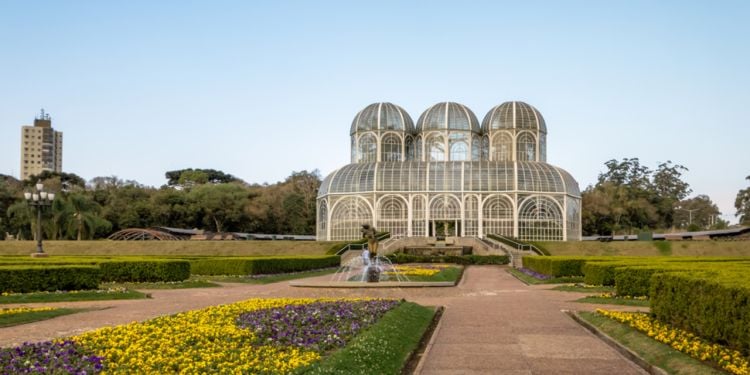
The Botanical Garden (Jardim Botânico) is Curitiba's most iconic landmark, featuring French-style gardens and a stunning Art Nouveau greenhouse resembling London's Crystal Palace. Open daily 6am-8pm with free admission. Parque Barigui is the city's most popular park for jogging, cycling, and weekend picnics, complete with capybara sightings. Tanguá Park offers dramatic waterfalls, walking trails, and panoramic city views. The Wire Opera House (Ópera de Arame) is a striking tubular steel structure set in a former quarry, hosting concerts and theater performances.
Nightlife and Entertainment
Batel and the historic center offer vibrant nightlife, from sophisticated wine bars to lively clubs. Rua Itupava in Alto da XV is a popular street lined with bars and restaurants for all ages. Praça da Espanha is a gathering spot surrounded by bars and cafes, perfect for outdoor drinks. The Santa Felicidade neighborhood is famous for traditional Italian restaurants serving generous portions of pasta and wine. The Festival de Curitiba in March is one of Brazil's largest theater festivals, while the Feira do Largo da Ordem on Sunday mornings offers crafts, antiques, and street food.
Everyday Life in Curitiba
Daily life in Curitiba combines Brazilian warmth with a distinctly European influence from its immigrant heritage. The city is known for its organized urban environment, mild climate, and strong community spirit. Residents enjoy a relaxed pace compared to São Paulo or Rio while still having access to excellent amenities and services.
Getting Around: Transportation
Curitiba pioneered the Bus Rapid Transit (BRT) system in 1974, which has become a model for cities worldwide. The Rede Integrada de Transporte (RIT) features dedicated bus lanes, iconic tube-shaped stations with prepaid boarding, and bi-articulated buses carrying up to 270 passengers. A single fare of BRL 5.50 allows transfers between routes at 21 transit terminals. About 721,500 passengers use the system daily across 74 kilometers of dedicated corridors. The city has excellent bus connections to all neighborhoods and surrounding areas. Note that Curitiba has the highest car ownership rate in Brazil (1.2 million vehicles for 1.8 million residents), so traffic can be congested during peak hours.
Climate and Lifestyle
Curitiba enjoys a subtropical highland climate with four distinct seasons. Summers (December-February) average 21°C (70°F) with occasional hot days reaching 32°C (90°F). Winters (June-August) are cool with averages of 13°C (55°F) and occasional frost. Rain is distributed throughout the year, so keep an umbrella handy. The lifestyle is notably health-conscious, with residents enjoying numerous parks for jogging, cycling, and outdoor activities. Weekends often feature farmers' markets, cultural events, and family gatherings at parks like Barigui or Tanguá.
Language and Integration
Portuguese is essential for daily life in Curitiba. While some professionals speak English, especially in international companies and tourism, most transactions, government services, and social interactions require Portuguese. Language schools like CELIN (UFPR) and private institutes offer Portuguese courses for foreigners. Curitibanos are generally welcoming to newcomers, and the expat community, while smaller than in São Paulo, is active and supportive.
Understanding the Cost of Living
Curitiba offers an excellent quality of life at costs significantly lower than major international cities. The city is approximately 66% less expensive than Seattle (excluding rent) and offers considerable savings compared to São Paulo. While not the cheapest city in Brazil, Curitiba provides exceptional value given its infrastructure, safety, and amenities.
Monthly Budget: Single Person
A single expat can live comfortably in Curitiba on USD 1,500-2,500 per month, depending on lifestyle choices and neighborhood. Basic expenses excluding rent average around BRL 3,000 (USD 555) monthly. Those seeking a more premium lifestyle with dining out and entertainment should budget USD 3,000+.
Expense | Monthly Cost (BRL) | Monthly Cost (USD) |
Rent (1-bedroom, center) | 2,400 | 445 |
Utilities | 400 | 75 |
Groceries | 1,200 | 220 |
Transportation | 300 | 55 |
Health insurance | 500 | 95 |
Dining/Entertainment | 800 | 150 |
Total | 5,600 | 1,040 |
Monthly Budget: Family of Four
Expense | Monthly Cost (BRL) | Monthly Cost (USD) |
Rent (3-bedroom, center) | 4,500 | 835 |
Utilities | 650 | 120 |
Groceries | 2,800 | 520 |
Transportation | 600 | 110 |
Health insurance (family) | 1,800 | 335 |
International school (1 child) | 5,000 | 925 |
Dining/Entertainment | 1,500 | 280 |
Total | 16,850 | 3,125 |
Sources: Numbeo 2025, Expatistan
In Short
Curitiba stands out as one of Brazil's most livable cities, offering an exceptional combination of urban innovation, green spaces, economic opportunity, and cultural richness. Whether you're drawn by career prospects in its thriving automotive and tech sectors, quality education options for your family, or simply a high quality of life at reasonable costs, Curitiba delivers. The city's pioneering spirit in sustainability and urban planning creates an environment where modern convenience meets natural beauty. Its multicultural heritage, friendly residents, and strong infrastructure make integration easier than in many Brazilian cities. For those seeking an authentic Brazilian experience with a touch of European influence, excellent safety, and outstanding value, Curitiba is hard to beat. Ready to start your Curitiba adventure? Join the Expat.com Curitiba forum to connect with fellow expats, ask questions, and get firsthand advice from those who've already made the move!
We do our best to provide accurate and up to date information. However, if you have noticed any inaccuracies in this content, please contact us.


Essential services for your expat journey



