

Living in Brasilia: the ultimate expat guide
Everything you need to know for a successful life in Brasilia.
Brasilia, Brazil's purpose-built capital, stands as a remarkable example of modernist urban planning and a unique destination for expatriates seeking a different kind of Brazilian experience. Inaugurated in 1960, this UNESCO World Heritage Site was designed by visionary architect Oscar Niemeyer and urban planner Lucio Costa, creating a city that resembles an airplane when viewed from above. Located on the Central Plateau at an elevation of 1,172 meters, Brasilia offers a mild tropical savanna climate, a high quality of life, and serves as the administrative heart of Latin America's largest economy. With a metropolitan population of approximately 4.8 million, the Federal District combines the advantages of a major capital with a more relaxed pace compared to São Paulo or Rio de Janeiro.
5 Good Reasons to Move to Brasilia
- Highest average salaries in Brazil – The Federal District boasts the nation's highest per capita income, with average monthly earnings of approximately BRL 4,648 (around USD 945).
- Excellent job opportunities – As the seat of government and host to numerous embassies and international organizations, Brasilia offers abundant employment in the public sector, diplomacy, and related industries.
- Unique architectural heritage – Live among iconic modernist landmarks, from the Cathedral to the National Congress, in a city recognized for its cultural significance.
- Lower cost of living than Rio or São Paulo – While maintaining high living standards, Brasilia offers more affordable housing and daily expenses compared to Brazil's largest cities.
- Access to nature – Enjoy proximity to the Cerrado biome, national parks, waterfalls at Chapada dos Veadeiros, and the stunning Lake Paranoá for outdoor recreation.
Working in Brasilia
Brasilia's economy is primarily driven by the public sector, with government employment representing a significant portion of the workforce. As Brazil's capital, the city hosts all federal ministries, the Supreme Court, Congress, and approximately 130 embassies, creating substantial opportunities in diplomacy, international relations, and public administration.
Key Employment Sectors
Beyond government, Brasilia has developed a growing technology sector, with numerous IT companies and startups establishing operations in the capital. The city also serves as a hub for agribusiness management, given its strategic location in Brazil's agricultural heartland. Other significant employers include construction, education, and financial services. The University of Brasilia and several private institutions create demand for academic professionals, while the concentration of wealth supports a robust service economy.
Work Permits and Employment Outlook
Foreign nationals require a VITEM V temporary work visa to be employed legally in Brazil. This visa is employer-sponsored and typically valid for two years, with the possibility of conversion to permanent residency. Applicants must demonstrate either two years of professional experience with nine years of education, or a university degree with one year of experience. Brazil also offers a Digital Nomad Visa (VITEM XIV) for remote workers employed by companies outside Brazil, valid for up to two years. The table below summarizes key employment indicators.
National unemployment rate (Q3 2025) | 5.6% |
Average monthly salary (Federal District) | BRL 4,648 (~USD 945) |
Main employment sectors | Government, IT, Education, Construction |
Sources: IBGE, Agência Brasil
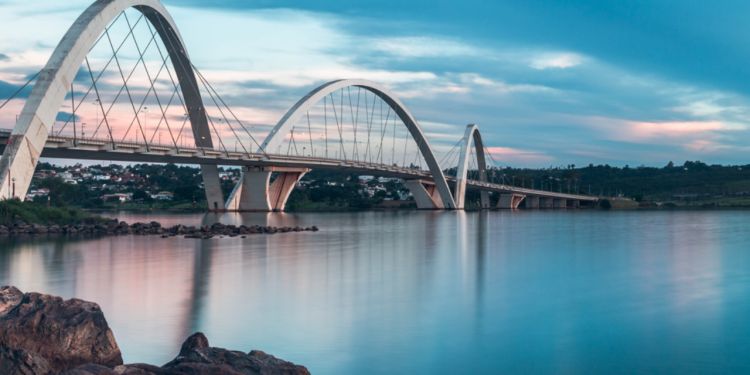
Working in Brasilia
While Brazil is still struggling somewhat and is recovering economically, Brasília's white-collar economy presents one of the best ...
Higher Education and Universities in Brasilia
Brasilia offers excellent higher education opportunities, anchored by one of Brazil's most prestigious public universities. The city's academic institutions benefit from proximity to government research agencies, international organizations, and diplomatic missions, creating unique opportunities for students interested in political science, international relations, and public policy.
University of Brasilia (UnB)
The Universidade de Brasília (UnB), founded in 1962, is the city's flagship institution and consistently ranks among Brazil's top universities. As a federal public university, UnB offers free tuition for both Brazilian and international students. The university operates across four campuses—Darcy Ribeiro, Ceilândia, Gama, and Planaltina—and enrolls approximately 47,000 students in 136 undergraduate programs and over 150 graduate programs. UnB excels particularly in political science, international affairs, economics, and architecture. The institution has 3,000 faculty members and welcomes over 400 international students annually.
Other Higher Education Options
Private universities in Brasilia include Centro Universitário de Brasília (UniCEUB), Universidade Católica de Brasília (UCB), and Instituto de Educação Superior de Brasília (IESB). These institutions offer programs in business, law, health sciences, and engineering, with tuition fees ranging from BRL 800 to BRL 3,000 per month depending on the program. International students typically apply through each institution's international office and may need to validate their secondary school credentials through the Brazilian Ministry of Education.
Schooling for Children in Brasilia
Families relocating to Brasilia will find a well-developed education system with options ranging from Brazilian public schools to international institutions offering American, British, French, and Swiss curricula. The city's status as a diplomatic hub means international schools are well-established and accustomed to serving expatriate families.
International Schools
The American School of Brasilia (EAB), founded in 1961, is one of the premier international schools in the capital. It offers education from pre-K through grade 12 following a U.S. curriculum with International Baccalaureate (IB) options. The school serves students from over 40 countries and provides bilingual instruction in English and Portuguese. Annual tuition ranges from approximately USD 16,000 to USD 18,500, with an additional international placement fee of USD 15,000 for guaranteed enrollment. Other notable options include the Lycée Français François-Mitterrand, affiliated with the French AEFE network, offering a French curriculum with annual fees between BRL 14,000 and BRL 22,000. The Swiss International School (SIS) provides bilingual education in English and Portuguese, preparing students for both Brazilian and international university entrance qualifications.
Brazilian Private and Public Schools
Private Brazilian schools (escolas particulares) offer high-quality education at lower costs than international institutions, with monthly fees typically ranging from BRL 1,500 to BRL 4,500. Many offer bilingual programs combining Portuguese instruction with English language learning. Public schools in the Federal District are free and generally well-regarded compared to other Brazilian states. Enrollment in public schools requires proof of residency and a CPF (tax identification number).
Sources: U.S. Department of State, Numbeo
Housing and Neighborhoods in Brasilia
Brasilia's unique urban design divides the city into distinct sectors, each with its own character and housing options. The central Plano Piloto (Pilot Plan) contains the main residential and commercial areas, designed in the shape of an airplane with numbered streets rather than traditional street names. Understanding the city's layout is essential for finding suitable accommodation.
Popular Neighborhoods for Expatriates
Asa Sul and Asa Norte (South Wing and North Wing) are the primary residential sectors within the Plano Piloto, offering apartment living in superquadras—organized residential blocks with green spaces, schools, and local commerce. These areas provide excellent security, with most buildings featuring 24-hour doormen, and convenient access to shops, restaurants, and cultural venues. Lago Sul and Lago Norte, located along Lake Paranoá, offer upscale houses and mansions—ideal for families seeking more space but at premium prices. Sudoeste is a newer district (established 1989) with modern apartments, green spaces, and bike paths. Águas Claras, though slightly outside the Plano Piloto, offers more affordable modern apartments with excellent metro connectivity.
Rental Prices and Procedures
Renting in Brasilia typically requires a CPF (tax ID), proof of income, and often a guarantor (fiador) who owns property in the Federal District. Some landlords accept rental insurance (seguro fiança) as an alternative. Lease terms are usually 30 months, though shorter arrangements can be negotiated. The table below shows average monthly rents.
1-bedroom apartment (city center) | BRL 2,364 (~USD 480) |
1-bedroom apartment (outside center) | BRL 1,426 (~USD 290) |
3-bedroom apartment (city center) | BRL 5,455 (~USD 1,110) |
3-bedroom apartment (outside center) | BRL 3,225 (~USD 655) |
Sources: Numbeo 2025
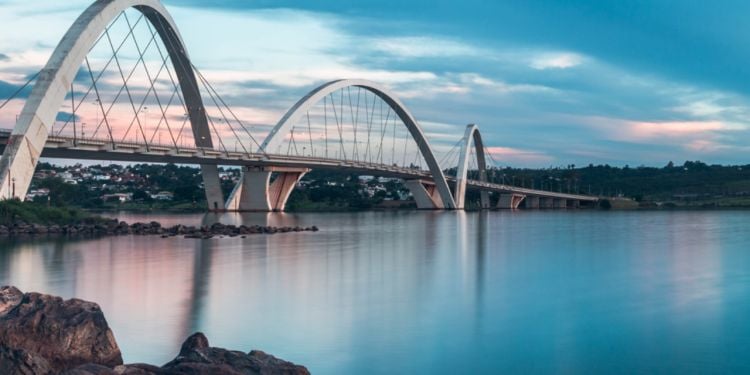
Accommodation in Brasilia
Brasilia, the country's federal capital, is home to many highly-paid government employees and foreign nationals. In this white-collar economy, ...
Leisure, Culture and Things to Do
Brasilia offers a rich cultural scene befitting a national capital, combined with abundant outdoor recreation opportunities thanks to its lakefront location and proximity to the Cerrado biome. The city's modernist architecture itself serves as an open-air museum, with most landmarks designed by Oscar Niemeyer.
Museums and Cultural Venues
The National Museum of the Republic on the Eixo Monumental hosts rotating contemporary art exhibitions in its striking white-domed building. The Banco do Brasil Cultural Center (CCBB) is a major cultural hub offering free exhibitions, theater performances, film screenings, and concerts—including the popular Cinema Festival and Japanese Festival. The JK Memorial honors President Juscelino Kubitschek, who founded Brasilia, with personal artifacts and historical exhibits. Architecture enthusiasts should not miss Itamaraty Palace (Ministry of Foreign Affairs), the iconic Cathedral of Brasilia with its stunning stained glass, and the National Congress building.
Parks and Outdoor Activities
Parque da Cidade Sarah Kubitschek is one of the world's largest urban parks, offering running and cycling trails, playgrounds, and picnic areas. Lake Paranoá provides opportunities for sailing, kayaking, and stand-up paddleboarding, with Pontão do Lago Sul serving as the main waterfront entertainment district with restaurants and nightlife. The Parque Nacional de Brasília (locally known as Água Mineral) features natural mineral pools and hiking trails through Cerrado vegetation. For weekend excursions, Chapada dos Veadeiros, a national park with spectacular waterfalls, is approximately 230 km north of the city. Major annual events include the Brasilia Carnival in February, the Festival de Brasília do Cinema Brasileiro in September, and Porão do Rock music festival in July.
Daily Life in Brasilia
Daily life in Brasilia differs significantly from other major Brazilian cities. The city's modernist design prioritizes automobile transportation, with wide boulevards and limited pedestrian areas. However, residents enjoy a high standard of living, excellent public services, and a more relaxed pace than São Paulo or Rio de Janeiro.
Transportation
Brasilia is a car-oriented city, and many residents rely on private vehicles for daily commuting. However, public transportation options exist and continue to expand. The Metrô-DF operates two lines with 24 stations, primarily serving Asa Sul and connecting to satellite cities including Águas Claras, Taguatinga, and Ceilândia. The metro carries approximately 160,000 passengers daily. A single metro or bus ticket costs BRL 5.50, while a monthly public transport pass is approximately BRL 244. The BRT Expresso DF, operational since 2014, connects satellite cities Gama and Santa Maria to the Plano Piloto using dedicated bus lanes. The BRB Mobilidade card allows integrated transfers between bus, metro, and BRT within a two-hour window for a single fare. Ride-hailing apps like Uber and 99 are widely available and affordable.
Lifestyle and Culture
Brasilia residents, known as Brasilienses, tend to be highly educated professionals working in government and related sectors. The city offers a cosmopolitan atmosphere with diverse dining options, from traditional Brazilian churrascarias to international cuisines at Pontão do Lago Sul, a popular waterfront entertainment complex. Shopping centers like Brasilia Shopping and Pátio Brasil serve as social hubs. The Feira da Torre de TV, a weekend market at the TV Tower, offers local crafts, food, and live music. Climate-wise, Brasilia has two distinct seasons: a dry season (May to September) with cool mornings and clear skies, and a wet season (October to April) with afternoon thunderstorms.
Cost of Living in Brasilia
Brasilia offers a moderate cost of living by Brazilian standards—lower than São Paulo and Rio de Janeiro but higher than smaller cities. The Federal District's strong economy and high government salaries support a comfortable lifestyle, with costs approximately 55% lower than in major U.S. cities.
Monthly Budget for a Single Person
A single professional can live comfortably in Brasilia on approximately USD 1,200 to USD 1,800 per month, including rent. The following table provides a breakdown of typical monthly expenses.
Rent (1-bedroom, city center) | BRL 2,364 |
Utilities (electricity, water, internet) | BRL 586 |
Groceries | BRL 1,200 |
Transportation (monthly pass) | BRL 244 |
Health insurance (private) | BRL 400–800 |
Total estimated | BRL 4,800–5,200 (~USD 975–1,060) |
Monthly Budget for a Family of Four
A family of four should budget approximately USD 2,500 to USD 3,500 monthly for a comfortable lifestyle, depending on schooling choices.
Rent (3-bedroom, city center) | BRL 5,455 |
Utilities (electricity, water, internet) | BRL 750 |
Groceries | BRL 2,500 |
Transportation (2 passes + fuel) | BRL 1,000 |
International school (1 child, annual) | BRL 90,000 (~BRL 7,500/month) |
Health insurance (family) | BRL 1,500–2,500 |
Total estimated | BRL 18,700–19,700 (~USD 3,800–4,000) |
Sources: Numbeo 2025
In Short
Brasilia offers expatriates a distinctive Brazilian experience—a modern, planned capital with excellent infrastructure, high salaries, and a quality of life that balances urban convenience with access to nature. Whether you're drawn by career opportunities in government and diplomacy, the city's architectural heritage, or the chance to explore the Cerrado wilderness, Brasilia delivers a compelling alternative to Brazil's coastal megacities. The welcoming expatriate community and well-established international schools make settling in straightforward for families. Ready to start your Brasilia adventure? Connect with fellow expatriates, ask questions, and share experiences on the Expat.com Brasilia forum—your first step toward calling this modernist masterpiece home.
We do our best to provide accurate and up to date information. However, if you have noticed any inaccuracies in this content, please contact us.


Essential services for your expat journey



