

Living in Sibiu: the ultimate expat guide
Everything you need to know for a successful life in Sibiu.
Sibiu is a medieval gem nestled in the heart of Transylvania, Romania. With a population of approximately 134,000 residents, this former European Capital of Culture (2007) blends historic charm with modern convenience. Cobblestone streets wind through pastel-colored buildings, while Gothic spires rise above bustling squares. The city's 800-year history is visible at every corner, from the iconic Bridge of Lies to the magnificent Lutheran Evangelical Cathedral. Sibiu offers an exceptional quality of life at a fraction of Western European costs, making it increasingly attractive to professionals, families, and retirees seeking an authentic European experience.
5 Reasons to Make Sibiu Your New Home
- Affordable cost of living – Monthly expenses for a single person average around USD 800, significantly lower than most European capitals.
- Rich cultural scene – Home to the Sibiu International Theatre Festival (FITS), the third-largest performing arts festival in Europe.
- Strategic location – Just hours from Bucharest, Budapest, and the Carpathian Mountains, with an international airport serving major European destinations.
- Growing expat community – A welcoming multicultural environment with Romanian, German, and Hungarian communities coexisting peacefully.
- Outstanding natural surroundings – Access to hiking trails, ski resorts at Păltiniș, and the stunning Făgăraș Mountains nearby.
Working in Sibiu: Jobs, Salaries, and Career Opportunities
Sibiu has emerged as a significant employment hub in Romania's Center Development Region. The city benefits from a diversified economy anchored by automotive manufacturing, IT services, and engineering. Major employers include Continental, which operates production facilities and R&D centers employing thousands of workers across Romania, with significant operations in Sibiu and other Transylvanian cities.
Key Employment Sectors
The city's labor market offers opportunities across multiple industries. Manufacturing and engineering dominate the private sector, with automotive components and machinery production leading the way. The IT and technology sector continues to grow, offering positions in software development and technical support. Tourism and hospitality provide seasonal and year-round employment, especially during major festivals. The unemployment rate in the Center Region stands at approximately 3.1%, well below the national average.
Work Permits and Salaries
Citizens from the EU, EEA, and Switzerland enjoy the same labor rights as Romanian nationals and do not require work permits. Non-EU nationals must secure a work permit through their employer, followed by a long-stay visa (D/AM type) and eventually a residence permit. Romania's annual quota for non-EU workers was set at 100,000 permits for 2024-2025. Processing typically takes 30-45 days.
The table below provides an overview of employment indicators in Sibiu:
Average monthly net salary | RON 4,900 (~USD 1,050) |
Regional unemployment rate | 3.1% |
Top hiring sectors | Automotive, IT, Engineering, Tourism |
Sources: Numbeo 2025, EURES Romania
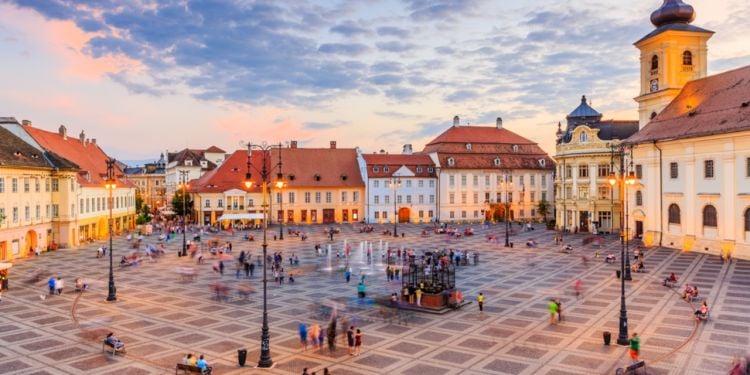
Working in Sibiu
Expats will always hear that it is difficult to move to another place, a statement that might affect or postpone the decision to move miles and miles ...
Higher Education in Sibiu: Universities and International Programs
Sibiu's academic scene is anchored by the Lucian Blaga University of Sibiu (ULBS), a public institution with over 225 years of educational tradition. The university hosts more than 15,000 students across nine faculties, supported by 680 academic staff members. ULBS is a member of the European University Association (EUA) and offers programs in multiple languages, including English.
Academic Programs and Faculties
ULBS provides undergraduate, master's, and doctoral programs across diverse fields. The Faculty of Medicine offers a highly regarded 6-year medical degree taught in both Romanian and English, attracting international students from Europe, Asia, and beyond. Other faculties include Engineering, Economic Sciences, Letters and Arts, Law, and Theology. The university promotes mobility through the Erasmus+ program, with partnerships spanning universities across Europe and North America.
Tuition Fees and Admission
Tuition fees vary by program and nationality. EU/EEA/Swiss citizens pay the same regulated rates as Romanian students, with amounts published per program in the university catalog. Non-EU international students pay separate fees, typically ranging from EUR 1,000 to EUR 8,000 per year depending on the discipline. Medicine and dentistry programs are among the highest, while engineering and economics are more affordable. The university also offers merit-based scholarships and Romanian Government Scholarships covering tuition, accommodation, and a monthly stipend.
For detailed program information and applications, visit the official university website:
Schools for Expat Children: International and Bilingual Options
Families relocating to Sibiu will find a growing selection of educational options for children. While the Romanian public school system offers free education, the language of instruction is primarily Romanian, which can pose challenges for newly arrived expat families. Fortunately, several private and international schools provide alternatives with English, German, and bilingual curricula.
International and Private Schools
Sibiu International School offers a modern learning environment with instruction in English, German, and Romanian. Located in the city center, the school serves students from primary through secondary levels, with a focus on personalized education and international curricula. Over 70% of teaching staff are international educators. The school emphasizes creativity and self-confidence alongside academic excellence.
FRAM School operates as a Cambridge International School, implementing the Cambridge Primary Curriculum with a bilingual approach. The school offers 10 subjects including Mathematics, Natural Sciences, and Global Perspectives, alongside core Romanian curriculum elements. FRAM provides education from preschool through primary levels with plans to expand.
Hermann Oberth International German School, founded in 2006, delivers education from kindergarten through high school with instruction primarily in German. The school is expanding bilingual approaches including German-English and German-Romanian programs, with an International Baccalaureate (IB) track available.
Enrollment and Fees
Private school tuition in Sibiu varies considerably. Monthly fees for preschool/kindergarten typically range from RON 1,500 to RON 2,500 (approximately USD 320-530). Annual fees for international primary schools average around RON 30,000 (approximately USD 6,400). Enrollment generally requires transcripts, identification documents, and sometimes entrance assessments.
Sources: Sibiu International School, FRAM School, Numbeo 2025
Finding a Home in Sibiu: Neighborhoods, Rent, and Housing Tips
Sibiu offers diverse housing options, from renovated apartments in historic buildings to modern developments on the city's outskirts. Compared to other Romanian cities like Cluj-Napoca or Bucharest, rental prices remain significantly more affordable, making Sibiu attractive for those seeking value without sacrificing quality of life.
Popular Neighborhoods for Expats
The Historic Center (Centrul Istoric) encompasses Piața Mare, Piața Mică, and surrounding streets. This protected area features beautiful squares, character-filled buildings, and excellent access to restaurants and cultural sites. Expect renovated apartments in two- and three-story historic houses, though options are limited and sought-after.
Newer residential districts on the city's periphery offer modern apartment blocks with contemporary amenities. Areas like Selimbar (a suburb south of Sibiu) provide family-friendly environments with newer constructions and often include parking facilities.
The city's compact size means no location is truly inconvenient. Walking or cycling to central areas is feasible from most neighborhoods.
Rental Prices and Procedures
The table below outlines typical monthly rental costs in Sibiu:
1-bedroom apartment (city center) | RON 1,860 (~USD 400) |
1-bedroom apartment (outside center) | RON 1,800 (~USD 385) |
3-bedroom apartment (city center) | RON 3,030 (~USD 650) |
3-bedroom apartment (outside center) | RON 2,790 (~USD 600) |
Rental agreements typically require a security deposit equivalent to one month's rent. Utilities (electricity, heating, water, garbage) are usually paid separately, averaging RON 530 (~USD 115) monthly for an 85m² apartment. High-speed internet costs around RON 50 (~USD 11) per month.
Sources: Numbeo 2025
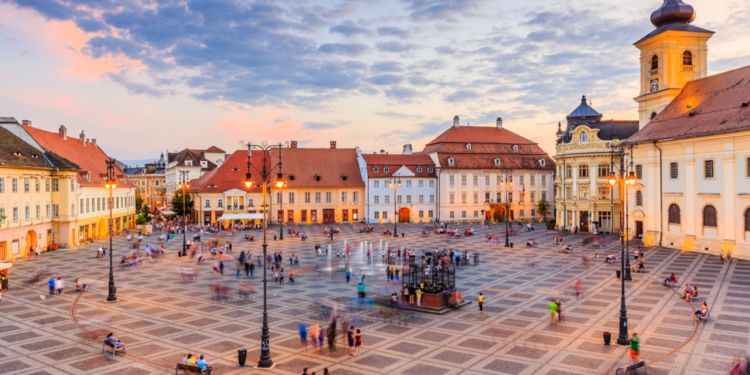
Accommodation in Sibiu
The European City of Culture in 2007, Sibiu is the Transylvanian gem for expats and tourists. Due to the large number of expatriates, finding ...
Leisure, Culture, and Things to Do in Sibiu
Sibiu pulses with cultural energy year-round. The city's status as European Capital of Culture 2007 sparked lasting investments in the arts, and today residents enjoy world-class festivals, museums, and outdoor activities rivaling much larger European cities.
Museums and Cultural Attractions
The Brukenthal National Museum, founded in 1817, is Romania's oldest museum. Housed in a magnificent Baroque palace on Piața Mare, it contains over 1,200 European artworks from the 15th to 18th centuries, including pieces attributed to Jan Van Eyck and Titian. The complex includes six separate museums: the European Art Gallery, Romanian Art Gallery, Museum of History, Museum of Pharmacy, Natural History Museum, and the Hunting Museum.
The ASTRA National Museum Complex, located 5 kilometers from the city center in Dumbrava Forest, is Europe's largest open-air ethnographic museum. Spanning 96 hectares, it showcases over 400 traditional buildings including churches, mills, and peasant homes from across Romania.
Festivals and Events
The Sibiu International Theatre Festival (FITS) transforms the city every June into a 10-day celebration of performing arts. With over 800 events, 5,000 artists from 80+ countries, and audiences exceeding 100,000, FITS ranks among the world's largest theatre festivals. Many performances are free and staged in outdoor squares, churches, and unconventional venues.
Other notable events include the ARTmania Festival (rock and alternative music in July), the Sibiu Jazz Festival, and the enchanting Christmas Market in Piața Mare during December.
Outdoor Activities
Nature enthusiasts benefit from Sibiu's proximity to the Carpathian Mountains. The Păltiniș resort, accessible via bus line 22, offers skiing in winter and hiking trails in summer. The Făgăraș Mountains provide challenging treks to glacial lakes and Romania's highest peaks. Sub Arini Park, within the city, offers peaceful walks and green space for relaxation.
Sources: Brukenthal National Museum, Sibiu International Theatre Festival
Daily Life in Sibiu: Transportation, Language, and Local Customs
Life in Sibiu moves at a relaxed pace, especially compared to larger Romanian cities. The medieval old town is best explored on foot, with cobblestone streets and pedestrian zones creating a walkable urban core. Residents enjoy a blend of Central European efficiency and Balkan warmth, reflected in everything from café culture to neighborly interactions.
Getting Around
Public transportation is operated by Tursib, providing 31 bus routes throughout the city and surroundings. A single trip costs RON 3 (~USD 0.65) and is valid for 60 minutes, allowing transfers between buses. Monthly passes are available for RON 85 (~USD 18). Tickets can be purchased from kiosks, vending machines, or directly on buses using contactless payment.
Key routes for newcomers include:
- Line 5 – Connects the train station (Gara) to Piața Unirii
- Line 11 – Links Piața Unirii to Sibiu International Airport
- Line 13 – Train station to ASTRA Village Museum
- Line 22 – Service to the Păltiniș ski resort
Taxis are affordable and widely available. Look for licensed vehicles displaying company numbers (such as 942 or 953) and ensure the meter is running. Ride-sharing apps operate in larger Romanian cities but are less common in Sibiu.
Language and Community
While Romanian is the official language, Sibiu's multicultural heritage means German and Hungarian are also spoken by minority communities. Many younger residents and professionals speak English, particularly in tourism, IT, and hospitality sectors. Learning basic Romanian phrases will greatly enhance daily interactions and is appreciated by locals.
Sources: Tursib Official Website, Sibiu City Transport Information
Cost of Living in Sibiu: Monthly Budget Breakdown
Sibiu offers one of the most affordable costs of living in Europe while maintaining a high quality of life. The city ranks among the cheapest 30% of cities globally for living expenses. Below are detailed monthly budget estimates for both single individuals and families.
Monthly Budget for a Single Person
A single professional can expect the following approximate monthly expenses:
Expense Category | Amount (USD) | Amount (EUR) |
Rent (1-bedroom, center) | USD 400 | EUR 370 |
Utilities | USD 115 | EUR 105 |
Groceries | USD 200 | EUR 185 |
Transportation | USD 20 | EUR 18 |
Dining out / Leisure | USD 100 | EUR 90 |
Health insurance (private) | USD 50 | EUR 45 |
Total Estimated | USD 885 | EUR 813 |
Monthly Budget for a Family of Four
A family with two adults and two children can anticipate the following monthly costs:
Expense Category | Amount (USD) | Amount (EUR) |
Rent (3-bedroom, center) | USD 650 | EUR 600 |
Utilities | USD 180 | EUR 165 |
Groceries | USD 450 | EUR 415 |
Transportation | USD 50 | EUR 45 |
International school (1 child) | USD 530 | EUR 490 |
Leisure / Activities | USD 150 | EUR 140 |
Health insurance (family) | USD 150 | EUR 140 |
Total Estimated | USD 2,160 | EUR 1,995 |
Sources: Numbeo 2025, LivingCost.org
In Short
Sibiu offers an exceptional combination of historic charm, cultural richness, and affordable living that few European cities can match. Whether you're drawn by career opportunities in manufacturing and IT, seeking quality education for your family, or simply looking for a place where centuries-old architecture meets vibrant contemporary culture, Sibiu delivers. The welcoming community, stunning Transylvanian landscapes, and lower cost of living make this medieval gem an increasingly popular choice for expats seeking authenticity over tourist crowds. Ready to take the next step? Connect with fellow expats, ask questions, and share experiences on the Expat.com Sibiu Forum.
We do our best to provide accurate and up to date information. However, if you have noticed any inaccuracies in this content, please contact us.


Essential services for your expat journey



