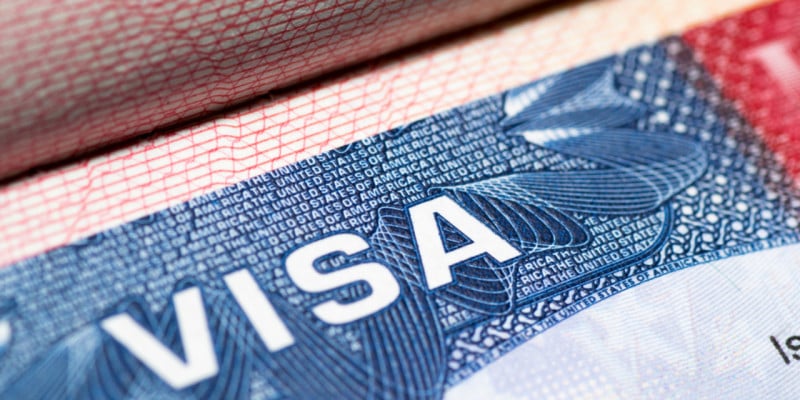
To enter Luxembourg, obtainingavisa is sometimes necessary. This may vary depending on nationality and the lengthof the stay. This article outlines the different types of visas for Luxembourg and the steps required to obtain them.
EU citizens enjoy the privilege of free movement within the EU, allowing them to reside and work in Luxembourg for up to 90 days, provided they have a valid identitycard or passport.
Whether for tourism, family visits, business trips, or professional activities, no administrative procedure or work authorization is required.
Note: Nationals of other states party to the Agreement on the European Economic Area (EEA) (Norway, Iceland, Liechtenstein) and those from Switzerland are treated as EU citizens.
A third-country national who is a familymember of an EUcitizen can stay in Luxembourg for up to three months, provided they are recognized as a familymember (spouse, registeredpartner, directdescendant under 21 years old or dependent, directascendant who is dependent, or another family member demonstrating a specificdependency) and fulfill certain formalities. Required documents include a validpassport and, if applicable, an entryvisa that must be obtained priorto arrival. If the familymember holds a residencecard issued by Luxembourg or another EU Member State, they are exempt from the visa requirement. During this three-month period, the third-country national is allowed to work without needing prior authorization.
Note: Nationals of the countries party to the EEA Agreement (Norway, Iceland, Liechtenstein) and Switzerland are treated as EU citizens.
Any third-countrynational wishing to stay in Luxembourg for less than 90 daysmust:
Before entering the territory
possess a validpassport with an expirationdateat least three months beyond the start of travel;
if subject to visarequirements, obtain a short-stay visa from the Luxembourg diplomatic or consular representation or from a Schengen State representing Luxembourg.
Entry and stay conditions
In addition to the above documents, the third-country national must meet the following conditions:
not be listed in the Schengen Information System (SIS);
not be subject to an entryban;
notpose a threat to public order, national security, public health, or international relations of Luxembourg or other Schengen States;
justifythepurpose and conditions of the stay (e.g., invitation letter, hotel reservation, round-trip ticket, etc.);
have sufficientfinancialresources for the duration of the stay and the return trip to the country of origin (or provide a sponsorship declaration);
holdhealthinsurance covering allrisks on Luxembourgish territory.
After entering the territory
make a declarationofarrival at the localmunicipaladministrationwithinthreeworkingdays of arrival, unless staying at a hotel or other tourist accommodation, in which case the accommodation form completed by the host generally serves as proof.
Once these formalities are completed, the third-country national isallowed to stay in Luxembourg for a maximum of three months within a six-month period.
Engaging in professional activity
Third-country nationals wishing to work in Luxembourg during their stay mustobtain a workauthorization from the Directorate of Immigration before starting any paid activity.
All EUcitizens benefit from freemovement within the EU, granting them the righttoworkandreside in Luxembourg for more than 90 days, provided they meet certain conditions:
engaging in salaried or self-employed work;
having sufficientresources to avoid becoming a burden on the local social assistance system, as well as health insurance;
beingenrolled in a public or privateeducationalinstitution in Luxembourg for studies or vocational training and, in this case, proving they have the necessary resources to support themselves and health insurance;
being a familymember of an EU citizen who meets one of the above conditions.
Note: Nationals of other states party to the EEA Agreement (Norway, Iceland, Liechtenstein) and Switzerland are treated as EU citizens.
Upon arrival in Luxembourg, individuals in question should visit the local administration office in their place of residence to apply for a registration certificate. You can find detailed information about this document in the article covering entry formalities in Luxembourg. It's important to highlight that EU nationals and their family members, who also possess European nationality, are granted automatic permission to work in Luxembourg.
Third-country nationals who are familymembers of EU citizens havetheright to reside in Luxembourg for more than three months, provided they accompany or join an EU citizen who meets the conditions applicable to EU nationals.
To enter Luxembourg, they must hold a validpassport and, if applicable, a requiredvisa or a residencecard as a family member of an EU citizen issued by an EU Member State.
Within three months of their arrival, they mustregister with the municipaladministration of their place of residence and apply for a residencecardforfamilymembers. Once these formalities are completed, they are allowedtowork in Luxembourg without needing prior authorization.
Third-country nationals wishing to reside in Luxembourg for morethanthreemonths must follow the procedure for regular stay on the territory. This procedure consists of twosteps: applying for a residencepermitbeforeentering Luxembourg and completingformalitiesafterarrival to obtain a residence card.
To obtain a residencecard, third-country nationals holding a temporaryresidencepermit must, withinthreedays of their arrival in Luxembourg, register their arrival with the municipaladministration of their placeofresidence. The receipt issued, together with the previously obtained residence permit, confirms the regularity of their stay until the residence card is issued.
A medicalexaminationmust then becarried out with a generalpractitioner, internalmedicine specialist, or pediatrician practicing in Luxembourg, and include tuberculosisscreening conducted by the Luxembourg Medical-Social League. The results are forwarded to the Ministry of Health, which informs the Directorate of Immigration if the medical requirements for long-term residence in Luxembourg are met.
The residencecard must then be requested from the Directorate of Immigration of the Ministry of Foreign Affairs using the dedicated application form. The application must include the following documents:
a certified copy of the entire validpassport;
a copy of the residencepermit issued by the ministry;
a copy of the arrivaldeclaration issued by the municipal administration;
proof of appropriate housing (rental agreement, property deed, etc.);
proof of payment of the issuancefee to the account number indicated on the form.
Once all documents are received, the applicant will be invited by mail to appearinperson at the Directorate of Immigration's offices with a validpassport. During this appointment, a photo (or a photo meeting biometric passport standards) and fingerprints will be taken for the residence card. The card will be available a few days later. Once the residence card is obtained, the third-country national must make a finalvisit to the municipaladministration of their placeofresidence to confirm their arrivaldeclaration and, if necessary, obtain a residence certificate.
Since January 1, 2021, Britishcitizensno longer benefit from freemovement within the European Union. For shortstays (up to 90 days within a 180-day period), they do not need a visa to enter Luxembourg but must hold a passportvalid for the duration of their stay. Since2025, British citizens are also required to obtain an ETIAS authorization to enter the SchengenArea, including Luxembourg, for stays of less than 90 days. This authorization can be requestedonline via the ETIAS system's dedicated website and is mandatorybefore departure. It aims to enhance border security, although it is not considered a visa.
For staysexceeding90days or to engage in paidactivities, a prior residencepermit is required and mustberequested from the Directorate of Immigration in Luxembourg, as is the case for third-country nationals.
Join the Luxembourg community
Get regular tips and advice to make the most of your expat life
Types of visa available in Luxembourg
There are severaltypesofvisas for Luxembourg: the airporttransit visa, the transitvisa, the short-stay visa, and the long-stay visa.
Airport Transit Visa (Visa A)
This visa allowstravelers subject to this requirement to transitthrough the international zone of airports without entering the Schengen area. It only permitspresence in the airporttransitzone and does not allow the holder to leave it.
Transit Visa (Visa B)
This visa is issued for transit through one or more Schengen States to reach a third country within a maximum of five days. It allows the holder to leavethe airport or port of transit and travelwithin the Schengenarea for the durationspecified in the visa.
Short-Stay Visa (Visa C)
This visa allowsstays in the Schengen area, either continuousornot, for a maximum of 90 days within a 180-day period. It is used for purposes such as:
tourist or family visits;
businesstrips;
participation in events such as conferences, trade fairs, or exhibitions;
attendance at boardmeetings and generalassemblies;
providingservices within the same group of companies.
This visa can be issued for a singleentry (for one trip) or multipleentries (for several trips).
Long-Stay Visa (Visa D)
This visa is intended for individuals wishing to stayinLuxembourg for more than 90 days. It is required for:
holders of a temporaryresidencepermit;
salaried or self-employed workers;
trainees;
students;
familymembers of EU citizens
This visa allows the holder to stay in Luxembourg for an initial period usually limitedto one year. Afterarriving in Luxembourg, visaholdersmust complete the necessaryprocedures to obtain a residence permit from the relevant Luxembourg authorities.
Note: Visas for Luxembourg have associated costs that vary depending on the type of visa. These fees are subject to change, so it is recommended to check the updated amounts with the relevant authorities before submitting an application.
Allvisa applications must be submittedinperson by the applicant to a Luxembourg diplomatic or consular mission in their country of habitual residence. If Luxembourg is not represented in the applicant's country, the application can be submitted to a diplomatic or consular mission of a Schengen State representing Luxembourg (often Belgium).
While the required documents mayvary depending on the purposeof the trip and the relationship with a sponsor in Luxembourg, the following list is commonto all applications:
a completed and signedvisaapplicationform;
tworecent passport-sized photos compliant with biometricpassport standards;
a validpassport or any other travel document recognized by Schengen countries, valid for at least three months beyond the visa's validity period and with at least two blank pages;
travelinsurance covering at least €30,000 for medicalexpenses, including repatriation for medical reasons;
documents justifying the purpose of the trip (e.g., an official invitation letter for a business visit, proof of sponsorship, hotel booking, return flight ticket, etc.);
proof of sufficient financial means to support oneself during the stay in Luxembourg and to cover the return to the country of origin or transit through a third country (e.g., recent bank statements, cash, credit card);
proof of legal residence in the applicant's habitual country of residence (e.g., valid residence permit for foreign residents).
Additional Documents for Family Reunification
For familyreunification cases, additionaldocuments are required, including:
an excerpt of the marriagecertificate or a registeredpartnership certificate;
an excerpt of the birthcertificate for each family member involved;
an excerpt of the criminalrecord issued within the last three months from the applicant's country of residence;
for dependentchildren: specific evidence such as documents related to custody or financialdependency.
Important Note: if the documents are not written in French, German, or English, they must be accompanied by a certified translation from a sworntranslator.
Commitment to care
The statement of financialsupport is a formality to be completed by the sponsorresiding in Luxembourg. The sponsor mustfillout a specificform, have it certified by their local municipality, and then send it by mail to the Passport Office.
The form mustbeaccompanied by the following documents:
the sponsor's threemost recent payslips or any other document proving their monthlyincome;
a standard copy of their identificationdocument;
if applicable, proof of legal residence in Luxembourg (only required for sponsors who are not citizens of the European Union).
Visa requirements, exemptions, and alternatives
Regardless of the duration of stay, a visaapplicationmaybe mandatory for nationals of certaincountries. The list of affected nationalities can be found on the website of Luxembourg's Ministry ofHome Affairs.
For nationalsexempt from the visarequirement, it is mandatory to register their arrival with the localmunicipality where they will reside for staysexceedingthreemonths. For stays shorter than threemonths, this registration is notrequired if staying in a hotel or another tourist accommodation.
We do our best to provide accurate and up to date information. However, if you have noticed any inaccuracies in this article, please let us know in the comments section below.